

Walk into a room where the curtains are hung badly and you will feel it before you can name it. The ceiling seems lower. The windows look stubby. Everything is fine, technically, and somehow the room reads cheap.
Nine times out of ten the fabric is not the problem. The bracket position is. Knowing how high to hang curtains, how far past the window to extend the rod, and how much fabric to buy is the difference between a window that looks styled and one that looks like it came with the rental. None of it costs extra. It is the same curtain, moved.
Here are the actual numbers, and the reasoning behind each one so you can adapt them to your own windows.
How High: Start Half a Foot Above the Frame

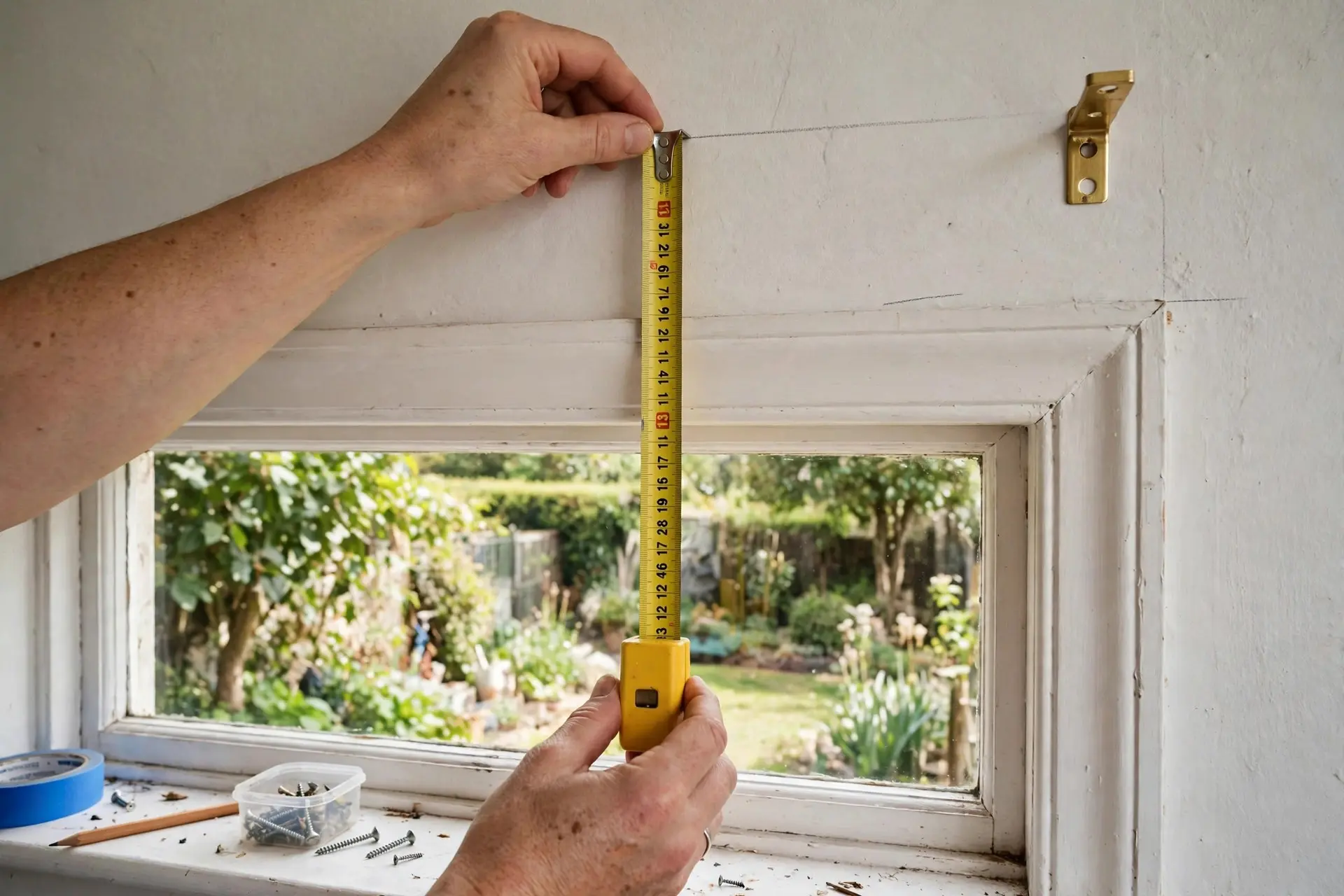
In a room with standard 8 foot ceilings, mount the rod about half a foot above the top of the window frame. Four inches is the floor, six is better. Below four inches and the rod reads as part of the window trim rather than as a frame around it.
The reason this works is simple. Your eye follows the vertical line of the fabric from the floor up to the rod and treats that as the height of the wall. Lift the rod and you lift the perceived ceiling. Hang it tight to the frame and you draw a hard horizontal line partway up the wall, which does the opposite.
If your ceilings are 10 feet or higher
The instinct is to go straight to the ceiling. Resist it. With very high ceilings, keep the curtains within about 8 inches of the tops of the windows. Beyond that the curtain stops relating to the window at all, and you get a strange band of bare wall visible through the gap when the curtains are drawn.
Ceiling mounted track is a deliberate look and it can be beautiful in a modern room, but it is a different decision from hanging a rod too high by accident.
If there is a transom above the window
You have two valid choices. Hang the rod 4 to 6 inches above the top of the transom to cover the whole assembly, which gives you full light control and the tallest possible line. Or hang it just above the main window and leave the transom exposed, which keeps the architectural detail visible and lets light in above the curtain. Pick based on whether the transom is a feature worth showing or a draft worth covering.
If the wall above the window is short
Some windows sit only two or three inches below the ceiling. In that case, go to the ceiling deliberately. A ceiling mounted track or a rod right at the top looks considered. A rod squeezed into a two inch gap looks like a compromise, because it is one.
How Wide: Extend Past the Window, But Not Endlessly

Mount the rod so it extends 3 to 6 inches past either side of the window frame, and more if there is decorative molding you want to clear.
This does two things at once. It lets the curtain panels stack on the wall instead of on the glass, so you get more daylight. And it makes the window look wider, because the eye reads the whole curtained area as the opening.
There is an upper limit. Keep the total rod length to no more than about one third wider than the window itself. A 54 inch window supports a rod of roughly 72 inches. Go much past that and the proportions stop looking generous and start looking odd, with curtains that seem to belong to a larger window somewhere else.
A practical note on support. Any rod over about 60 inches needs a center bracket or it will sag in the middle, especially with heavy lined fabric. Choose a center bracket that lets the rings pass, or accept that the panels will not slide across in one movement.
How Much Fabric: The Fullness Ratio Nobody Calculates

This is the measurement most people skip, and it is the one that most visibly separates curtains that look expensive from curtains that look thin.
The combined width of your curtain panels should be between two and two and a half times the width of the window. Not the same as the window. Two to two and a half times it.
Work an example. A 54 inch window needs roughly 108 to 135 inches of total panel width. Two panels at 54 inches each gives you 108, which is the minimum. Two panels at 50 inches gives you 100, which will hang flat and slightly sad even in good fabric.
Fullness is why a cheap curtain in the right quantity often looks better than an expensive one in the wrong quantity. The folds are what create the shadow and depth your eye reads as quality. Buying four narrow panels instead of two is usually cheaper than upgrading the fabric, and it does more.
If the curtains are purely decorative and will never close, you can go lighter on fullness. If they will actually be drawn every night, do not.
How Long: Where the Hem Should Land

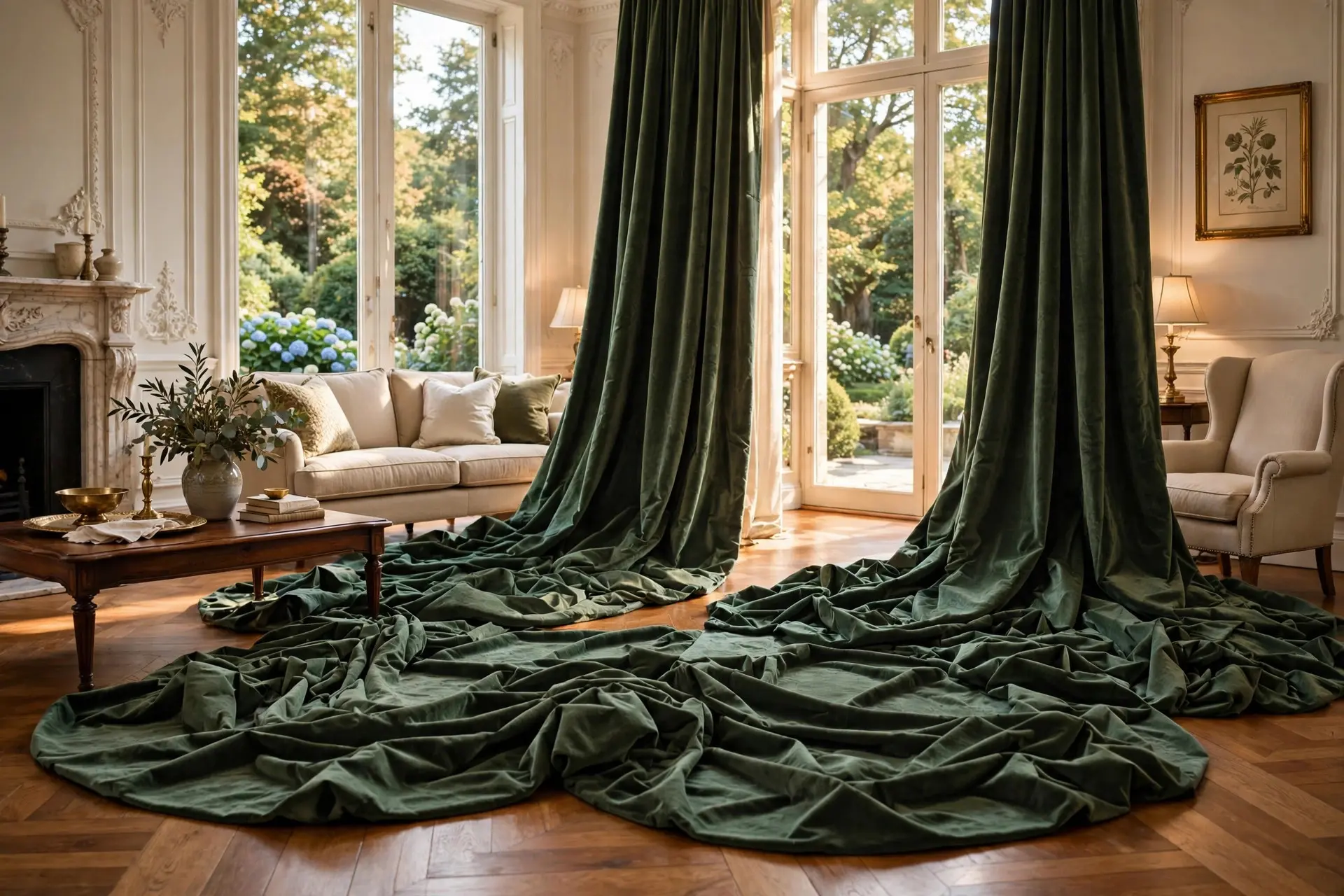
Three finishes work, and one very common one does not.
- Kissing the floor. The curtain touches the floor or sits no more than half an inch above it. This is the cleanest, most practical option, and the right default for anything you open and close daily or anywhere with pets and children.
- A modest break. An extra 1 to 3 inches of fabric so the hem gathers softly at the floor. Slightly more relaxed and forgiving, and it hides a floor that is not perfectly level.
- A full puddle. Around 6 inches of extra fabric pooling on the floor. Dramatic and traditional. It collects dust, and it has to be rearranged after every vacuum, so save it for a formal room you do not pass through constantly.
What does not work is the hem floating two or three inches above the floor. There is no reading where that looks intentional. It just looks like the curtains shrank.
Sill length and apron length curtains are legitimate in specific places, above a kitchen sink, behind a radiator, or in a bathroom, where floor length fabric would be impractical. Outside those cases, go to the floor.
Measure after the rod is up
Order of operations matters. Install the brackets first, then measure from the point the curtain will hang from down to the floor, then buy or hem the panels. Measuring from the window frame and guessing the rod position is how people end up with curtains that are four inches short.
Remember to account for the hardware. Rings and clips add height above the panel, so the drop from the rod is not the same as the drop from the top of the curtain. Tab tops and rod pockets behave differently again.
Awkward Windows and What to Do With Them

- Two windows close together. If the wall between them is narrow, treat them as one window with a single long rod. Two separate rods with a sliver of wall between them chops the room up.
- A window in a corner. You cannot extend past the frame on the corner side, so extend further on the open side to balance it, and let the panel on the corner side be narrower.
- Sliding doors. Extend well past the frame on both sides so the panels stack clear of the glass. A door you have to fight a curtain to open is a curtain that gets taken down.
- Radiator under the window. Floor length curtains will trap heat behind the fabric. Use sill length panels, or a shade paired with decorative side panels that never close.
- Windows of different heights on one wall. Hang every rod at the same height, aligned with the tallest window. Matching the rod to each individual window makes the wall look accidental.
Small Details That Do a Lot

- Anchor the brackets properly. Lined curtains are heavier than people expect, and a rod pulling out of drywall takes a chunk of wall with it. Use the right anchors or hit a stud.
- Train the folds. After hanging, arrange the fabric into even vertical folds and tie them loosely with ribbon for a few days. The curtain learns the shape and hangs better permanently.
- Steam out the creases. Curtains arrive folded. Ten minutes with a steamer changes how the whole window looks.
- Match the rod finish to something else in the room. A hardware finish that echoes your lighting or door handles looks deliberate. A random finish reads as whatever was in stock.
- Line up your soft surfaces. Curtains and rugs are the two largest soft elements in most rooms. If you are choosing both, our living room rug guide covers how to size a rug so the two work together.
Once the measurements are settled, the style choice gets much easier. If you are still deciding on fabric, weight, and heading style, our curtain and drapery ideas post covers the looks that work in different rooms, and our modern living room curtain guide focuses on the main living space.
Frequently Asked Questions
How high should curtains be hung above a window?
In a room with 8 foot ceilings, mount the rod about half a foot above the window frame, with 4 inches as the minimum. With ceilings of 10 feet or more, keep the rod within about 8 inches of the top of the window so the curtain still relates to the opening.
How far should a curtain rod extend past the window?
Three to 6 inches past each side, or more if there is molding to clear. Keep the total rod length within about one third wider than the window. A 54 inch window suits a rod of roughly 72 inches.
How wide should curtain panels be?
The combined width of all panels should be two to two and a half times the window width. For a 54 inch window that means roughly 108 to 135 inches of total panel width. Anything less hangs flat instead of falling in folds.
Should curtains touch the floor?
Yes, in most rooms. Either touch the floor or sit no more than half an inch above it. You can add 1 to 3 inches for a soft break, or about 6 inches for a dramatic puddle in a formal room. Hems floating a few inches above the floor always look unfinished.
Does hanging curtains higher really make a room look taller?
It reliably makes a room read taller, because the unbroken vertical line of fabric is what your eye measures rather than the window itself. It is the cheapest change in decorating, since it usually just means moving two brackets.
The Short Version
Six inches above the frame. Three to 6 inches past each side, capped at one third wider than the window. Panel width totalling two to two and a half times the window. Hem touching the floor. Measure after the brackets are up, not before. Five numbers, no extra budget, and a room that looks noticeably taller than it did this morning.