

A rug that is too small does something strange to a bedroom. The bed looks like it is floating on an island of bare floor, the nightstands stop feeling connected to anything, and the room reads less finished than it did before you spent the money. Most people blame the color or the pile height. Nine times out of ten the problem is the size.
Choosing the rug size for queen bed rooms is one of the few decorating decisions that has a real right answer. A queen mattress measures 60 inches wide by 80 inches long. Add a frame and you are usually looking at 64 to 68 inches across. Once you know that number, and you decide how much rug you want showing around the bed, everything else is arithmetic.
Here are the numbers, the three placements that work, and a way to test the whole thing with painter tape before you spend anything.
The Only Number You Really Need
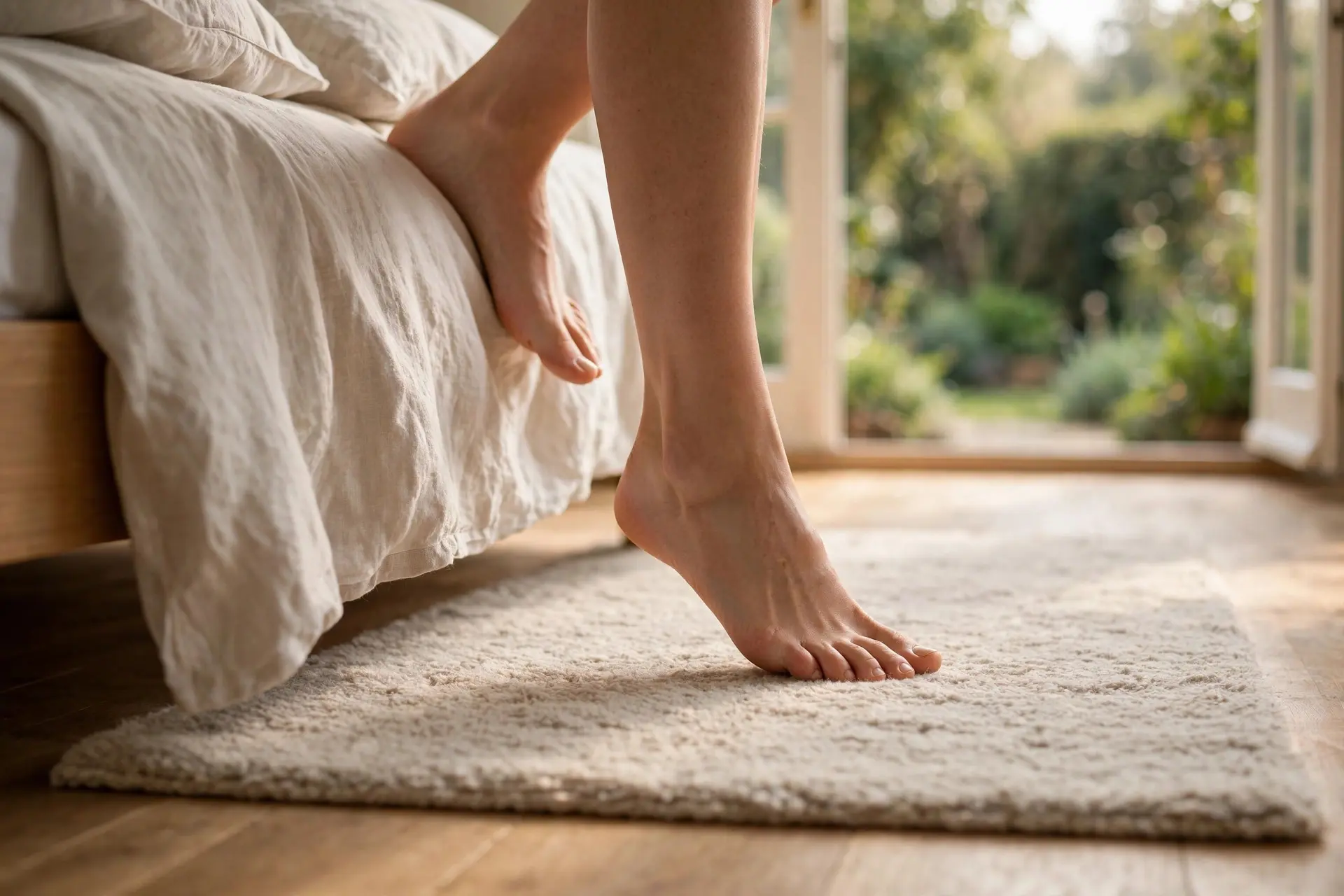
Aim for 18 to 24 inches of visible rug on both long sides of the bed and at the foot. That band is not arbitrary. It is roughly the width of one comfortable step, so your feet land on wool instead of cold floor when you get up, and it is wide enough that your eye reads the rug as a deliberate border rather than a miscalculation.
Twelve inches is the absolute floor. Below that the rug looks like it shrank in the wash. Above 24 inches you start eating into walkways, and the rug begins to function as wall to wall carpet, which is a different look and a more expensive one.
Now run the math for a queen. Sixty inches of mattress plus 18 inches on each side equals 96 inches, which is exactly 8 feet. That is why the 8 by 10 rug exists, and why it lands so neatly under a queen bed.
The Three Rug Sizes That Work With a Queen Bed
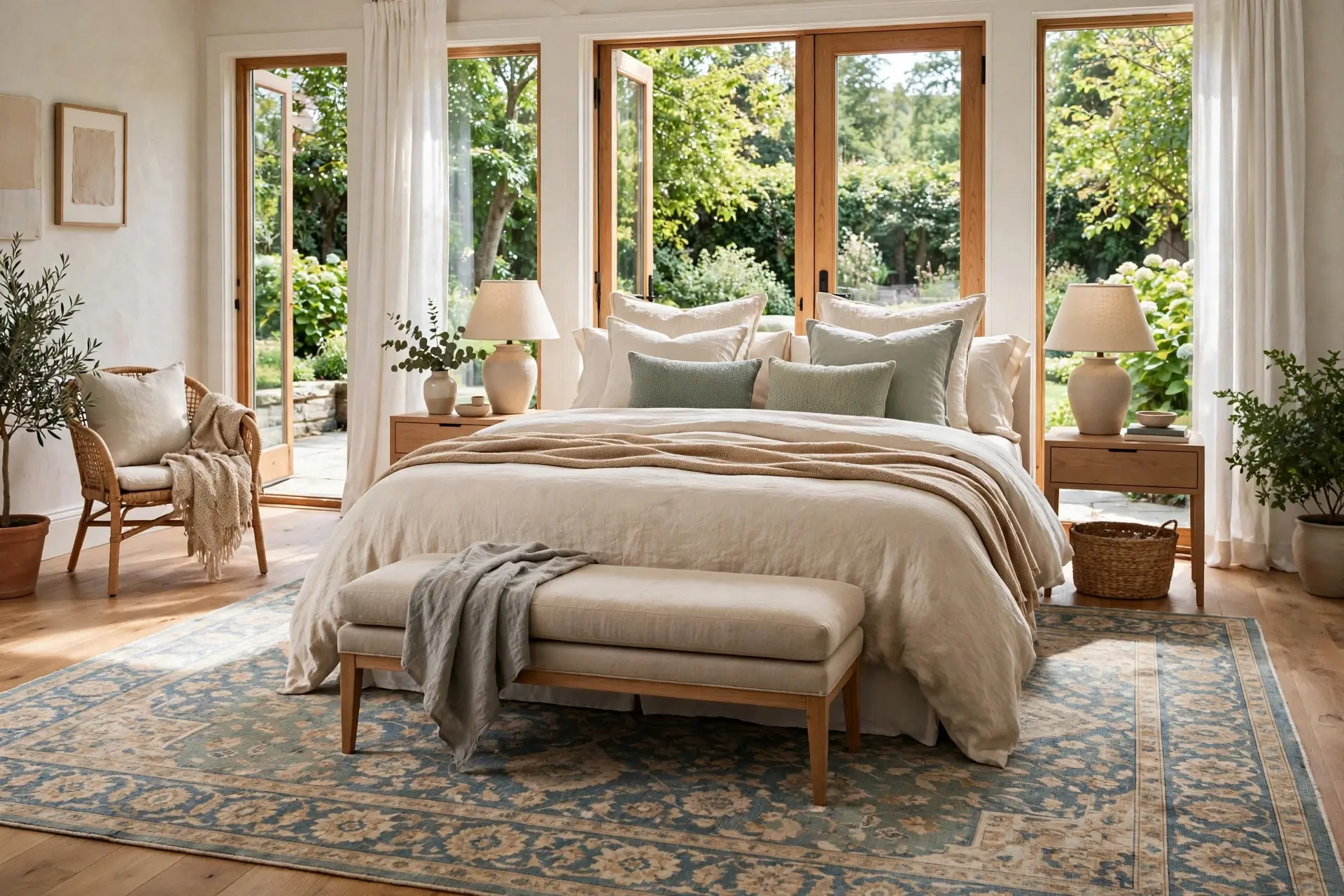
8 by 10 feet, the safe default
That is 96 by 120 inches. Slide the whole bed onto it and you get 18 inches on each side and roughly 40 inches at the foot, which is enough room for a bench and still walk past it. This is the size to buy when you are not sure. It suits bedrooms from about 11 by 12 feet up to 13 by 15 feet.
9 by 12 feet, for larger rooms
That is 108 by 144 inches. You get 24 inches on each side and enough length to bring the nightstands onto the rug along with the bed. In a room smaller than roughly 13 by 14 feet this size crowds the walls, and you lose the strip of bare floor that makes a rug look placed rather than fitted. Leave at least 8 inches of floor showing around the edges of any area rug, and closer to 18 inches if the room allows it.
6 by 9 feet, for smaller rooms and partial placement
That is 72 by 108 inches. Push the whole bed onto it and you get 6 inches on each side, which looks like an accident. Used the right way, with the two thirds placement below, a 6 by 9 is a genuinely good option in a room under 11 feet wide.
Skip 5 by 7 entirely with a queen. At 60 inches wide it is exactly as wide as the mattress, so nothing shows on the sides, and there is no placement that rescues it.
Three Placements, and When Each One Is Right
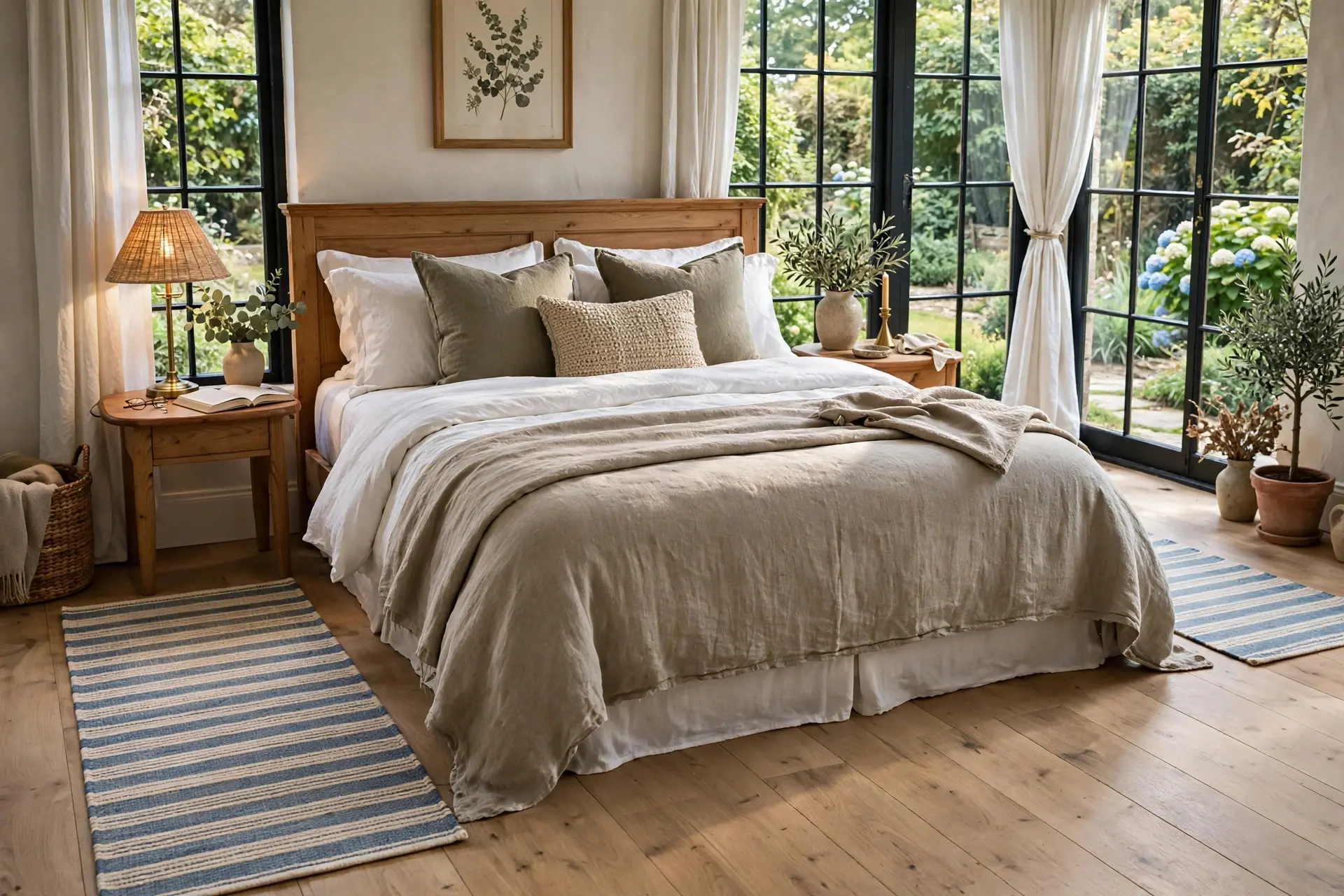
Everything on the rug
Bed, nightstands and bench all sit on the rug. This is the most generous version and the one you see in good hotel rooms. It usually needs a 9 by 12. Budget with your eyes open, because you are paying for several feet of rug that will spend its entire life under furniture.
The two thirds placement
This is the one most people should use. Slide the rug down so its top edge runs across the floor just in front of the nightstands, usually 20 to 24 inches below the head of the bed. The front legs of the bed sit on the rug, the back legs sit on bare floor, and the rug covers the lower two thirds of the mattress plus everything past the foot.
It works for three reasons. You get the full border exactly where you actually step. You are not paying for rug hidden under a headboard. And the nightstands stay level on hard floor, so drawers keep closing cleanly.
A pair of runners
Two runners of roughly 2.5 by 8 feet, one down each side of the bed. This is the answer for a very small room, for a bed pushed into a corner, or for anyone who likes the floor and does not want to cover it. Keep both runners the same distance from the bed frame, usually 4 to 6 inches, or the asymmetry will quietly bother you every time you walk in.
Tape It Out Before You Buy
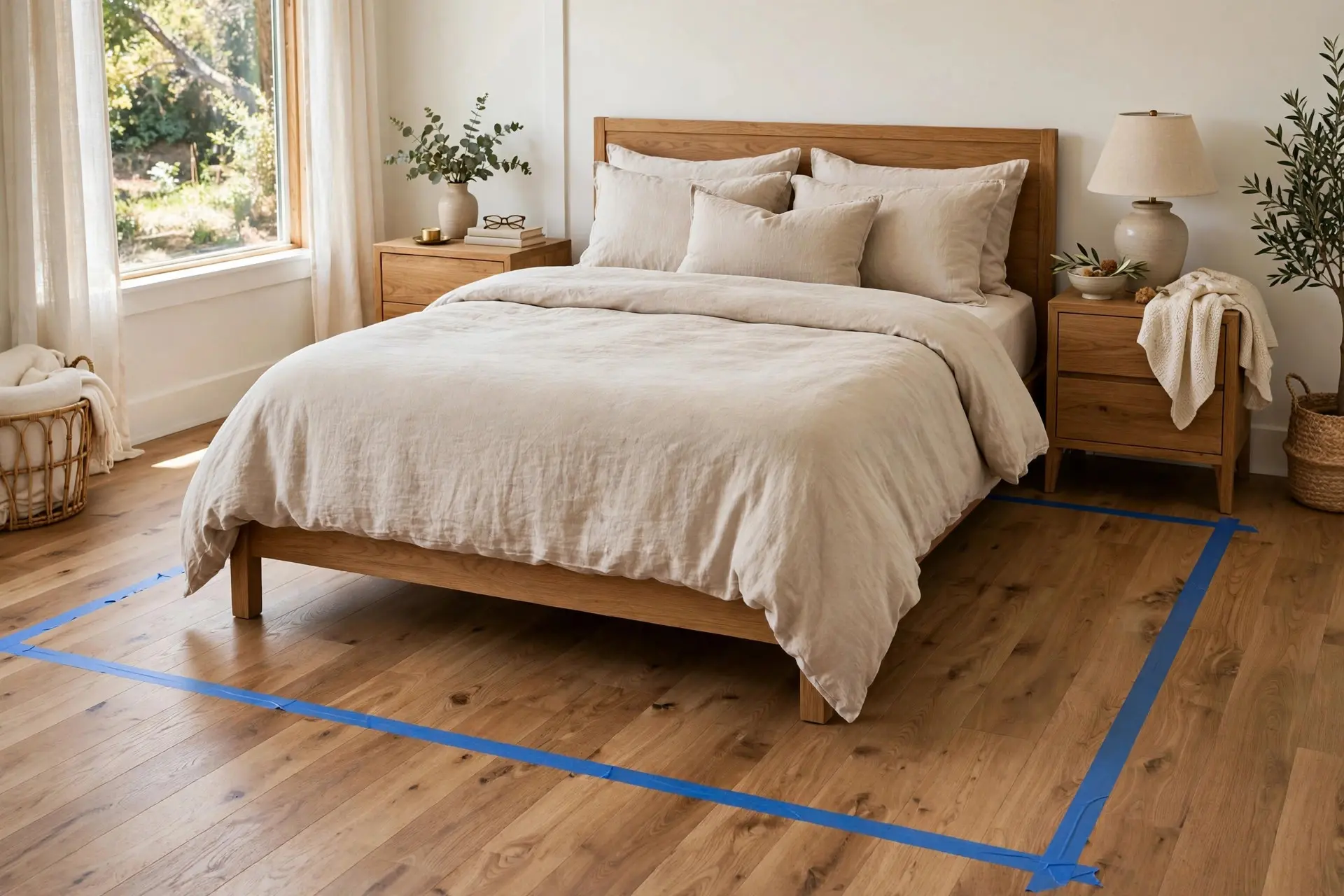
Mark the rug outline on the floor with painter tape and live with it for two days. It costs almost nothing and it catches the three problems a return label will not fix.
- Door swing. Interior doors usually clear the floor by about three quarters of an inch. A high pile rug plus a pad can easily exceed that, and a door that scrapes will irritate you daily.
- Drawers and closet doors. Open everything fully over the taped area. Bifold closet doors are the usual casualty.
- Walkways. You want at least 30 inches of clear path between the foot of the bed and whatever sits across from it, whether that is a dresser or a wall.
What to Do When the Room Is Genuinely Small
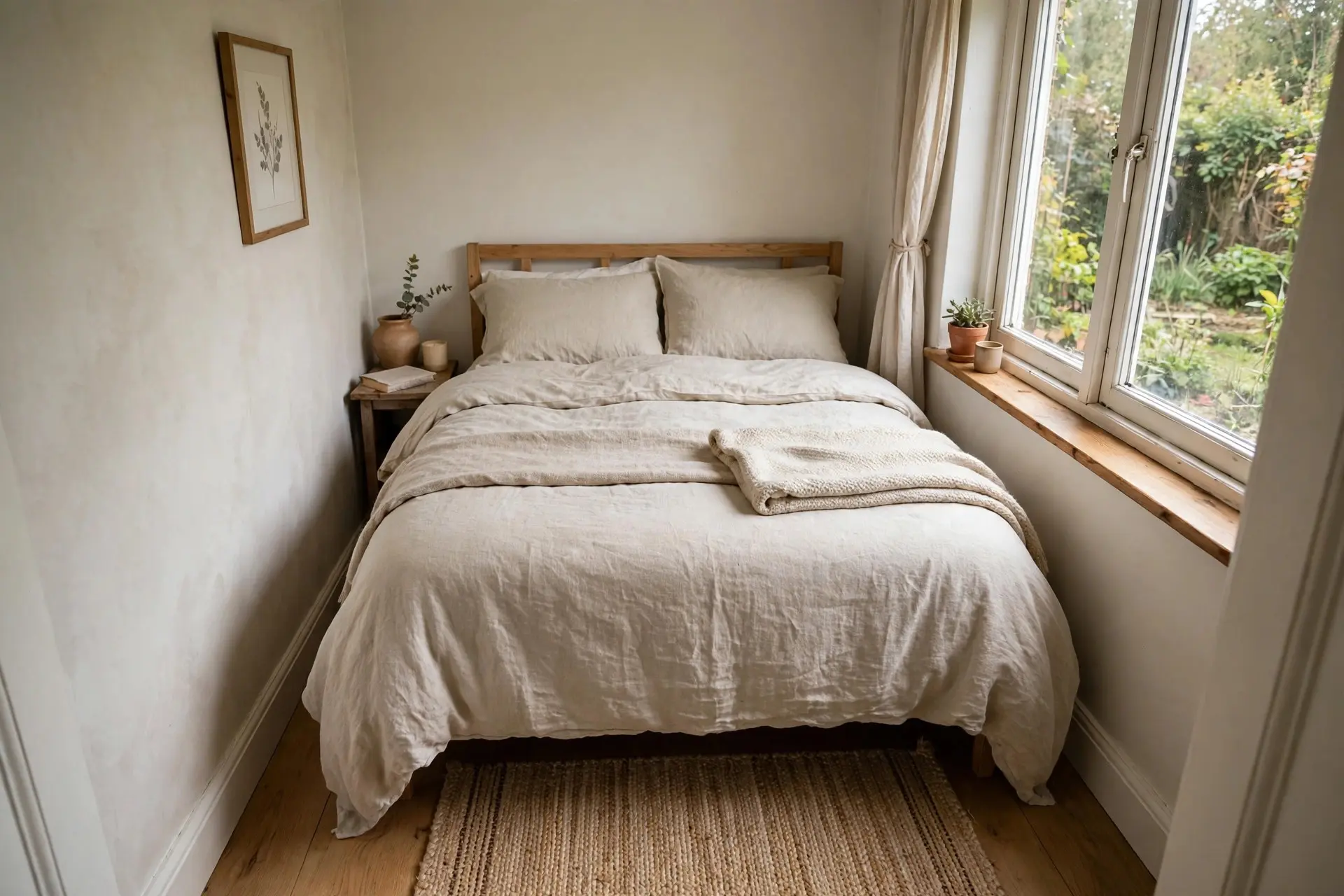
In a bedroom under 11 feet wide, a full size rug under a queen is not going to look right no matter how carefully you shop. Two options actually work.
The first is a 6 by 9 with the two thirds placement. You give up the border at the head of the bed, which nobody looks at anyway, and you keep a usable band on both sides.
The second is a pair of runners. In a narrow room they read as a decision rather than a compromise, and they emphasize the length of the floor instead of fighting it.
What does not work is buying a small rug and centering it under the bed so that a thin strip pokes out at the foot. If your budget only stretches to a 5 by 7 right now, put it somewhere else in the house and wait. Small rooms punish every wrong purchase twice, which is why it pays to plan the whole space before you buy anything. There are more space smart ideas for tiny bedrooms worth reading first.
Layering a Rug Over Carpet
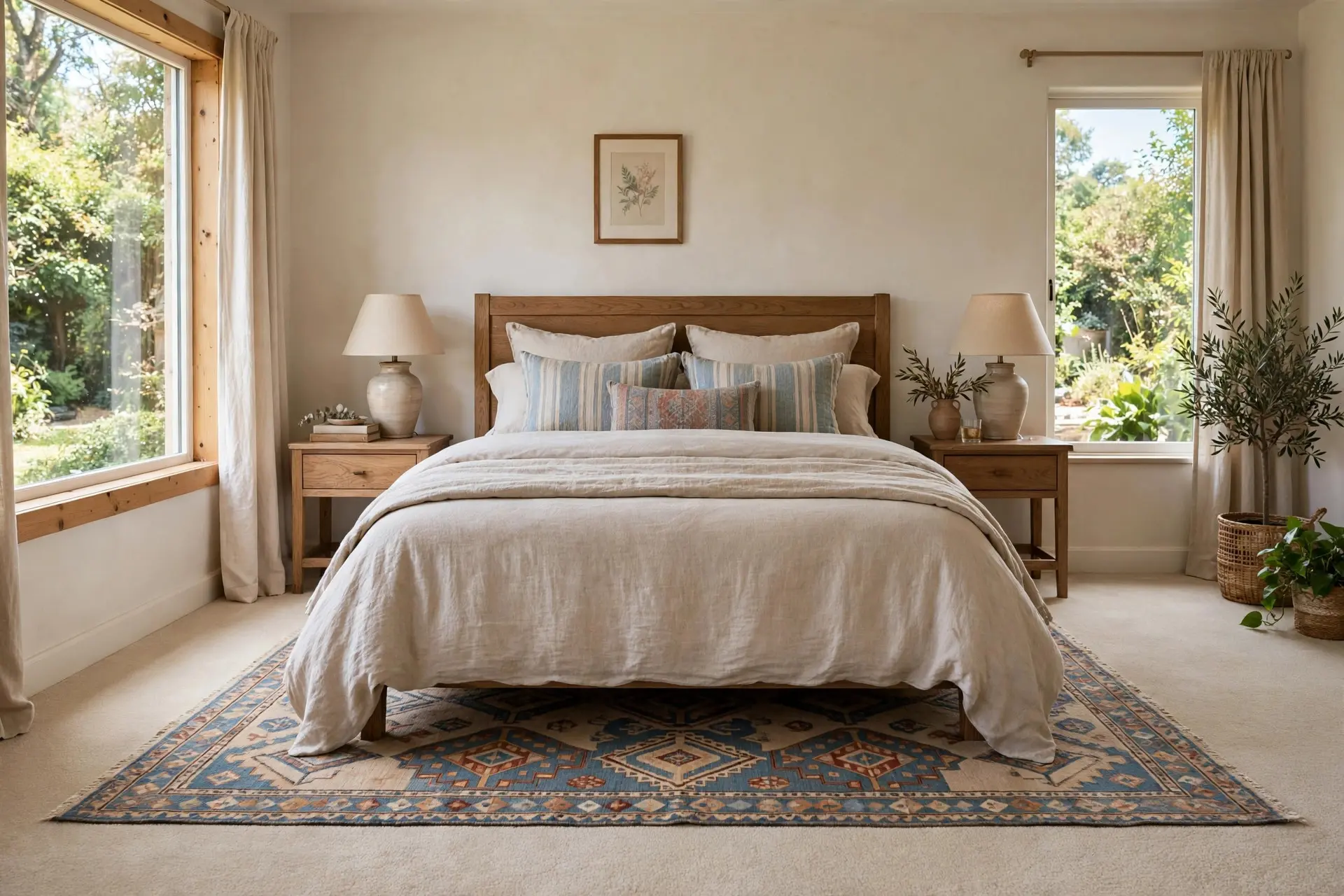
Layering works, and it is one of the few ways to get a defined bedroom rug in a rental with wall to wall carpet. Three rules keep it from looking like a bath mat that wandered in.
- Go big. A layered rug needs to be at least 5 by 8, and 8 by 10 still looks better. Anything smaller floats and the eye reads it as clutter.
- Use the right pad. A standard rubber pad grips hard floor and does nothing on carpet. Look for a pad made specifically for use over carpet, usually a felt and rubber combination, or the rug will creep toward the door within a month.
- Contrast the texture, not just the color. A flat weave or a jute over plush carpet gives you the change in surface that makes layering read as intentional.
Material Matters Less Than Size, but It Still Matters
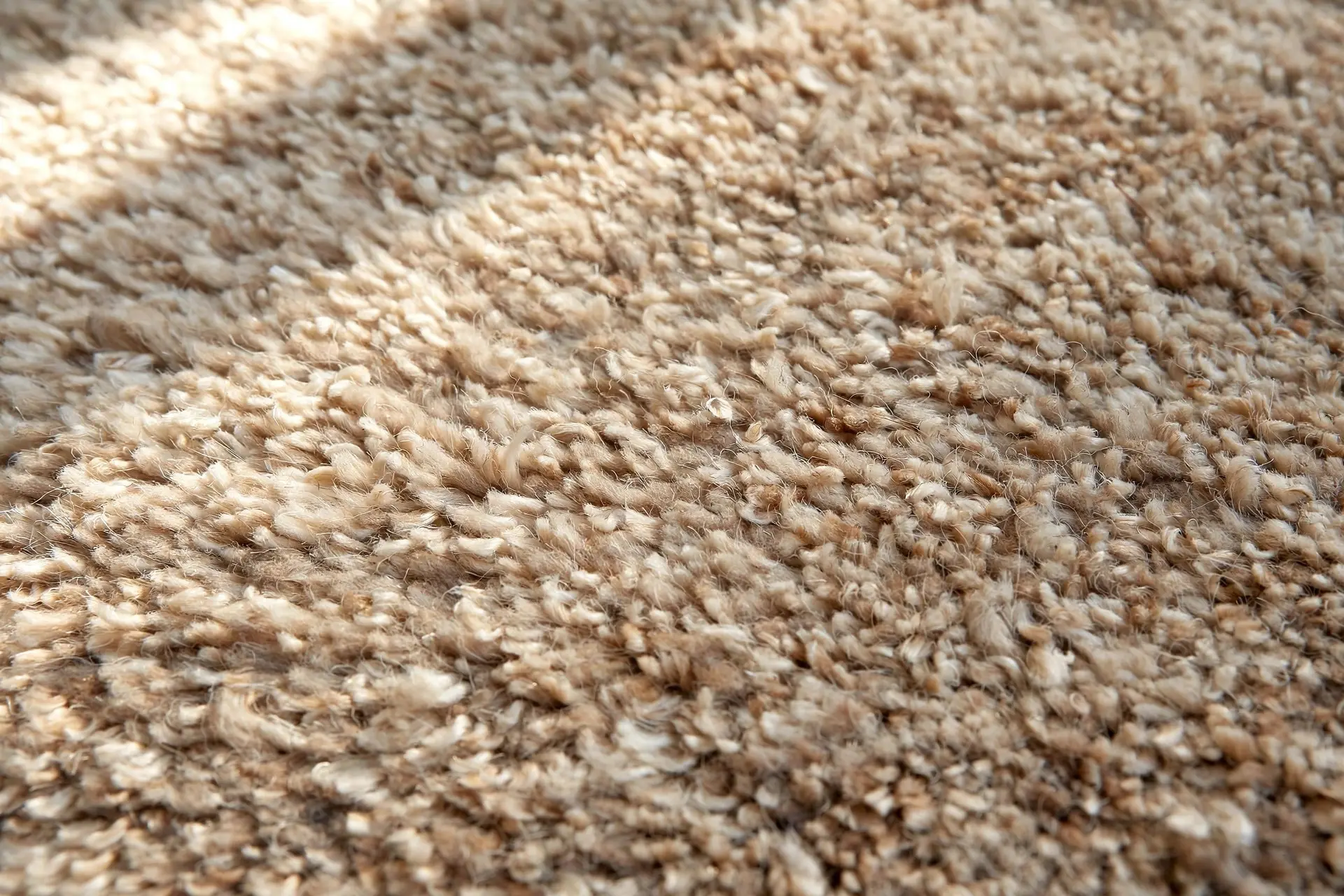
- Wool. Best underfoot, hides soil well, costs the most. A bedroom is low traffic, so a wool rug here tends to outlast the same rug in a hallway by years.
- Jute and sisal. Beautiful texture in photographs, rough on bare feet first thing in the morning. If you love the look, layer a small soft rug on top on the side you get out of.
- Polypropylene. Inexpensive and easy to clean, but it flattens under bed legs and can look shiny in direct daylight. A reasonable first rug, not a forever one.
- Cotton flat weave. Washable, thin enough to clear most door swings, and the safest choice for layering over carpet.
The Mistakes That Show Up in Almost Every Photo

- Centering the rug on the room instead of on the bed. The bed is the anchor. If the bed sits off center in the room, the rug follows the bed.
- Stopping short at the foot. If you have a bench, the rug needs to clear its legs by at least 6 inches, or the bench straddles the edge and the whole grouping looks unresolved.
- Matching the rug to the headboard width. The rug relates to the mattress plus its border. The headboard has nothing to do with it.
- Ignoring the pile height near the door. Measure the gap under your bedroom door before you fall in love with a shag.
Once the rug is right, the two things that finish a bedroom fastest are the nightstands and the window treatments, and both reward the same habit of measuring first. It is worth looking at how to style a nightstand and at where curtains should actually be hung before you call the room done. If you are choosing rugs for other rooms at the same time, the same border logic applies, with different numbers, in these living room rug ideas.
Frequently Asked Questions

What size rug fits under a queen bed?
An 8 by 10 is the safest choice. It gives you 18 inches of rug on each side of a 60 inch mattress and about 40 inches at the foot. Move up to a 9 by 12 if your room is 13 by 14 feet or larger and you want the nightstands on the rug as well.
Can I use a 5 by 8 rug with a queen bed?
Not under the bed. A 5 by 8 is 60 inches wide, exactly the width of a queen mattress, so no rug shows on either side. If you already own one, run it across the foot of the bed instead, or move it to another room.
Should the nightstands sit on the rug?
Only if all four legs of each nightstand land on it. Two legs on and two off means the piece rocks, and drawers in a tilted case never close cleanly. The two thirds placement keeps them off the rug on purpose for exactly this reason.
How far past the foot of the bed should the rug go?
At least 18 inches, and more if you have a bench or an ottoman there. Allow 6 inches of clear rug beyond the bench legs so the whole grouping sits comfortably inside the rectangle.
Does a bedroom rug have to be rectangular?
No, but rectangles are much easier. A round rug under a queen bed rarely works, because the curve argues with the straight lines of the mattress and you end up with four odd gaps. If you want a round rug in the bedroom, put it in a corner under a reading chair instead.
The whole decision comes down to one measurement, which is how much rug you want to see beside the bed. Pick 18 inches, work outward from a 60 inch mattress, and the size chooses itself.