

Almost every garden path is built too narrow. Not by much, usually. Six inches, maybe a foot. But a path you have to walk single file down, or turn sideways on to let someone past, or drag a wheelbarrow along with one wheel in the border, is a path you quietly stop using.
Garden path width gets underestimated because you plan it on paper, in spring, looking at bare soil. Then the plants grow, the edges soften, and the 30 inches you drew becomes 20 inches of actual walking room by July. The good news is this is easy to get right if you plan for the path you will have in August rather than the one you are building in September.
The Numbers That Actually Work

Landscaping Network publishes a simple scale that has held up well: 18 inches is the bare minimum, 24 inches is functional, 30 inches carries one person, 36 inches is the standard garden path, and 48 inches lets two people walk side by side (Landscaping Network).
Translated into the paths people actually build:
- Main walkway, front door to street: 48 inches. This is the one path where two people should be able to walk together, and where guests form their first impression. Narrower feels grudging.
- Standard garden path: 36 inches. Comfortable for one person carrying something, and wide enough that plants can lean over the edges without closing it up.
- Utility or side yard path: 30 inches. One person, infrequent use, getting from A to B.
- Informal or secondary route: 24 inches. Fine for a short connector through a planted area that nobody hurries down.
The governing principle is that the more a path is used, the wider it should be. A route you walk twice a day in the dark carrying groceries has different requirements from one you stroll down on a Sunday.
Now Add the Plant Allowance

Here is the adjustment that separates a path that works from one that looked fine on the plan.
Perennials do not stay inside their beds. Catmint, lady’s mantle, hardy geraniums and most ornamental grasses flop 6 to 12 inches over an edge by midsummer. Lavender and box get wider every year. Whatever hard surface you lay, the walkable width in peak season is the surface width minus the encroachment from both sides.
So a 36 inch path bordered by sprawling perennials on both sides is a 20 inch path in August. That is below the functional minimum, and it is why people find themselves brushing wet foliage against their legs every time they walk out.
Two ways to handle it. Either build the path 6 to 12 inches wider than the walking width you want, or keep a band of low, tidy planting immediately beside the path and put the sprawlers further back. The first costs materials. The second costs planning. Both beat the third option, which is cutting your plants back every three weeks because they are in the way.
A crisp physical edge helps more than people expect. Steel, brick on edge or a timber board keeps gravel where it belongs and gives sprawling plants something to lean on rather than spread across.
What Has to Fit Down It
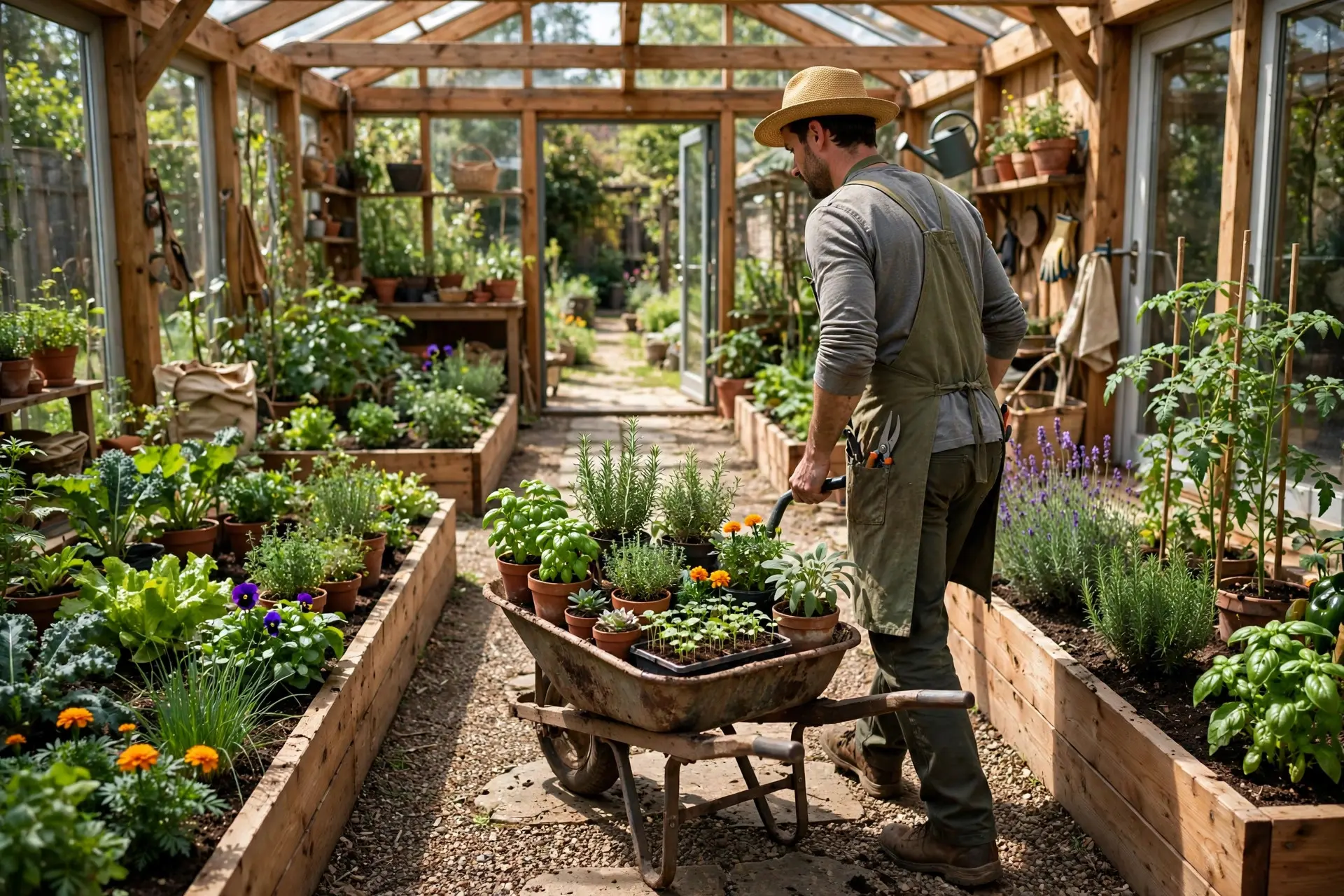
Before you settle on a number, walk the route in your head with the things you will actually be moving.
- Wheelbarrow: a standard barrow is about 25 to 30 inches across the handles, and you need clearance for your knuckles. Thirty inches is the absolute floor for any path you haul compost or soil along. Thirty six is comfortable.
- Lawn mower: measure the deck width, then add a few inches. A 21 inch walk behind mower needs less than you think. A ride on needs considerably more, often 48 inches with room to steer.
- Wheelchair or walker: 36 inches is the usual minimum for passage, and 60 inches allows turning or two chairs to pass. If accessibility matters now or might later, build to 48 inches and keep the surface firm and even.
- Bins and deliveries: the side path to the street carries wheelie bins, bikes and furniture. This is the route most often built at 24 inches and most often regretted.
Paths serving vegetable beds have their own logic, because you kneel on them as well as walk down them. Our guide to raised garden bed sizes and spacing covers the widths between beds that let you work comfortably without compacting the soil.
Curves Need More Width Than Straights

This is a small thing that makes a large difference and almost nobody mentions it.
When you walk a curve, you do not track the centreline. You cut the inside and drift wide on the outside, and a wheelbarrow does it far more dramatically than you do. A 36 inch path that feels generous on the straight will feel pinched through a tight bend.
Add 6 inches through any curve with a radius under about 6 feet. Widening on the outside of the bend rather than the inside also looks better, because it follows the line your eye already expects.
While you are at it, avoid the curve that exists for no reason. A path that meanders without a destination or an obstacle to go around reads as decoration, and people cut the corner and wear a shortcut through your planting. If you want a curve, give it something to curve around: a tree, a boulder, a change of level.
Vary the Width on Purpose

A path does not have to be one width from end to end, and the best ones are not.
Widening at a destination signals arrival. Where the path meets a patio, a bench, a gate or a view, letting it swell to 48 or 60 inches for a few feet tells people this is somewhere to stop rather than somewhere to pass through. It is the same instinct that makes a doorway feel different from a corridor.
Narrowing works too, in the right place. A path that pinches to 24 inches as it passes between two shrubs creates a moment of enclosure, and the space on the other side feels bigger by contrast. Use it deliberately and briefly. A narrow stretch that goes on for twenty feet is just a narrow path.
Gathering spaces follow the same logic in reverse: the path feeds them, then opens out. If your route ends at a seating area, our guide to fire pit seating area layouts covers the clearances that make the destination work once you get there.
Material Changes the Effective Width
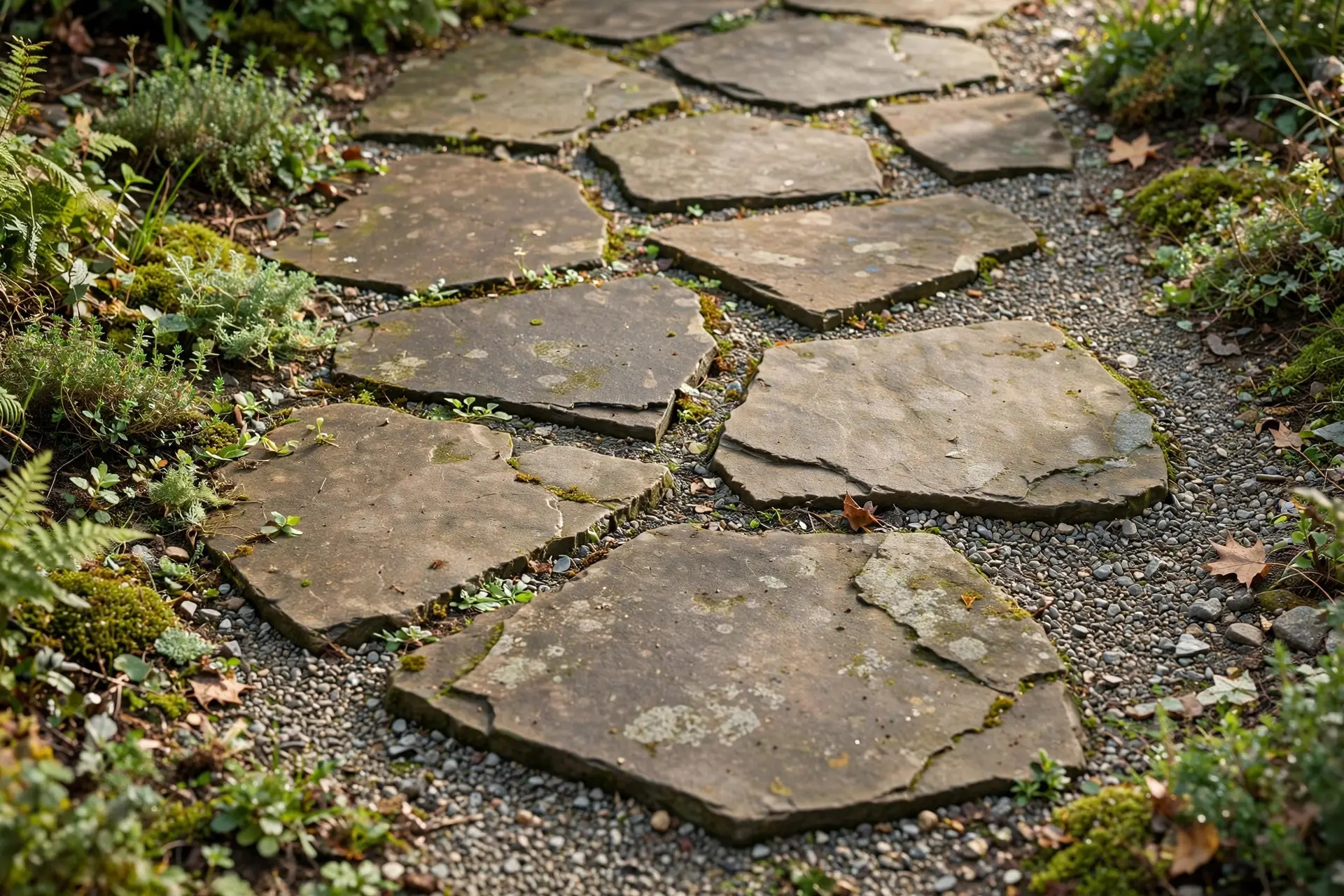
Two paths of identical width can feel completely different underfoot.
Continuous hard surfaces such as flagstone, brick or poured concrete give you the full width. You can walk anywhere across them without thinking, so 36 inches is genuinely 36 inches.
Stepping stones give you only the stones. You are following a line of individual footfalls, so the effective width is the width of one stone, whatever the gravel or planting between them measures. Space them 18 to 24 inches centre to centre to match a natural stride, and make each stone at least 18 inches across so you are not aiming.
Loose gravel needs firm edging or it migrates into the beds, and the path gets narrower every year without anyone noticing. Angular crushed stone compacts and stays put far better than rounded pea gravel, which rolls underfoot and is genuinely difficult to push a barrow through.
Bark or wood chip is cheap, soft and forgiving, and it breaks down. Expect to top it up every year or two, and do not use it on any slope where water runs.
Autumn Is the Right Time to Build One
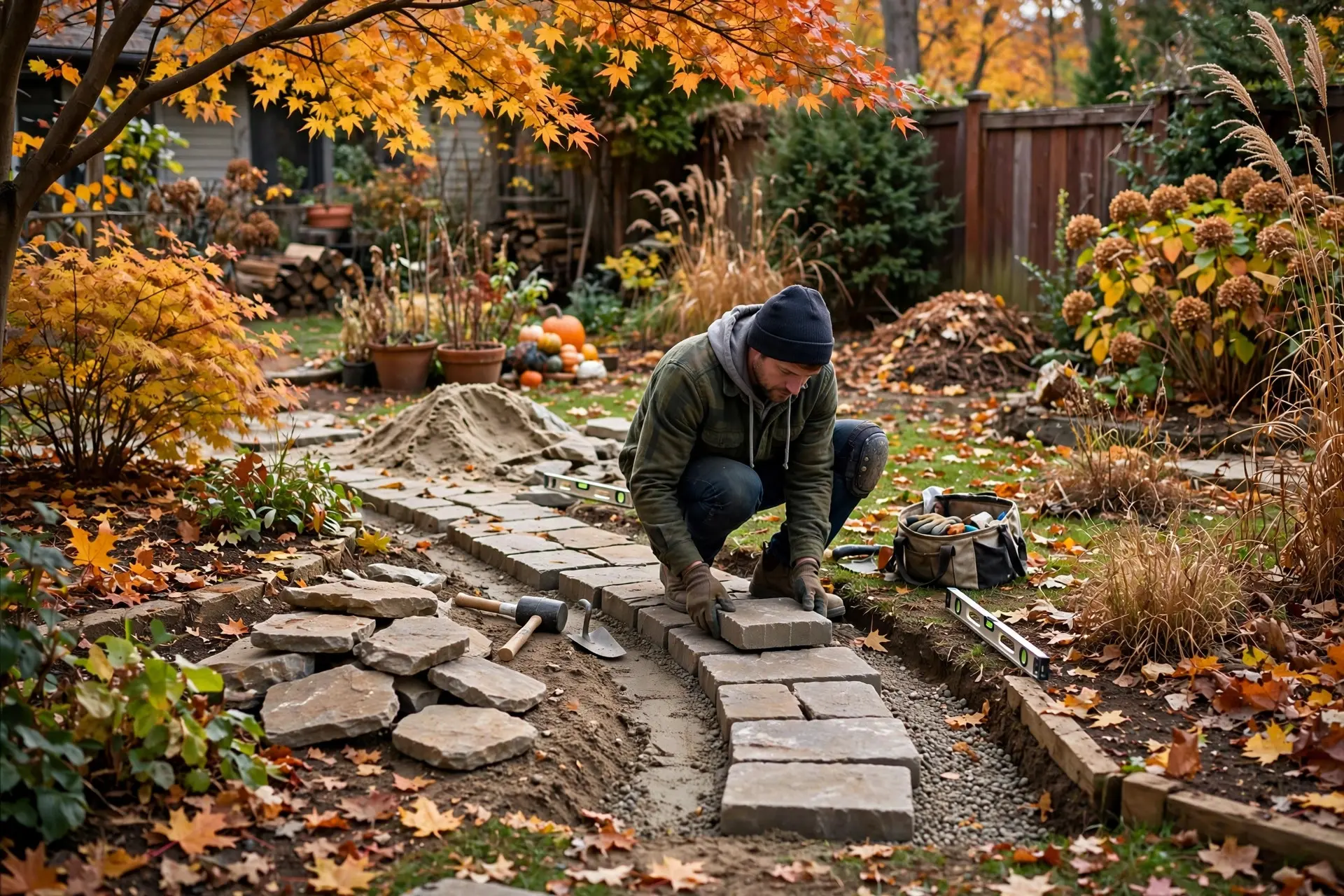
If you are reading this in the shoulder season, the timing is good. Soil is usually workable but no longer baked hard, perennials are dying back so you can see the bones of the garden and dig without wrecking anything in full growth, and anything you disturb has the whole winter to settle before spring.
It also pairs naturally with the rest of the autumn work. You are already cutting back and moving things around, so it is the obvious moment to reroute a path that has never quite worked. Our guide to fall garden cleanup covers what to cut and what to leave standing while you are out there.
One practical step before you dig anything: lay the route out with a hose or a line of sand and live with it for a few days. Walk it in the dark. Push a wheelbarrow down it. Paths that look elegant on a plan sometimes ignore the way people actually move through a garden, and a hose is much easier to move than a tonne of stone.
Frequently Asked Questions
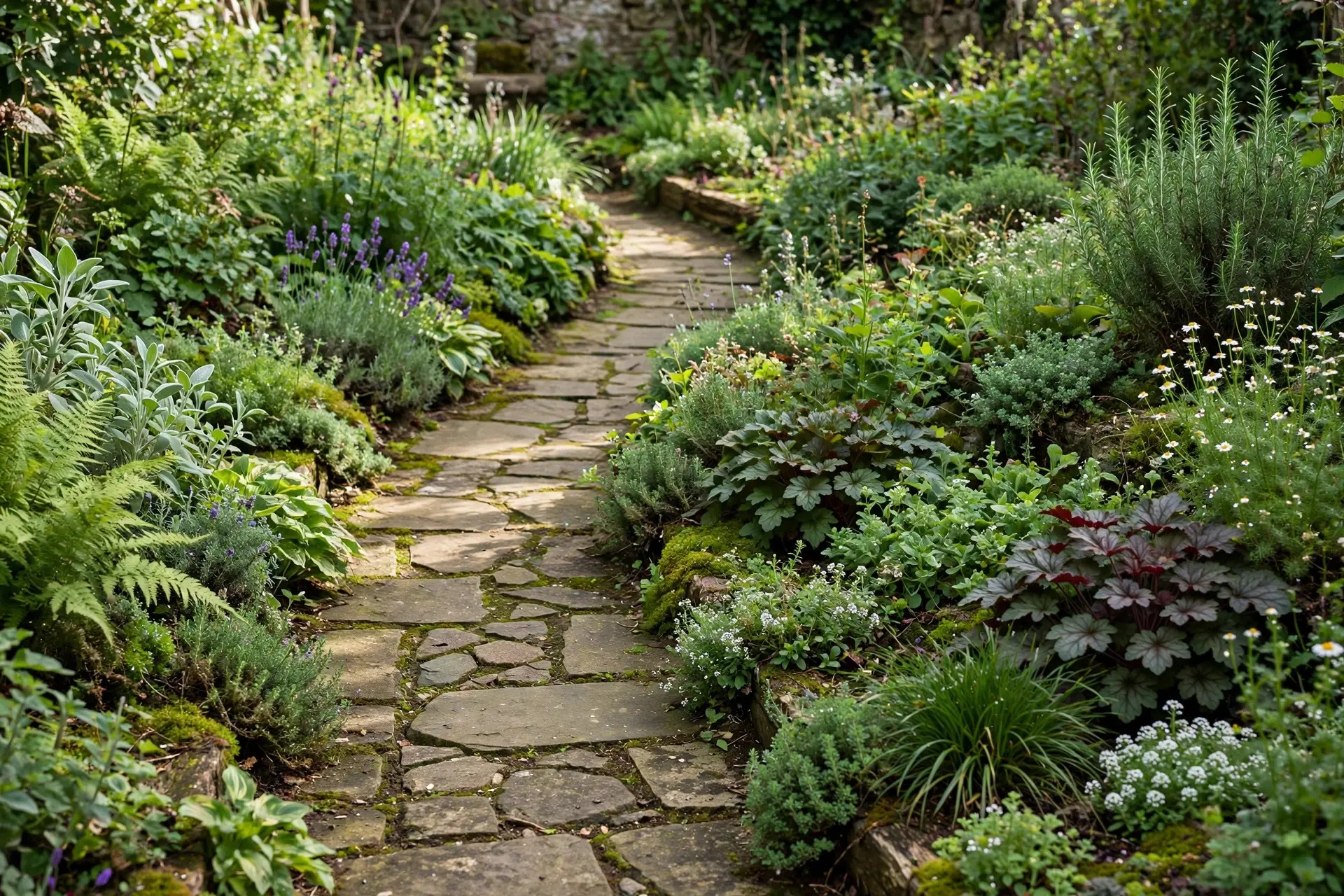
How wide should a garden path be?
Thirty six inches for a standard garden path, 48 inches for a main walkway where two people should walk side by side, and 30 inches for a utility route used by one person. Add 6 to 12 inches if plants will spill over the edges.
What is the minimum width for a walkway?
Eighteen inches is the absolute minimum and it is only workable for a short informal stretch. Twenty four inches is the point at which a path becomes genuinely functional, and 30 inches is where one person can walk comfortably while carrying something.
How wide does a path need to be for a wheelbarrow?
At least 30 inches, since a standard wheelbarrow measures roughly 25 to 30 inches across the handles and you need knuckle clearance. Thirty six inches is comfortable, and you should add another 6 inches through any tight curve because a loaded barrow swings wide.
Should a garden path be straight or curved?
Straight suits functional routes where people are getting somewhere, such as a front walk or a run to the shed. Curved suits leisure routes through planting, but the curve needs a reason, like a tree or a level change. A curve with nothing to go around invites people to cut the corner.
How far apart should stepping stones be?
Eighteen to 24 inches from centre to centre matches a comfortable natural stride for most adults. Make each stone at least 18 inches across so you are not aiming your feet, and walk the spacing before you set them, because stride length varies more between people than you would guess.
Before You Order the Stone
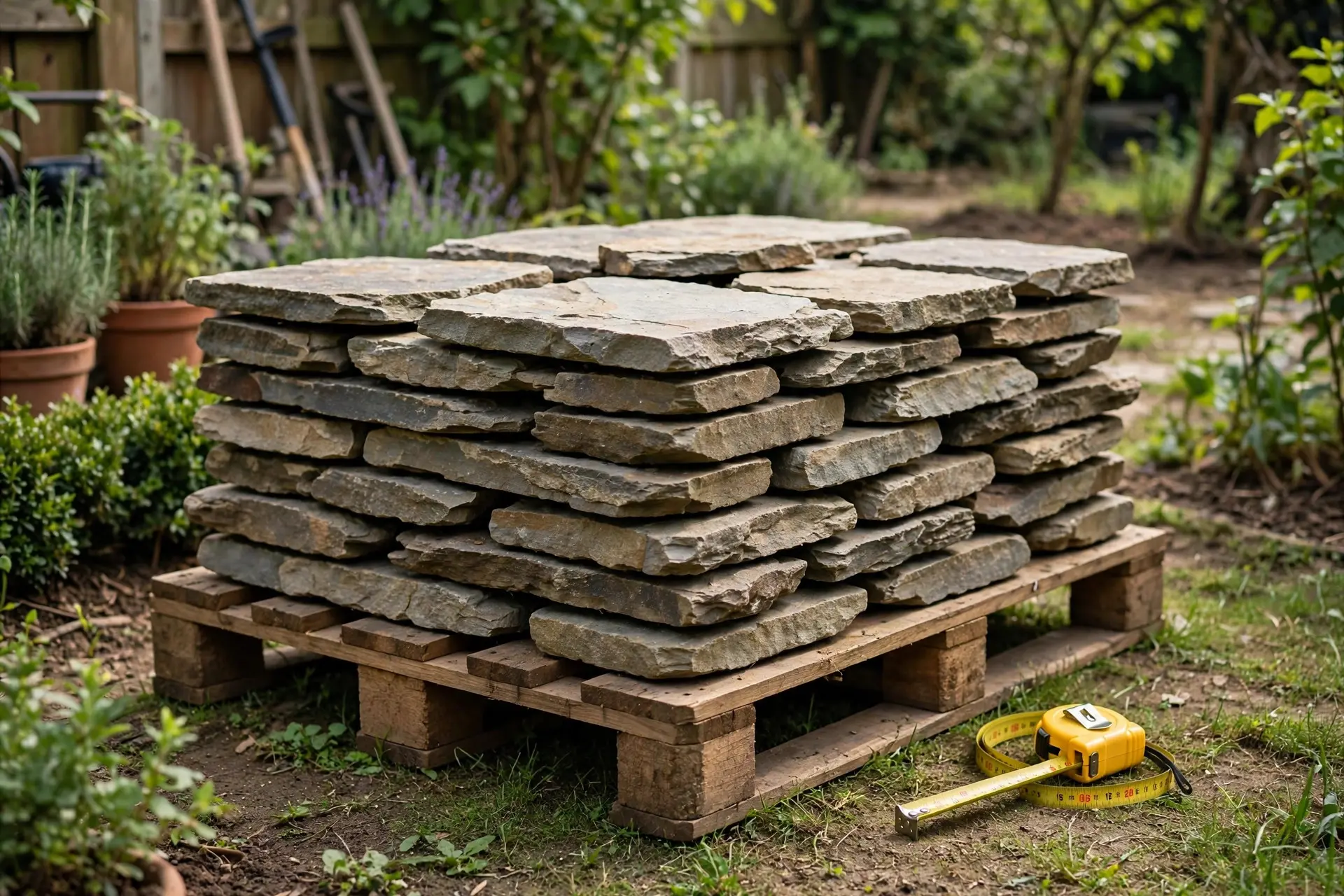
Pick the width from how the path is used, add the plant allowance, check the widest thing that has to travel down it, then widen the curves and the arrival points. In most gardens that lands you at 36 inches for the main routes and 48 for the front walk.
Nobody has ever stood in a garden and complained that the path was too generous. Plenty of people have rebuilt one that was too tight.