

The urge to strip the garden bare in October is strong. Everything is collapsing, the beds look messy, and cutting it all down feels like closing the season properly. But a full fall garden cleanup is usually the wrong move, and not for vague environmental reasons. Some of what you cut down is protecting the plant underneath it, and some of what you rake up is where next year’s pollinators are sleeping.
The useful version of this job is selective. Some things genuinely need to come out now, and leaving them is how disease overwinters. Other things should stay standing until spring. Here is how to tell which is which.
The One Question That Sorts Almost Everything

Before you touch a plant, ask: was this plant healthy this year?
If it was healthy, the foliage and stems can stay. They shelter insects, they hold snow, they protect the crown, and they give you something to look at in February.
If it had a disease or a pest problem, it comes out now and it goes in the trash or municipal green waste, not your compost pile. Illinois Extension puts this plainly in its fall cleanup guidance: if pest or disease problems showed up during the season, remove that plant material so the organisms cannot overwinter in it.
That one question handles maybe eighty percent of the decisions. The rest is knowing which plants are exceptions.
Cut These Back Now
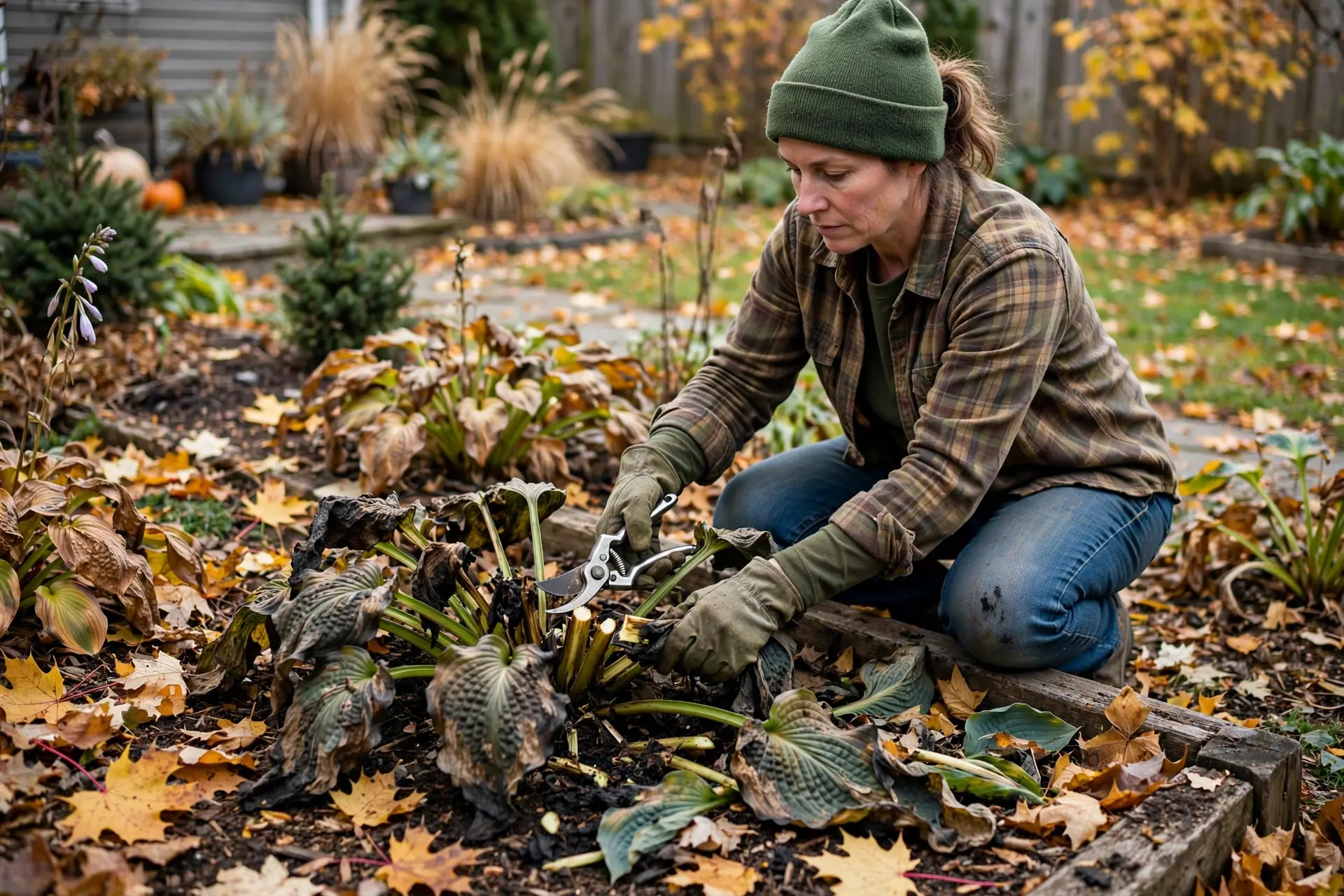
- Peonies. Cut to just above the ground after the first hard frost. Peony foliage is a reliable host for botrytis, and leaving it is how you get grey mould on next year’s buds.
- Bearded iris. Trim the fans down to 4 to 6 inches and clear all the loose debris around the rhizomes. Iris borer eggs overwinter in that litter.
- Hostas. Once frost has turned them to mush, remove the foliage. It is a slug and snail nursery otherwise, and the mush does the crown no favours.
- Anything with powdery mildew. Bee balm, garden phlox and zinnias often finish the season with white coated leaves. Cut and remove.
- Roses with black spot. Rake up and bin every fallen leaf under the plant. This single task does more for next year’s rose foliage than any spray.
- Vegetable garden debris. Tomato, potato, squash and cucumber vines carry blight and mildew. Clear the beds completely.
- Fallen fruit and fruit tree leaves. Mummified apples left on the branch or the ground carry brown rot straight into next season. Pick them off and clear the leaf litter under fruit trees.
- Daylilies. The foliage mats down into a wet blanket that encourages crown rot. Cut it back once it yellows.
Leave These Standing Until Spring
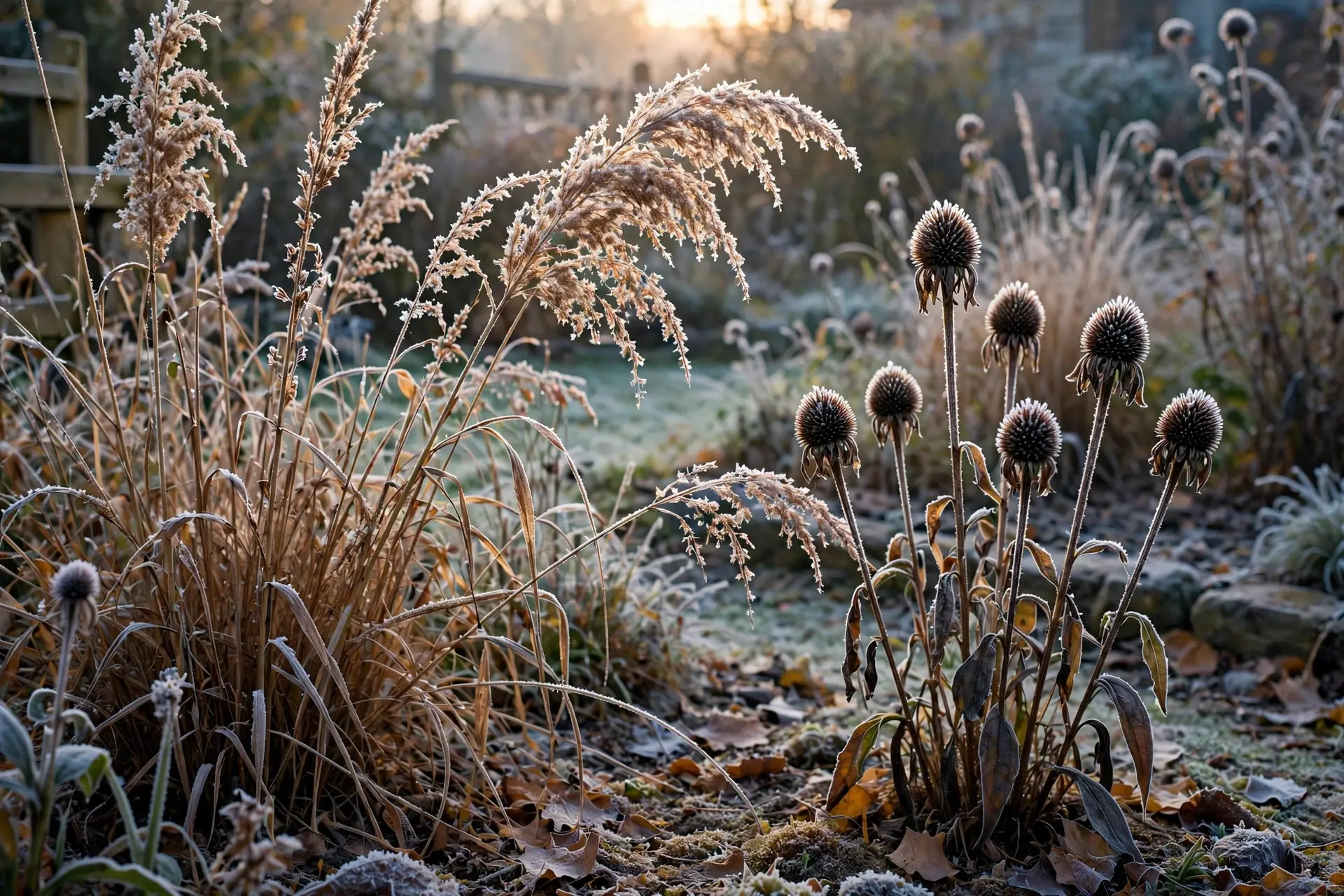
Seed heads and structure
Coneflower, black eyed susan, sedum, ornamental grasses and sunflowers all hold their shape through winter and feed goldfinches, chickadees and juncos while they do it. Grasses in particular should stay: the standing clump insulates its own crown, and cutting it in autumn lets water sit in the centre and rot it.
Hollow and pithy stems
Bee balm, joe pye weed, asters, elderberry, raspberry canes and sunflower stalks are hollow or soft centred, and small cavity nesting bees spend the winter inside them. Leafcutter bees and mason bees are the ones most people have heard of. Cut the stems to the ground in October and you have removed the nest.
Plants that are only marginally hardy where you live
This one costs people plants every year. Lavender, russian sage, caryopteris, butterfly bush and many salvias rely on their own top growth for winter protection. Cutting them back in autumn exposes the crown and the plant can simply fail to return. Leave them scruffy and cut them in spring once you can see where the live wood starts.
Evergreen and semi evergreen perennials
Heuchera, hellebores, epimedium and many ferns keep working through winter. Tidy the genuinely dead leaves off them in early spring, not now.
The Tidy Compromise: Cut High, Not Low

Most advice on this topic gives you two choices: cut everything, or leave everything. If your garden is visible from the street or you simply do not want to look at collapsed perennials all winter, there is a middle option that works better than either.
Cut perennials back to 12 to 18 inches instead of to the ground. You remove the flopped, wet, ugly top growth. You leave standing stubble that still functions as habitat, because that is the height band cavity nesting bees use. The Xerces Society keeps a detailed guide to creating habitat for stem nesting bees if you want the full picture.
By late May the new growth has completely hidden the stubs, so nobody ever sees them. This is the single most useful adjustment most gardeners can make to their autumn routine, and it takes no extra work. You are cutting anyway, just higher.
What to Actually Do With the Leaves

Leaves are the part people get most confused about, because the advice has swung from rake everything to leave everything, and neither is right.
On lawn: a thin scattering is fine and feeds the soil. Run the mower over it and let the shredded pieces fall between the grass blades. If you cannot see grass through the leaves, the layer is too thick and will smother it. Move the excess to beds.
On beds: 2 to 3 inches of leaves is a good insulating layer. Shred them first if they are large flat leaves like maple or sycamore, because whole ones mat together into a mould sheet that water cannot pass through. Oak and beech leaves are stiffer and mat less.
Do not cover every square inch. Illinois Extension notes that around 70 percent of Illinois native bees nest in the ground, so patches of bare, undisturbed soil are as valuable as the leaf layer. A garden mulched wall to wall leaves nowhere for them.
The surplus: a leaf pile in a back corner turns into leaf mould in about a year and is the best free soil conditioner there is. It also happens to be excellent overwintering cover.
When to Do the Spring Cleanup Instead
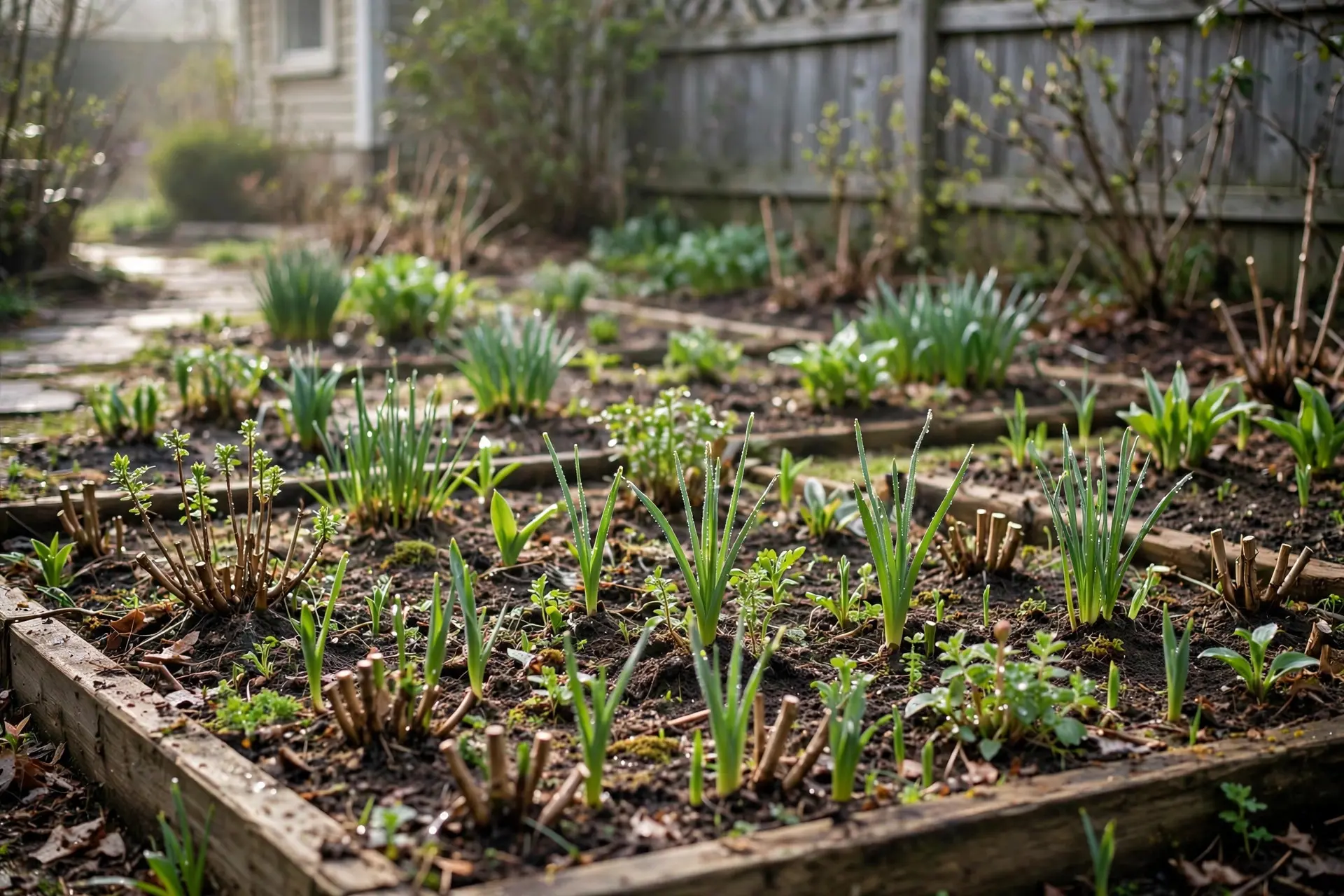
Leaving stems up only helps if you do not then cut them down on the first warm day in March. The Xerces Society suggests that in northern states mid to late April is the earliest to consider cutting back perennials, and notes that some bees do not emerge until late May.
Two natural signals are more reliable than a date: wait until apple and pear trees have finished blooming, or until cool season grass has started growing regularly again. Both track local conditions better than the calendar does.
When you do cut, lay the cut stems along the back of a bed or in a loose pile rather than shredding them immediately. Anything still inside gets a chance to leave.
Jobs Actually Worth Doing This Autumn

Autumn is not a do nothing season. It is just that the useful jobs are not the ones involving a rake.
- Weed properly. Winter annuals germinate now and go to seed before you have finished your spring coffee. An hour of weeding in October saves several in April.
- Plant. Autumn is the best planting window for trees, shrubs and perennials in most regions, because roots establish while the soil is still warm. It is also bulb season, and getting the depths, spacing and timing for fall bulbs right now is what decides next spring’s display.
- Divide crowded perennials. Anything that flowered poorly or has a dead centre is asking to be split.
- Empty terracotta and ceramic pots. Wet soil expands when it freezes and cracks the pot. Empty, dry and store them.
- Drain hoses and shut off outdoor taps. Cheap, boring, and the alternative is a burst pipe.
- Top up raised bed soil. Beds settle several inches over a season, and autumn is the easy time to fix it. If you are building new ones, the widths, depths and spacing that actually work are worth checking before you buy lumber.
- Clean and oil your tools. Ten minutes now, sharp secateurs in March.
Things Not to Do in Autumn
- Do not prune spring flowering shrubs. Lilac, forsythia, weigela and bigleaf hydrangea set next year’s buds on old wood. Prune them now and you have thrown away the flowers.
- Do not fertilise perennials or shrubs. You are pushing soft growth into a frost.
- Do not compost diseased material. Most home piles never get hot enough to kill the pathogens.
- Do not leave slopes bare. Bare soil on any gradient erodes over winter. That is one place mulch or a cover crop is not optional.
- Do not mulch before the soil cools. Mulching too early keeps the ground warm and delays dormancy. Wait until after a couple of frosts.
Work From Your Frost Date, Not the Month
Every timing instruction above is really tied to your first hard frost, which might be late September or early December depending on where you live. Find your average first frost date, then treat the tasks as before frost jobs and after frost jobs. The month name is not the useful unit.
Frequently Asked Questions
Should I cut back all my perennials in fall?
No. Cut back the ones that had disease or pest problems, plus peonies, iris, hostas, daylilies and all vegetable debris. Leave healthy plants with strong seed heads or hollow stems, ornamental grasses, evergreen perennials, and anything only marginally hardy in your zone.
Is it really bad to rake up all the leaves?
It is a missed opportunity more than a disaster. Leaves are free insulation and free soil conditioner, and they shelter overwintering insects. The sensible approach is to move leaves off the lawn, spread 2 to 3 inches over beds, and pile the surplus in a corner rather than bagging it for collection.
How short should I cut perennial stems?
If you are cutting for tidiness, 12 to 18 inches is a better target than ground level. You get rid of the collapsed growth, the standing stubble still works as habitat, and new spring growth hides the stubs within weeks.
Can I put diseased leaves in my compost?
Better not to. A home compost pile rarely sustains the temperatures needed to kill fungal spores and many pathogens, so you risk spreading the problem next time you spread compost. Send diseased material out with municipal green waste or household waste.
When is it safe to clean up in spring?
Later than most people think. Mid to late April is the earliest in colder regions, and the more reliable signals are apple and pear blossom finishing or cool season grass starting to grow steadily again. When you do cut, stack the stems loosely for a few weeks instead of shredding them straight away.
The Short Version
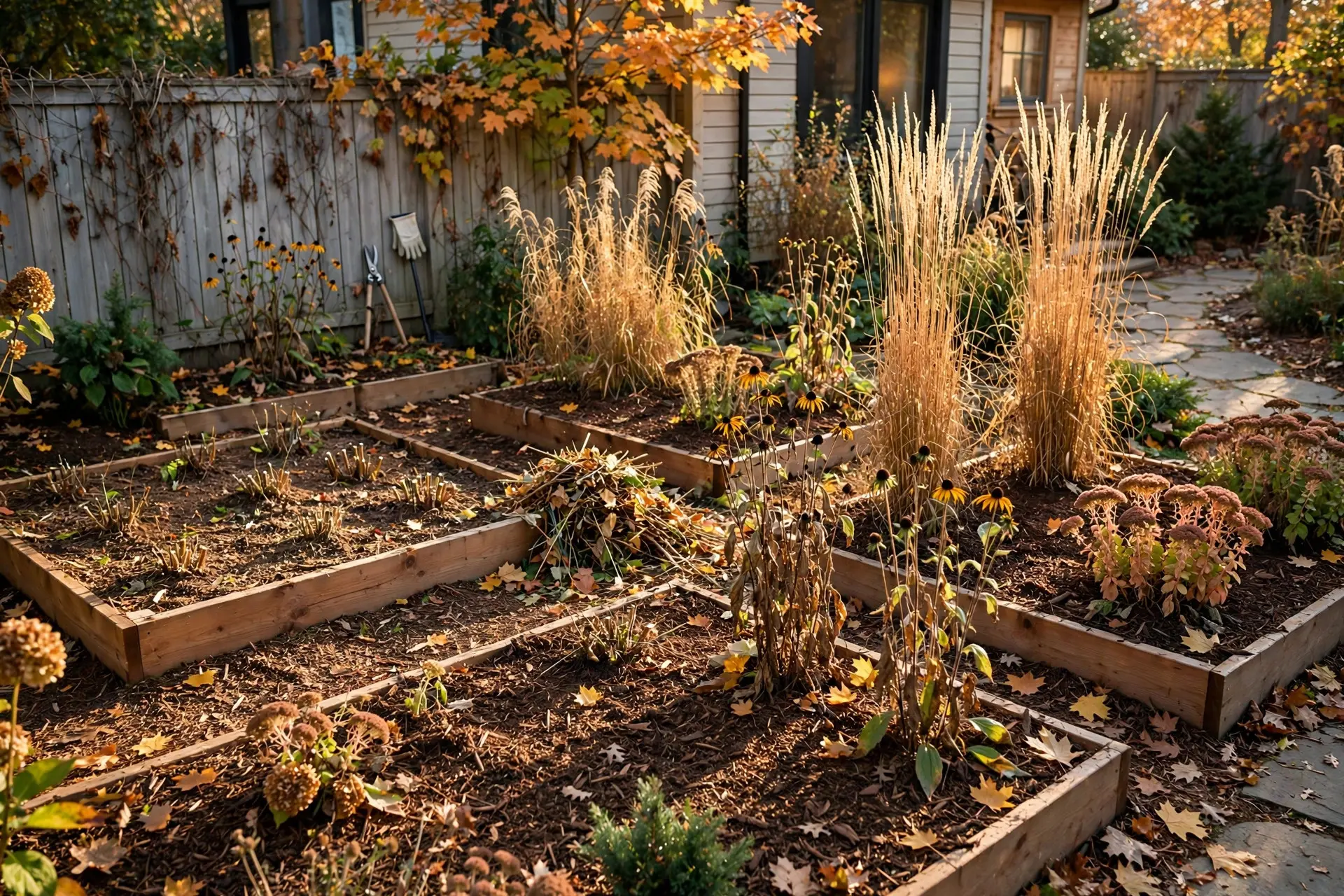
Remove anything that was sick. Leave anything that was healthy. Cut to 12 to 18 inches if you need it to look tidy. Spread the leaves on the beds, not in bags. Then stop, and spend the time planting instead, which is what actually changes how the garden looks next year. If you are rethinking the layout while you are out there, these garden area ideas are a better use of an autumn afternoon than raking.