

Most raised beds fail on paper before anyone touches a shovel. The bed is built five feet wide because that was the space available, and from that day on the middle is a place things grow and nobody weeds.
Raised garden bed sizes are worth thinking about carefully, because a bed is a decision you live with for a decade. The good news is that there are only four numbers involved. Width, length, depth and the gap between beds. Get those right and everything else, from what you grow to how much soil you buy, follows on.
Autumn is the natural time to work this out. The garden is winding down, lumber is easier to get hold of, and a bed built now has all winter for the soil to settle before spring planting.
Width: Four Feet, and Why It Is Not Arbitrary

Four feet is the standard width for a raised bed you can walk around, and it comes straight from the length of a human arm. Most adults can comfortably reach about 24 inches into a bed without leaning on the soil. Two feet from each side covers a four foot bed all the way across.
That matters more than it sounds. The whole point of a raised bed is that nobody stands on the soil, so it stays loose and drains well. A bed that forces you to step in defeats the design.
Narrow the width in three situations:
- Against a wall or fence. If you can only reach from one side, cap the width at 30 inches, and 24 inches is better.
- Children’s beds. A child’s reach is closer to 15 inches, so a 30 inch bed is the equivalent of a four foot bed for an adult.
- Anyone gardening seated or with limited mobility. Three feet wide accessed from both sides, or 24 inches from one side, keeps everything in range without stretching.
Going wider than four feet almost never pays off. A five foot bed gives you 25 percent more soil and roughly 100 percent more frustration.
Length: Let the Lumber Decide
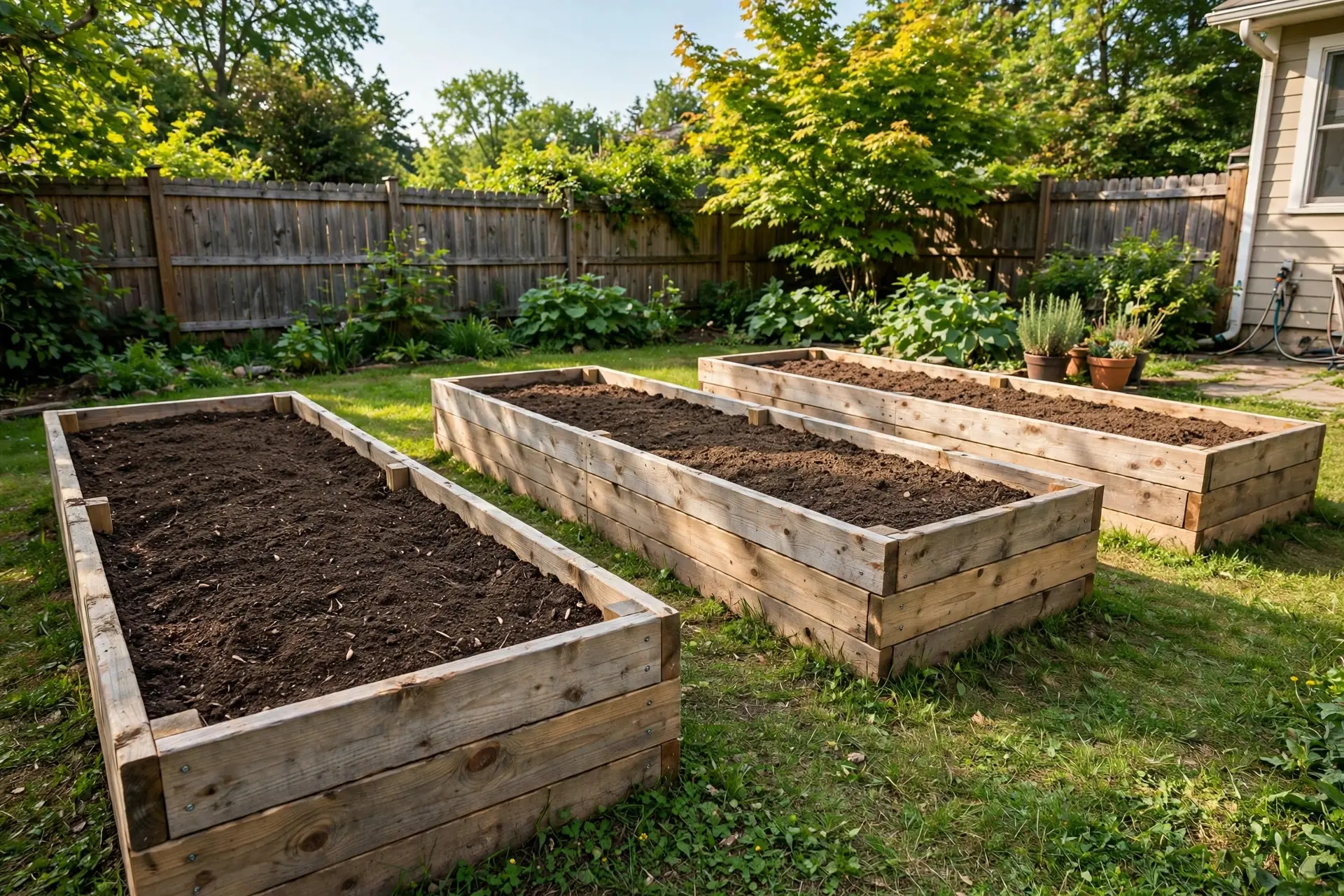
Length is the flexible dimension, so the practical move is to match it to the material you can buy without cutting. Dimensional lumber commonly sells in 8, 10 and 12 foot lengths, which is why 4 by 8 is the most common raised bed on the planet. One 8 foot board becomes two 4 foot ends with nothing wasted.
Two things to plan for once you go past 6 feet:
- Bowing. Wet soil pushes hard against long sides. Add a cross brace or a stake driven inside the bed at the midpoint of any run over 6 feet, or the sides will belly out within two seasons.
- Walking around. A 12 foot bed means a 24 foot round trip to reach the other side. Two 6 foot beds with a path between them hold the same soil and are far less annoying in daily use.
If you are building several beds, keep them all the same size. Identical beds let you rotate crops easily, share covers and hoops between beds, and buy soil in round numbers.
Depth: Match It to What You Actually Grow
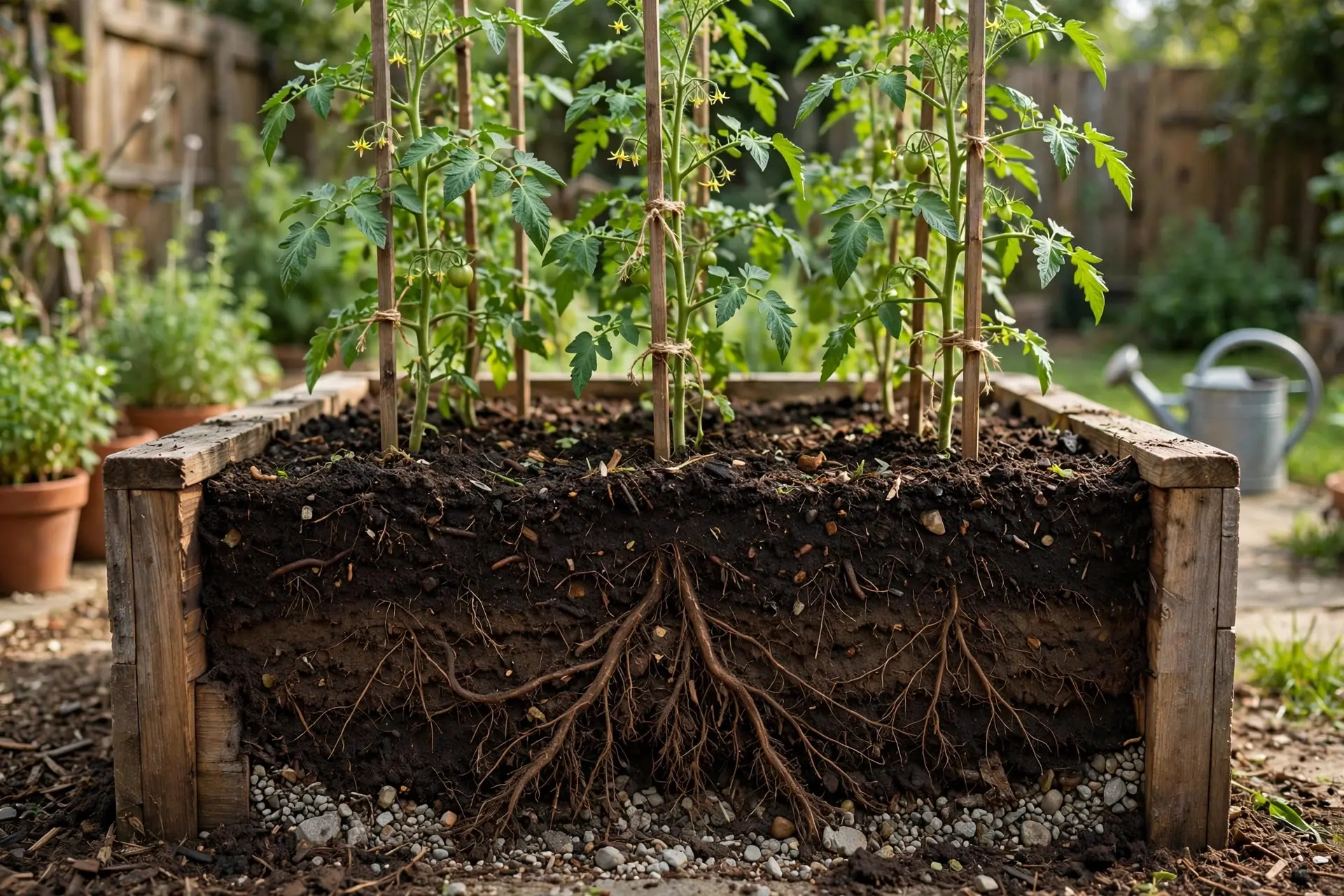
Depth is the number people overthink and underbuild at the same time. The honest answer depends on two things: what is growing in it, and what is underneath it.
If your bed sits on open ground and the soil below is reasonably loose, roots will travel down past the frame and the frame height matters less. Gardening writers who have tested this range widely, and the guidance at Savvy Gardening puts a practical standard at 10 to 12 inches, which conveniently matches two stacked 2 by 6 boards at about 11 inches.
Rough root depths by crop, useful when you are deciding whether to build one board higher:
- Lettuce, spinach and salad greens: around 4 to 6 inches is enough.
- Most herbs: about 7 inches.
- Bush beans, radishes, onions and garlic: comfortable in 8 to 10 inches.
- Carrots, beets and parsnips: 12 inches minimum, and long carrot varieties want more.
- Tomatoes, squash and potatoes: happiest with 18 inches or more. They will survive in 12 inches but tend to need more water and produce less.
If the bed sits on concrete, a patio or heavy compacted clay, treat the frame as the whole root zone. In that case 12 inches is the floor and 18 inches is a much better target, because nothing is growing down past the bottom board.
One more point that gets missed: shallow beds dry out fast. An 8 inch bed in full sun in July may need watering twice a day, while a 16 inch bed holds enough moisture to get through on one. Depth buys you time as much as it buys root room.
Height for the Gardener, Not Just the Plants
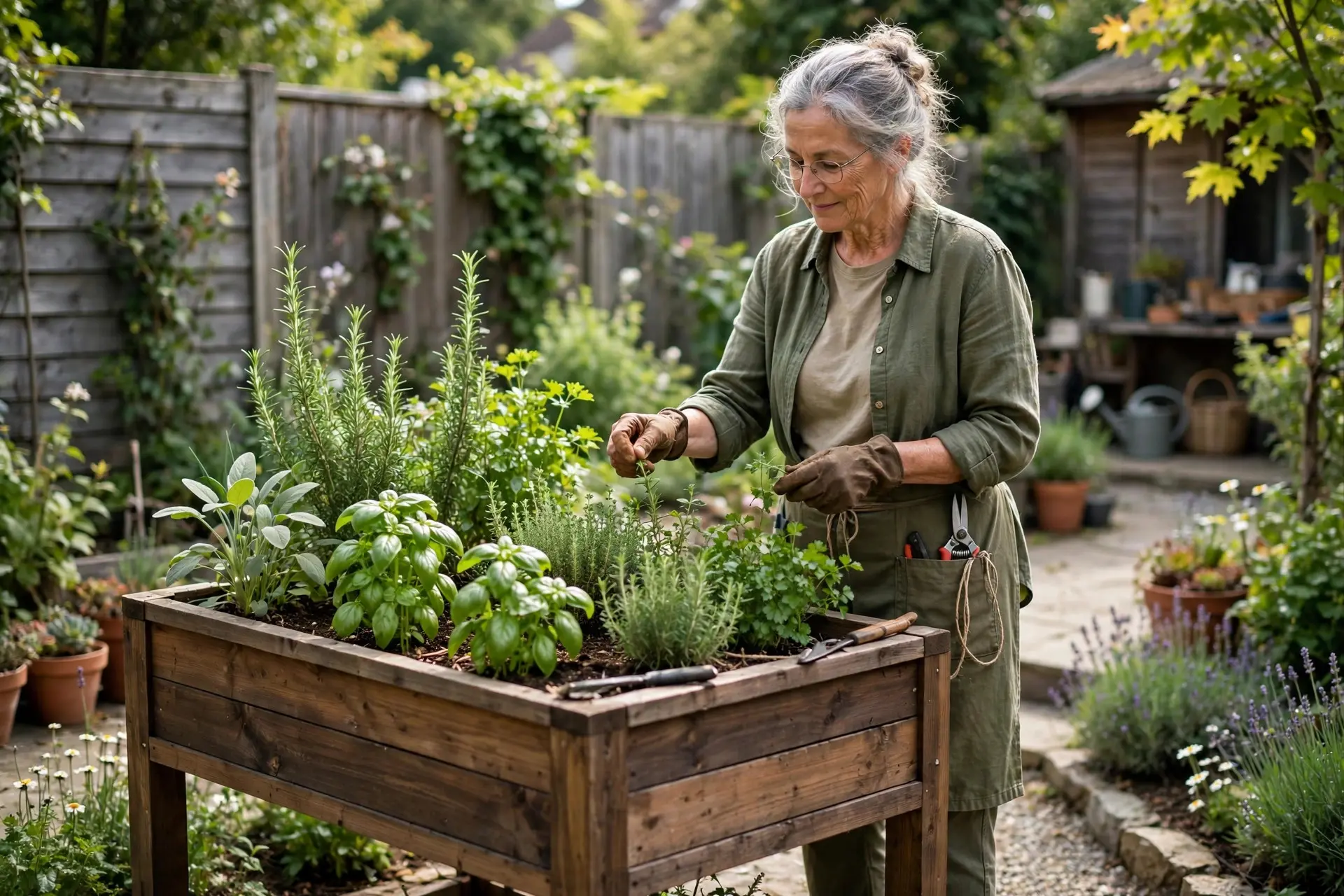
Depth of soil and height off the ground are two separate decisions. A tall bed can be built with a solid base partway up, so you get standing height without paying for three feet of soil.
- 11 to 12 inches. Classic ground level bed. You kneel to work it. Cheapest and most common.
- 18 to 24 inches. Sit on the edge to weed. This is the height most people wish they had built after their first full season.
- 30 to 36 inches. Standing height. Excellent for anyone with a bad back or limited mobility, and the top of the range matches standard counter height so tools sit comfortably on the edge.
A tall bed needs proper corner posts and bracing, because the outward pressure of wet soil grows quickly with height. Do not build a 30 inch bed with the same corner joinery you would use on a 12 inch one.
Paths: The Dimension Everyone Forgets
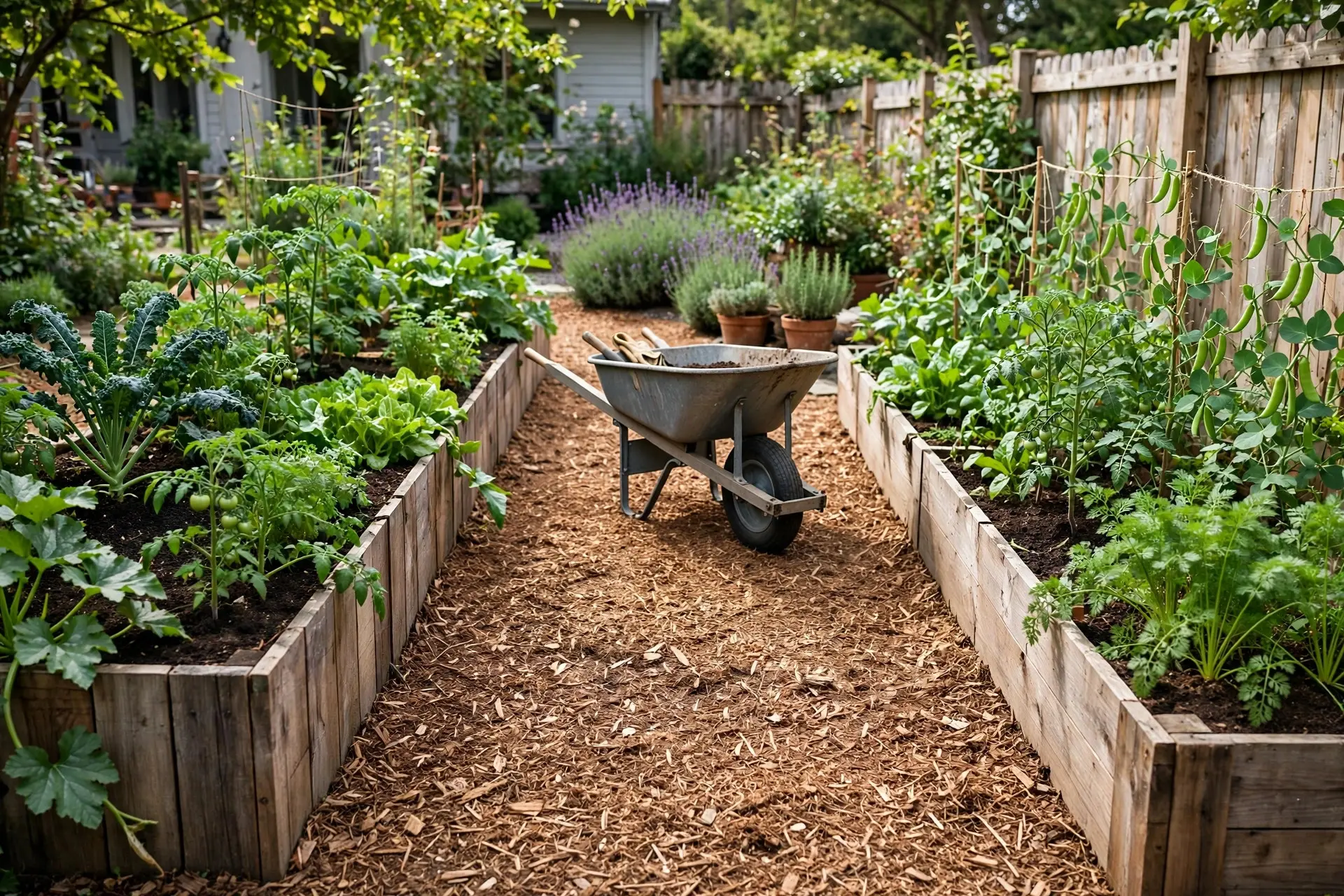
Beds get planned carefully and paths get whatever space is left over, which is backwards. The path is where you stand for every hour you spend in the garden.
- 18 inches. Absolute minimum. You can walk it, you cannot kneel in it, and you cannot get a wheelbarrow down it.
- 24 inches. Enough to kneel and work comfortably. A good choice for secondary paths between beds.
- 30 to 36 inches. Fits a wheelbarrow with room for your feet either side. Make at least one main path this wide.
- 36 inches or more. Required if anyone will use a wheelchair or a walker in the garden, and worth it anyway for the main run.
Mark the paths out with string or a hose before you build anything, then walk them with an actual wheelbarrow. Five minutes of this saves years of shuffling sideways.
How Much Soil You Will Actually Need
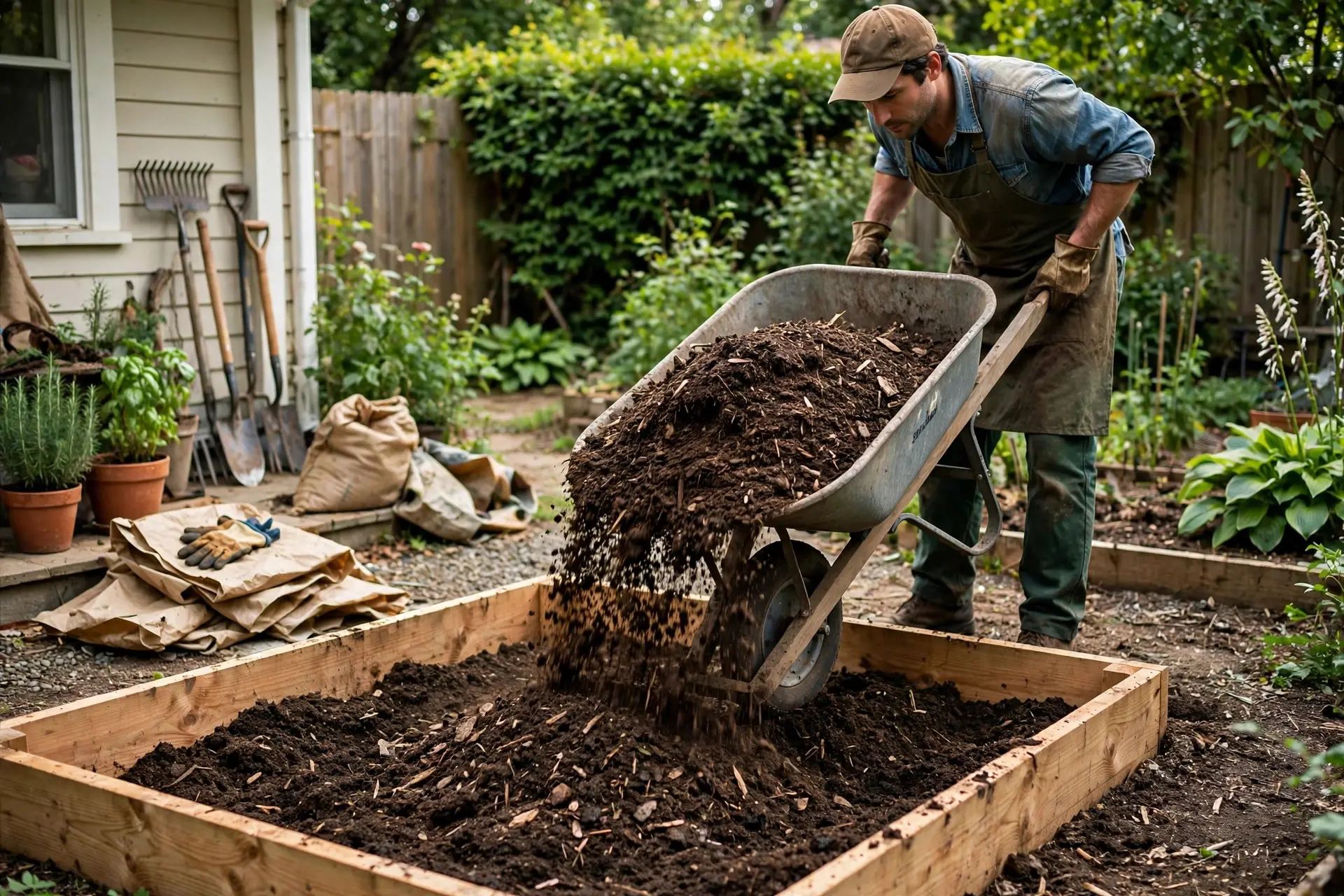
Soil is the biggest cost in a new raised bed and the number that surprises people. The math is simple. Multiply length by width by depth in feet to get cubic feet, then divide by 27 to get cubic yards.
A 4 by 8 bed filled to 12 inches is 32 cubic feet, which is just under 1.2 cubic yards. At a common bagged size of 1.5 cubic feet, that is about 21 bags for one bed. If you are filling more than two beds, bulk delivery is almost always cheaper and far less work than carrying bags.
Two things to budget for that nobody mentions. Fresh soil settles, usually by an inch or two over the first season, so order a little more than the calculation says. And you will top up every spring with compost, which is a small annual cost rather than a one off.
In deep beds you can fill the bottom third with coarse woody material, rough compost or turf turned upside down, and put good soil on top. This cuts the cost noticeably and the lower layer breaks down into decent soil over a few years.
Materials and the Trade Offs Nobody Lists
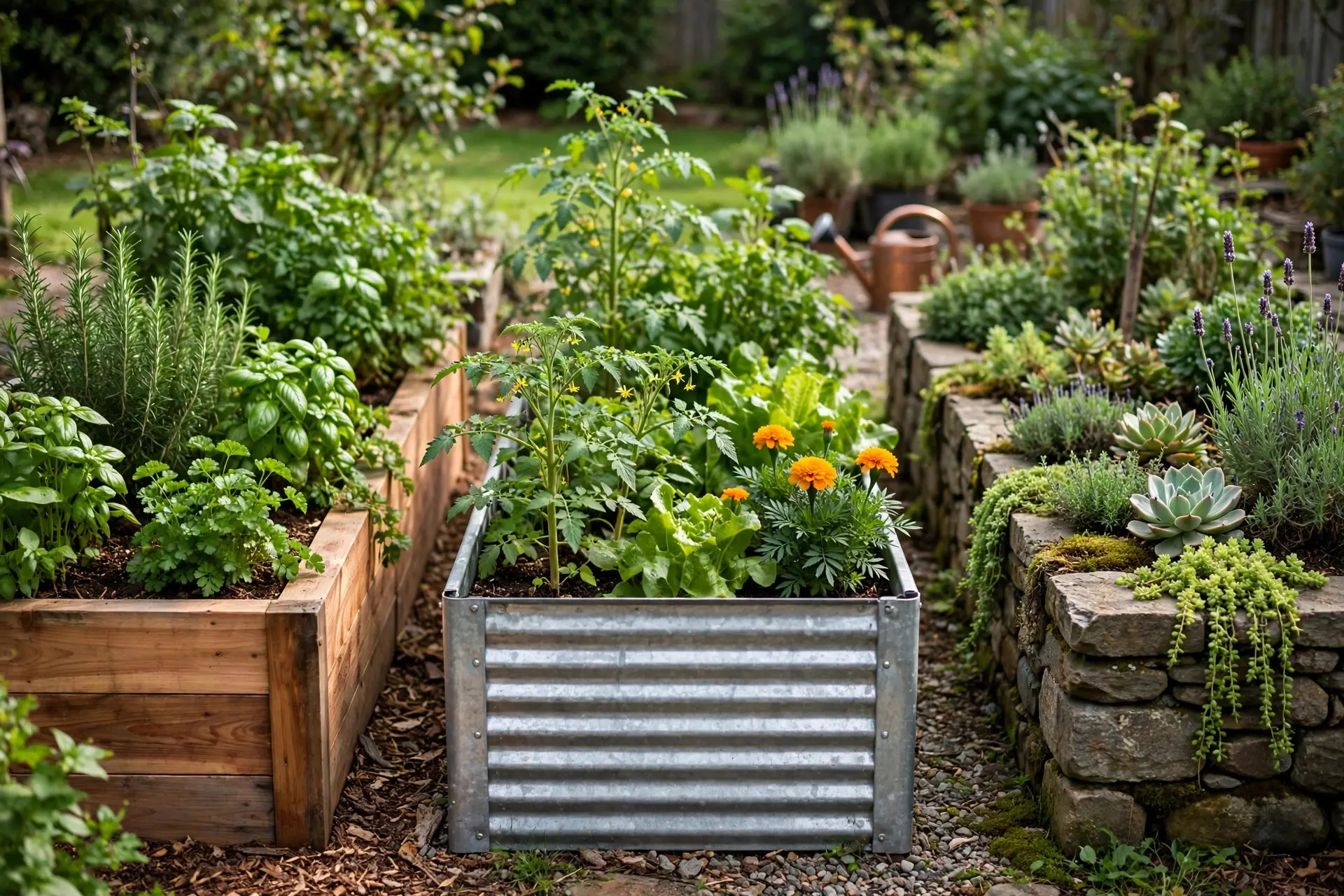
- Cedar and redwood. Naturally rot resistant and the longest lasting untreated wood option. Also the most expensive by a wide margin.
- Untreated fir or pine. Cheap and easy to find. It will rot, and how fast depends heavily on your climate and drainage. Plan on replacing boards rather than the whole bed.
- Galvanized steel. Long lived, no rot, and increasingly popular in photographs. It heats up in strong sun, which helps in a cool climate and can stress roots at the edges in a hot one.
- Concrete block. Very durable and the hollows can be planted with herbs. Heavy, and the footprint is wider than it looks, so allow for the block thickness when you plan paths.
- Modern pressure treated lumber. Current treatments use copper based preservatives rather than the arsenic compounds used decades ago. Many gardeners use it happily and others line the inside with heavy plastic sheeting as a precaution. Check what the specific product is rated for before you decide.
Whatever you choose, a raised bed is a piece of permanent structure in the garden, so it is worth siting it with the same care you would give any built feature. These garden area ideas and these small yard landscaping ideas are useful for working out where the beds sit in the wider space. If you are building this autumn, it is also the right moment to plan what goes in the ground now, which is covered in this guide to fall bulb planting depths and timing.
Frequently Asked Questions
What is the best size for a raised garden bed?
Four feet wide by 8 feet long by 12 inches deep is the most useful all purpose size. The width keeps every part of the soil within arm’s reach from a path, the length matches standard lumber with no waste, and the depth suits the majority of vegetables.
How deep does a raised bed need to be for vegetables?
Ten to 12 inches handles most crops when the bed sits on open ground, because roots can grow down past the frame. Go to 18 inches for tomatoes, squash and long root vegetables, and treat 18 inches as the target rather than the maximum if the bed sits on concrete or a patio.
Can a raised bed be wider than 4 feet?
It can, but you will regret it. Past four feet you cannot reach the center from either side without standing in the bed, which compacts the soil and undoes the main advantage of raising it in the first place.
How much space should I leave between raised beds?
Eighteen inches is the bare minimum for walking. Twenty four inches lets you kneel and work. Make at least one main path 30 to 36 inches wide so a wheelbarrow fits, and use 36 inches throughout if anyone needs wheelchair access.
Is autumn a good time to build raised beds?
It is one of the best times. Building now means the soil has months to settle and the organic matter you add has time to break down, so the bed is ready the moment spring planting starts instead of being a rushed job in April.
Four feet wide, as long as the lumber allows, at least 12 inches deep, with a path you can push a wheelbarrow down. Those four numbers cover almost every raised bed worth building.