

Mulch is the cheapest thing you can do for a garden and one of the easiest to get wrong. Too little and the weeds come straight through. Too much and you slowly suffocate the plants you were trying to protect. Mulch depth is the whole game, and the right answer is a narrower range than most people assume.
Fall is the season when this matters most, because mulch put down at the wrong time or the wrong thickness in autumn can cause problems that do not show up until spring. Here are the numbers, where they come from, and how to apply them without hurting anything.
The Number Is 3 to 4 Inches

The Morton Arboretum recommends spreading mulch to a depth of 3 to 4 inches for medium to coarse textured materials. That covers the mulches most people buy: shredded hardwood bark, bark nuggets, wood chips from a tree service.
Three inches is enough to shade out most weed seeds, hold soil moisture through a dry week and buffer the soil against temperature swings. Four inches is the ceiling, not a target. Past that, you start working against yourself.
That depth is cumulative, which is the part people miss. If you already have 2 inches of mulch left from last year, you are adding 1 to 2 inches this time, not another full 3. Yards that get a fresh 3 inches every spring end up under 8 or 9 inches of compacted bark within a few seasons.
Why Deeper Is Not Better
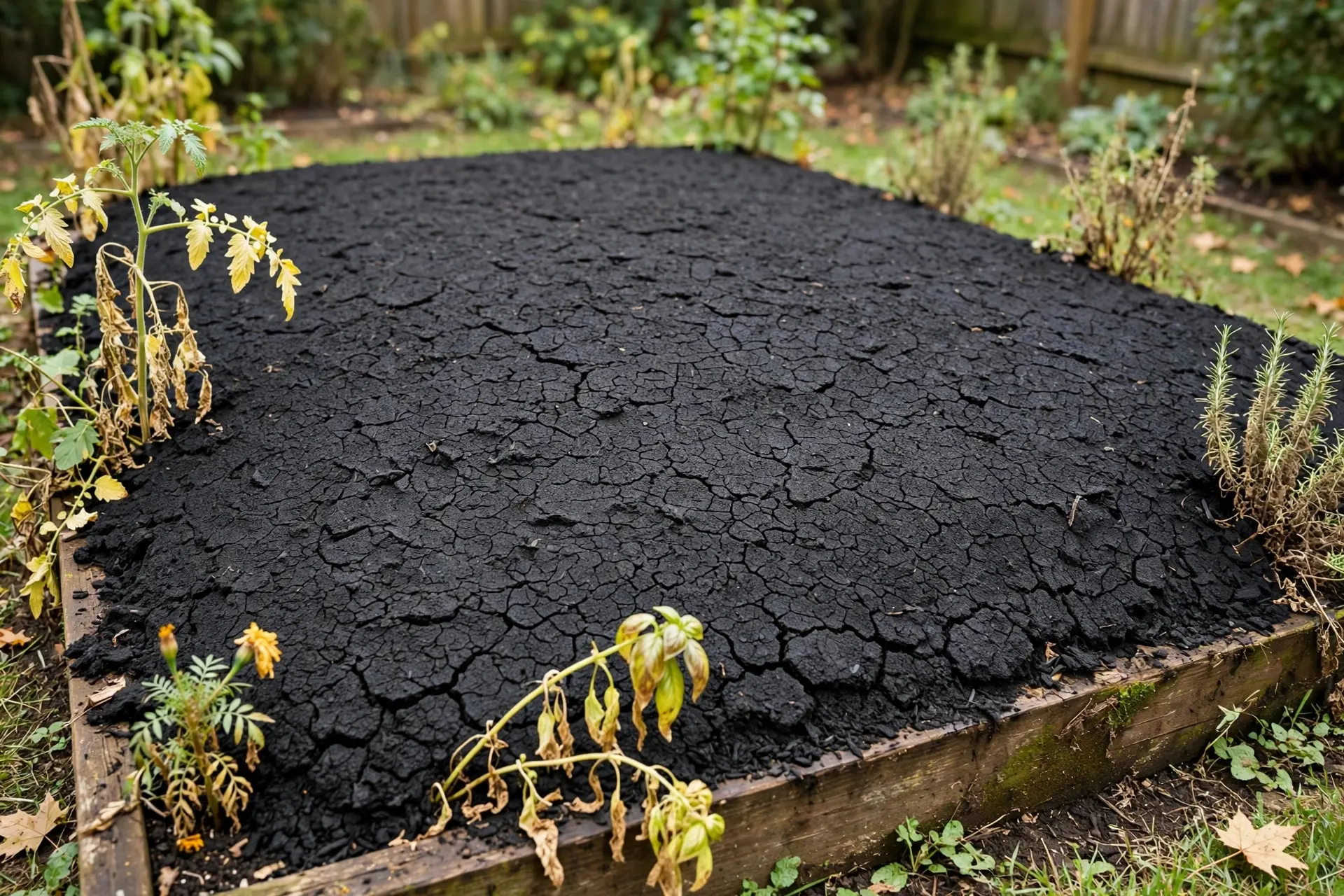
Thick mulch stops behaving like mulch and starts behaving like a lid. Three things go wrong.
Water stops reaching the soil. A deep layer of fine mulch can absorb a light rain entirely and then dry out before any of it gets down to the roots. The plant is thirsty under a layer that looks like it should be helping.
Roots grow in the wrong place. When mulch stays consistently moist and the soil below does not, roots migrate up into the mulch layer. Those roots are shallow, unstable and the first to die in a drought or a hard freeze.
Air stops moving. Roots need oxygen. A thick, matted layer restricts gas exchange, and the symptoms look exactly like overwatering, which leads people to water less and make things worse.
Volcano Mulching Is the Real Damage
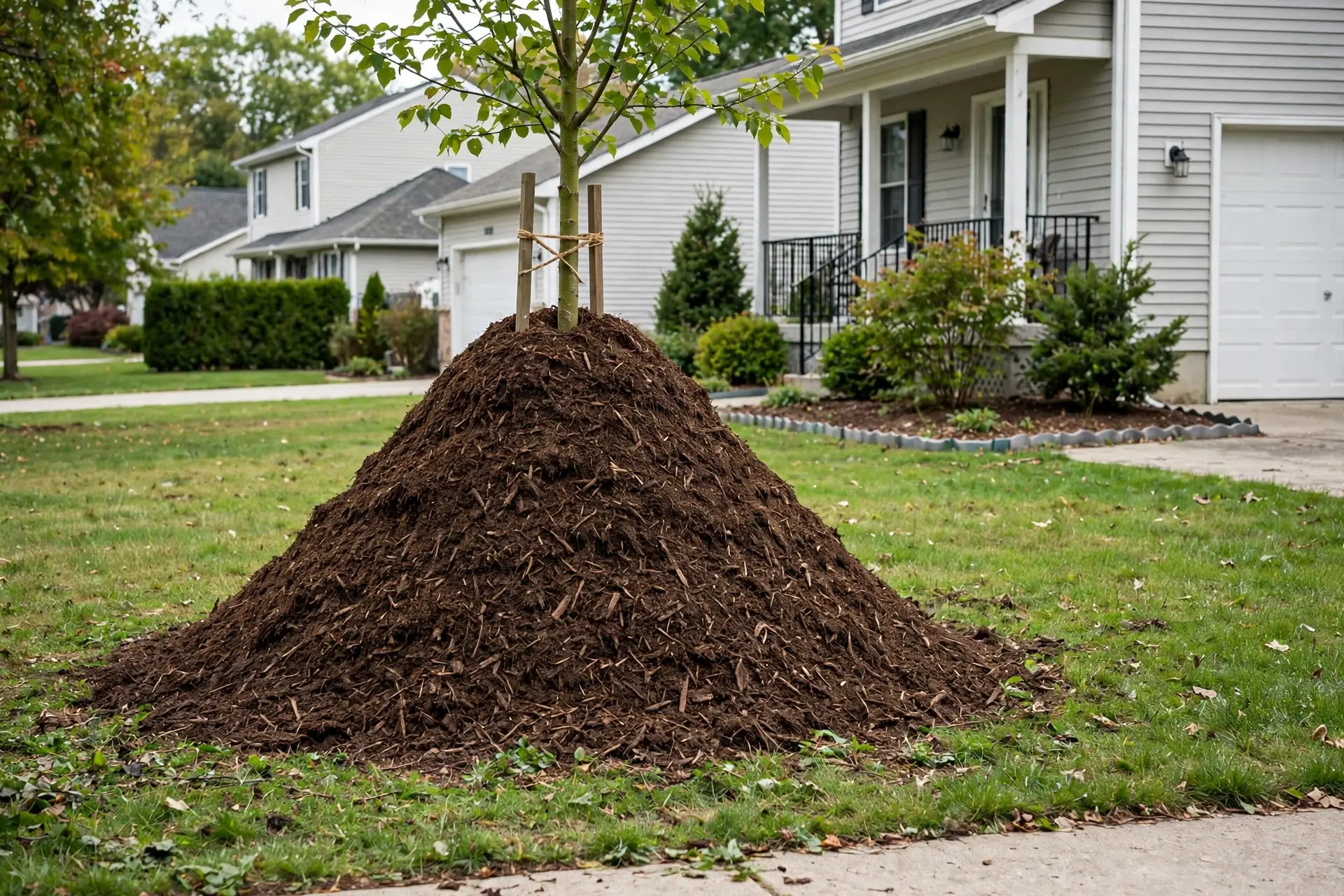
You have seen it on every commercial landscape in the country: mulch piled into a cone around the trunk of a tree, sometimes a foot deep against the bark. It looks tidy. It is one of the most reliable ways to kill a young tree slowly.
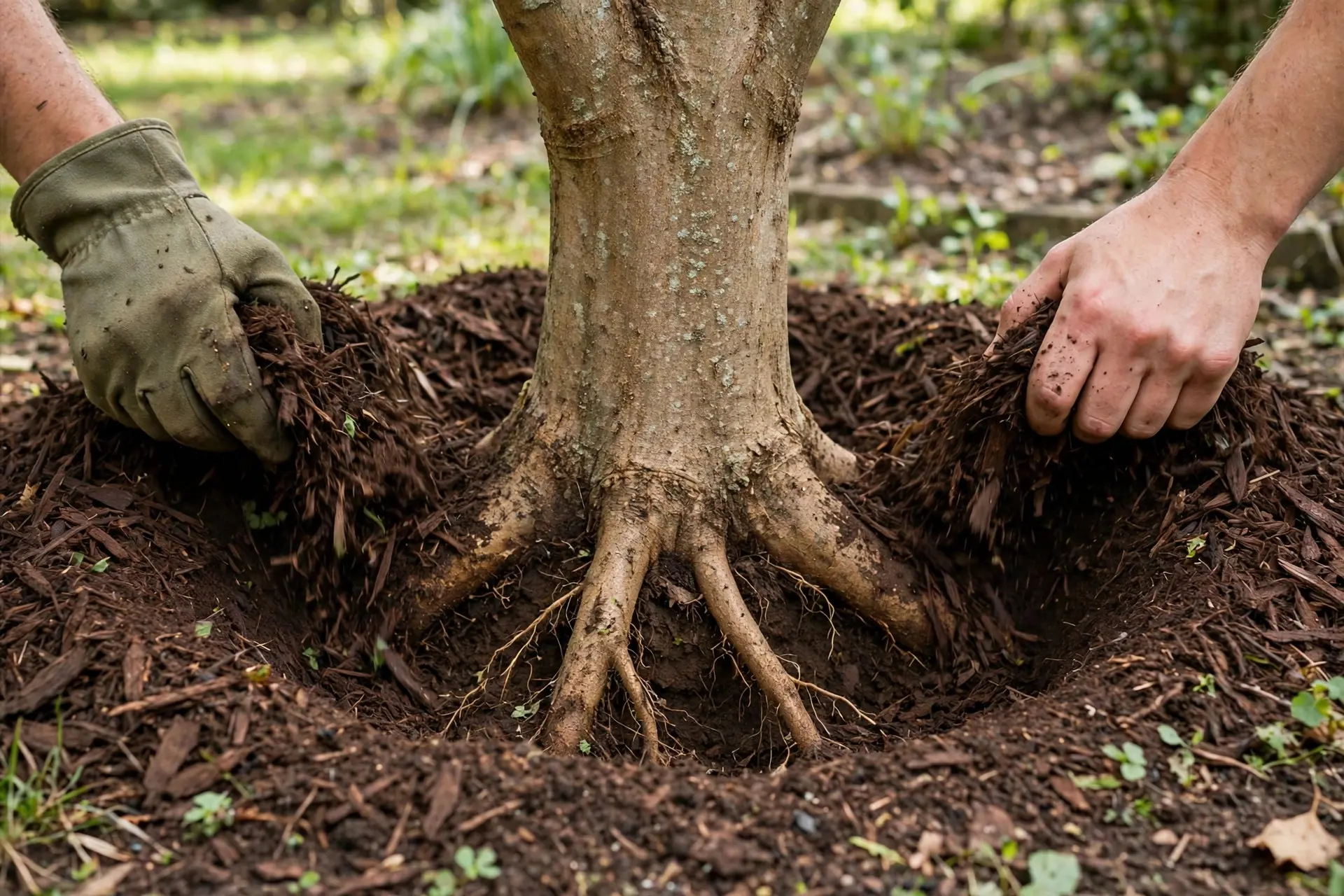
The Morton Arboretum is direct about this. Mulch should be spread and pulled away from the base of tree and shrub trunks, creating a donut hole around the trunk. Piling mulch against the trunk causes moisture to build up, which creates ideal conditions for insect pests, diseases and decay.
Bark is not designed to stay wet. It is designed to shed water and breathe. Bury it and it stays damp permanently, which softens the tissue, invites rot and gives borers an easy entry point. The tree may take five or ten years to die, and by then nobody connects it to the mulch.
What the Donut Should Look Like
Leave a clear gap of a few inches of bare soil all the way around the trunk, then start the mulch and keep it level at 3 to 4 inches out to the edge of the ring. You should be able to see the root flare, the point where the trunk widens out and meets the ground. If you cannot see the flare, there is too much mulch or too much soil over it.
Flat, not conical. If your mulch ring has a peak in the middle, it is wrong no matter how deep it is.
How Wide to Make the Ring
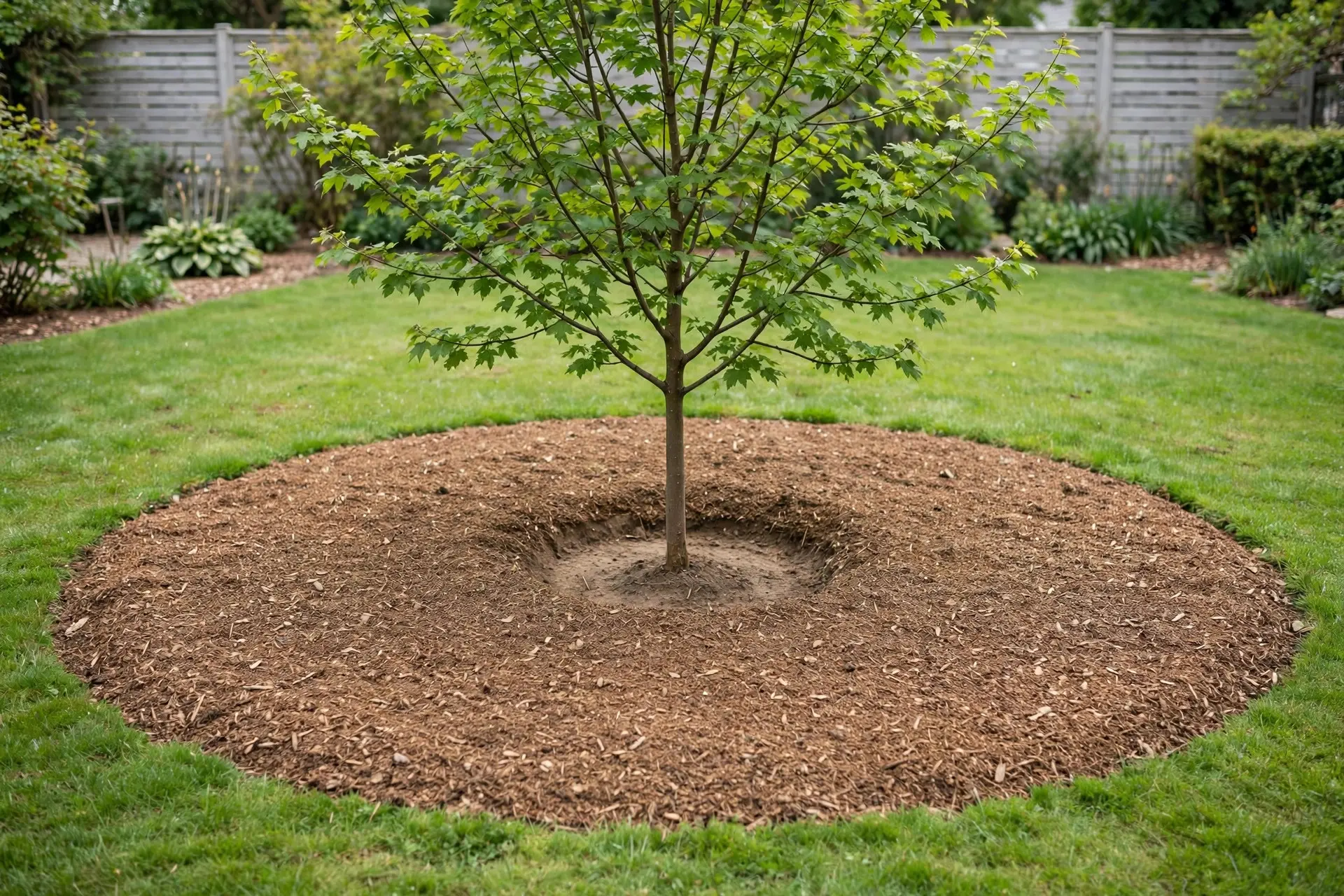
Depth gets all the attention, but width does more for the tree. Roots spread far wider than most people picture, and the mulched area is the part of the root zone that is protected from mower damage, foot traffic and grass competition.
- Young trees: extend mulch out to the drip line, meaning the outer edge of the branches
- Mature trees: cover at least a 4 to 5 foot diameter area around the trunk
Wider is better if you can live with the look. A generous mulch ring also keeps the string trimmer away from the bark, which is the other common cause of slow tree decline in a home yard. If you are still deciding where trees go in the first place, spacing them correctly saves all of this trouble later, and our guide to how far to plant trees from a house covers those distances.
Texture Changes the Depth
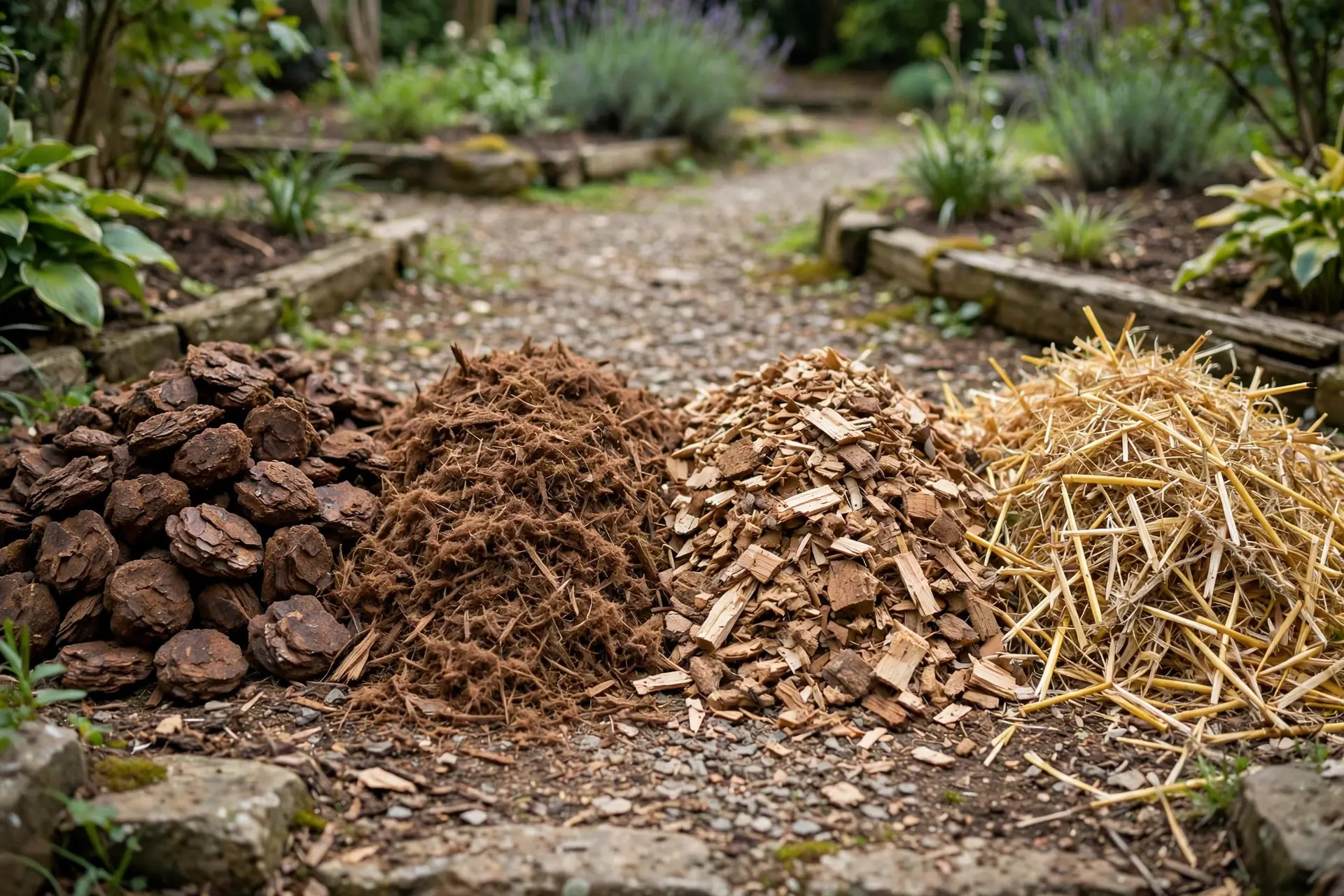
The 3 to 4 inch figure applies to medium and coarse materials. Finer mulches compact and hold water differently, so adjust:
- Bark nuggets and coarse wood chips: the full 3 to 4 inches. They stay loose and let water through
- Shredded hardwood: 3 inches. It knits together and sheds water if you go deeper
- Fine compost or finely ground mulch: closer to 2 inches. It packs down and can form a crust
- Straw around vegetables: can go deeper because it is so airy, often 4 to 6 inches, and it settles fast
- Gravel and stone: 2 to 3 inches. It never decomposes, so it does not feed the soil and it reflects heat
If your existing mulch has formed a hard surface that water beads up on, rake it before adding more. Breaking the crust does more good than a fresh layer on top of it.
When to Mulch
Fall
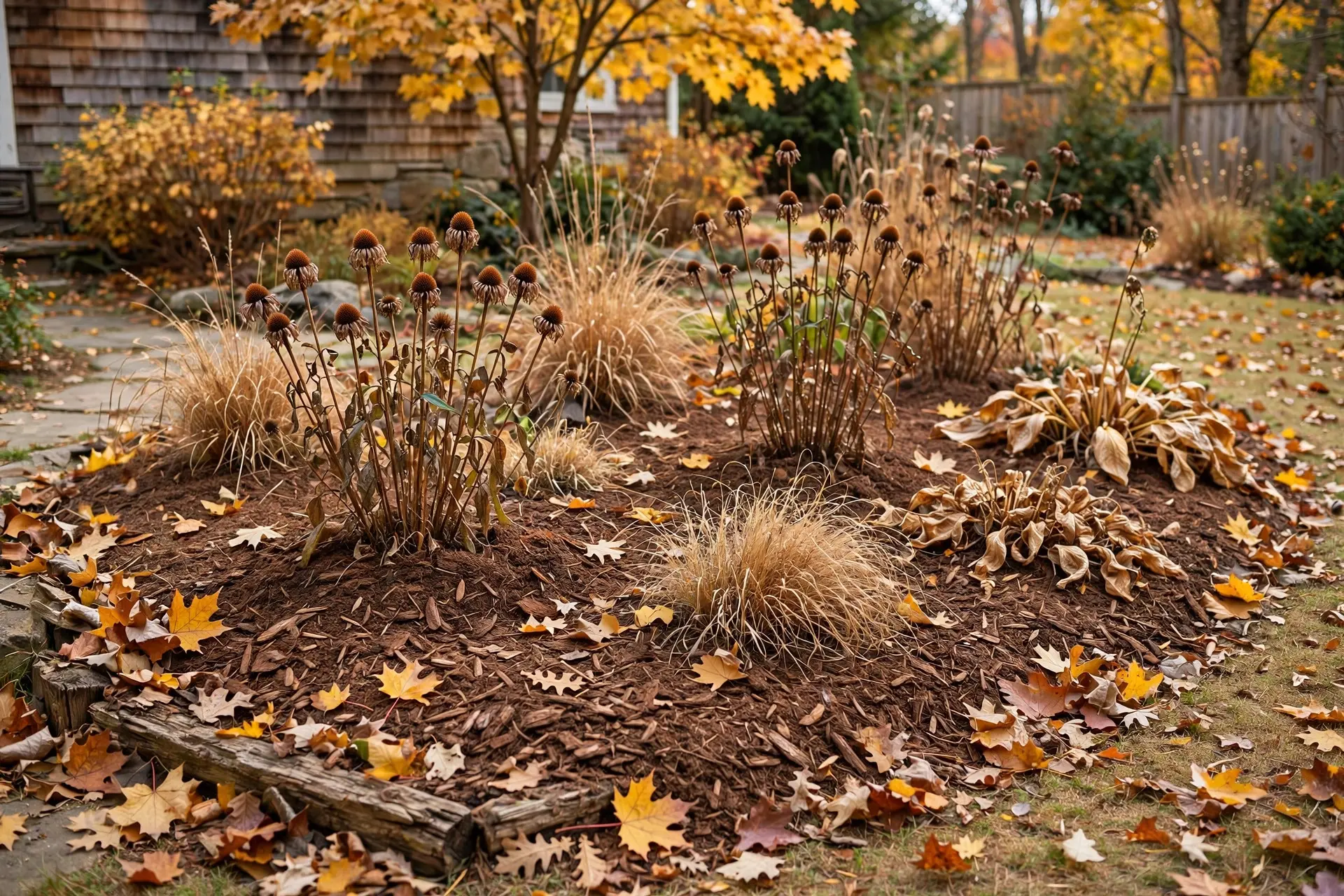
Apply fall mulch once the soil begins cooling, after regular frosts have started. Not after the first frost of the season, but once frost has become routine.
The timing matters because the point of fall mulch is not to keep the ground warm. It is to keep the ground consistently cold. Soil that freezes and thaws repeatedly heaves shallow rooted plants right out of the ground. Mulching too early, while the soil is still warm, can encourage tender new growth that then gets killed by the first hard freeze.
Fall mulching pairs naturally with the rest of the autumn list. Our guide to what to cut back and what to leave in fall covers the order those jobs should happen in, and if you are putting bulbs in the ground this season, the timing in our fall bulb planting guide should come before the mulch goes down.
Spring
In spring, wait until the soil has warmed and excess moisture has drained before mulching. Mulching over cold, soggy ground traps both conditions in place and delays everything.
The temptation is to mulch on the first nice weekend in March because the beds look bare. Give it a few more weeks. A bed that is mulched too early in spring runs behind all season.
How Much to Buy
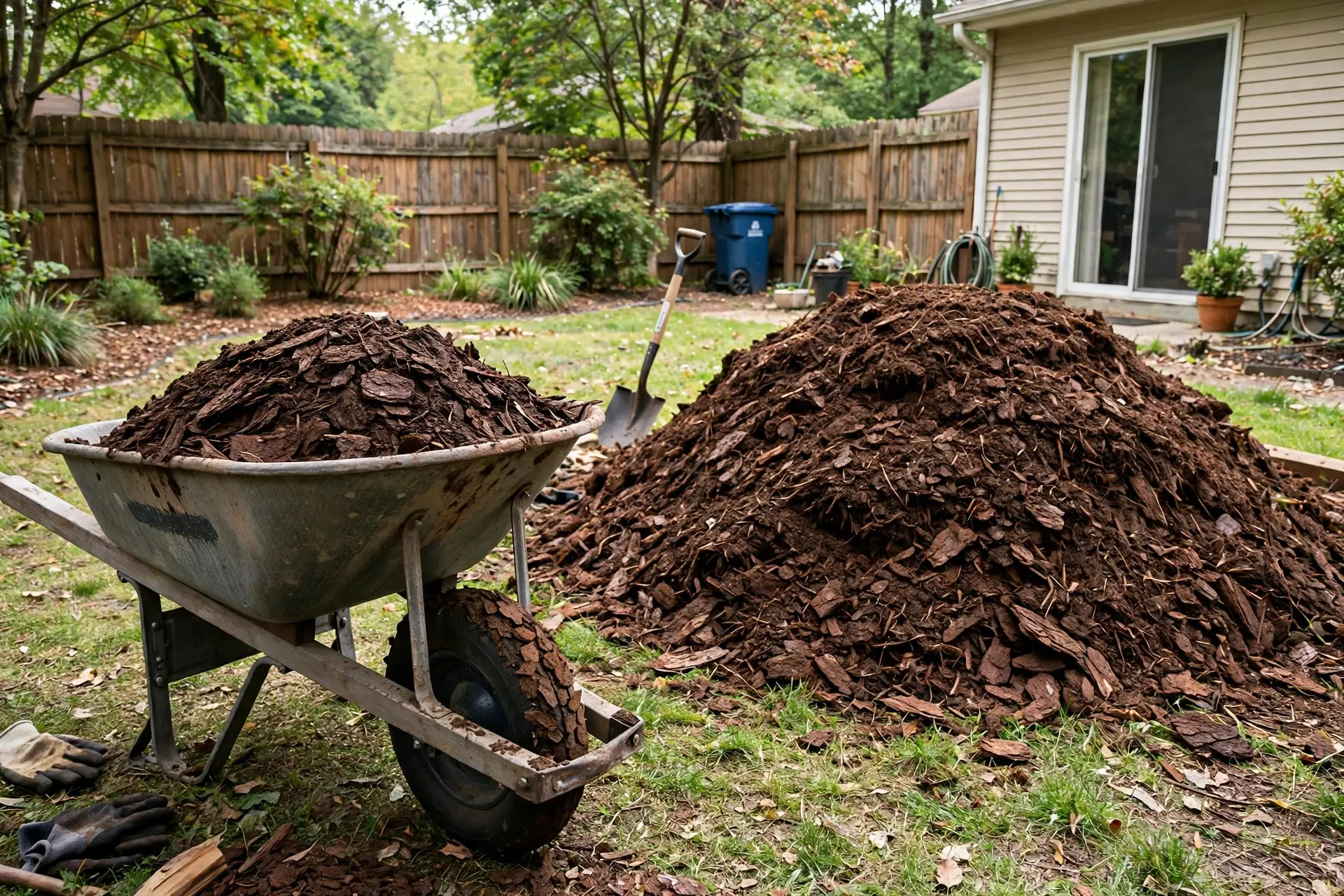
One cubic yard is 27 cubic feet. Divide that by your depth in feet and you get coverage:
- At 2 inches deep: 1 cubic yard covers about 162 square feet
- At 3 inches deep: 1 cubic yard covers about 108 square feet
- At 4 inches deep: 1 cubic yard covers about 81 square feet
Bagged mulch usually comes in 2 cubic foot bags, so a cubic yard is about 13 or 14 bags. Bulk delivery is far cheaper per yard once you need more than about two yards, and it is worth the wheelbarrow work.
To find your square footage, measure your beds. For a circular tree ring, multiply the radius by itself, then by 3.14. A 5 foot diameter ring has a 2.5 foot radius, so 2.5 times 2.5 times 3.14 gives about 20 square feet, which is under a quarter of a cubic yard at 3 inches.
Beds Versus Trees
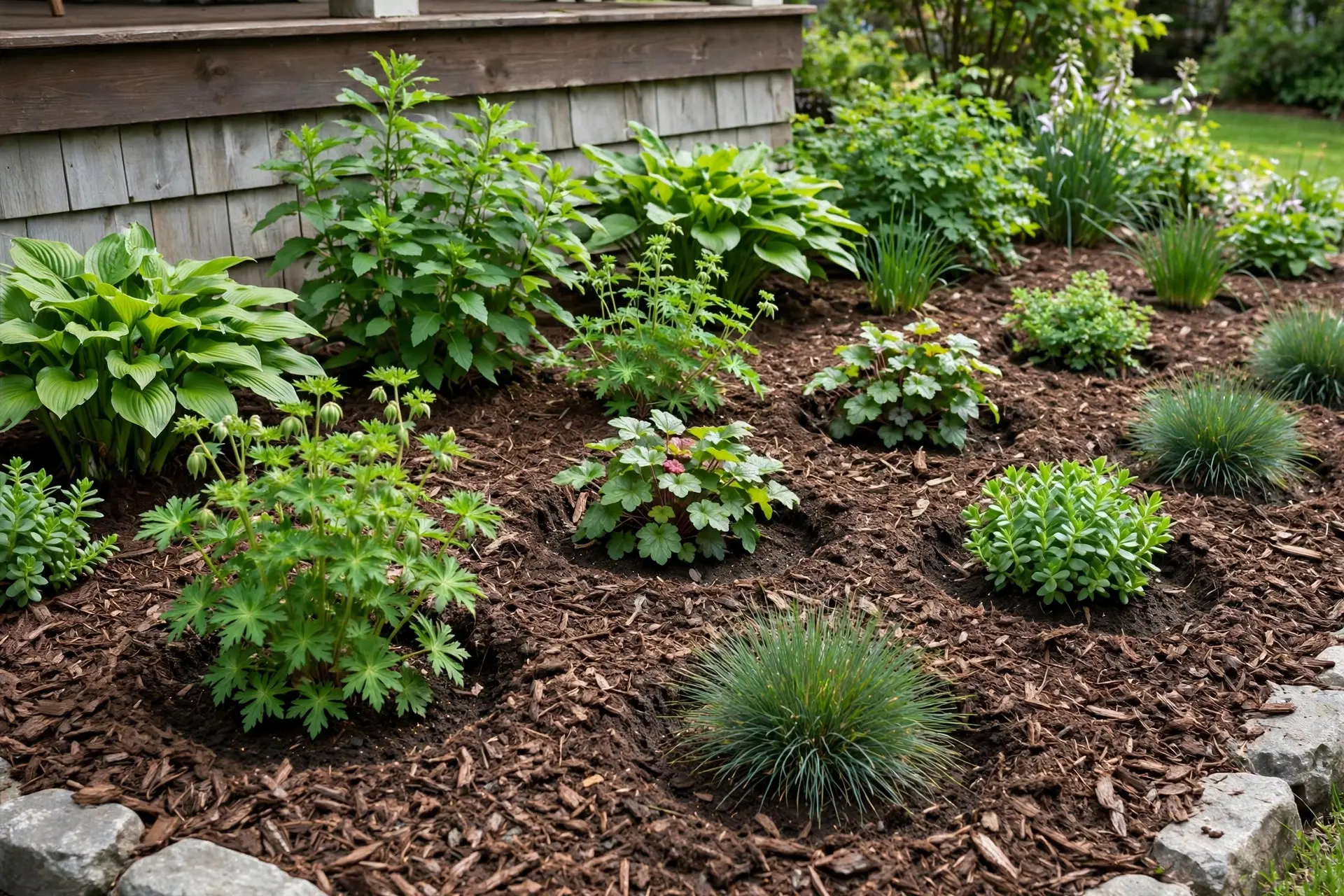
Perennial beds follow the same depth rule with one adjustment: keep mulch off the crowns of the plants, the same way you keep it off tree trunks. Mulch piled over the crown of a perennial rots it over winter. Pull it back an inch or two from each plant.
Raised beds behave differently because the soil drains faster and warms sooner. Two to three inches is usually plenty there, and the soil level drops each year as organic matter breaks down, so you will be topping up soil as often as mulch. If you are building beds this season, the dimensions in our guide to raised garden bed widths and depths affect how much of both you will need.
Mistakes Worth Avoiding
- Adding a full layer every year without checking. Measure what is already there first
- Piling against trunks and stems. The single most damaging habit on this list
- Laying plastic sheeting under mulch. It blocks water and air, and weeds eventually root in the mulch on top anyway
- Mulching over dry soil. Water first. Mulch holds in whatever moisture is present, including none
- Using fresh wood chips right against young plants. They can tie up nitrogen at the surface as they break down. They are fine as a top layer or around established trees
Frequently Asked Questions
How deep should mulch be to stop weeds?
Three inches suppresses most weed seeds by blocking light. Going deeper adds very little weed control and starts causing water and air problems, so 3 inches is the practical sweet spot.
Can I put new mulch on top of old mulch?
Yes, but only up to a combined depth of 3 to 4 inches. Measure the existing layer, break up any crust with a rake, and add only the difference. If you already have 4 inches, skip the year entirely.
How close to the trunk should mulch go?
It should not touch the trunk at all. Leave a clear ring of bare soil a few inches wide around the base so the root flare stays visible and the bark stays dry.
Should I remove old mulch before adding new?
Usually not. Old mulch is breaking down into the soil, which is the point. Remove it only if the layer is already too deep, has matted into a water shedding crust or shows signs of disease.
Is it too late to mulch in late fall?
Late fall is the correct window for fall mulching. The recommendation is to wait until the soil is cooling and frosts have become regular, so mulching after the garden has gone dormant is on schedule rather than late.
Depth, ring width and timing guidance in this article comes from The Morton Arboretum guide to mulching trees and shrubs.