

Nobody regrets a bigger bed until they have to walk around it. That is the whole problem this bed size guide is built to solve. A king mattress in a room that cannot hold one does not feel luxurious, it feels like a piece of furniture you have to edge past sideways in the dark.
Mattress dimensions are standardized, so the sizing part is simple arithmetic. The harder question is what is left over once the bed is in the room. Here are both numbers, size by size, plus the clearances that decide which one your room can actually take.
Standard Mattress Dimensions
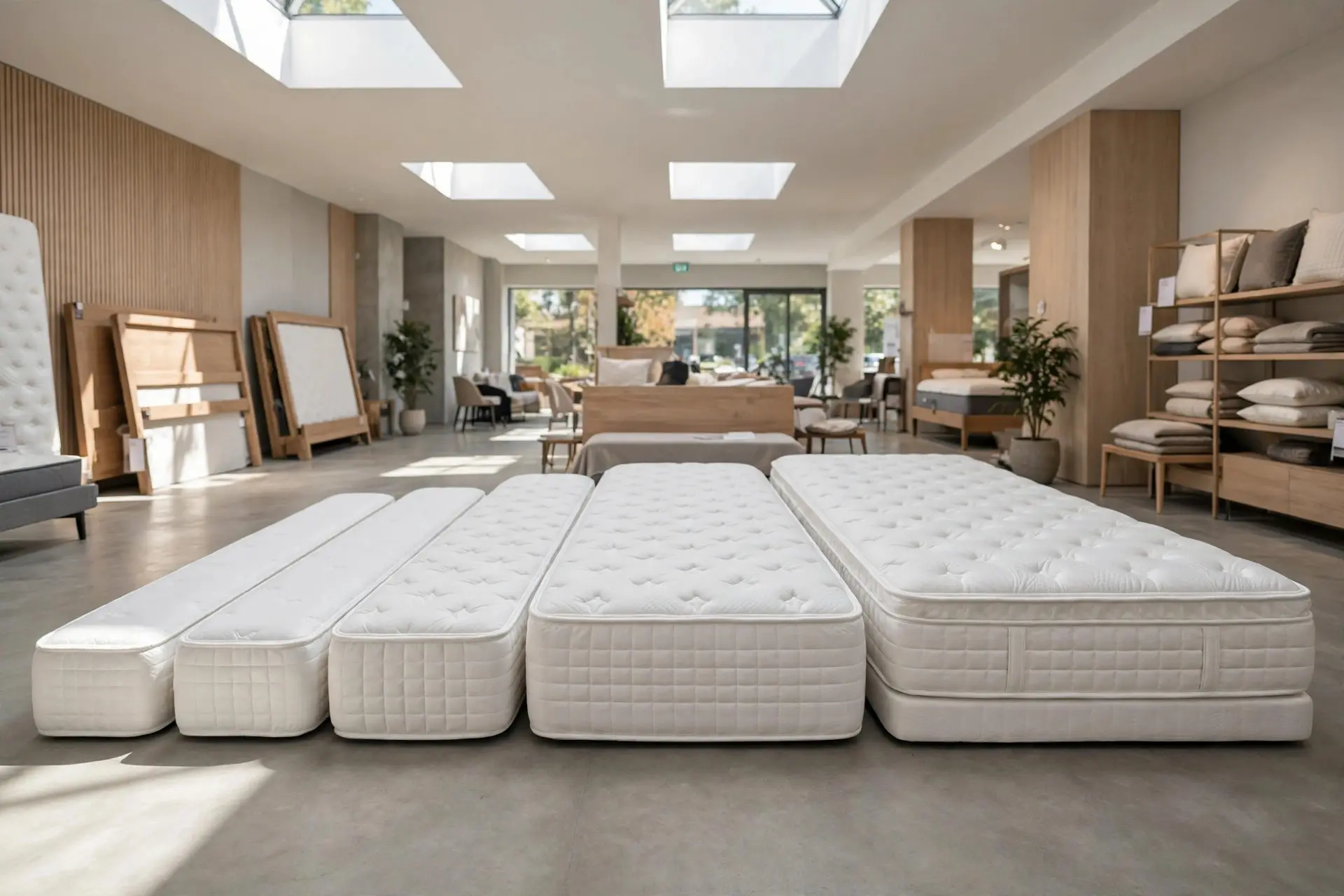
These are the standard US sizes in inches, width by length:
- Twin: 38 by 75
- Twin XL: 38 by 80
- Full, also called Double: about 53 to 54 by 75
- Queen: 60 by 80
- King: 76 by 80
- California King: 72 by 84
Two things jump out of that list. A King is not longer than a Queen, it is only wider, by 16 inches. And a California King is narrower than a standard King, by 4 inches, in exchange for 4 more inches of length. Cal King is a height solution, not a space solution.
The other useful way to read these numbers is per person. On a Queen, each of two sleepers gets 30 inches of width. On a King, each gets 38 inches. A standard crib is 28 inches wide, which is the comparison that usually settles the Queen versus King argument for couples.
Minimum Room Size for Each Bed
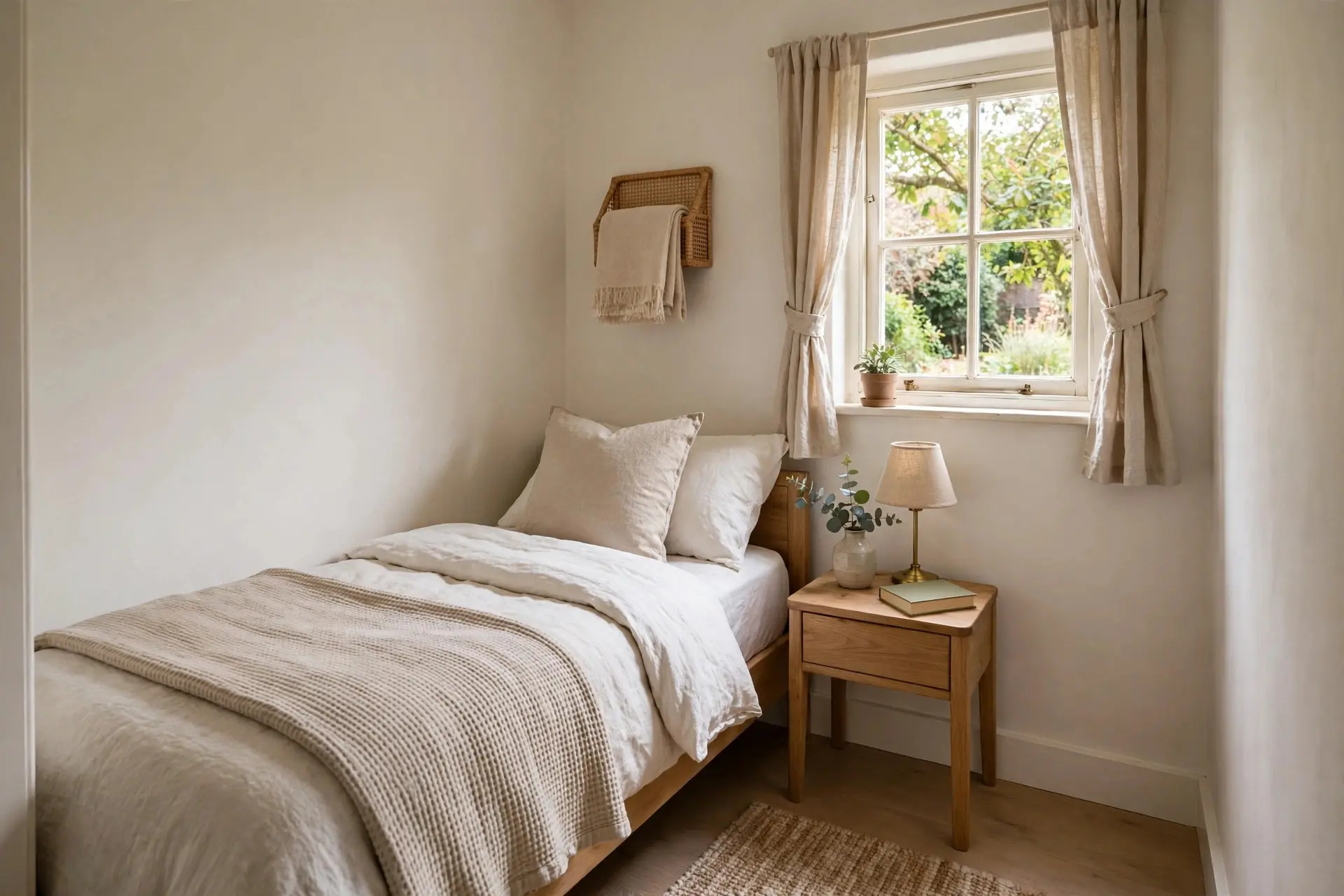
Mattress makers publish minimum room recommendations, and they line up closely across brands:
- Twin: 7 by 9 feet minimum, 8 by 10 feet comfortable
- Twin XL: at least 8 by 10 feet
- Full: at least 9 by 11 feet
- Queen: 10 by 10 feet minimum, 10 by 12 feet comfortable
- King: at least 12 by 12 feet
- California King: at least 12 by 12 feet
Treat the minimums as exactly that. A Queen in a 10 by 10 room fits, but there is no room left for a dresser, and the bed will be the only real piece of furniture in there.
The Clearance Math That Actually Decides It
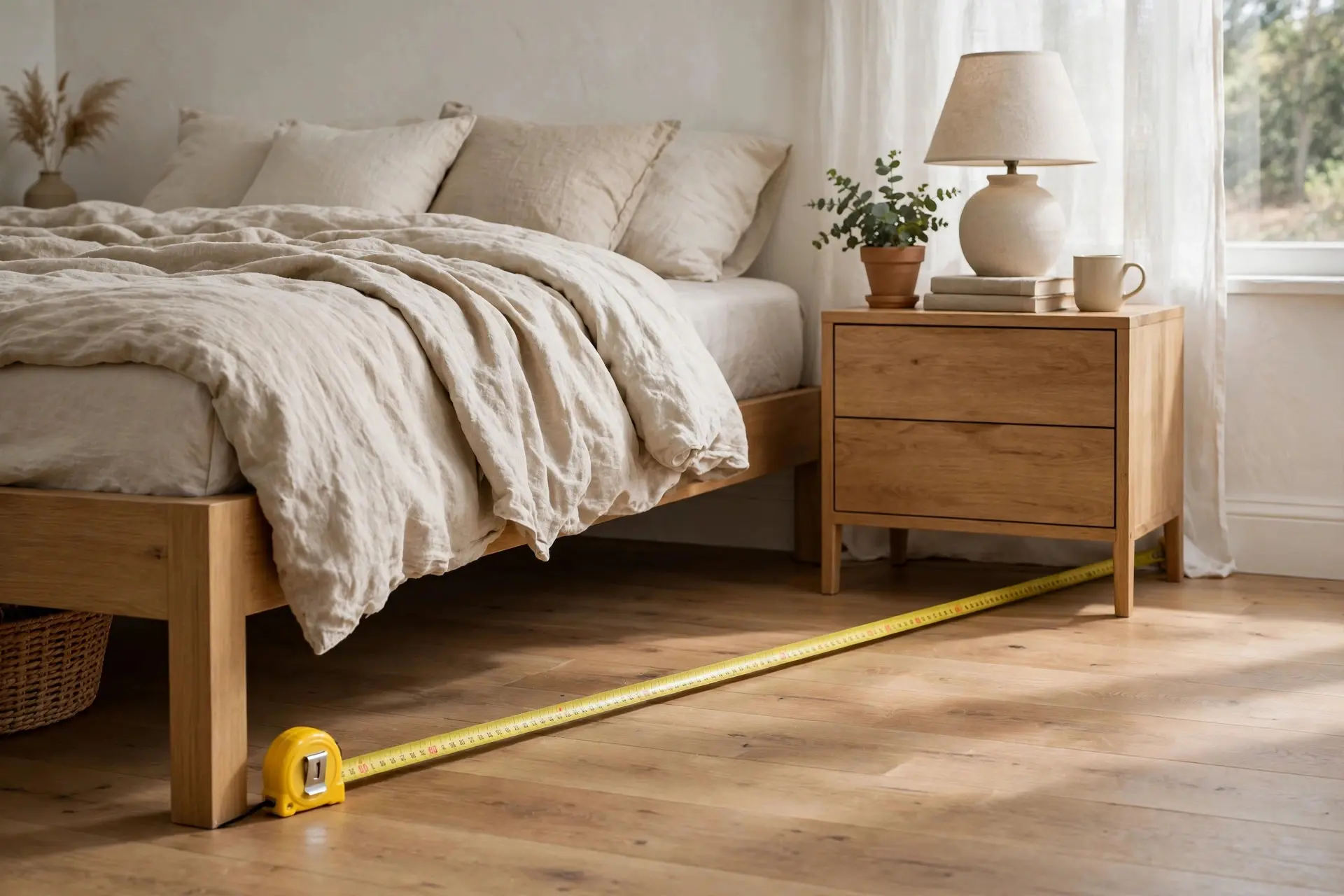
Room size charts are useful but blunt. The better approach is to work out the clearance you need and add it to the mattress footprint yourself, because your room has doors and closets in specific places that a chart cannot know about.
Work with these three:
- 24 to 30 inches on each side you walk down. A typical nightstand is 16 to 24 inches deep, so 30 inches gives you a nightstand plus a walking path. Twenty four inches is walkable but tight once a nightstand is in place
- 24 to 36 inches at the foot of the bed. More if a dresser sits there, since you need room for the drawers to open and for you to stand in front of them
- Full door and closet swing. A standard bedroom door needs about 32 inches of clear arc. A closet door needs its own
Run the arithmetic for a King, which is 76 inches wide. Add 30 inches on each side and you need 136 inches of wall to wall width, which is 11 feet 4 inches. Add the 80 inch length plus 30 inches at the foot and a headboard taking a few inches, and you are at roughly 9 feet 6 inches in the other direction. That is why the King recommendation lands at 12 by 12.
Do the same for a Queen. Sixty inches wide plus 30 on each side is 120 inches, exactly 10 feet. The chart is not arbitrary, it is this calculation.
Where People Get It Wrong
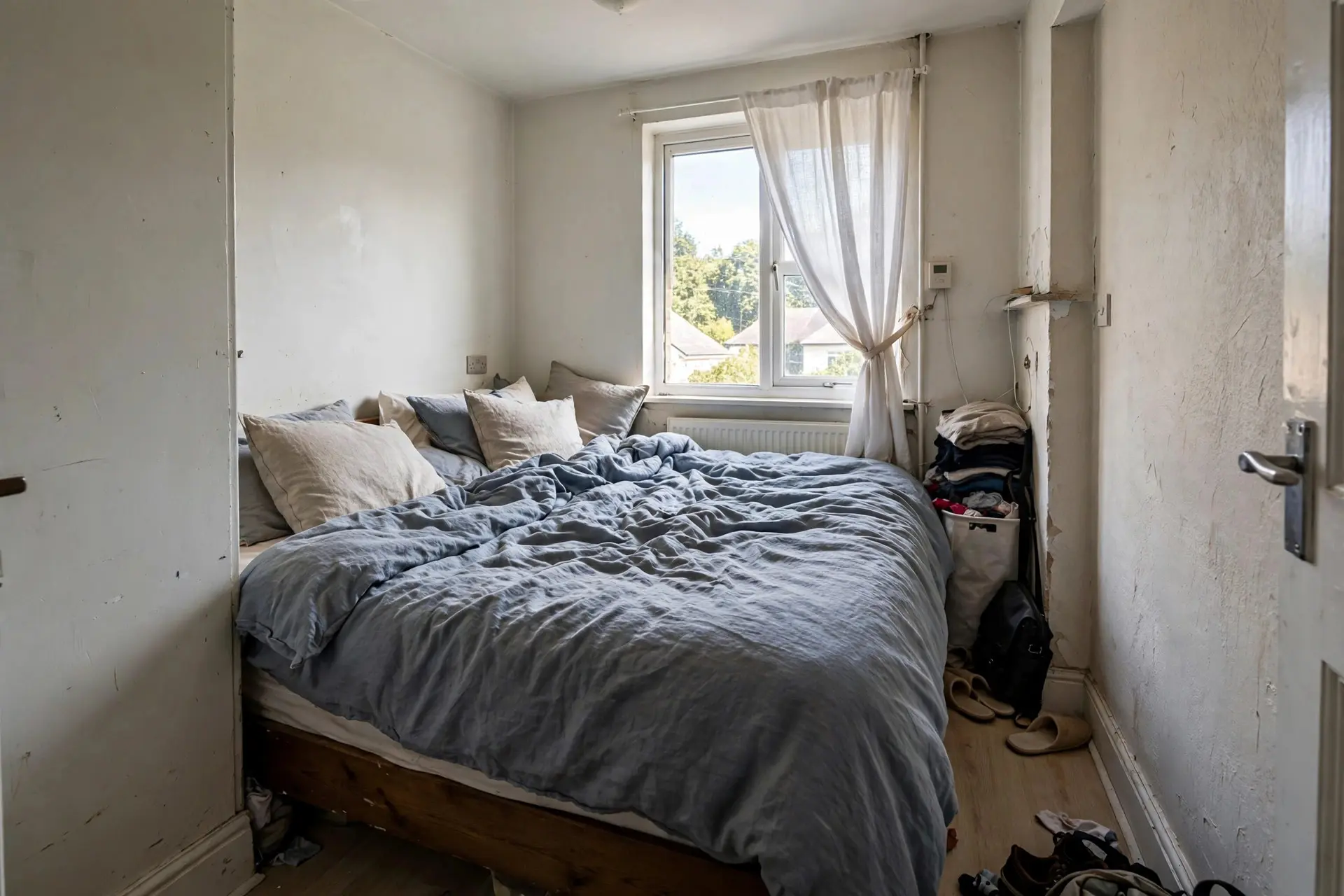
Measuring the Mattress, Not the Bed
The mattress is the small number. A bed frame adds width, often 2 to 4 inches per side for a platform frame and considerably more for an upholstered or storage frame. A footboard adds length. Always measure the frame you are buying, not the mattress it holds.
Forgetting the Headboard Wall
A headboard sits against the wall and pushes the mattress forward by 2 to 5 inches depending on the style. Mounted headboards and wall panels change that number again. Our guide to sizing a headboard for your bed and your wall covers both the height and the depth side of that decision.
Assuming One Side Can Be Against a Wall
Pushing a bed against a side wall is a real solution for a single sleeper or a child. For two adults it means one person climbs over the other every night. It also makes the bed almost impossible to make properly. It works for a Twin, rarely for anything larger.
Ignoring Ceiling Slope
Floor area tells you nothing about usable area in an attic or dormer bedroom. A room might measure 12 by 12 on the floor plan and have only 7 feet of it tall enough to stand in. If that is your situation, the layout advice in our post on attic bedroom ideas for sloped ceilings will be more useful than any size chart.
Choosing Between the Common Pairings


Full or Queen
A Full gives two adults about 26 inches each, which is less than a crib. It works for one adult who likes to sprawl, for a guest room, or for a teenager. For two people sleeping every night, the Queen is worth the extra 7 inches of width and 5 inches of length. Full length is 75 inches, which is short for anyone near 6 feet tall.
Queen or King
This is the real decision for most couples, and it should be answered by the room rather than by preference. If the room cannot give you 12 feet in the width direction, a Queen with proper clearance will be more pleasant to live with than a King you squeeze past.
If the room can take a King, the 8 extra inches per person is genuinely noticeable, particularly if one of you moves a lot or a pet joins in. Budget for bedding too, since King sheets, duvets and mattress protectors all cost more.
King or California King
Pick California King only if someone is tall enough to need the extra 4 inches of length. You give up 4 inches of width to get it, so for two average height adults the standard King is the better trade. Cal King also fits better in a long narrow room, where the width of a standard King is the constraint.
Twin or Twin XL
Same width, 5 inches of difference in length. Twin XL is the standard in college dorms and is the right pick for a tall teenager. Two Twin XL mattresses side by side equal the footprint of a King, which is how split King adjustable bases work.
Once the Size Is Settled

Bed size drives almost every other measurement in the bedroom. Rug size is set by the mattress footprint plus the amount you want showing on each side, which our guide to rug placement for a queen bed works through in detail. Nightstand height should match the top of the mattress, not a fixed number, which is why the nightstand height rules are relative rather than absolute.
If the honest answer is that your room is smaller than the bed you want, that is a layout problem rather than a shopping problem, and there are more fixes for it than most people expect. Our post on making a tiny bedroom feel bigger covers the ones that work.
A Test Before You Buy
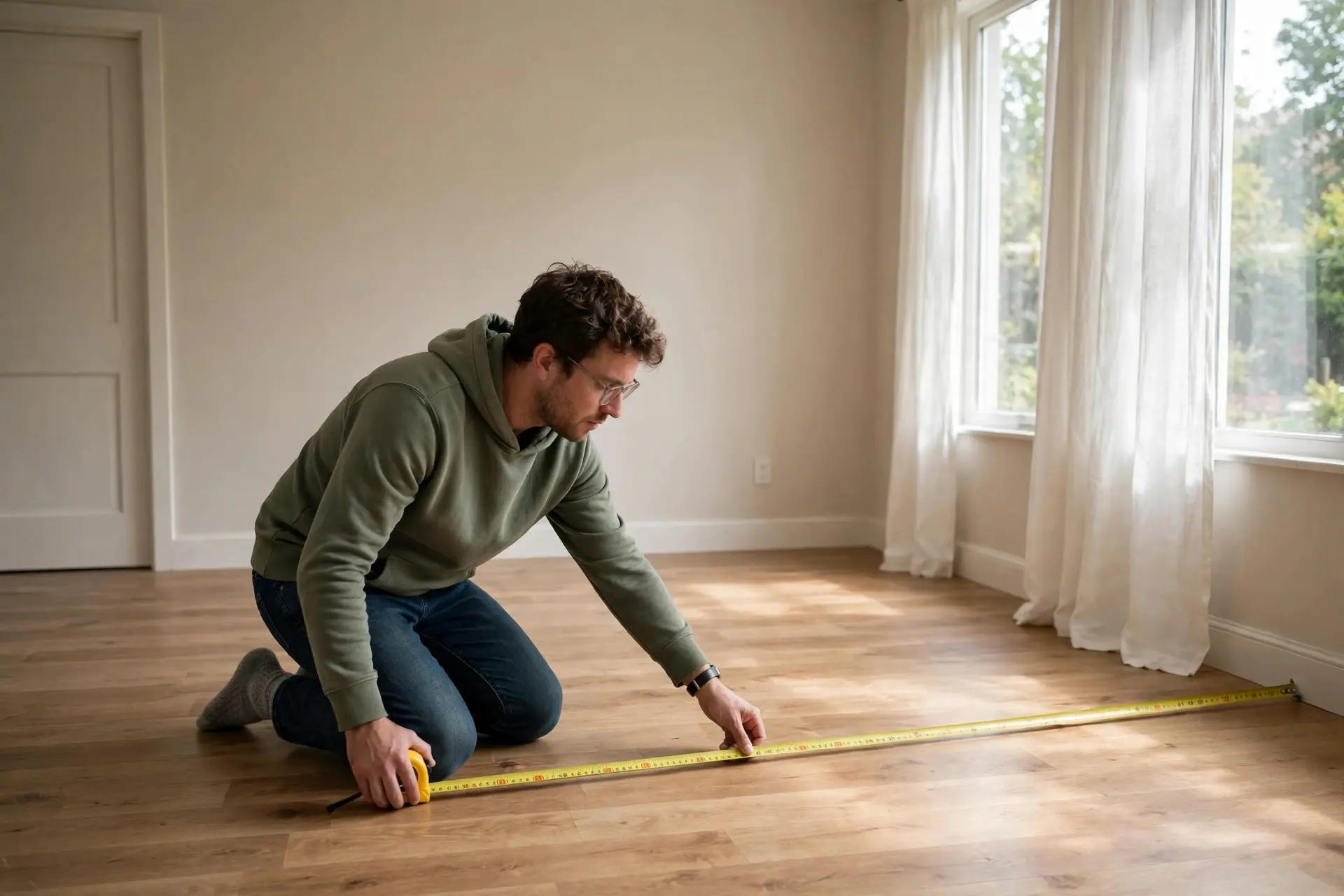
Tape the footprint out on the floor. Painters tape, the mattress dimensions plus your frame allowance, on the actual bedroom floor in the position the bed will sit.
Then walk the room. Open the door. Open the closet. Stand where the nightstand goes. Pretend to make the bed. Five minutes of tape will tell you more than any chart, and it is the step almost nobody does before spending a thousand dollars on furniture that cannot be returned easily.
Frequently Asked Questions
What size room do I need for a king bed?
At least 12 by 12 feet. A King is 76 by 80 inches, and adding 30 inches of walking clearance on each side brings the required width to about 11 feet 4 inches before you account for a frame, so 12 feet is the practical floor.
Is a queen bed big enough for two adults?
A Queen gives each person 30 inches of width. That is comfortable for most couples and is the most popular size sold. If either of you moves a lot in your sleep, or a child or pet joins regularly, a King is worth it when the room allows.
How much space do you need around a bed?
Aim for 24 to 30 inches on each side you walk down and 24 to 36 inches at the foot. Thirty inches on the sides accommodates a nightstand plus a clear path, while 24 inches works only if nothing is beside the bed.
Is a California king bigger than a king?
Not overall. A California King is 72 by 84 inches and a standard King is 76 by 80 inches. Cal King trades 4 inches of width for 4 inches of length, so it is longer but narrower and has slightly less total surface area.
Can you put a king bed in a 10 by 12 room?
It will physically fit, but the clearances will be tight. With the bed centered on the 10 foot wall you have roughly 22 inches on each side, which is below the comfortable range and leaves almost no room for nightstands. A Queen is the better fit in that room.
Mattress dimensions and minimum room recommendations in this article come from the Casper mattress size comparison guide.