

Most people shop for a coffee table the way they shop for a lamp. They find one they like, check the price, and hope it works. Then it lands in the living room and something feels wrong. The room suddenly plays smaller, or the table looks like a footstool that wandered in by mistake. Coffee table size is almost always the reason, and it is one of the few decorating problems you can solve completely with a tape measure before you spend a single dollar.
The rules are not complicated. What trips people up is the order they solve them in. Nearly every guide starts with length, and length is the wrong place to start. That is exactly how you end up with a table that matches the sofa perfectly and turns the room into an obstacle course.
Solve the Walkway First, Then the Sofa
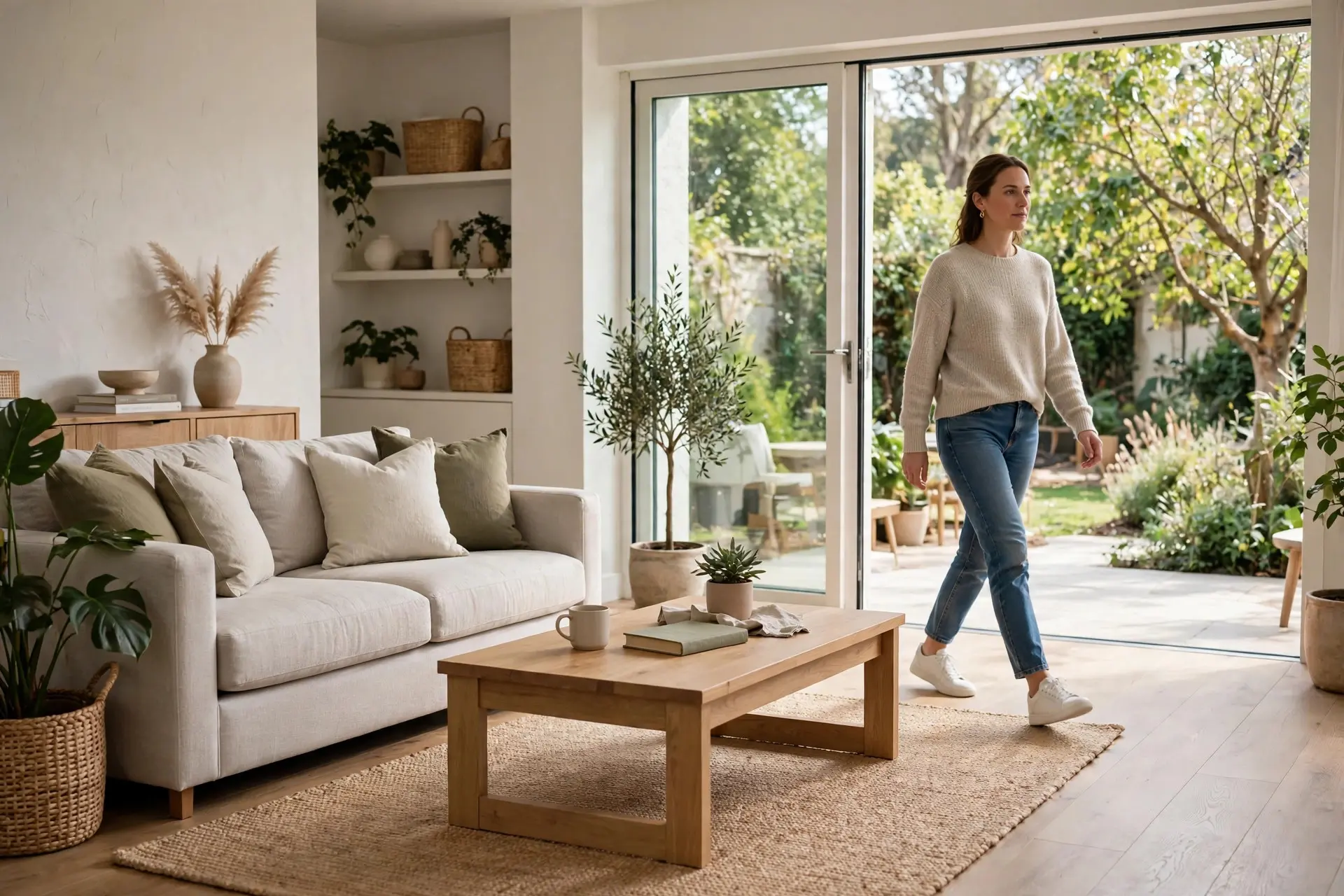
A coffee table has to share the floor with people walking across it. Designers generally want 30 to 36 inches of clear walking space between furniture pieces, and that number should set your ceiling before you look at a single product page.
Here is the arithmetic. Measure the open floor from the front of your sofa to whatever sits opposite it, usually a media console, a fireplace, or a pair of chairs. Then subtract two things: the gap you want between the sofa and the table, and the walkway on the far side.
Say you have 60 inches of open floor. Take away 16 inches for the sofa gap and 30 inches for the walkway, and you are left with 14 inches of usable depth. That is narrower than most coffee tables are built. This is not a failure. It is useful information, and it tells you to stop looking at 40 inch rectangles and start looking at a round table, a narrow bench, or two small tables you can pull apart.
Run the same math on a room with 84 inches of open floor and you get 38 inches of depth to play with, which is more than you need. Now you can choose based on looks instead of survival. Knowing which of those two rooms you have is the whole game, and it is the same logic that decides a narrow living room layout.
How Long Should a Coffee Table Be

The common guidance is that a coffee table should be about two thirds the length of the sofa. A 60 inch sofa pairs with roughly a 40 inch table. Some designers widen that to anywhere between one half and two thirds, which is a more forgiving range and closer to what looks right in real rooms.
Measure your sofa the honest way, arm to arm across the outside, not just the seat cushions. A 60 inch sofa in a catalog often means 60 inches of total frame, and that is the number the ratio is built on.
When the Two Thirds Rule Stops Helping
On a loveseat or a compact sofa under about 60 inches, two thirds lands you around 38 inches, which can read stubby next to the seat. Push toward the top of the range instead. On a very long sofa, say 96 inches, two thirds is 64 inches, and a table that long starts to feel like a runway. Two smaller tables side by side usually serve that sofa better, and they let people reach the surface from both ends.
Sectionals Change the Math
With a sectional, do not measure the total length. Measure only the longest straight run, the section people actually sit facing. Then size the table to that run. Also keep the chaise leg clear. A table that crowds the chaise means nobody can stretch out, which was the entire reason you bought a sectional.
The Height Number Everyone Measures Wrong
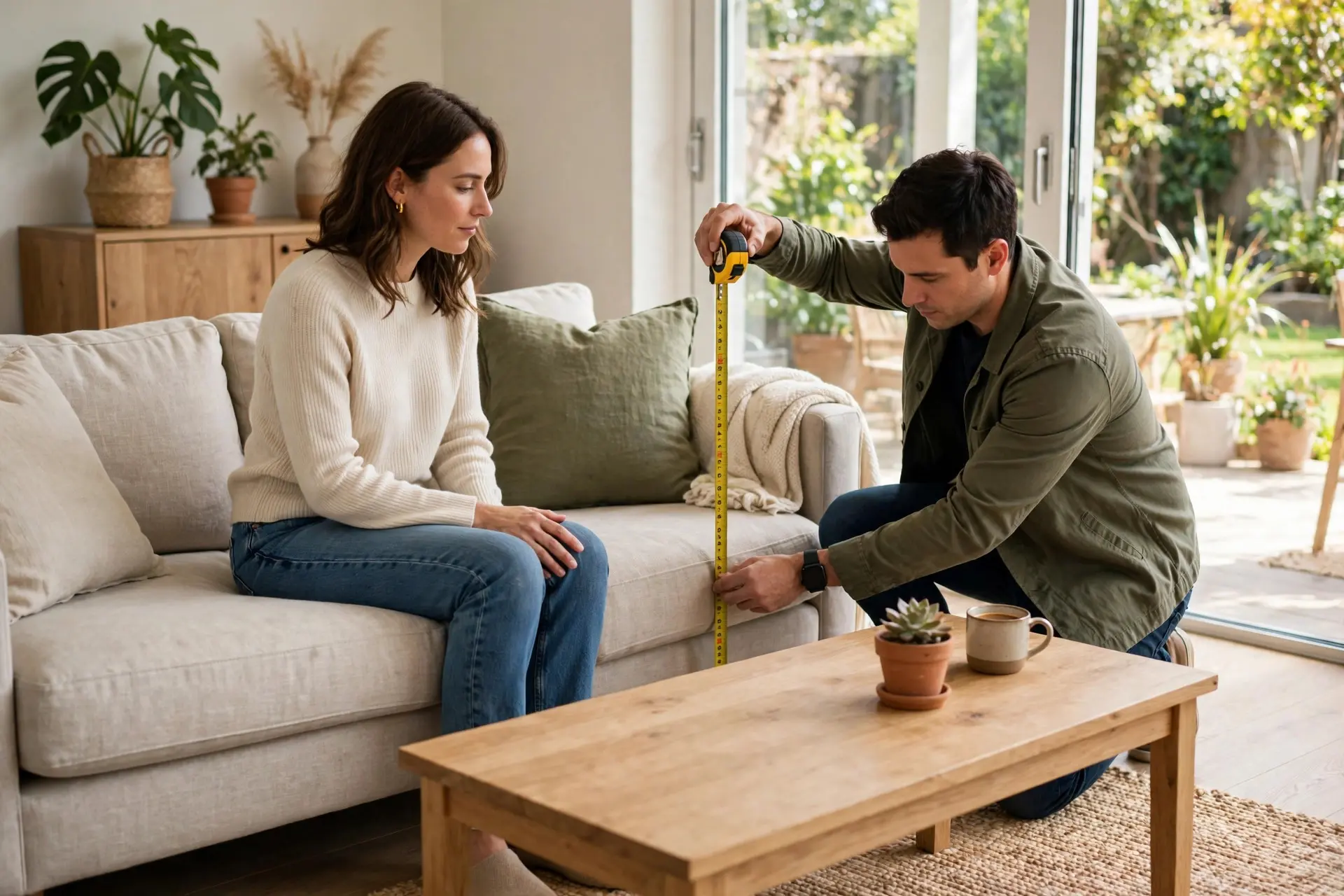
Standard coffee tables run 16 to 18 inches tall. The better target is your own sofa: match the height of the seat cushion, or sit 1 to 2 inches below it. Staying within about 4 inches either way still works fine.
Here is the part most guides skip. Do not measure the cushion while the sofa is empty. Sit down, get comfortable, and have someone measure from the floor to the top of the squashed cushion. A plush seat can lose 2 or 3 inches under a person, and that compressed number is the one your mug and your knees care about. A table that looked level in an empty room can end up sitting noticeably high once the sofa is doing its job.
Very low tables under 14 inches look great in photographs and are genuinely annoying to use from a deep sofa. You have to lean forward and reach down for everything. If you have a deep, soft sofa, go taller rather than lower.
How Far From the Sofa

Leave 12 to 18 inches between the front of the sofa and the edge of the table. Most people land happiest around 14 to 16 inches.
- Under 12 inches: your shins find the table every time you stand up.
- 14 to 16 inches: you can set a drink down without leaning and still get out of the seat cleanly.
- Over 18 inches: you have to stretch, so the table stops being convenient and starts being decoration.
If you are someone who puts their feet up, aim for the lower end. The closer gap makes the table double as a footrest without you having to slide down in the seat.
Width and Depth, the Measurement People Forget
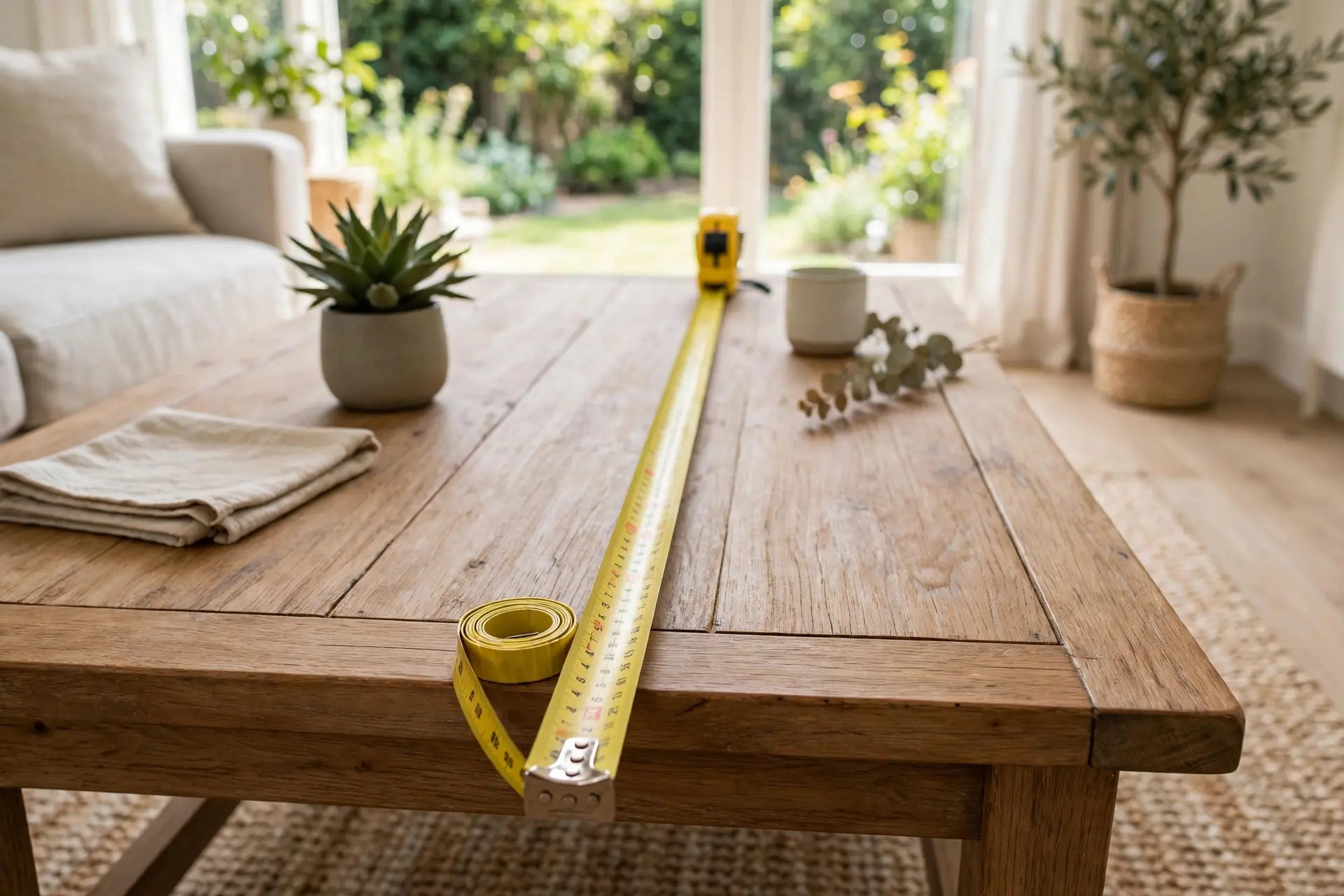
Coffee tables are usually sorted into narrow under 16 inches, standard 16 to 40 inches, and wide over 40 inches. For a rectangle, depth of roughly half the length keeps the proportions comfortable. A 48 inch table around 24 inches deep is a safe, boring, reliable choice.
Watch out past about 40 inches of depth. The center of a very deep table becomes dead space you cannot reach from either side, so it collects mail and dust instead of drinks and books.
Picking the Shape Based on Your Numbers
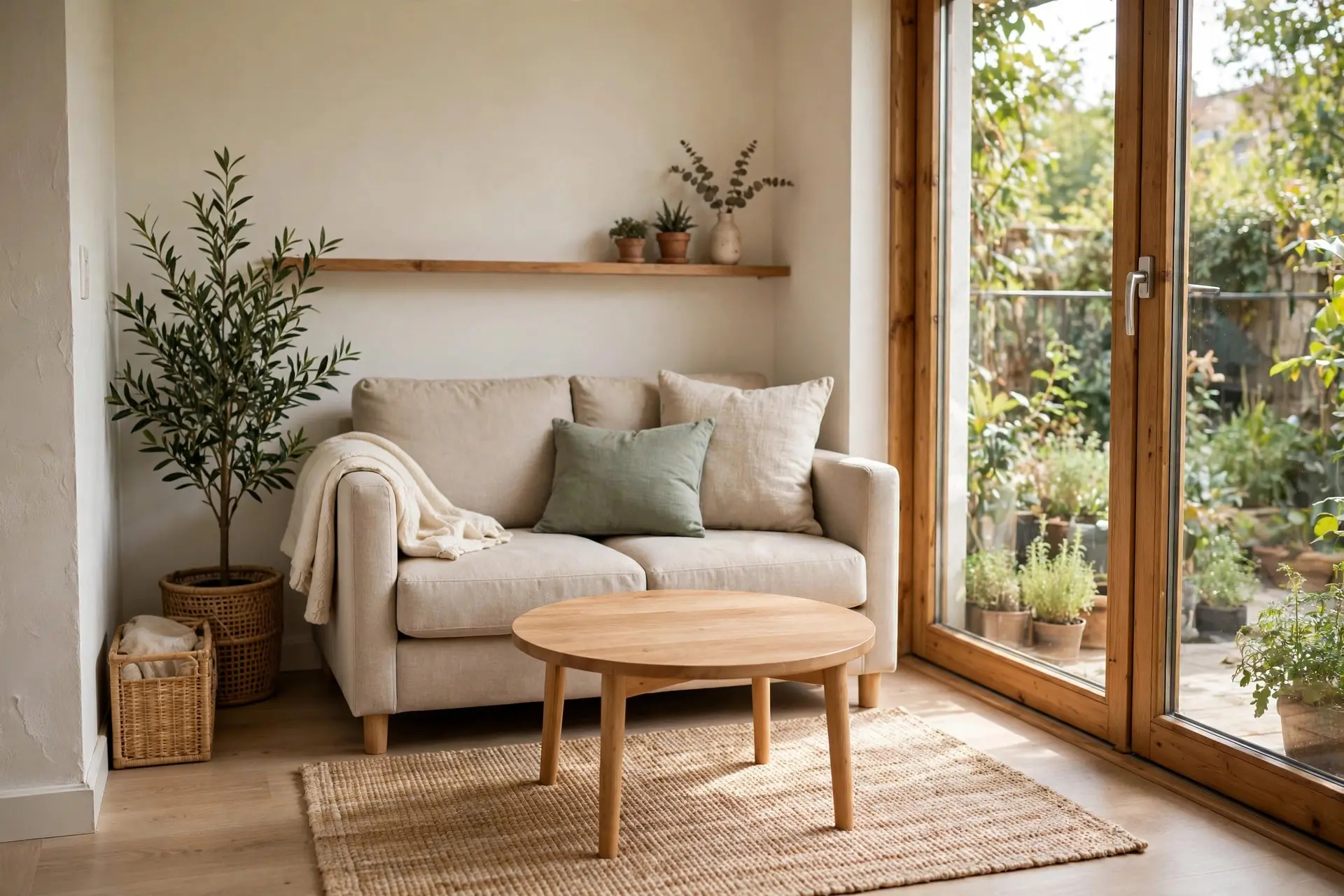
- Rectangular: the default for one sofa against one wall. Easiest to size, easiest to fill.
- Round or oval: the right answer when your depth math came out tight or when a walking path cuts near the seating. No corners to bruise a shin, and it reads smaller than it measures.
- Square: works with an L shaped sectional or two sofas facing each other, because every side has a seat pointed at it.
- Two small tables or a nesting pair: the fix for a very long sofa or a room where 14 inches of depth was all you had. Pull them apart when you need surface, push them together when you need floor.
- Upholstered ottoman: comfortable and usually the right height, since it is built at seat level. Add a hard tray so drinks have somewhere honest to sit.
Standard Coffee Table Sizes at a Glance
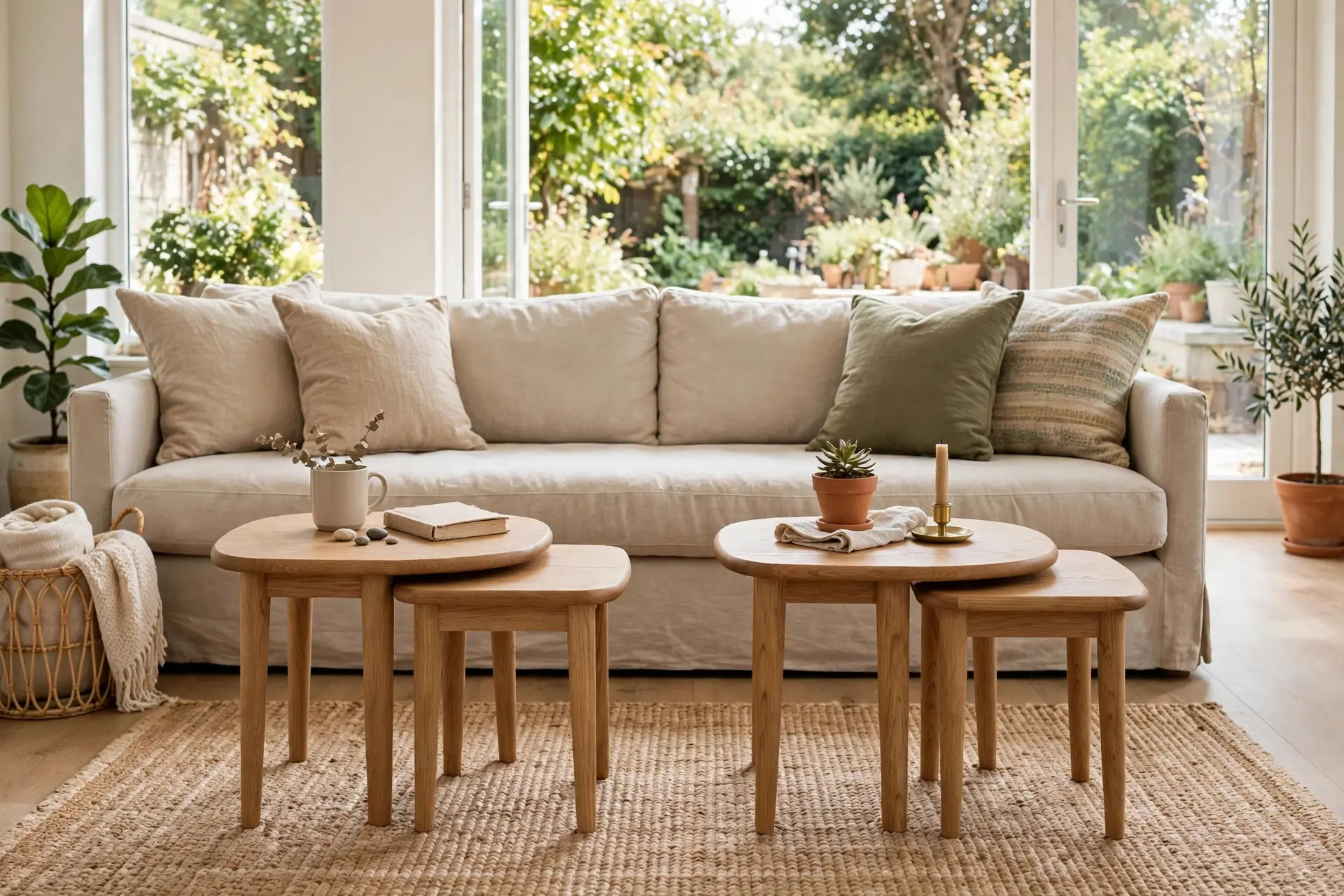
- Height: 16 to 18 inches is standard. Under 14 inches is low, over 22 inches is tall.
- Length: under 30 inches is small, 30 to 50 inches is standard, over 50 inches is large.
- Width: under 16 inches is narrow, 16 to 40 inches is standard, over 40 inches is wide.
- Loveseat around 54 inches: look at 30 to 36 inches of length.
- Sofa around 72 inches: look at 44 to 48 inches of length.
- Sofa around 84 inches: look at 50 to 56 inches of length.
Tape It Out Before You Buy
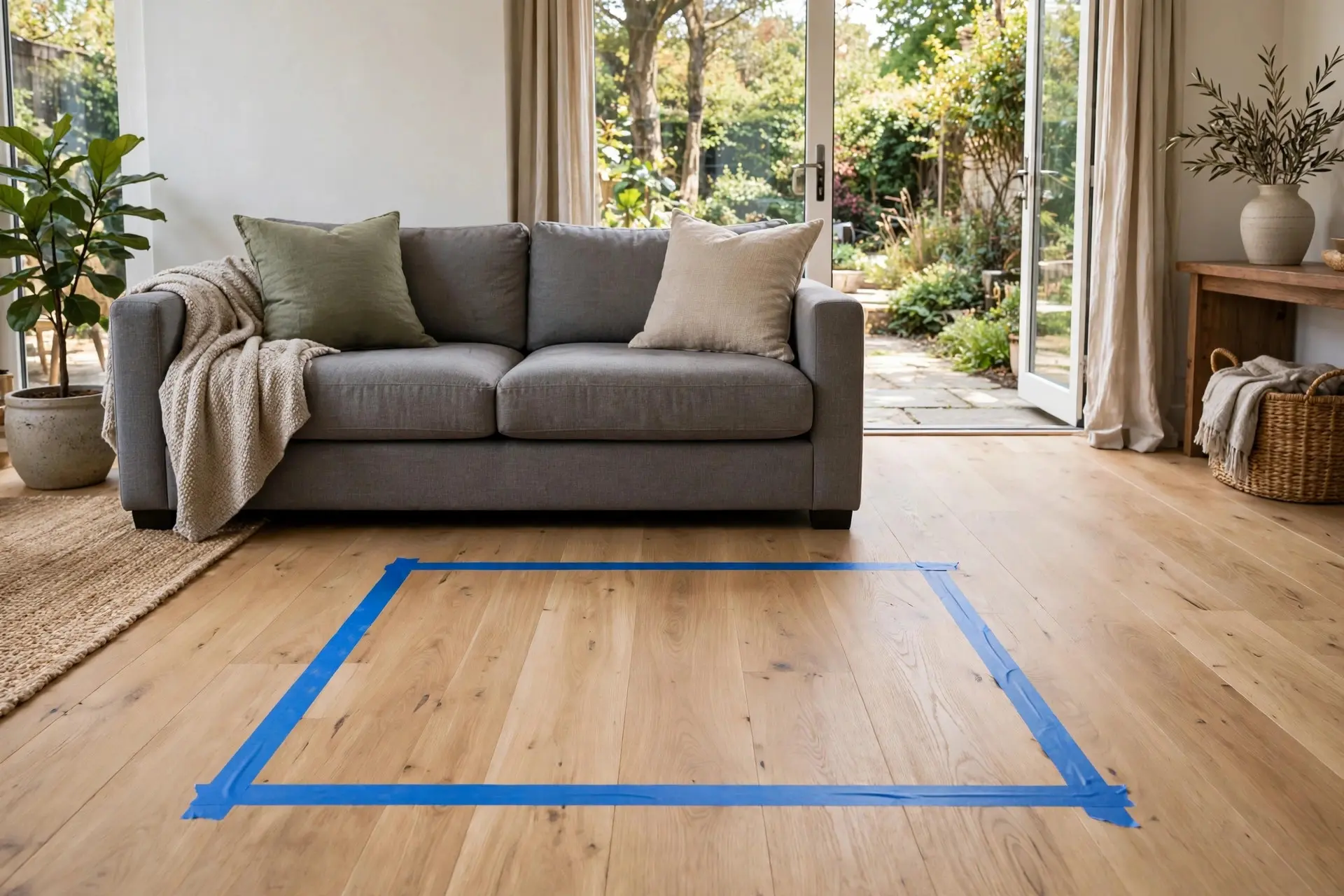
This takes ten minutes and saves return shipping. Mark the table footprint on the floor with painter’s tape, then stack books or boxes to the height you are considering. Now live with it for two days.
Pay attention to three things. Walk the path you actually walk when you cross the room, not a polite imaginary one. Sit down and reach for the tape line to check the distance. And carry something bulky past it, like a laundry basket, because that is the test real furniture fails. The same approach works for dining table size, where clearance matters even more because chairs move.
Sizing Mistakes That Show Up Later

- Buying to fill the rug. The table answers to the sofa, not to the rug. Size the rug to the seating group instead, which is a separate decision covered in these living room rug ideas.
- Measuring an empty cushion. The compressed seat height is the real number.
- Going too deep. A wide table with an unreachable middle becomes a shelf for clutter.
- Forgetting the far side. People measure the sofa gap carefully and then leave 18 inches to squeeze past the TV stand.
- Matching heights to the TV wall. Table height answers to the sofa. Screen placement is its own calculation, and TV mounting height has nothing to do with your coffee table.
Frequently Asked Questions
What size coffee table fits a 72 inch sofa?
Roughly 44 to 48 inches long. Two thirds of 72 is 48, and anything down to about 44 still looks intentional. Keep the depth near 24 inches and the height between 16 and 18 inches unless your seat cushion says otherwise.
Can a coffee table be longer than the sofa?
It should not be. A table that runs past the arms of the sofa makes the seating look undersized and blocks the natural way people step in and out of the group. Stay shorter than the sofa every time.
How much space do I need between the coffee table and the TV stand?
Treat it as a walkway and give it 30 to 36 inches. If the room cannot spare that, you need a shallower table, a round one, or a pair of small tables rather than a compromise on the path.
Is a round coffee table better for a small living room?
Usually yes. A round table has no corners to catch a shin, it lets people cut the corner when they walk past, and the curved edge makes a tight room read looser than a rectangle of the same footprint. A 36 inch round table often works where a 48 by 24 inch rectangle does not.
Should the coffee table match the side tables?
No, and a matched set often makes a room look like a showroom floor. What matters is height logic: side tables should sit no taller than the sofa arm, ideally about 3 inches below it, while the coffee table answers to the seat cushion. Get those two heights right and mismatched materials look deliberate.
The Short Version
Measure the open floor first and subtract your walkway. Size the length to one half or two thirds of the sofa. Match the height to a compressed seat cushion. Leave 14 to 16 inches of gap. Then tape it on the floor and walk around it for two days before you buy. Do that in order and the table will fit the room instead of fighting it.