

A shower niche looks like a small decision. It is a hole in a wall with tile in it. But the shower niche size you pick is locked in the moment the framing goes up, and it is decided by things most inspiration photos never mention: where the studs are, how deep the wall actually is, and how tall your shampoo bottle is. Get it wrong and you end up with a beautiful recess that your conditioner will not stand up in.
This is the practical version. Real dimensions, the framing limit that decides your maximum width, and where the niche should and should not go.
The Sizes People Actually Build

Prefabricated niches, the foam or plastic boxes that get set into the wall before tiling, come in a handful of repeating sizes. Size guides from tile suppliers list the common ones as:
- 12 by 12 inches: one shelf, enough for a shampoo and a body wash. The minimum that is genuinely useful.
- 12 by 24 inches: the most common choice. Usually split with one shelf into two compartments.
- 16 by 20 or 16 by 24 inches: better for a shared shower where two people each need their own row.
- Depth: 3.5 to 4 inches, because that is what a standard wall gives you.
Custom built niches run wider, from 12 inches up past 36, and that is where people get ambitious without checking what is inside the wall.
The Framing Limit Nobody Mentions

Wall studs are usually spaced 16 inches on center, sometimes 24. With 16 inch spacing and standard 2 by 4 lumber, the clear space between two studs is about 14.5 inches.
That single number sets your easy maximum. A niche up to roughly 14 inches wide drops neatly into one stud bay. The carpenter adds blocking above and below, and nothing structural changes. This is why 12 inches is such a common width. It is not a design choice, it is what fits.
Go wider than about 14 inches and a stud has to be cut. That means a header across the top to carry the load, and in some walls it means the framing has to be reworked. It is doable, it is normal work for a builder, and it costs more. So if a contractor pushes back on your 30 inch wide niche, this is usually why.
The workaround that costs nothing: two 12 inch niches in adjacent stud bays, side by side with the stud between them. You get the storage of a wide niche without touching the framing, and in a shared shower it naturally gives each person their own space.
Depth Is Tighter Than the Number Suggests
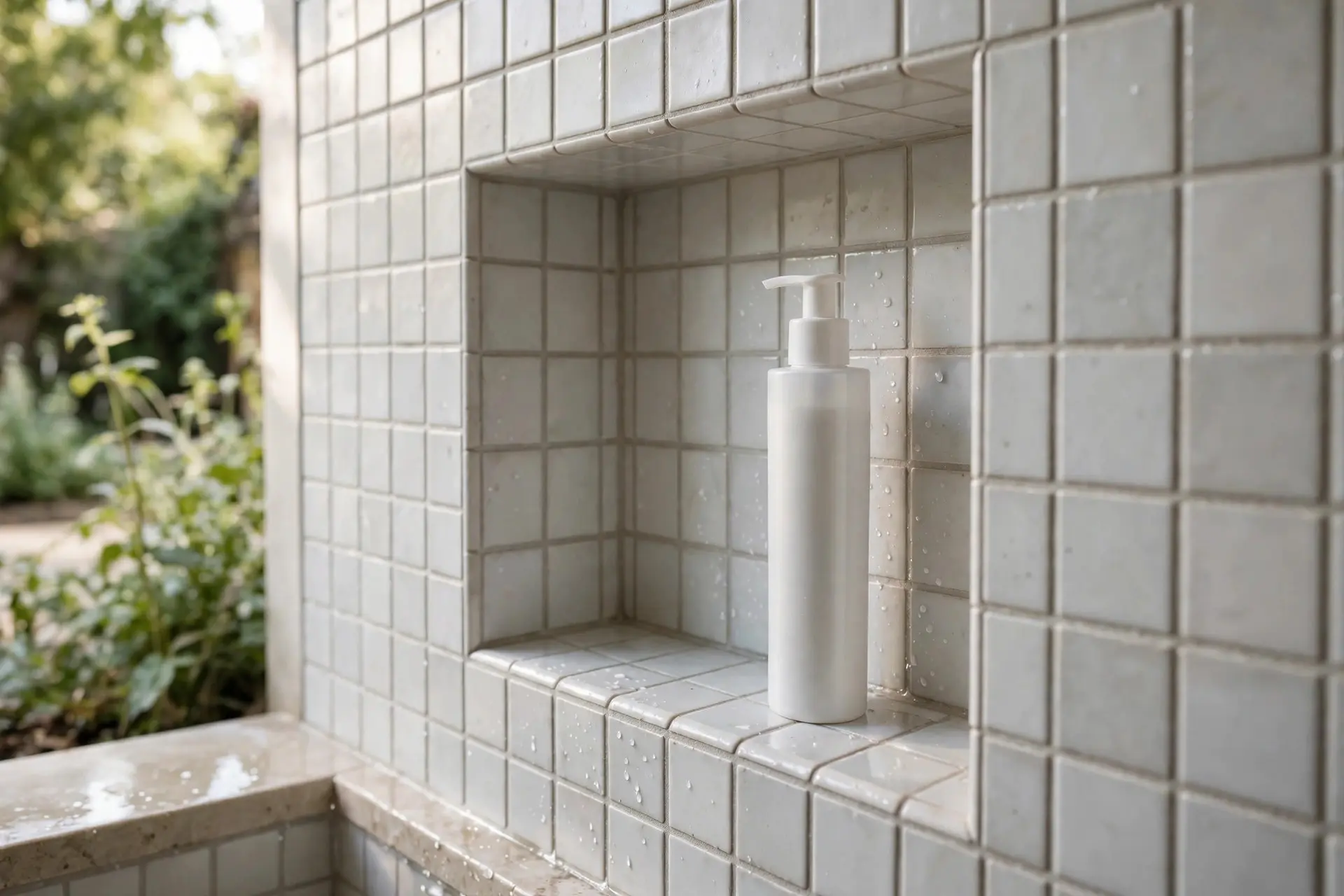
A 2 by 4 wall is 3.5 inches deep. That is the number quoted, and it is technically true. But the usable depth is less, because the back of the niche gets a waterproofing membrane and then tile, and both of those eat space. Depending on the tile you choose, expect to lose half an inch to three quarters of an inch. Usable depth lands somewhere around 2.75 to 3 inches.
Now go look at your shower. A big pump bottle of conditioner is often 3 inches deep or more. A pump bottle with a wide oval base can be 3.5. If your shelf is 2.75 inches deep, that bottle sits proud of the tile face and will get knocked off.
Do this before framing: measure the depth and height of the tallest and fattest bottle you actually buy. Not the travel size. The one from the warehouse store. That measurement is your real design brief.
If your bottles are too deep for a 2 by 4 wall, you have options. Build the niche into a 2 by 6 wall if one is available. Fur the wall out an inch during construction. Or, and this is often the smartest answer, accept the depth and decant into narrower bottles.
How High to Put It
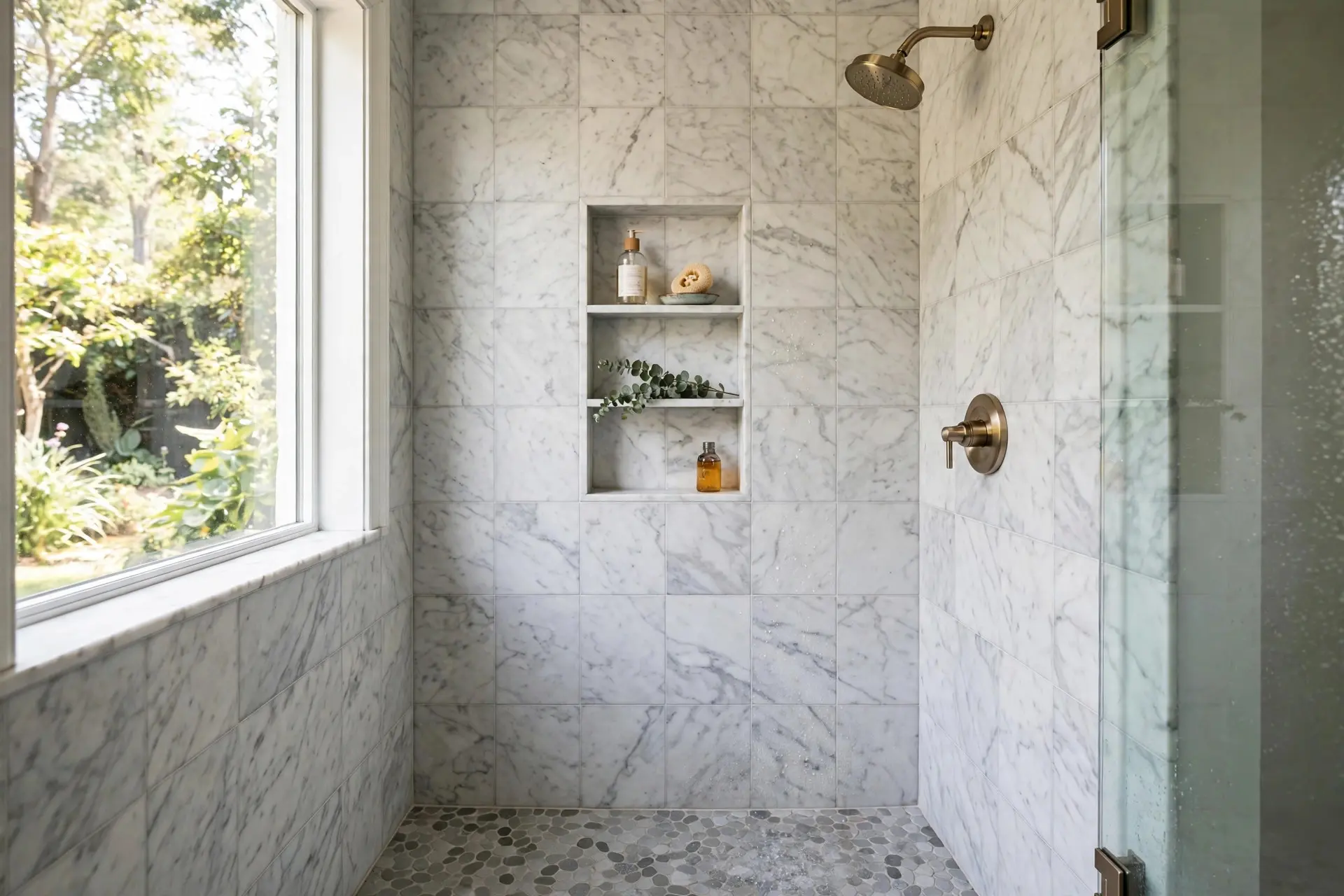
The usual guidance puts the niche at around 48 inches from the shower floor, which is roughly chest to shoulder height for most adults. That is a good default because it puts things where your hand naturally goes without bending or reaching overhead.
Adjust from there based on how the shower is used:
- Walk in shower, standing use: 44 to 52 inches to the bottom of the niche works well.
- Tub and shower combination: drop it. 36 to 42 inches is better, because you are often reaching for things while sitting in the tub or leaning over it.
- Shower with a bench or seat: consider a second low niche at 24 to 30 inches, reachable while seated.
- Leg shaving: a low recessed ledge or foot ledge around 12 to 18 inches is a separate feature, and it is far more useful than a high niche for that job.
Shelf spacing inside the niche matters too. Leave 12 to 14 inches of clear height for the compartment that holds tall pump bottles, and 7 to 8 inches for the one holding bar soap, razors and face wash. Splitting a 24 inch niche dead in the middle gives you two 11 inch compartments, and the tall bottles will not fit in either.
Which Wall, and Where on It

Placement rules, roughly in order of how much trouble they save you:
Not on an exterior wall if you can help it. Recessing a box into an outside wall cuts into the insulation. In a cold climate that is a condensation and cold spot problem. If it is the only option, the niche needs rigid insulation behind it.
Not on the plumbing wall. The wall carrying the valve and the shower riser is full of pipe. Putting a recess in the middle of that is asking for a conflict, and a plumber will usually refuse or charge you to reroute.
Out of the direct spray. A niche directly under the shower head fills with water and the contents never dry. The side wall, or the back wall away from the head, keeps the shelf drier and the tile cleaner.
Reachable from where you stand. Sounds obvious. Gets missed constantly when the niche is placed for symmetry in a drawing instead of for the person in the shower. Stand in the space, put your hand where you want the bottles, and mark the wall.
Clear of the door or glass panel. A niche that a hinged door swings into, or that a glass panel lands across, is a detailing headache.
Make the Niche Land on Grout Lines
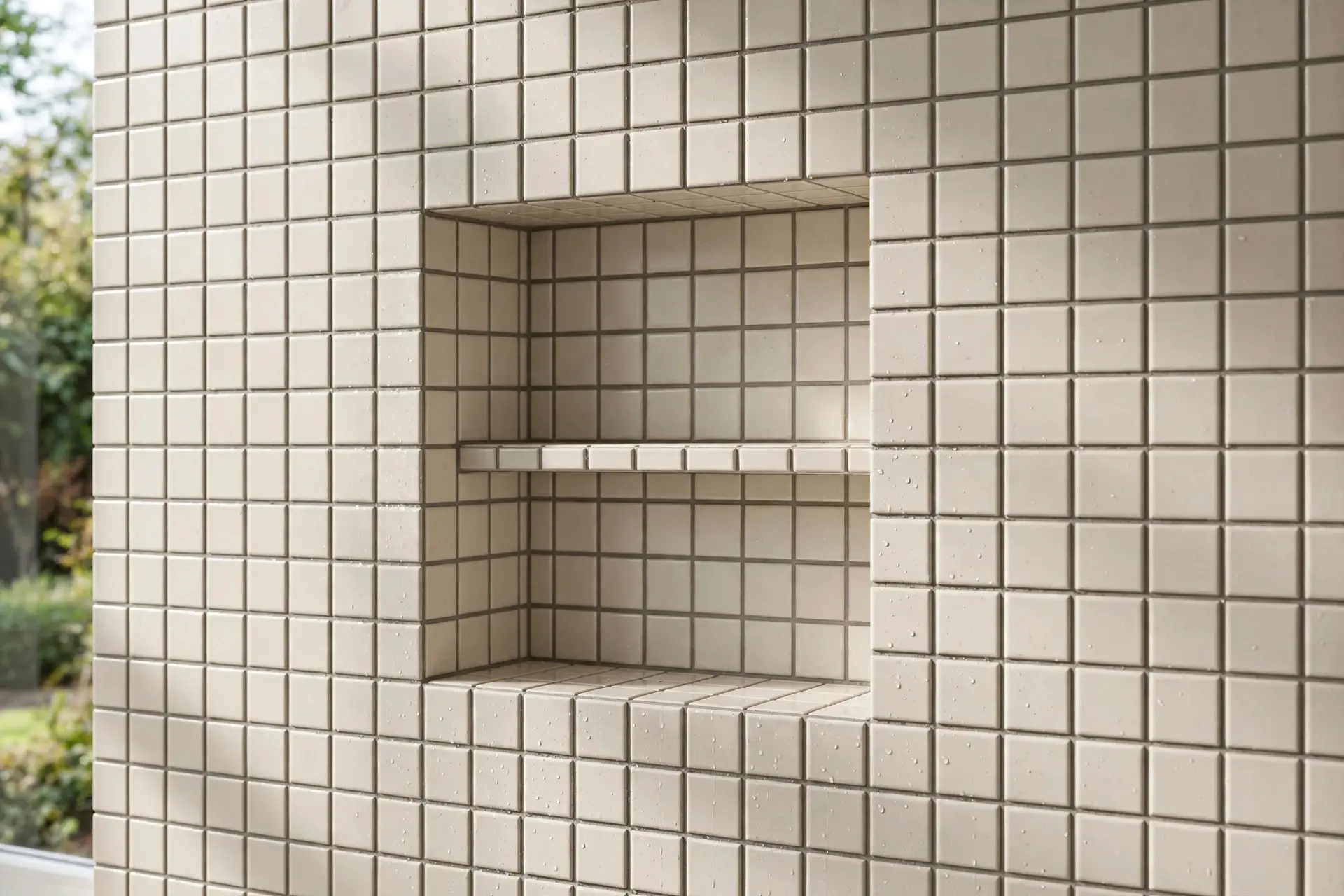
This is the single detail that separates a niche that looks built in from one that looks cut in. Size the opening so its edges fall on tile joints rather than partway across a tile.
With 12 by 24 inch wall tile, a 12 inch wide niche aligns naturally. With 4 by 12 subway tile in a running bond, a niche width that is a clean multiple of 4 inches plus grout joints keeps the courses reading straight across. With mosaic sheets, you have more freedom, because the sheet can be cut anywhere.
The practical move is to have this conversation before the framing, not after. Ask the tile setter where the niche should sit so the courses work out. They will have an answer in about thirty seconds, and it will save you from a row of one inch tile slivers running along the top edge. If you are still choosing materials, it is worth reading through these bathroom tile design ideas with the niche layout in mind rather than picking tile first and fitting the niche around it.
The Bottom Has to Slope
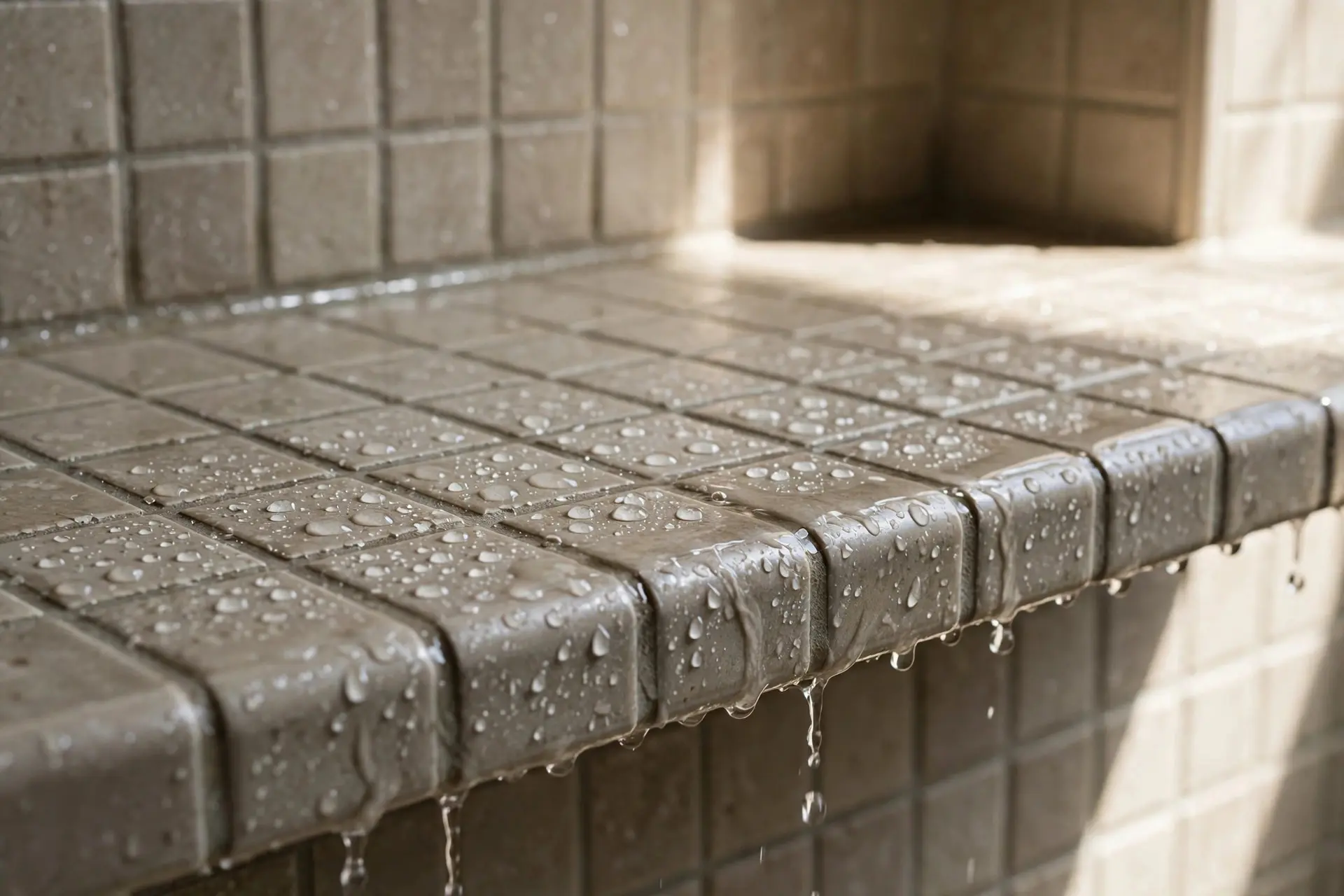
A flat niche bottom holds a puddle. That puddle leaves soap scum, then a ring, then discoloration in the grout. The fix is a slight slope on the shelf, around an eighth of an inch, tipping toward the shower so water runs out.
It is a small thing that gets skipped, and it is the difference between a niche you wipe once a month and one you scrub. Ask for it specifically. Same with the waterproofing: the niche is a five sided box cut into a wet wall, so the membrane has to be continuous around every corner and seam. This is the part of the job where cutting corners shows up as a leak two years later.
When a Niche Is Not the Right Answer

If the wall is a poor candidate, or the build is already framed, a recessed niche may not be worth the trouble. Reasonable alternatives:
- A full width ledge. A tiled shelf running the length of one wall at 48 inches. No framing surgery, plenty of room, and it reads as a design line rather than a box.
- A corner shelf. Tiled triangular shelves set into a corner during tiling. Less storage, far less disruption.
- Surface mounted storage. Less elegant, completely reversible, and the right call in a rental or a shower you are not rebuilding. There are better and worse versions of this, and these shower storage ideas for small bathrooms cover the options that do not involve opening a wall.
Frequently Asked Questions
What is the best shower niche size?
For one person, 12 by 24 inches with one shelf placed off center, giving a 13 to 14 inch compartment for tall bottles and a shorter one below. For a shared shower, two separate 12 by 20 or 12 by 24 niches in neighbouring stud bays beats one wide one, because it avoids cutting a stud and gives each person their own shelf.
How deep can a shower niche be?
In a standard 2 by 4 wall, about 3.5 inches of framing depth, which becomes roughly 2.75 to 3 inches of usable space once waterproofing and tile are added. A 2 by 6 wall gives you more. Measure your actual bottles before assuming 3 inches is enough.
How high should a shower niche be from the floor?
Around 48 inches to the bottom of the niche is the common default for a standing shower. Lower it to 36 to 42 inches in a tub and shower combination, and add a second low niche near 24 to 30 inches if the shower has a seat.
Can I add a niche to an existing tiled shower?
Not without removing tile and opening the wall, which means redoing the waterproofing in that area. It is a real job, not a weekend upgrade. If the shower is otherwise fine, a corner shelf or surface mounted storage is the sensible route.
Should the niche be tiled to match the wall or in a contrast tile?
Both work, and the choice is about how much attention you want the niche to draw. Matching tile makes it disappear, which suits a busy or patterned wall. A contrast back panel turns it into a feature, which works when the surrounding tile is plain. What rarely works is a contrast tile that clashes in thickness, because the edge detail gets awkward.
Before You Sign Off on the Framing

Measure your tallest bottle. Pick a width that fits between the studs. Set the height by standing in the space, not by a drawing. Ask for a sloped bottom and continuous waterproofing. Confirm the opening lands on grout lines. That is five short conversations, and they happen before anything is permanent, which is exactly the same reason it pays to nail down vanity sizes and clearances at the planning stage rather than after the plumbing is roughed in.