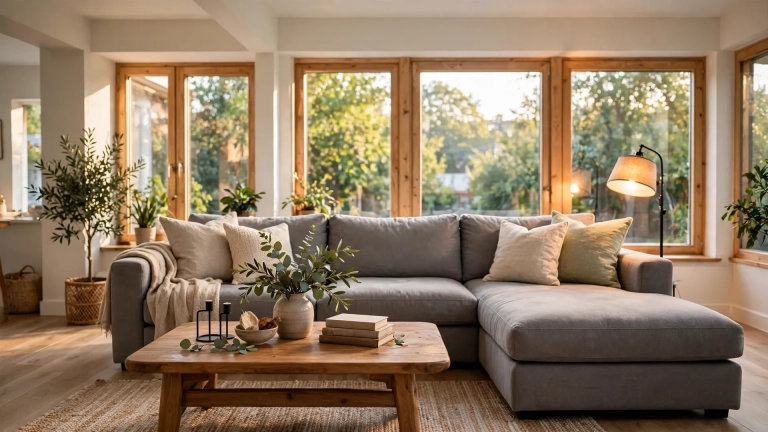
Wall Art Size Guide: 12 Sizing Rules That Make Every Room Look Right

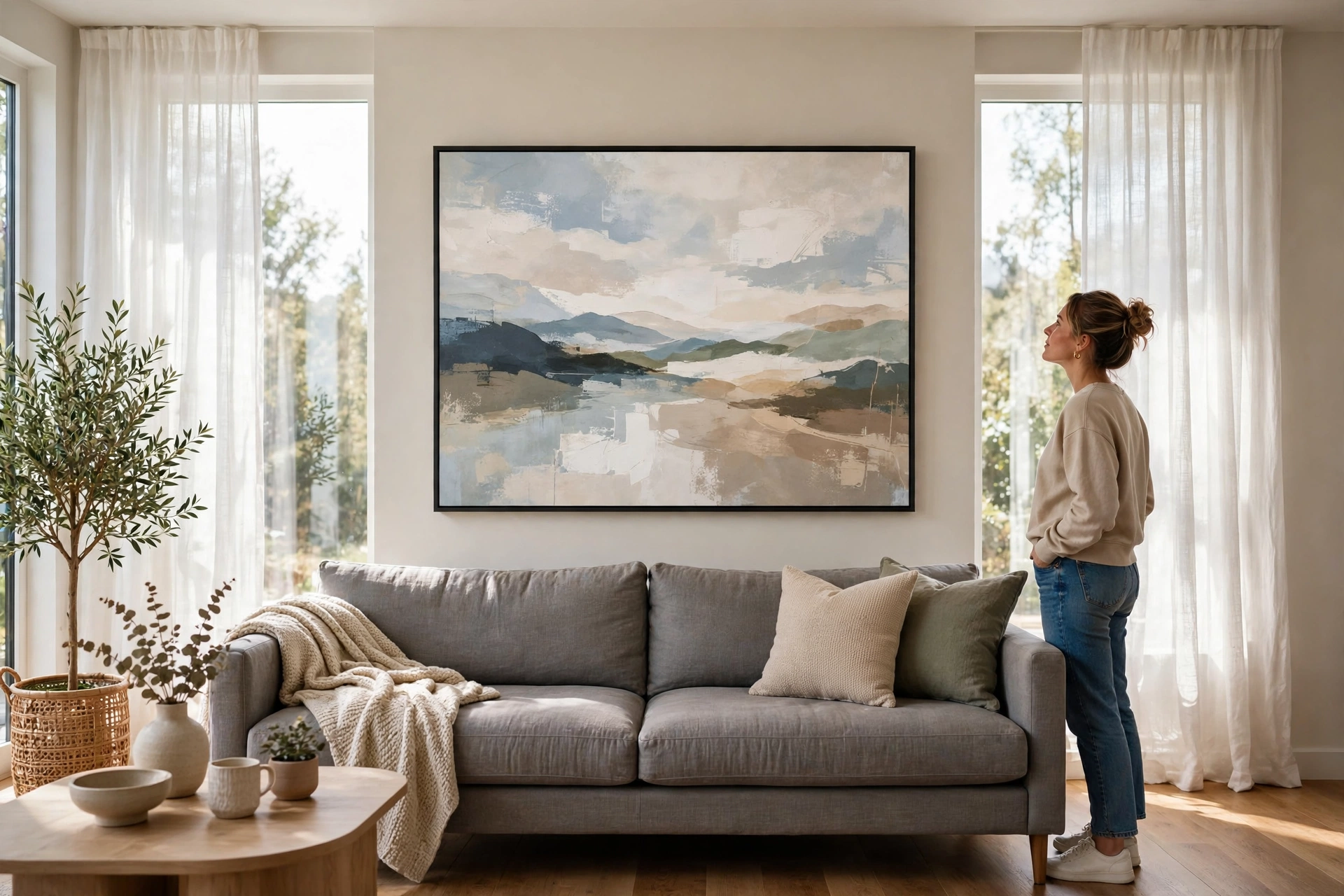
My sister once hung a beautiful print over her sofa. It was a gift from her best friend, and she loved it. The only problem was the size. The print was no bigger than a placemat, and the sofa stretched nine feet long. Guests kept asking where she bought it, and she kept pointing at this tiny square floating in the middle of a huge empty wall. She finally moved it to the hallway, where it looks perfect. The print never changed. Only the wall did.
I have made the same mistake myself. A frame that looks grand in the store can look lost above a king bed. A canvas that fills a gallery wall can swallow a small mantel. The fix is never better taste. It is better math. Think of this wall art size guide as a friendly tape measure for your walls, with twelve simple rules you can use in any room.
Wall Art Size Guide Basics: The 57-Inch Center Line
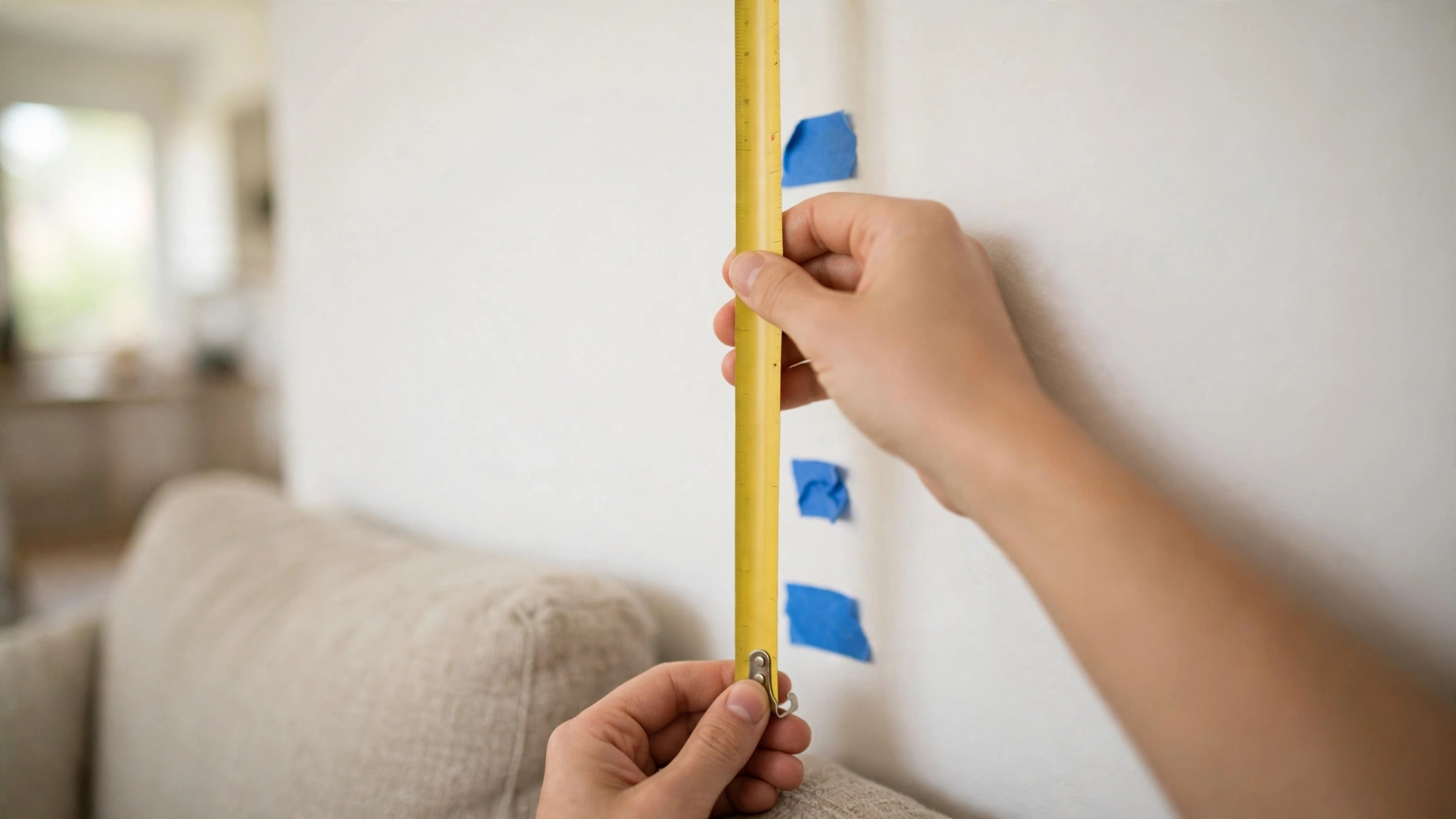
Galleries and museums around the world hang art so the center of the piece sits at 57 inches from the floor. That number sounds oddly specific, but it matches the average human eye level. When you stand in front of a painting in a museum, you are looking straight at its middle without tilting your head. That calm feeling is not an accident. It is a measurement.
Rule 1: hang art so its center hits 57 inches. Measure 57 inches up from the floor and mark the spot lightly with painter’s tape. Then hang the piece so the middle of the frame lines up with the mark. The room will feel calmer at once, even if you change nothing else.
Rule 2: leave 6 to 8 inches between art and furniture. When art hangs above a sofa, console, or headboard, the gap matters as much as the height. Less than 6 inches feels crowded. More than 10 inches breaks the visual link, and the art starts floating on its own. Most decorators quietly follow this wall art size guide math before they hang a single nail.
Rule 3: make the art about two-thirds the width of the furniture below it. This is the famous two-thirds rule, and it fixes more rooms than any other trick. Measure the width of your sofa, bed, or console, then choose art that spans roughly two-thirds of it. A 90-inch sofa wants art about 60 inches wide. A 60-inch dresser wants art about 40 inches wide. The rule works because it groups the furniture and the art into one visual unit instead of two strangers sharing a wall.
Above the Sofa: Where Most People Go Wrong
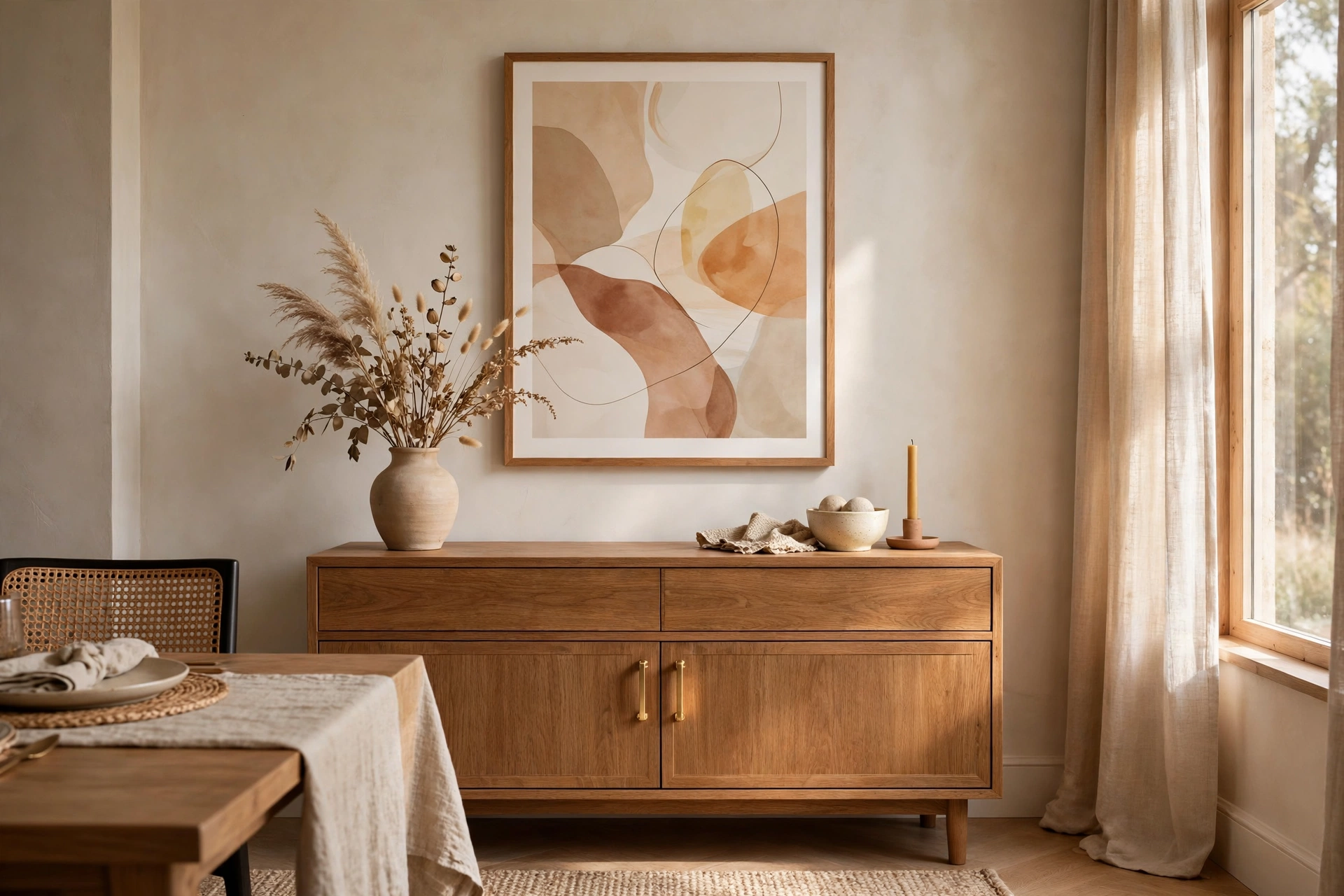
The sofa wall is the first wall guests see, and it is where sizing mistakes show up the loudest. A tiny frame over a long sofa looks like a postage stamp. An oversized canvas over a loveseat looks like it is falling on you.
Rule 4: let the sofa set the width. This wall art size guide treats the sofa as the anchor of the living room, so the art must relate to it. For a standard 84-inch sofa, aim for a single piece or a group that totals 56 to 60 inches across. If you hang a pair of prints, measure the two frames plus the gap between them as one shape.
Rule 5: one large piece usually beats three small ones. Small frames scattered over a big sofa read as clutter, not decor. They pull the eye in too many directions. One generous canvas or a tight pair of medium frames gives the wall a clear focal point and makes the whole room feel more expensive.
Rule 6: hang the frame 6 to 8 inches above the sofa back. Sit on the sofa and look up. The bottom of the frame should clear the back cushions by about a hand’s width. Any higher and the art disconnects from the sofa. Any lower and heads will knock it when people lean back.
Above the Bed: Softer Rules for a Restful Room
Bedrooms forgive more than living rooms. The mood is softer, the light is lower, and nobody judges your headboard wall the way they judge the sofa wall. The numbers still help, though.

Rule 7: size the art to the headboard, not the whole bed. A king bed can measure 76 inches wide while its headboard is only 70, and the pillows eat the edges anyway. Use the headboard as your anchor. Art about two-thirds of the headboard width sits comfortably in the middle and leaves calm space on both sides.
A Wall Art Size Guide Fix for Extra-Wide Headboards
Rule 8: break a wide bed into a trio. When a headboard stretches past 72 inches, one frame can feel lonely even at the right width. Hang three matching frames in a row, keep 2 to 3 inches between them, and treat the trio as one piece. The rhythm of three softens a big blank wall and still follows the two-thirds math.
Above the Fireplace and Mantel
The mantel is the stage of the living room. Everything on it gets noticed, so the art above it carries extra weight. The rules here are tighter because the shelf already sets a strong horizontal line.

Rule 9: keep the art narrower than the mantel shelf. A frame that sticks out past the mantel edges looks top heavy and tipsy. This wall art size guide keeps mantel art a little narrower than the shelf itself, usually by 6 to 12 inches on each side. The frame should feel like it belongs to the mantel, not like it is trying to escape it.
Rule 10: lean tall art instead of hanging it. Mantels were made for leaning. A tall mirror or canvas resting on the shelf with a slight tilt looks relaxed, and you can change the display with the seasons. Layer a small framed photo in front of a larger leaning piece for extra depth. Just watch the total height so the mantel does not look crowded.
Gallery Walls and Hallways
A gallery wall is really one big artwork made of small pieces. Once you think of it that way, the sizing rules fall into place. Hallways follow the same logic, with one extra twist for stairs.
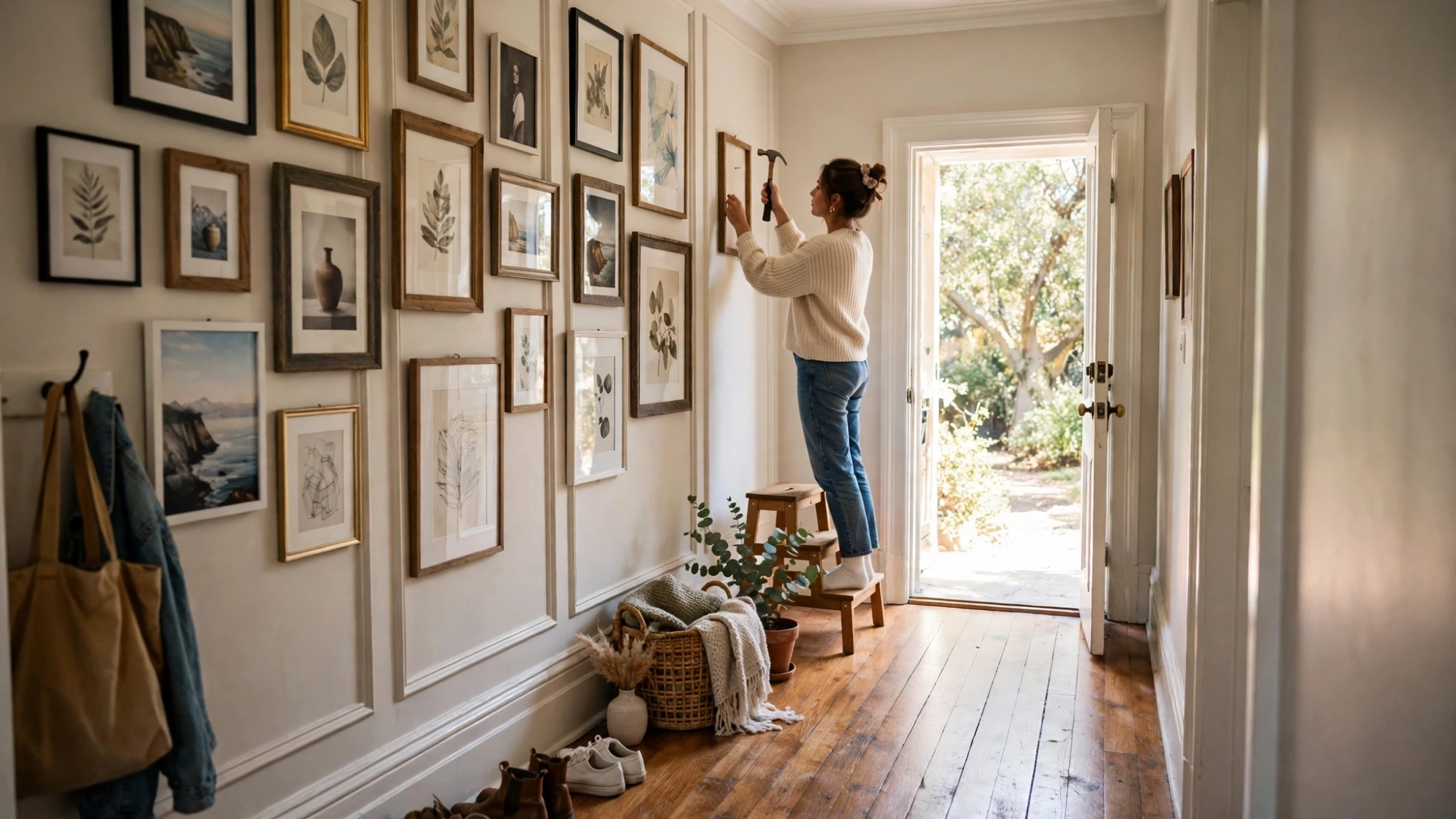
Rule 11: treat the group as one big piece. A wall art size guide should treat a gallery wall as one big piece instead of many small ones. Lay the frames on the floor first and arrange them into a pleasing shape. Measure the whole shape, then apply the two-thirds rule to the furniture below it. Keep 2 to 3 inches of space between frames so the group breathes as a single unit.
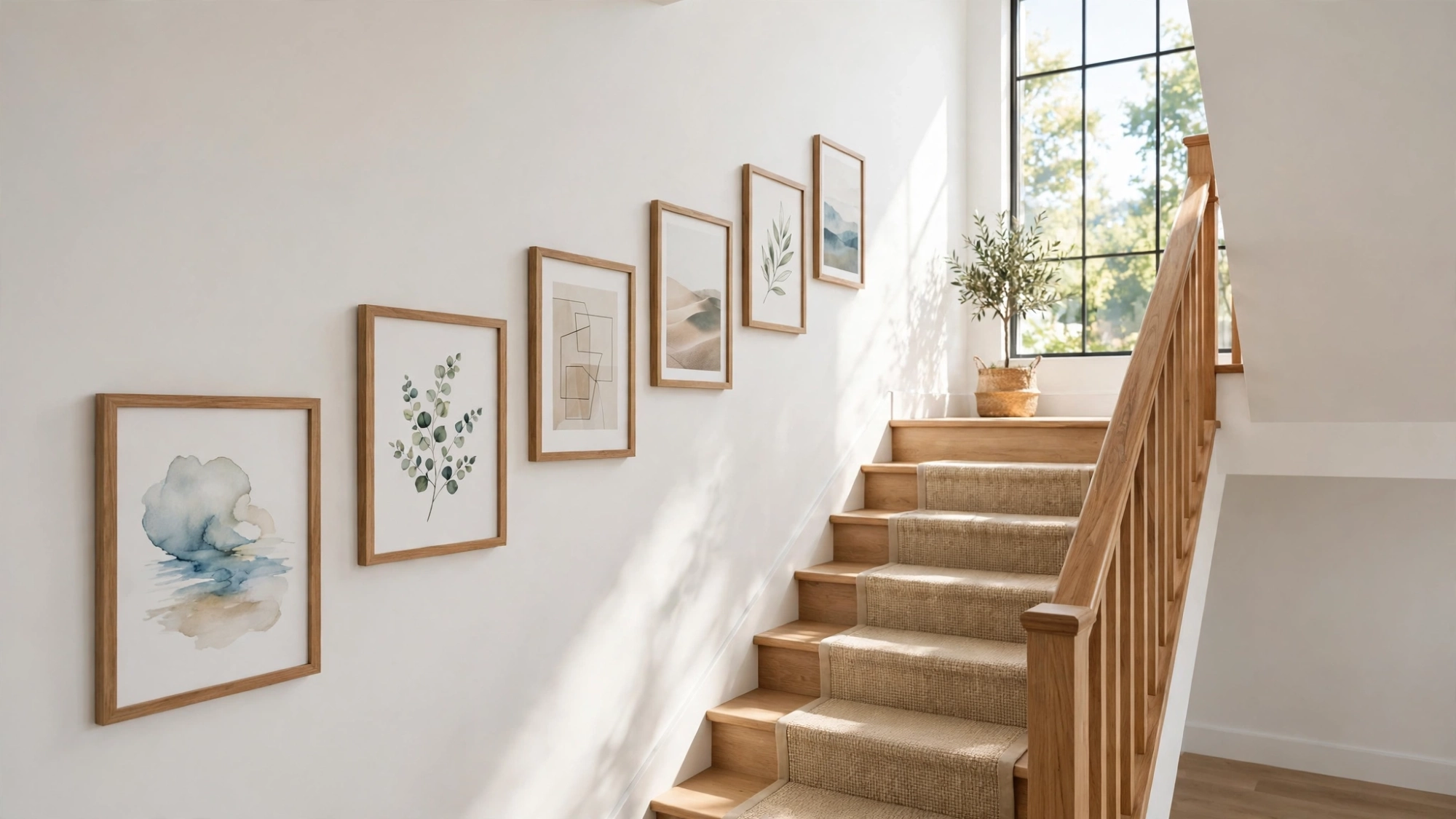
Rule 12: follow the slope on staircases. Stair walls trick everyone. Hang the frames so their centers follow the angle of the stairs, keeping each center about 57 inches above its own step. Step back to the landing often and check. If the line of frames runs parallel to the stair rail, you did it right.
Mistakes That Make Good Art Look Wrong
Big art on a small wall overwhelms. Small art on a big wall disappears. The most expensive mistake is buying art before measuring. Measure the wall, measure the furniture, and bring the numbers to the store with you.
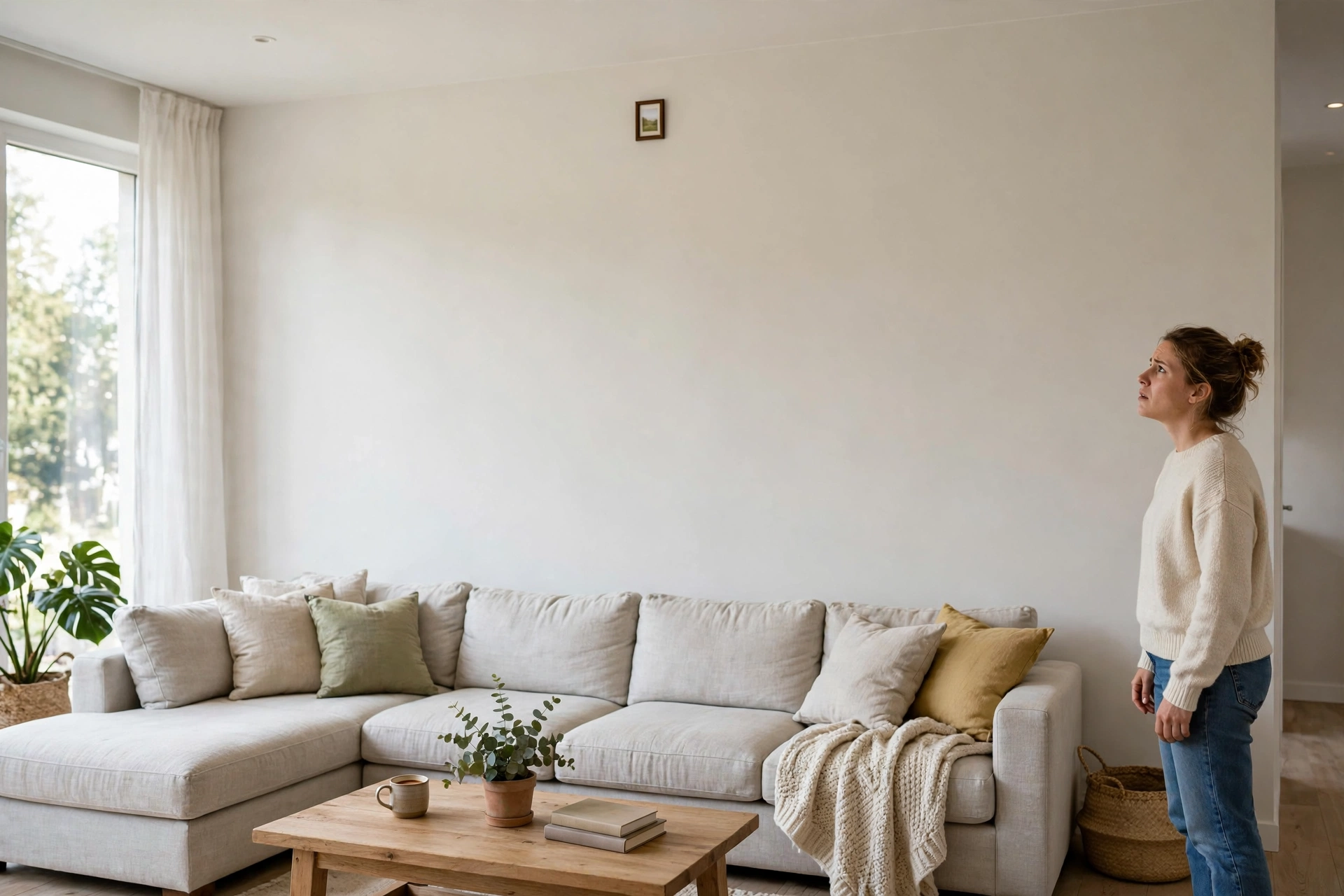
A second common mistake is hanging too high. If guests tilt their heads up like they are watching tennis, lower the piece. The third mistake is mixing frame sizes with no plan. Similar frames in a loose cluster look calm and collected. Random sizes with no rhythm look like a yard sale.

Quick Answers
Can I hang one small piece over a big sofa?
You can, but it will look lost. A better move is to build a small cluster around it. Add two or three frames of similar style, keep the gaps tight, and let the group reach about two-thirds of the sofa width. The small piece becomes the star of a group instead of a lonely square.
How do I hang art on a very tall wall?
Tall walls tempt people to hang art too high. Resist. Keep the center at 57 inches and let the empty space above breathe. If the blank area bothers you, add a tall plant or a floor lamp beside the art instead of raising the frame.
Should the art match my furniture color?
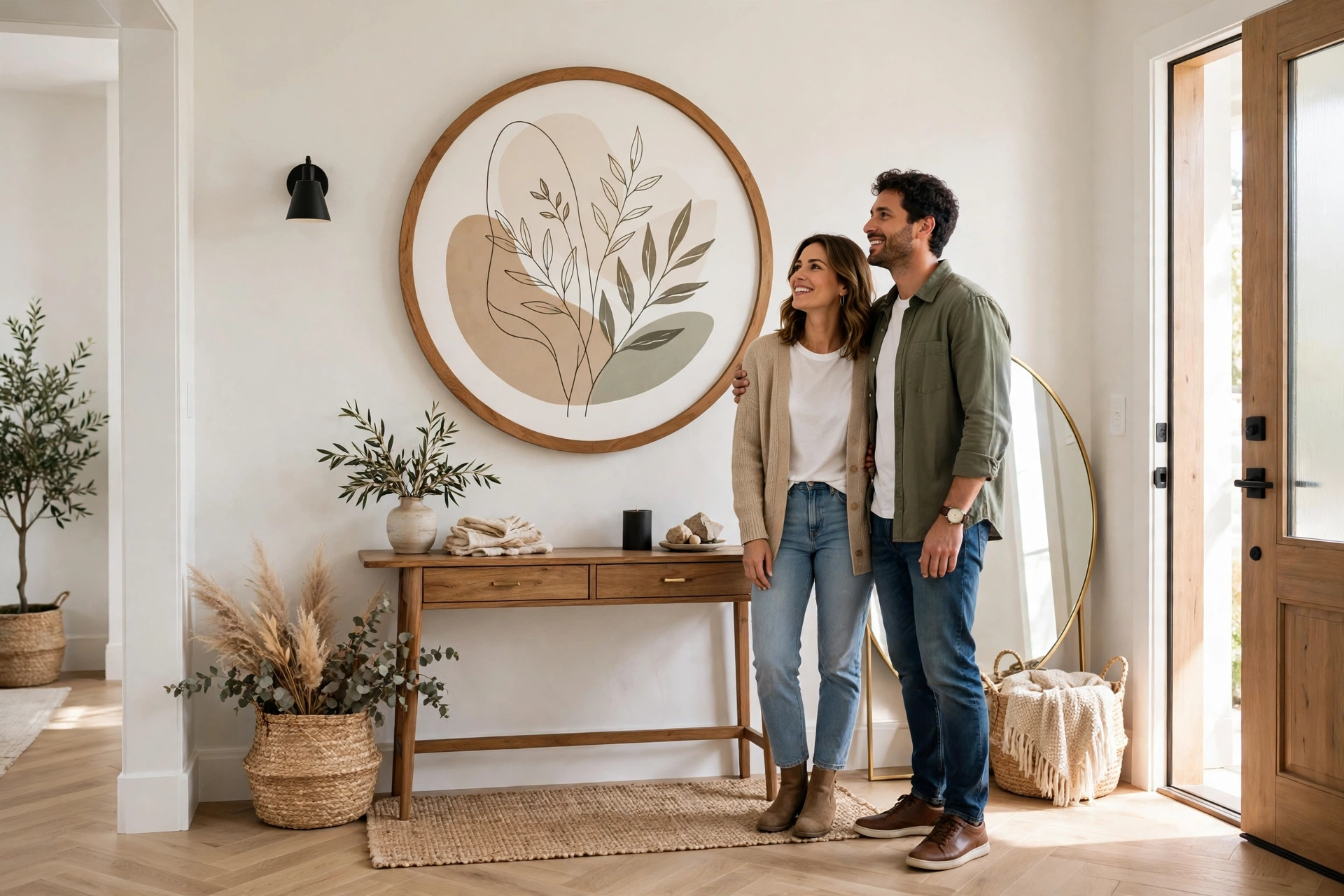
It does not need to match, but it should talk to the room. Pick up one or two colors from your rug, pillows, or curtains. The frame color matters too. Black frames feel modern, wood frames feel warm, and white frames feel airy. Let the frame echo something else in the room.
Your walls are the largest blank surface in your home, and they deserve better than guesswork. Measure once, hang once, and the room does the rest. Save this wall art size guide on your phone before your next art shopping trip, and you will never bring home the wrong size again.