The 96 Inch Question: What the Standard Sectional Sofa Size Taught Us About Our Living Room


Three years ago, my husband and I fell in love with a sofa. It sat in the middle of a furniture showroom, wrapped in soft gray fabric, with deep cushions and a long chaise that looked like the perfect place for Sunday naps. We bought it on the spot, and we never once measured our living room.
The sofa arrived on a Saturday morning. Two delivery men carried the pieces through our front door, set them down in the living room, and left. Then we saw the truth. The sofa was enormous. It filled the whole wall, blocked the path to the kitchen, and pushed the coffee table so close to the television that we had to turn sideways to walk past it.
I felt sick. We had spent good money on that sofa, and now it ruled the room instead of serving it. We sent it back, paid a restocking fee, and spent the next week learning everything we could about sofa sizes. That was the day I first heard the phrase standard sectional sofa size.

What Is the Standard Sectional Sofa Size?
In plain words, the standard sectional sofa size is about 96 inches wide on its longest side, 36 to 40 inches deep, and 32 to 38 inches tall. Picture a long, low sofa that seats three people in a row, with a chaise or a second arm that turns the corner. Most furniture makers in the United States and the United Kingdom build their sectionals around these numbers, so when a store calls a sectional standard, this is the shape it usually means.
But one number never tells the full story. A typical L shaped sectional has one side that runs about 84 to 96 inches long, and a shorter side that runs about 60 to 72 inches. The chaise, the long seat with no back where you stretch your legs, usually measures about 60 to 65 inches from the wall to its front edge. The seat height, the distance from the floor to the top of the cushion, sits near 17 to 19 inches. The seat depth, from the front edge of the cushion to the backrest, runs about 21 to 24 inches. When all these parts work together, you can sit down, rest your back, plant your feet on the floor, and stand up again without a struggle.
Why does 96 inches matter so much? It matches the average living room. Most living rooms in American and British homes measure about 12 to 16 feet across, which gives a 96 inch sofa room to breathe and leaves space for a coffee table and a clear walkway.
The Standard Sectional Sofa Size Quick Check
Keep this short list on your phone when you shop. First, measure your wall. Second, measure the sofa. Third, sit on it for at least ten minutes with your whole family. A sectional that passes all three tests is a sectional you can buy with confidence.
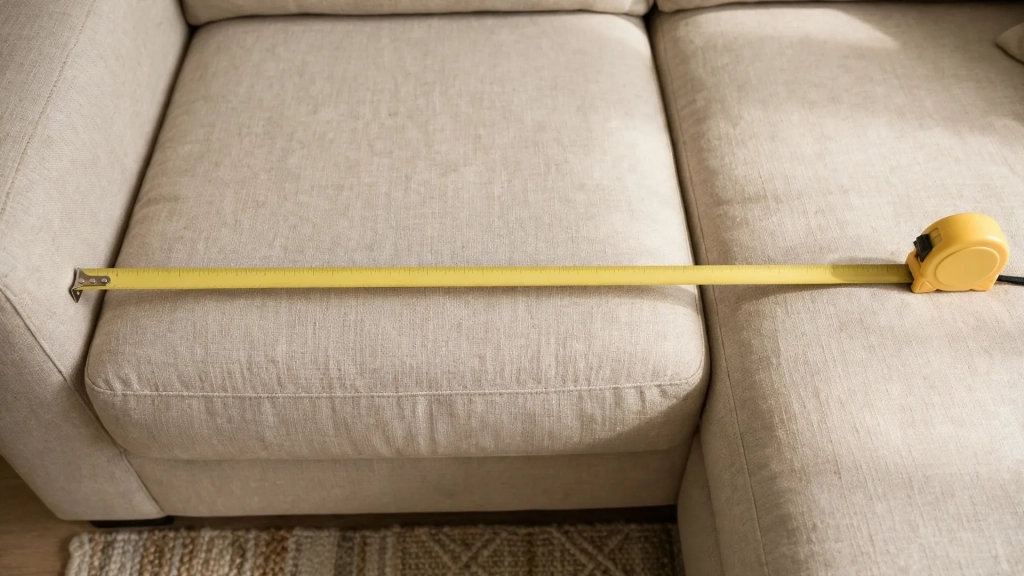
Check the length of the longest side, not just the total width on the tag. Some stores list the size of the whole piece, and some list only the main sofa part, so ask the salesperson exactly what the number includes. Check the depth with the chaise open. A chaise can add two feet to the footprint, and that changes everything in a small room.
How to Measure Your Room for a Sectional
Measure twice, buy once. That old rule matters more with a sectional than with any other piece of furniture, because the standard sectional sofa size is big, and a mistake costs real money and real trouble.

Start with the wall where the sofa will live. Measure from one end to the other, then subtract at least 30 inches for a walkway on each open side. What is left is the longest sofa your room can hold. Next, measure the depth from the wall to the edge of your coffee table or rug. A sectional needs about 36 to 40 inches of depth, plus 16 to 18 inches between the sofa and the coffee table so your legs have room.
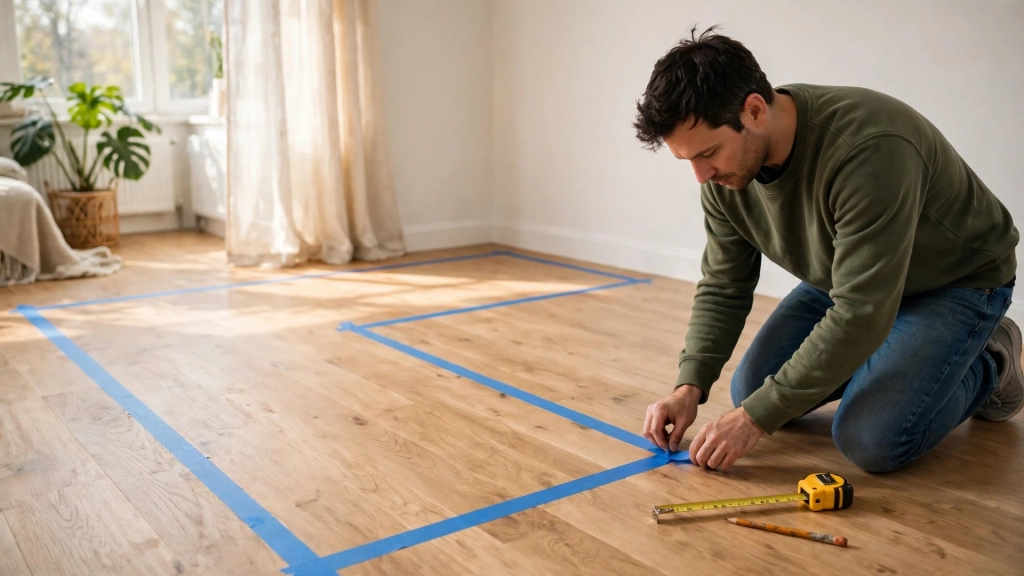
Now mark the floor. Use blue painter tape to draw the outline of the sofa right on your floor, chaise and all. Live with that outline for a day. Walk around it. Carry a laundry basket past it. Open the front door and see if the tape blocks the path. This simple trick costs almost nothing, and it has saved thousands of families from buying a sofa that eats their whole room.
L Shape or U Shape: Which Fits Your Room?
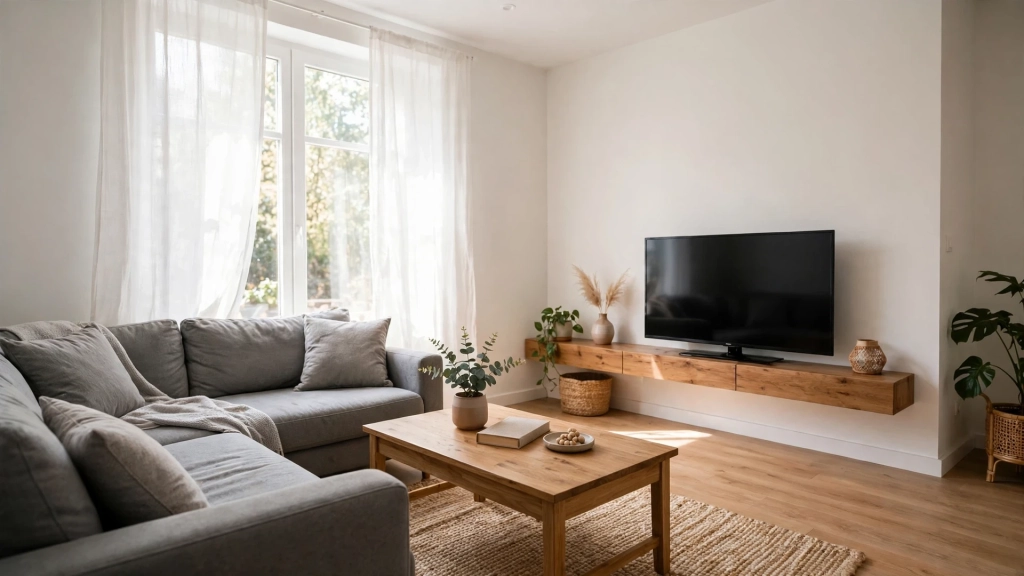
An L shape fits most rooms. It has two sides that meet at a right angle, like the letter L, and it tucks neatly into a corner or floats against one wall. It seats four or five people, and it leaves the rest of the room open for a coffee table, a chair, and a clear path to the door. If your room is small or medium, start with an L shape.
A U shape needs a much bigger floor. It has three sides that wrap around a coffee table, and the standard sectional sofa size for a U shape can run 120 inches or more across. That shape seats six or seven people, and it turns a living room into a cozy conversation pit. But it also swallows the floor. A U shape belongs in a large open plan room, not in a small apartment living room.
Think about how your family actually lives. Do you watch movies together every night, with everyone stretched out? Then a long L shape with a chaise may be perfect. Do you host big family dinners and need seats for everyone? Then a U shape in a large room may earn its space.
The Door Test: Will It Even Get Inside?
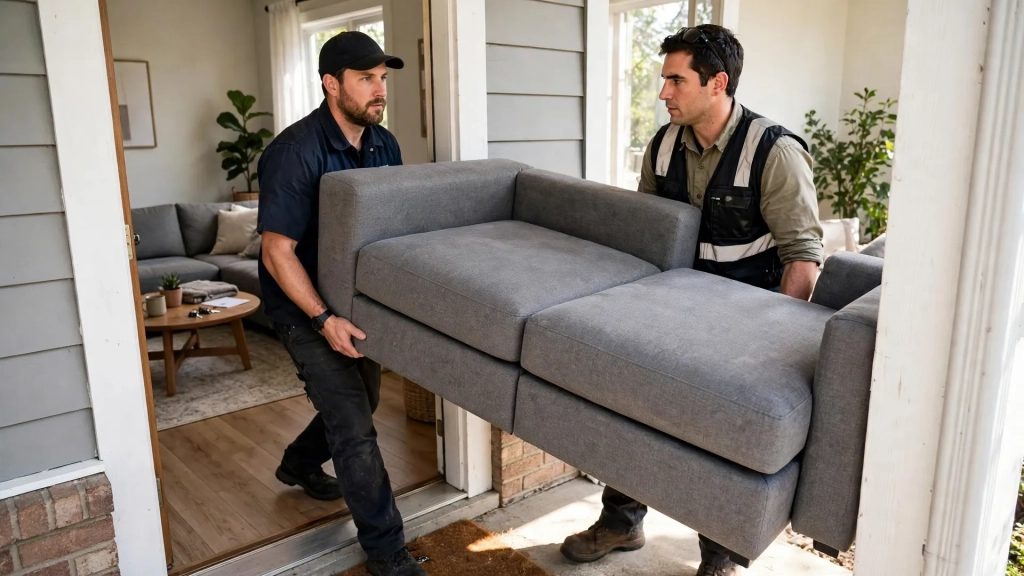
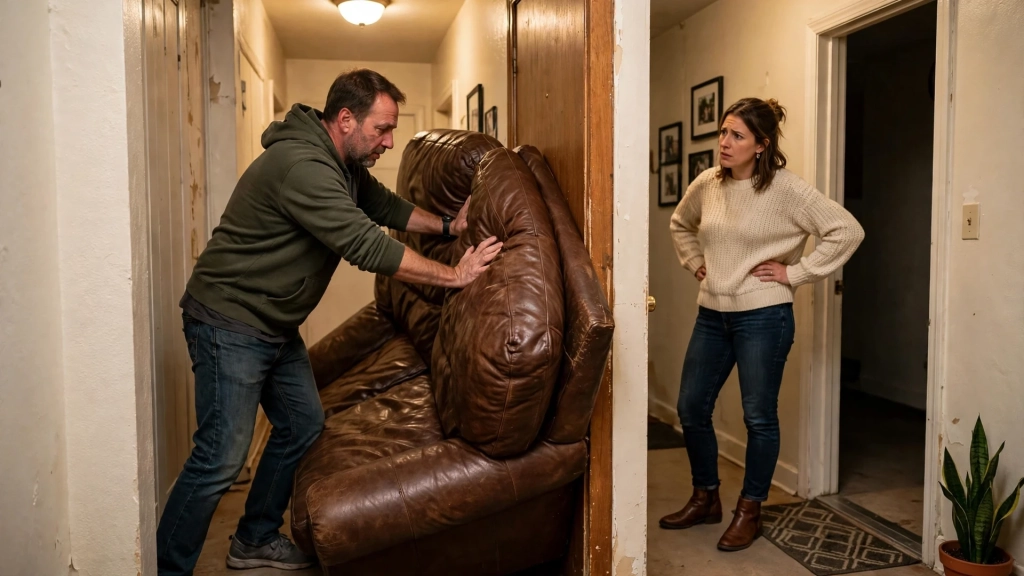
Here is the step most buyers forget, and it is the one that causes the most tears. A sectional that fits your room perfectly is useless if it cannot get through your front door. Measure every door, hallway, and stair turn on the path from the street to your living room, and compare each one with the standard sectional sofa size you plan to buy. If the longest piece is wider than your narrowest door, it will not fit, and the delivery men will carry it right back to the truck.
Most sectionals arrive in two or three separate pieces, which helps a lot. Ask the store how the sofa breaks down, and get the size of the biggest single piece. Then measure your narrowest doorway, including the door frame, not just the open door. A doorway that is 30 inches wide will stop a 36 inch deep sofa piece unless the piece can stand on its end and turn.
Also check the stairs and the lift if you live in an apartment. A tight stair turn has stopped many deliveries. Tell the store about every tight spot before you pay.
Seat Depth, Seat Height, and Comfort
Numbers on a tag mean nothing if the sofa hurts to sit on. Seat depth decides whether you can sit upright or sink back like a tired traveler. A seat depth of 21 to 24 inches suits most adults. If you are tall, look for a deeper seat, around 24 to 26 inches, so your thighs get full support. If you are short, a shallower seat near 20 inches lets your feet touch the floor.
Seat height works the same way. A seat height of 17 to 19 inches fits most people. Taller people may like 19 or 20 inches, so their knees do not point up. Shorter people may like 16 or 17 inches, so their feet rest flat. Sit on the sofa the way you sit at home, shoes on, legs relaxed, for a full ten minutes.
Mistakes to Avoid Before You Buy
The first mistake is buying with your eyes only. A sofa can look perfect in a huge showroom and still swallow a normal living room. Always measure first, and always tape the floor.

The second mistake is forgetting the walkway. Every room needs a clear path of at least 30 inches for people to move. A sofa that blocks the path to the kitchen or the front door will annoy you every single day.
The third mistake is ignoring the other furniture. A sectional, a coffee table, a television stand, and a reading chair all share one floor. Measure them together, not one at a time.
The fourth mistake is buying the biggest sofa your budget allows. Bigger is not better. The right sofa leaves room for life, for children to play, for guests to walk through, and for the room to breathe. A sofa that fits is worth far more than a sofa that impresses.
Final Thoughts: Measure First, Love Second
The right sofa is not the biggest one or the prettiest one. It is the one that fits your room, your family, and your life, and that is why the standard sectional sofa size matters. A 96 inch sectional with a sensible chaise, a clear walkway, and a seat that fits your body will serve your family for years. It will hold movie nights, sleepy Sundays, birthday parties, and quiet cups of tea.

So take out the tape measure before you take out your wallet. Mark the floor, test the doors, sit on the sofa for ten honest minutes, and check the walkway with a laundry basket in your hands. Do these simple steps, and your next sectional will feel like it was made for your home. Your living room will thank you every single day.