Bedside Table Height: The Level-With-Mattress Rule for a Perfect Nightstand

<!– IMAGE 01: featured –>
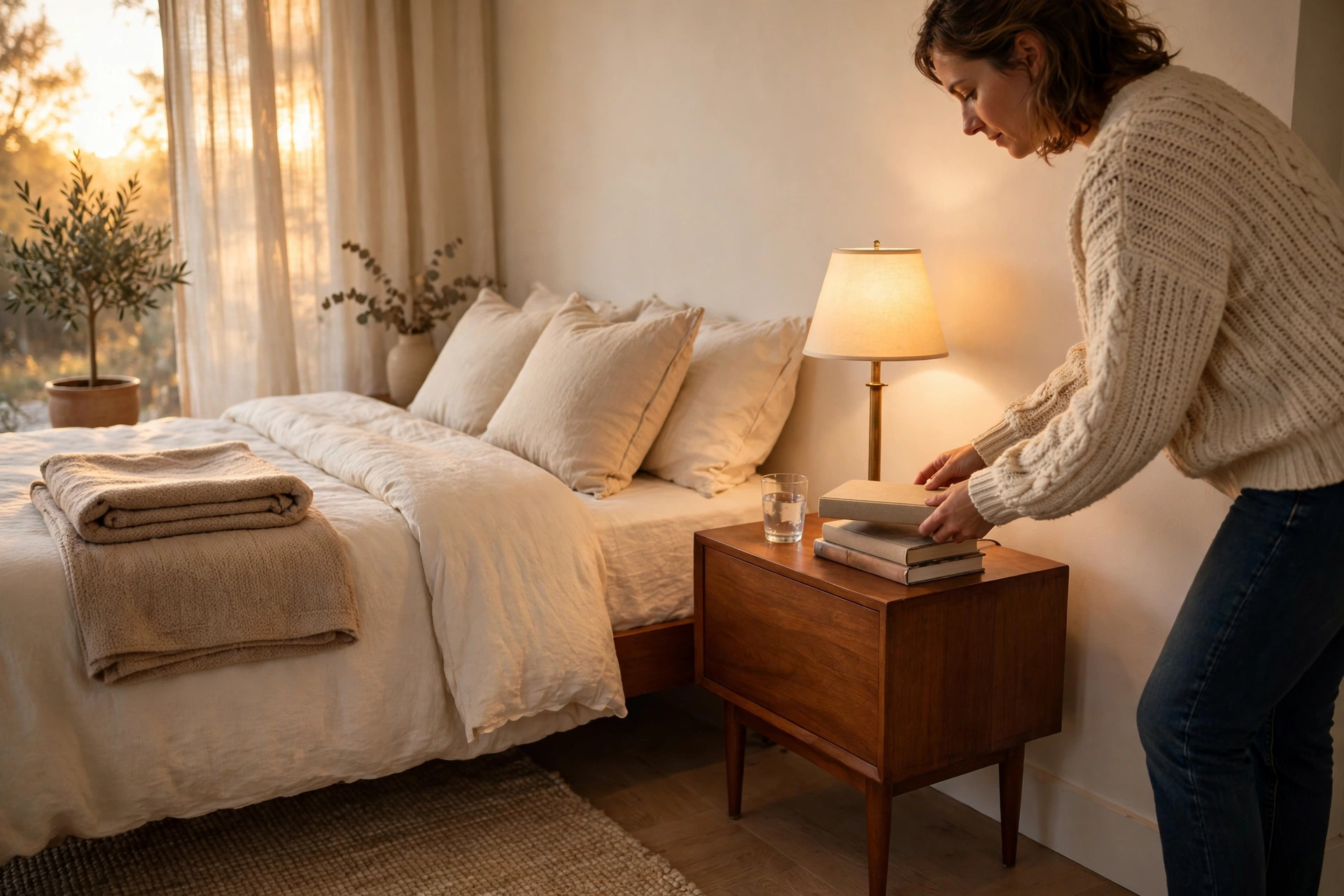
Maya had been saving for months for a bedroom refresh. She picked a soft linen duvet, a cozy reading lamp, and a gorgeous carved nightstand she found online. It looked perfect in the photos. But on the first night, she reached across the dark for her water glass and found the table sitting a full six inches below her mattress. Her shoulder twisted. The glass wobbled. She ended up using a stack of books for three weeks until she admitted the truth. The table was beautiful, but getting the bedside table height right mattered more than the price tag or the style.
This happens in bedrooms everywhere. People spend hours choosing the color and the drawer style, then barely glance at the one detail that decides whether the nightstand feels right every single day. Interior designers call the fix the level-with-mattress rule, and it takes about two minutes to apply. This guide walks you through ten simple sizing rules, from measuring your mattress to pairing your lamp, so you can buy once and love it forever.
Why Getting Your Bedside Table Height Right Changes Everything
<!– IMAGE 02 –>

Rule 1 is simple. Your nightstand is a working surface, not a decoration. You reach for it with your eyes half closed at 2 a.m. You grab your phone, your glasses, your medicine, or a sip of water without fully waking up. When the surface sits level with your mattress, your arm moves in a short, easy arc. When it sits too low, you bend and stretch. When it sits too high, you lift and fumble. That small difference in comfort repeats itself hundreds of times a year, and it quietly shapes how your whole bedroom feels.
Designers talk about visual balance, which just means things look right together when their sizes agree. A nightstand that lines up with the top of your mattress looks like it belongs with your bed. Get the height right, and the rest of the room gets easier.
The Golden Rule of Bedside Table Height
<!– IMAGE 03 –>

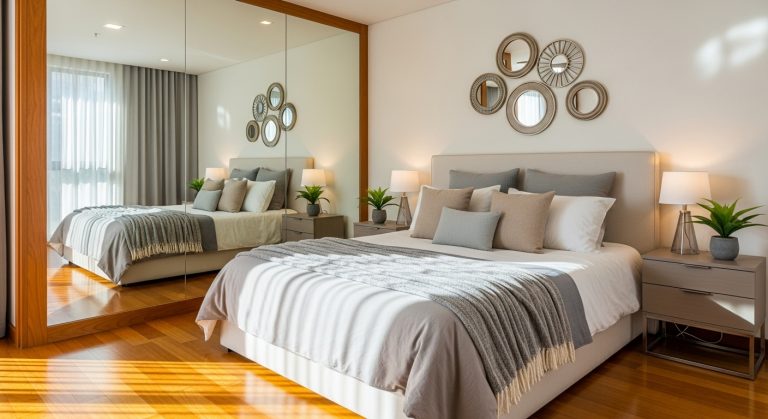
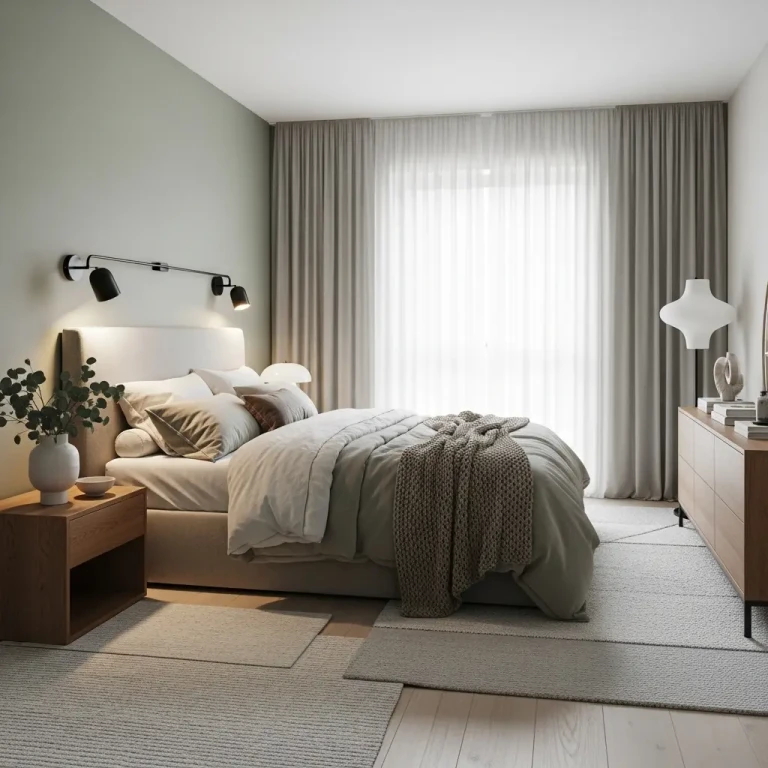
Rule 2 is the rule every designer reaches for first. The top of your nightstand should sit level with the top of your mattress, give or take two inches. That is the whole rule. When your bedside table height matches your mattress, everything feels effortless. Your hand finds the lamp switch without looking. Your alarm clock is easy to read. A book slides onto the surface with one tired motion.
Most standard beds put the mattress top somewhere between 24 and 28 inches off the floor, and that is exactly where most well designed nightstands land. If you remember one number from this article, make it two inches. Two inches above or below the mattress top is the comfort zone. Measure twice, shop once, and your bedroom will thank you.
Measure Your Mattress the Right Way
<!– IMAGE 04 –>

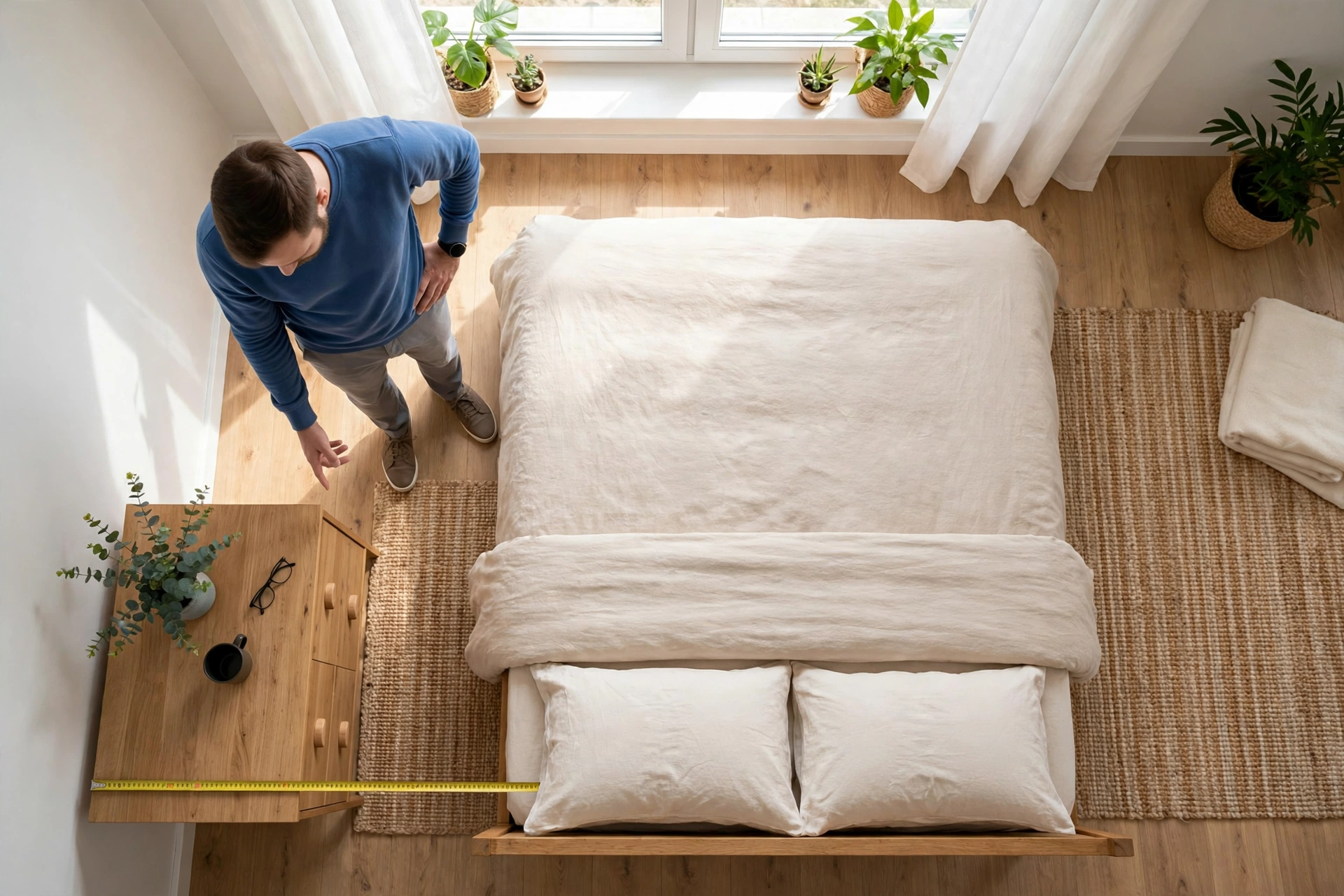
Rule 3 is about measuring, and it matters more than people expect. Do not just measure the mattress tag height. Measure from the floor to the top of your mattress the way it actually looks on your bed, with the mattress pad and sheets on. Bedding adds one to three inches, and pillow top mattresses can sit even higher. Designers at places like Pottery Barn and Crate and Barrel build their nightstand lines around real world numbers, and the pro tip is always the same. Measure the finished sleeping surface.
Grab a tape measure and stand beside the bed. Run the tape from the floor to the top of the mattress where your shoulder rests. Write that number down on your phone before you shop. Rule 3 takes sixty seconds, and it keeps you from falling in love with a nightstand that is secretly the wrong size.
What to measure
– Total height from floor to mattress top, with bedding on – Mattress thickness alone – Bed frame and box spring or platform height – Your favorite lamp base height, if you already own one
Know Your Standard Bed and Mattress Heights
<!– IMAGE 05 –>

Rule 4 is knowing the numbers before you walk into a store. Standard nightstands usually stand 24 to 28 inches tall. Standard mattresses range from about 8 inches for a slim bunk style to 14 inches or more for a luxury pillow top. Low platform beds can put the mattress top near 20 inches, while tall four poster frames can push it past 30 inches.
Knowing these standards helps you judge bedside table height at a glance when you shop. If you own a tall sleigh bed with a thick mattress, you need a nightstand on the taller end of the range, maybe 28 to 30 inches. If you sleep on a low platform with a slim mattress, a 22 to 24 inch nightstand might be perfect. The bed is the boss here. The nightstand serves the bed, not the other way around.
How Width and Depth Support the Right Bedside Table Height
<!– IMAGE 06 –>
Rule 5 covers width. Designers suggest a width between 18 and 24 inches for most bedrooms. For a queen or king bed, aim for the wider end so the table holds its own beside the big headboard. For a twin or a small guest room, 16 to 18 inches works fine. As a rough guide, your nightstand should look like it covers about one quarter to one third of the bed’s width on its side.
Rule 6 covers depth, which is the distance from the wall to the front edge. Keep the depth between 16 and 24 inches so the table does not crowd the walkway around the bed. When the width and depth fit the room, the correct height looks even more natural, like the furniture was made for the space.
Pairing Your Lamp With the Right Nightstand
<!– IMAGE 07 –>

Rule 7 is about the lamp, because a lamp can make a correct nightstand look wrong. The bottom of the lampshade should sit at about your eye level when you are sitting up in bed. That usually means the total height of the lamp is 24 to 27 inches for a standard nightstand, but the exact number depends on the table. Here is the easy formula. Sit in your bed, measure from the nightstand surface to your eyes, and choose a lamp where the shade center lands near that line.
The bedside table height sets the stage for the lamp, so pick the table first and the lamp second. A tall lamp on a short table looks tipsy. A tiny lamp on a tall table disappears. If you love a statement lamp, measure it before you shop for the table and work backward.
Surface Space and Storage Rules
<!– IMAGE 08 –>
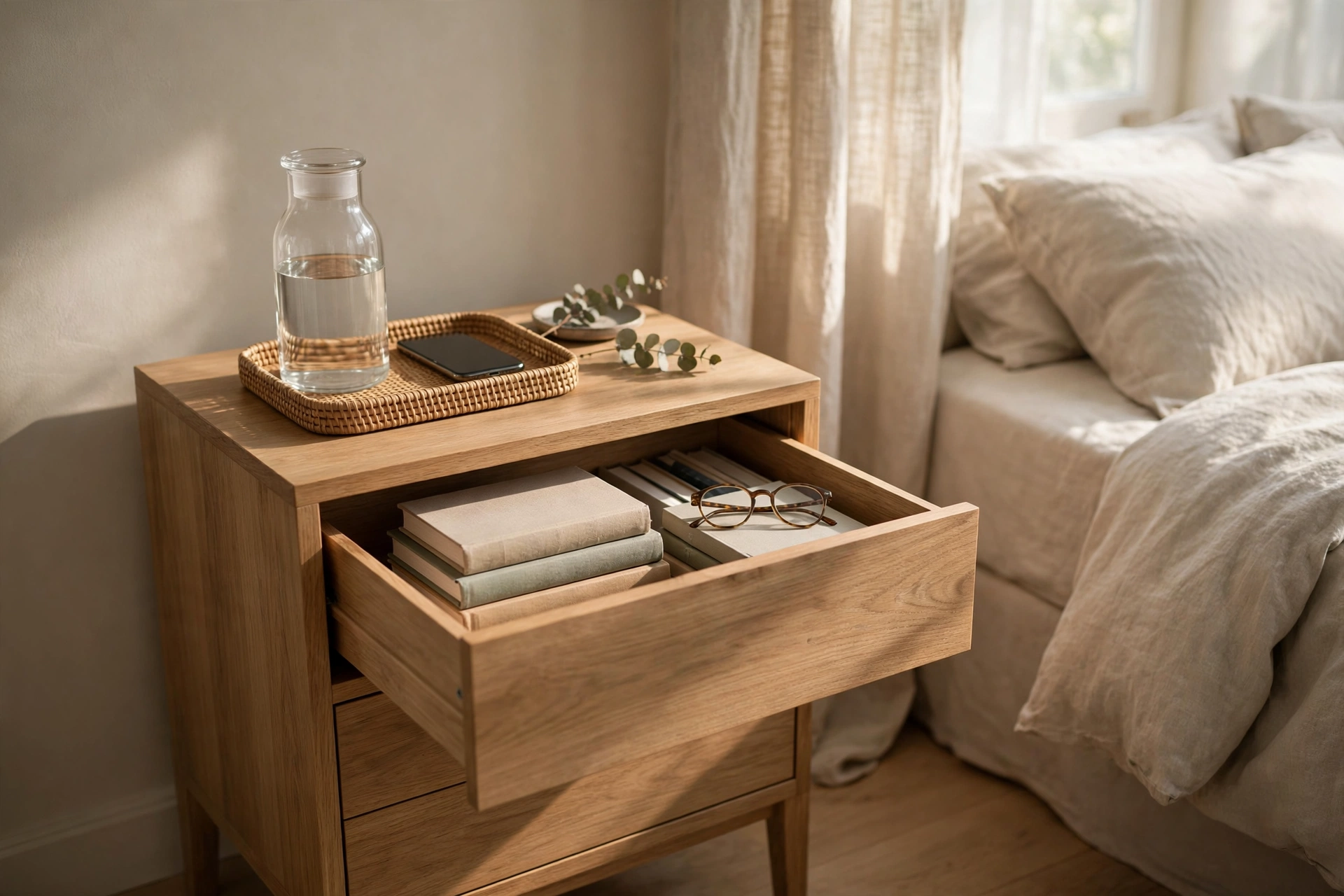
Rule 8 is about what lives on top. A nightstand needs room for the daily essentials without turning into a cluttered shelf. Most designers say you want at least 12 inches of clear surface in front of the lamp for a book, a phone, and a glass of water. If you are short on space, a table with a drawer or a lower shelf pulls double duty. Books and chargers hide away, and the top stays calm.
Think about your own nightly routine before you choose. If you journal, you need room to write. If you charge two devices, you need a spot where cords stay out of sight. Rule 8 is personal. The right height brings comfort, but the right storage brings peace.
Common Bedside Table Height Mistakes
<!– IMAGE 09 –>
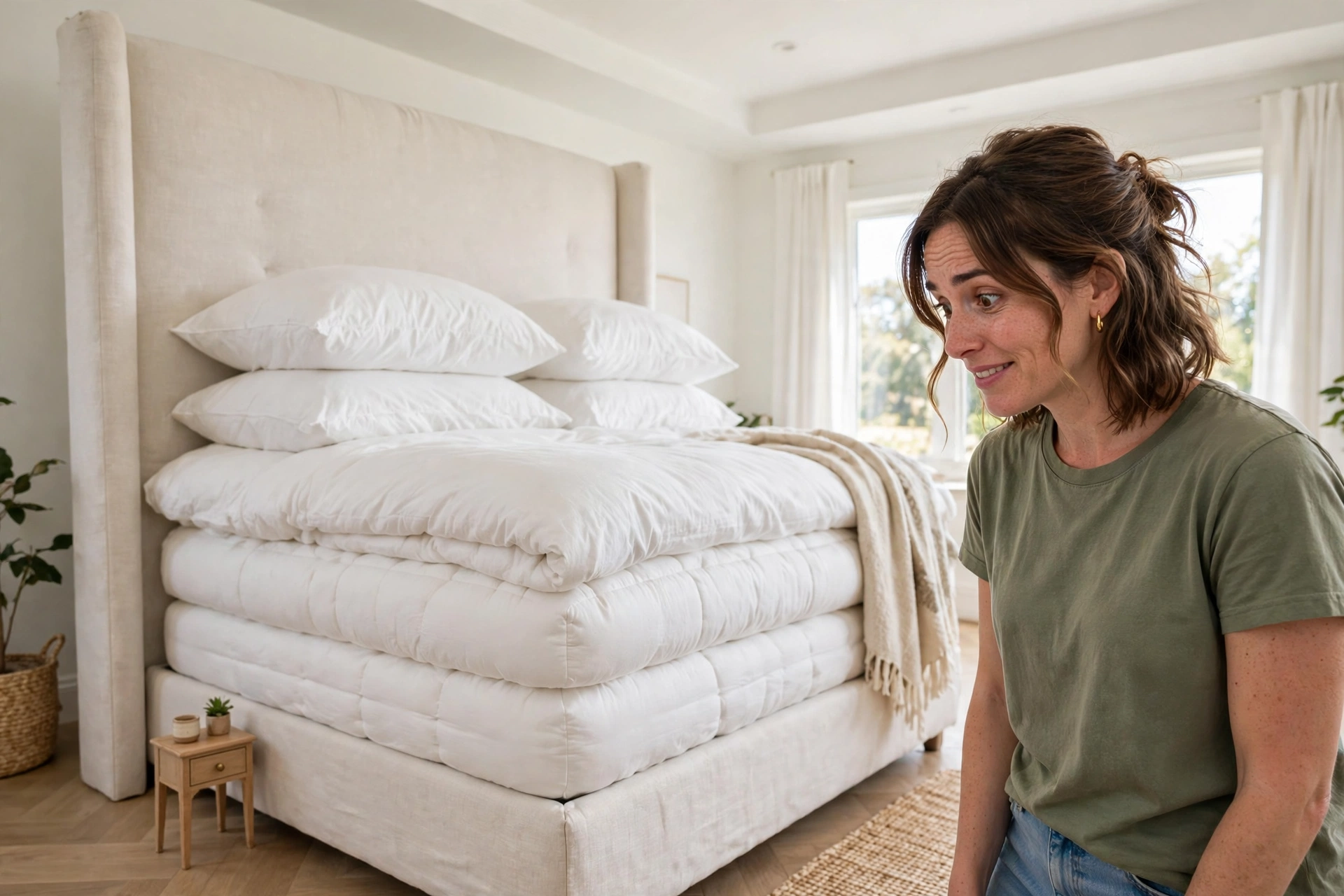
Rule 9 is learning from the mistakes almost everyone makes. The most common one is buying the nightstand first and the bed later, or buying both without comparing numbers. The second most common is copying a look from a photo without noticing that the bed in the photo is much lower than yours. Pinterest and catalog photos are beautiful, but they are styled to sell, not to fit your room.
Another classic mistake is choosing a trendy floating shelf as a nightstand and mounting it at the wrong spot. Floating shelves work beautifully, but the same level-with-mattress rule applies. The last mistake is forgetting about drawers and doors. A nightstand at the perfect height still fails if the drawer hits the bed frame every time you open it. Measure the clearance too.
Rules for Couples and Small Bedrooms
<!– IMAGE 10 –>

Rule 10 covers the tricky rooms. In a couple’s bedroom, both sides do not need matching nightstands. In fact, designers often prefer mismatched tables when partners have different needs. One side can have a taller drawer table for the reader, the other a slim stool table for the minimalist. Just keep each table level with the shared mattress, and the pair will look intentional.
Small bedrooms have their own logic. A wall mounted shelf or a narrow 14 inch table can save precious floor space while still following the mattress level rule. Round tables soften tight corners. And if two people share a tiny room, a single wider table between two low beds can serve both sleepers. Rule 10 is freedom. The mattress level principle stays the same, but the furniture can bend to fit your life.
Getting your nightstand right is one of those small wins that changes your whole bedroom. Ten rules, one tape measure, and two inches of wiggle room. The next time you shop, stand beside your bed, check the level, and choose with confidence. Your 2 a.m. self will be grateful.