The Standard Ottoman Size Guide: Buy Once, Sit Happy


The Standard Ottoman Size Guide: Buy Once, Sit Happy
Sarah spent three weeks hunting for the perfect ottoman. She found a soft velvet one online, ordered it the same night, and waited by the door like a kid before a birthday party. When the box arrived, the ottoman looked great, but next to her sofa it seemed tiny, like a toy next to a throne. Her husband laughed, she sighed, and back it went in the same week. The store had listed every detail except the one thing she needed: a clear sense of scale. Sarah is not alone. Shoppers everywhere guess their way through ottoman shopping, and most of them guess wrong at least once. This guide fixes that. By the time you finish reading, you will know the numbers, the shapes, and the simple measuring trick that keeps you from repeating Sarah’s mistake.
What the Standard Ottoman Size Actually Is
Most furniture stores agree on a common range for single ottomans. The standard ottoman size for a footrest-style piece is about 18 inches wide and 24 inches long, with a height between 14 and 18 inches. You will see slight differences from brand to brand, but this range covers the majority of what sits in showrooms and warehouses. These dimensions grew out of the average seat height of American sofas, which sits around 17 to 19 inches. An ottoman in this range lines up well with most couches, coffee tables, and lounge chairs, so your feet rest level instead of dangling or lifting too high.
Matching Your Ottoman to Your Sofa
How the Standard Ottoman Size Lines Up With Your Sofa
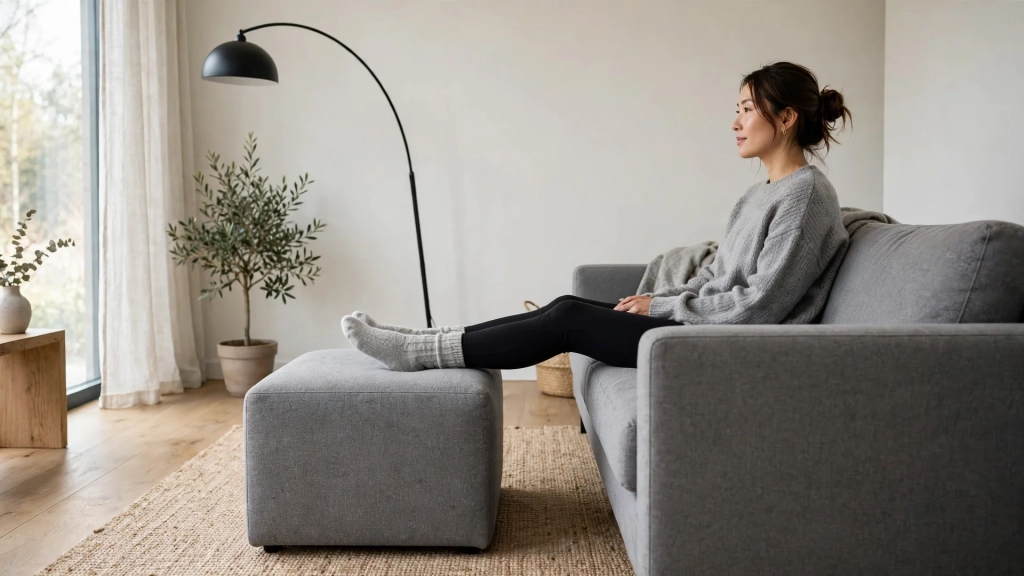
The best ottoman does not live in a vacuum. It lives next to your sofa, and the two must agree on height. Measure from the floor to the top of your sofa cushion. Your ottoman should sit within two inches of that number, a little lower is fine, a little higher is awkward. A 16-inch ottoman next to an 18-inch sofa seat feels natural. The same 16-inch piece next to a low, modern 14-inch platform sofa looks like it wandered in from another room. Width matters as well. A good rule of thumb is to choose an ottoman about two-thirds the width of your sofa, so a 72-inch sofa pairs nicely with a 36-inch cocktail ottoman. Long-tail shoppers often search for “ottoman height for 18 inch sofa” or “what size ottoman goes with a loveseat,” and the answer is always the same: match the seat, not the arm.
Ottoman Shapes and Their Usual Dimensions
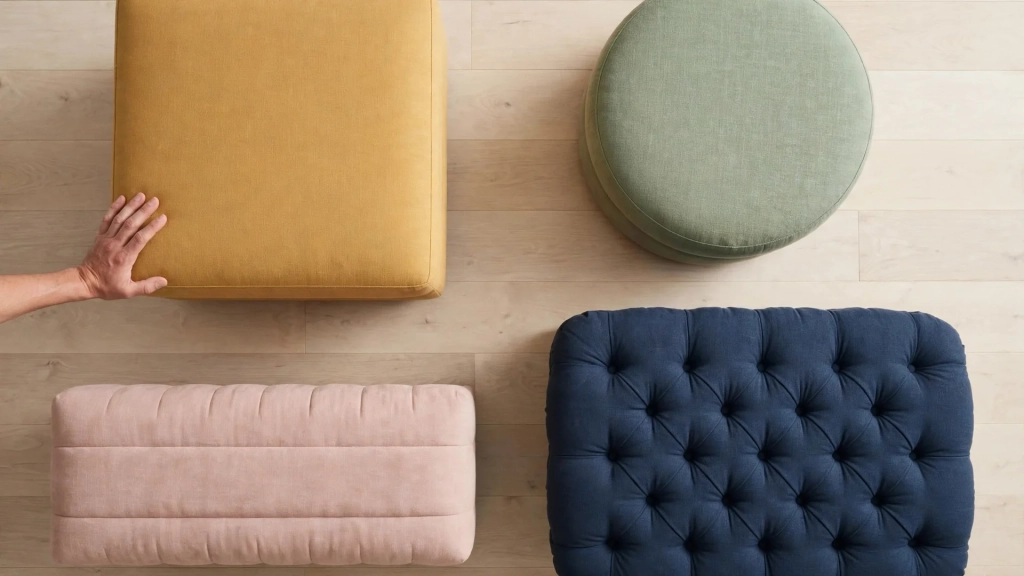
Ottomans come in four common shapes, and each has its own habit. Square ottomans often measure 18 by 18 inches, round ones usually run 24 to 30 inches across, rectangular bench styles stretch to 30 by 18 inches, and oversized cocktail ottomans can reach 36 by 24 inches or more. Cocktail ottomans double as coffee tables, so they grow to fill the space in front of a full-size sofa. Many shoppers search for “oversized ottoman dimensions for sectional” or “round ottoman diameter guide” before they buy, which shows how much shape drives the decision. A round ottoman softens a room full of straight lines, while a rectangular bench ottoman works well at the foot of a bed. Choosing the shape comes down to the job you want it to do: footrest, extra seat, tray table, or all three. Keep in mind that round pieces need more floor clearance for doors that swing nearby, since they extend in every direction.
Seat Height and Depth: The Comfort Math
Height decides comfort more than any other number. The most restful ottoman height lands at or just below your sofa seat, usually 15 to 17 inches. Depth matters too. A shallow 18-inch-deep ottoman suits a petite reader chair, while a 24-inch-deep piece gives a tall person real leg support. The standard ottoman size covers the middle of the bell curve, which is why it works for most homes. If someone in your house is much taller or shorter than average, measure their seated knee height from the floor. Pick an ottoman height within two inches of that knee height, and long evenings will feel effortless.

Common Mistakes When Picking an Ottoman
The first mistake is buying for the price instead of the proportions. A cheap ottoman that clashes with your sofa costs more in returns than a well-measured one ever would. The second mistake is forgetting the traffic path. Leave at least 18 inches of walking space between the ottoman and the coffee table, or shins will file complaints. The third mistake is ignoring the “chair test.” Sit in your sofa, swing your feet up, and ask a helper to slide a box of the right size under them. If your knees ride above your hips, the box is too tall. If your heels hang past the edge, the standard ottoman size in a longer rectangle will serve you better. Measure twice, order once.

Where the Ottoman Goes in Your Room
Placement changes how big an ottoman feels. Tucked against a loveseat in a small apartment, even a 24-inch piece reads compact. Floating in the middle of an open living room, the same piece looks generous. Designers often pair a single ottoman with a reading chair in a corner nook, which needs only about 30 inches of floor space for both. In a family room, two matching ottomans in front of a three-seat sofa create flexible seating for game nights. Leave the front edge of the ottoman roughly aligned with the front of the sofa cushion, so the pairing looks intentional rather than accidental. If you use an ottoman as a coffee table stand-in, center it under the midpoint of the sofa and leave about 12 to 18 inches between the seat and the piece for comfortable leg room. A large tray on top turns it into a stable surface for mugs and books, then lifts off when feet take over.

Storage Ottomans and Special Styles
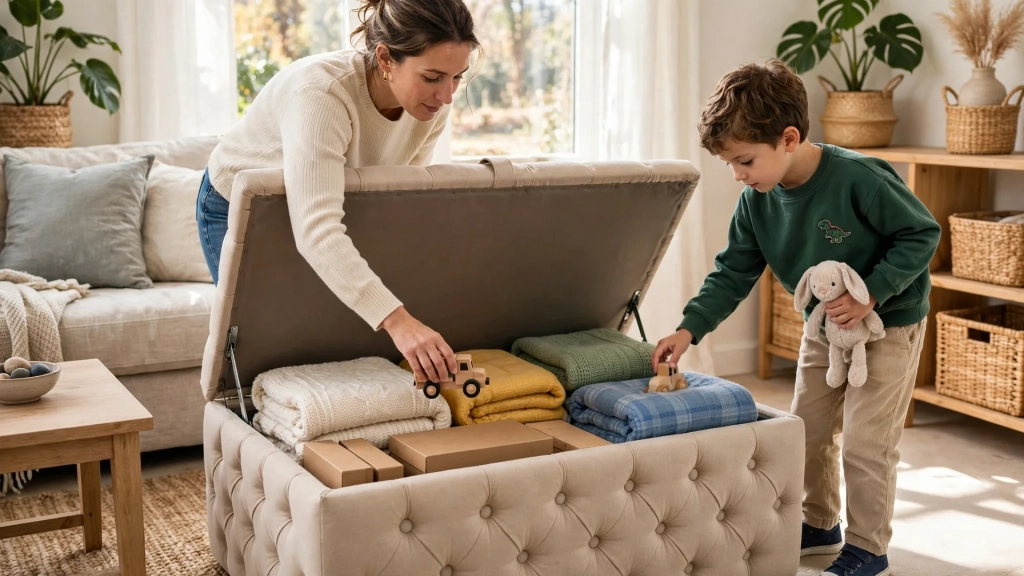
Storage ottomans add a lid and a hollow middle, and the extra structure changes the feel. Most run slightly larger, around 30 by 18 inches, because the walls need room for hinges and a frame. The interior often holds throws, board games, or the remote collection that multiplies on its own. Tray-top ottomans flip between soft seat and firm surface, which makes them popular in small living rooms that lack a coffee table. Tufted styles with button detailing look classic but add half an inch of height at the buttons, a tiny detail worth noting if you measured your seat height tightly. For pet owners, performance fabrics and darker tones hide paw prints and shed fur between cleanings. Leather ottomans age with character but scratch more easily, while bouclé and woven textures bring warmth to modern rooms.
Measure for the Standard Ottoman Size in Ten Minutes
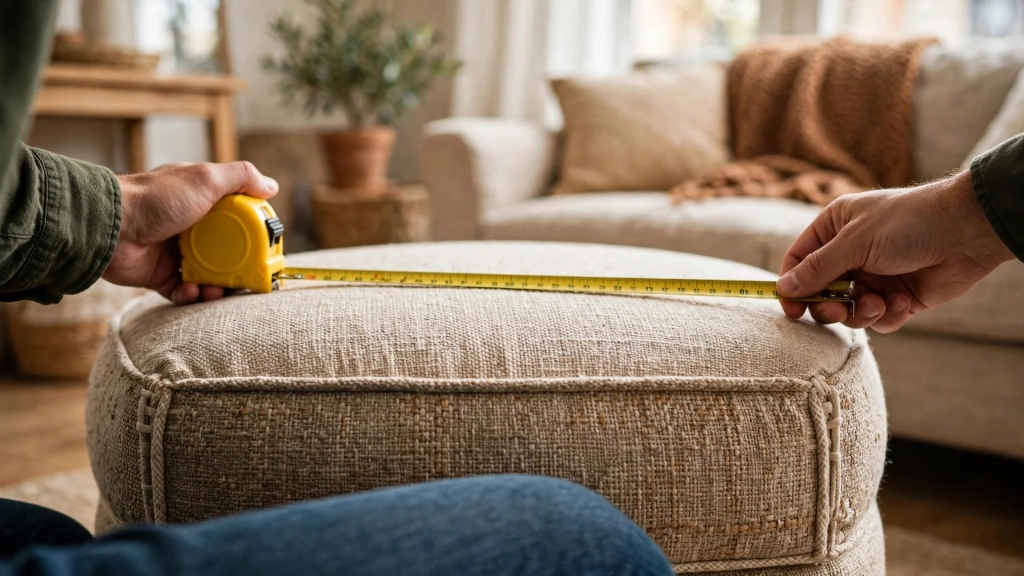
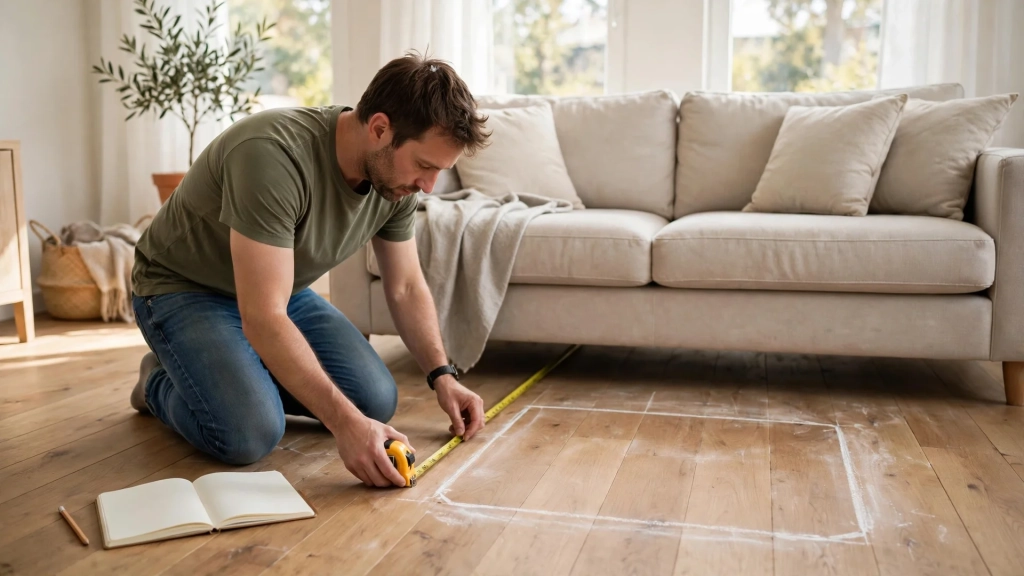
You do not need a design degree, just a tape measure and ten minutes. First, measure your sofa seat height from the floor to the cushion top, and write it down. Second, measure the clear floor space in front of the sofa, minus 18 inches for walking room. Third, decide the shape based on your main use: square or round for feet, rectangular for trays and storage. Finally, compare your notes to the standard ottoman size range of 18 by 24 inches and 14 to 18 inches tall. If your numbers fall inside it, shop with confidence. The National Association of Home Builders notes that furniture scaled to the room improves how people perceive space, and an ottoman matched to your sofa does exactly that. If your numbers fall outside it, look for oversized or custom options instead of forcing a fit. Custom shops can build pieces to the half inch, which suits tall sectional owners and anyone furnishing a bay window nook. Jot your three measurements on your phone before you browse, because showrooms have a way of making every piece look bigger or smaller than it really is.
Final Thoughts
Sarah eventually reordered, this time with a tape measure in hand. Her new ottoman matches her sofa within an inch, and her living room finally looks like the photos she saved. The lesson is simple: the standard ottoman size is not a rule, it is a starting point. Measure your seat, honor your walking paths, pick the shape that fits your life, and you will buy the right piece the first time. Your feet, your wallet, and your weekend will thank you.