Standard Sofa Size: The Dimensions That Fit Your Living Room Perfectly

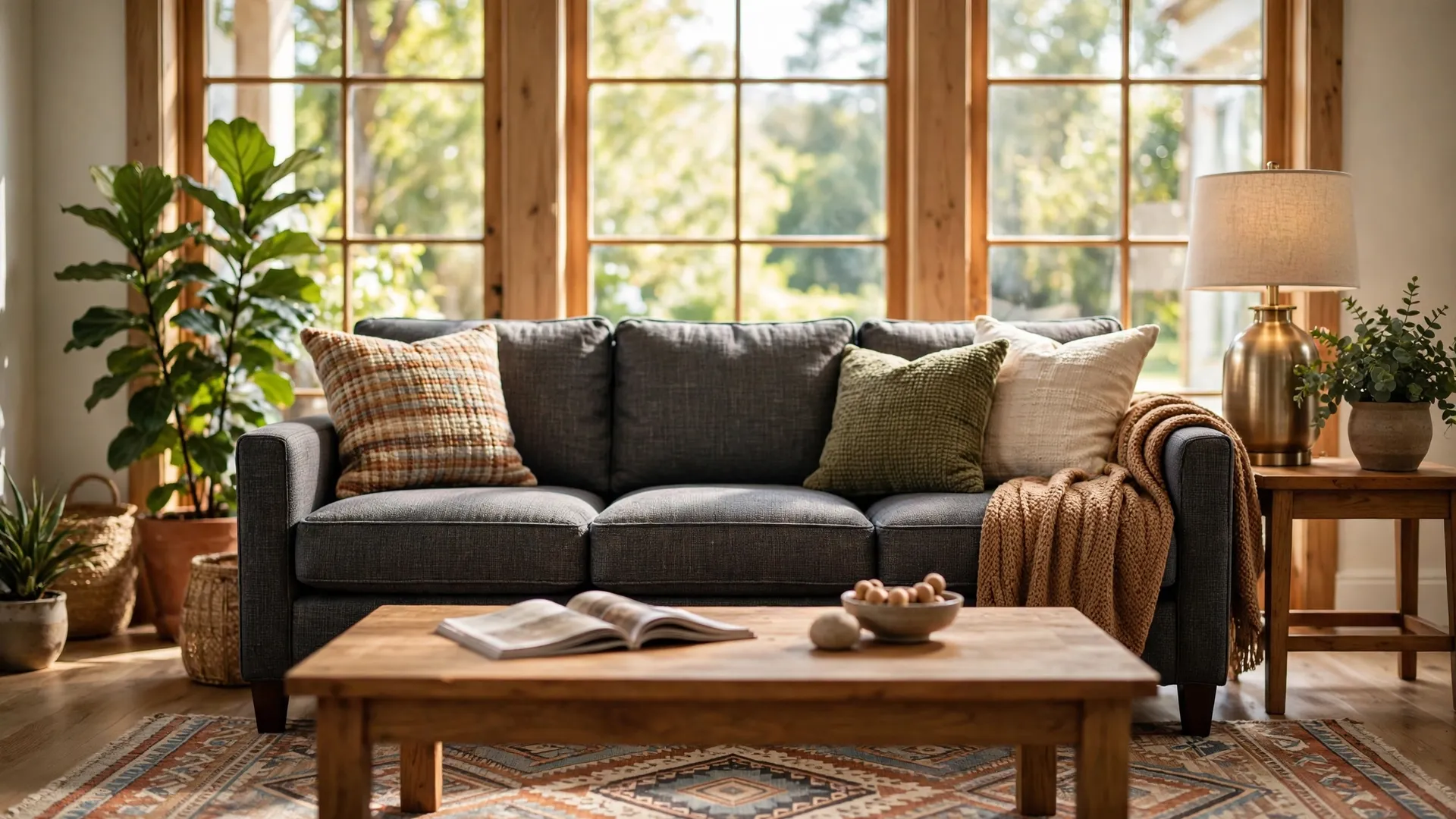
Last spring my friend Maya moved into her first real apartment. She found a gorgeous charcoal gray sofa online, clicked buy in about six minutes, and spent two weeks dreaming about movie nights. On delivery day the delivery crew carried it up the stairs, turned into her hallway, and stopped. It did not fit around the corner. It did not fit through the living room doorway either. Maya had to send it back, pay a restocking fee, and sit on floor cushions for another month. Nobody had ever explained the standard sofa size to her, so she guessed. That guess cost her money and a month of comfort.
This guide makes sure that never happens to you. You will learn the exact numbers furniture makers use, how to match them to your room, and the simple tricks interior designers use before they buy.

What Is the Standard Sofa Size?
A standard sofa size is not one magic number. It is a range that most furniture makers agree on for a classic three-seat sofa, the workhorse of living rooms everywhere. When a store lists a sofa as a standard three-seater, it usually measures between 78 and 88 inches wide, with 84 inches being the most common width you will see on showroom floors.

Those numbers break down like this. The width runs 78 to 88 inches, wide enough for three adults to sit side by side. The depth runs 35 to 40 inches, measured from the back of the sofa to the front edge of the seat. The overall height runs 32 to 38 inches, measured from the floor to the top of the backrest. Seat height sits between 17 and 19 inches, and seat depth runs 21 to 24 inches from the back cushion to the seat edge.
High-authority sources back this up. Manufacturers like IKEA and Room & Board publish three-seat sofa dimensions inside this same band, and the American Society of Interior Designers includes similar measurements in its residential space-planning guidelines. Different brands tweak their designs, but the range stays steady because it matches the average human body and the average living room.
Standard Sofa Size Dimensions in Plain Numbers
Numbers mean little until you connect them to real life. Here is what each measurement does for you.

Width is the headline number. At 84 inches wide, three adults get about 28 inches each, which feels relaxed. Drop below 78 inches and shoulders start touching. Push past 90 inches and you enter large-sofa territory, which suits big family rooms but swallows small ones.
Depth controls how the sofa fills your floor. A 38-inch-deep sofa eats nearly three and a half feet of room depth. In a twelve-foot-deep living room, that still leaves space for a coffee table and a walkway. In a ten-foot-deep room, it starts to choke the space.
Seat height matters most for comfort getting up and down. Seventeen to 19 inches works for most adults. Taller people love 19 or 20 inches because their knees stay level with their hips. Older family members also find higher seats easier to rise from.
Arm height and back height shape the look. Arms usually run 22 to 27 inches high, and backrests run 32 to 38 inches. Lower backs look modern and keep sightlines open in small rooms. Higher backs feel cozy and support your head during a nap.
Why Seat Depth Matters More Than You Think
Once you understand the standard sofa size, seat depth becomes the number that decides whether you love your sofa or just tolerate it. Seat depth is the distance from the back cushion to the front edge of the seat, and small changes here change everything.

Shallow seats around 21 or 22 inches deep keep you upright. They suit petite people, anyone with short legs, and formal living rooms where you sit and talk rather than sprawl. Your feet reach the floor easily, your back rests against the cushions, and the sofa looks trim.
Deep seats around 24 inches or more invite lounging. Tall people sink in happily, kids curl up with books, and the sofa becomes a nap zone. The trade-off is that shorter people end up sitting on the edge or sliding back with their feet dangling.
Deep Seats vs Shallow Seats
Match the seat depth to your life, not just your room. If your household gathers for long movie nights, pick deeper seats and add a chaise lounge for leg room. If the sofa hosts dinner-party conversation, pick a shallower seat that keeps posture straight and alert. Couples often split the difference at 23 inches and add throw pillows to fine-tune the depth.
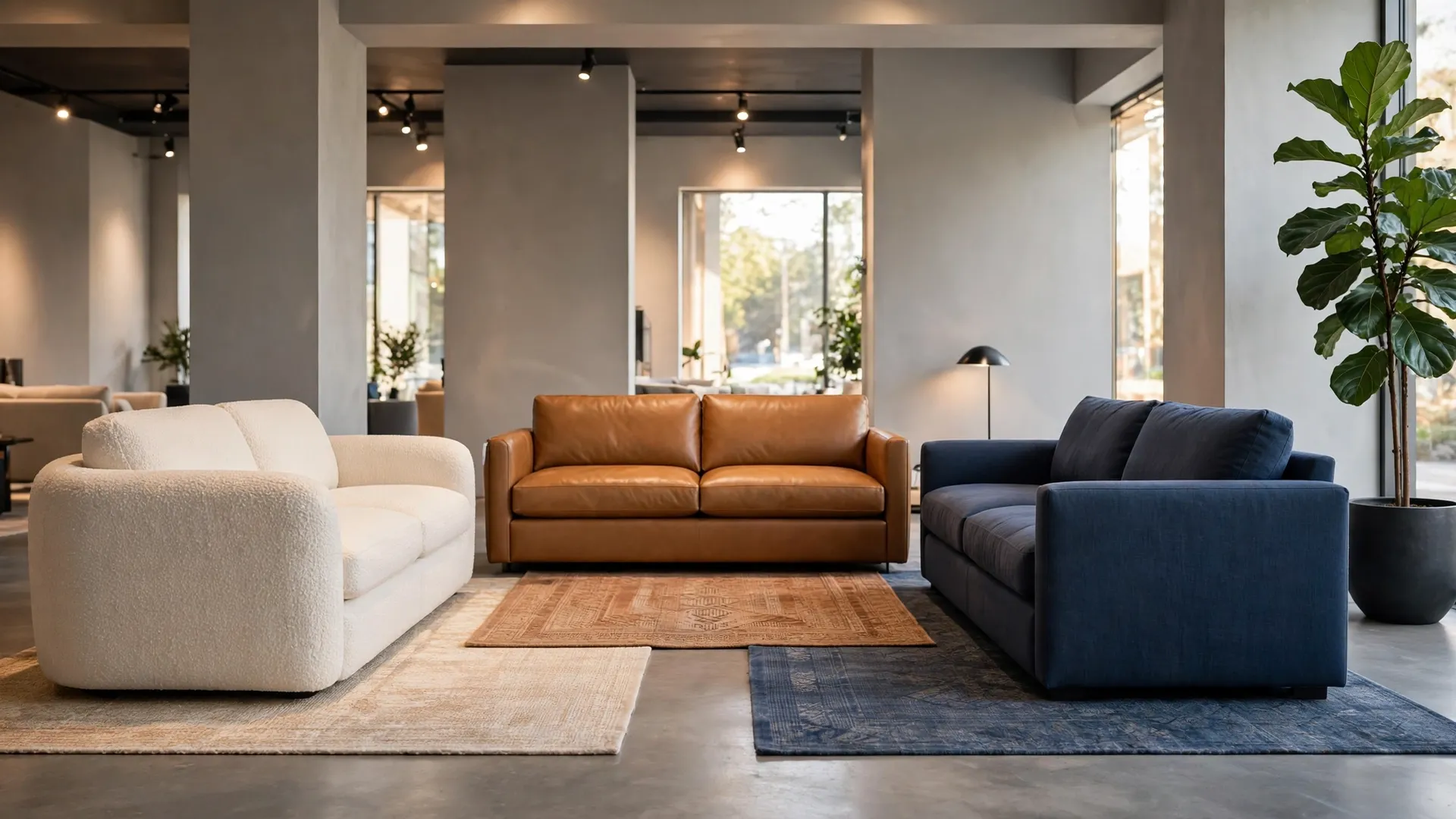
Back height pairs with seat depth. A deep seat with a low back feels like a daybed, perfect for casual spaces. A deep seat with a high back wraps you like a hug, which suits readers and nappers. Test the combination in a showroom whenever you can, because five minutes of sitting tells you more than any spec sheet.
Does the Standard Sofa Size Work in a Small Apartment?
The standard dimensions fit most rooms, but small apartments and narrow layouts sometimes need a lighter touch. Here is how to think through the options.
A loveseat runs 48 to 72 inches wide and seats two. It keeps a classic sofa look while freeing two feet of floor. An apartment sofa, sometimes called a condo sofa, runs 72 to 78 inches wide. It holds three slimmer adults or two comfortably, and it bridges the gap between a loveseat and a full-size sofa.
Sectional sofas solve a different problem. An L-shaped sectional uses a corner, which opens the middle of the room. Many sectionals come in modular pieces, so you can split them or rearrange them as your needs change. For studio apartments, an armless loveseat or a compact chaise can work where nothing else fits.
Layout rules matter as much as the sofa itself. Leave 30 to 36 inches of walkway in front of major traffic paths so people move without squeezing. Keep about 18 inches between the sofa front and the coffee table, close enough to reach your drink but far enough to walk through. Place the sofa at least 6 to 8 inches from the wall so the room breathes, or pull it fully into the room to float a seating zone. Choose a rug that extends 8 to 12 inches beyond each side of the sofa so the whole arrangement sits on one island of fabric.
How to Measure Your Room Before You Buy
You do not need design software. You need a tape measure, painter's tape, and ten honest minutes.

First, measure the room itself. Record the length and width of the living room, note the door swings, and mark the windows and heating vents. Radiators and vents decide where a sofa cannot sit, so map them before you fall in love with an arrangement.
Second, measure the delivery path. Measure every doorway, hallway, stairwell, and elevator the sofa must travel through. Write the numbers down. A beautiful sofa that cannot reach your living room is just an expensive lesson.
Third, compare your tape outline against the standard sofa size range before you fall in love with any couch. This is the step Maya skipped, and it is the step that saves you from delivery-day disaster. If the sofa's width, depth, and height all clear your room and your delivery path, you can shop with confidence.
The Painter's Tape Trick
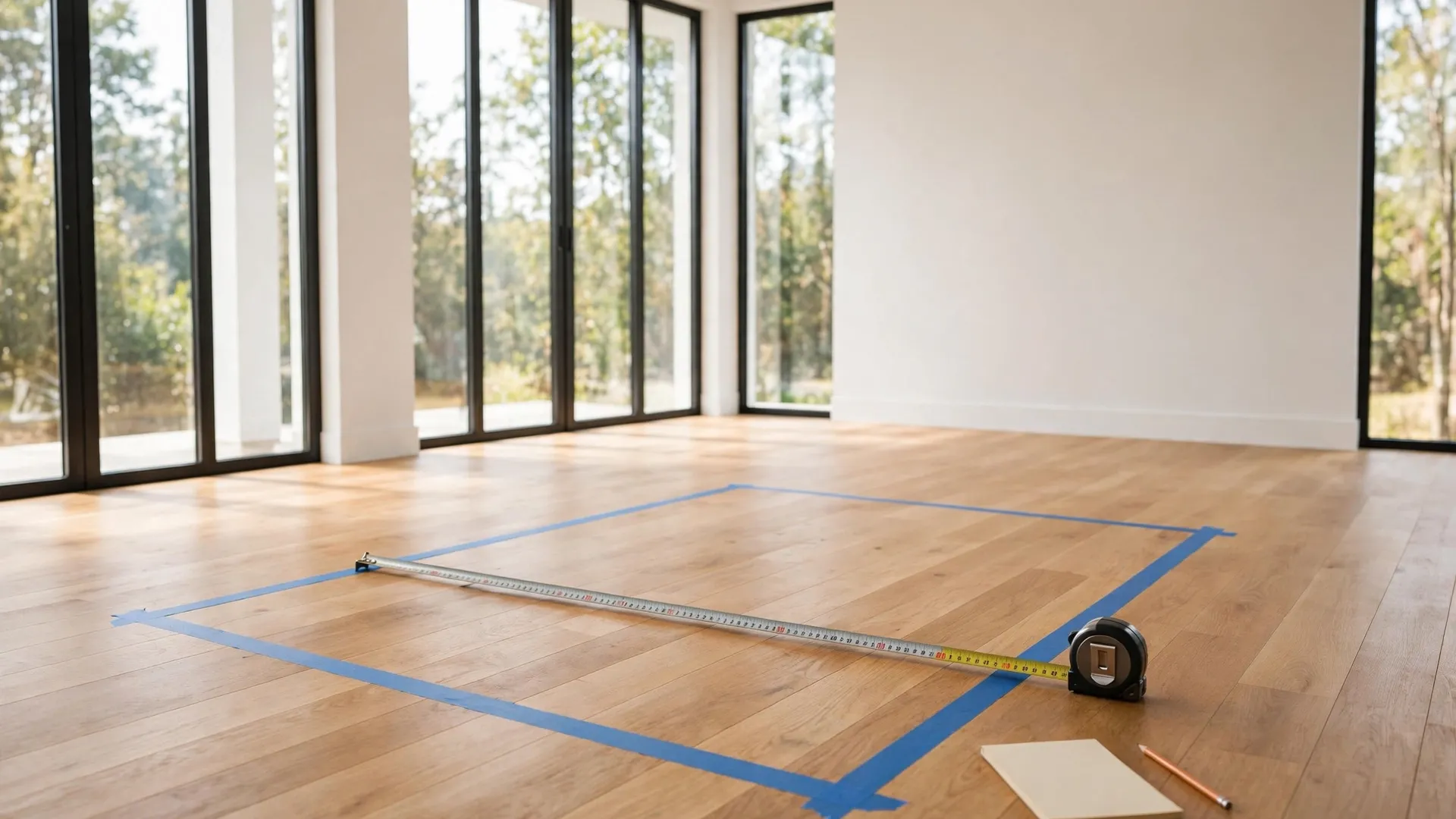
Interior designers use this trick on every project. Lay painter's tape on your floor in the exact footprint of the sofa you are considering. An 84 by 38 inch rectangle, for example, shows you exactly how much floor the sofa will claim. Walk around it for a day. Sit inside it on the floor. You will instantly feel whether the room still breathes or whether the sofa dominates everything.

While the tape is down, tape the coffee table and side tables too. Check the 18-inch gap to the coffee table and the 30-inch walkways. Move the tape until the room flows, then buy a sofa that matches your winning rectangle.
A Quick Checklist for Smart Shoppers
– Confirm the sofa width, depth, and height in the product listing, and compare them with your room measurements. – Sit-test the seat depth when possible, and match it to your height and your sitting habits. – Check the frame material, solid hardwood frames outlast softwood and particleboard by years. – Ask about the suspension, sinuous springs or eight-way hand-tied springs hold up far better than plain webbing. – Test the delivery path one more time, doorways, hallways, stairs, and elevators, before you pay. – Read the return policy and restocking fees so a wrong guess never costs you twice.

Start every search with the standard sofa size as your baseline, and you will never get a delivery-day surprise again. Measure first, tape the floor, and pick the sofa that fits your room and your life. Your movie nights will thank you.