Standard Floor Lamp Height: How Tall Should Yours Be?

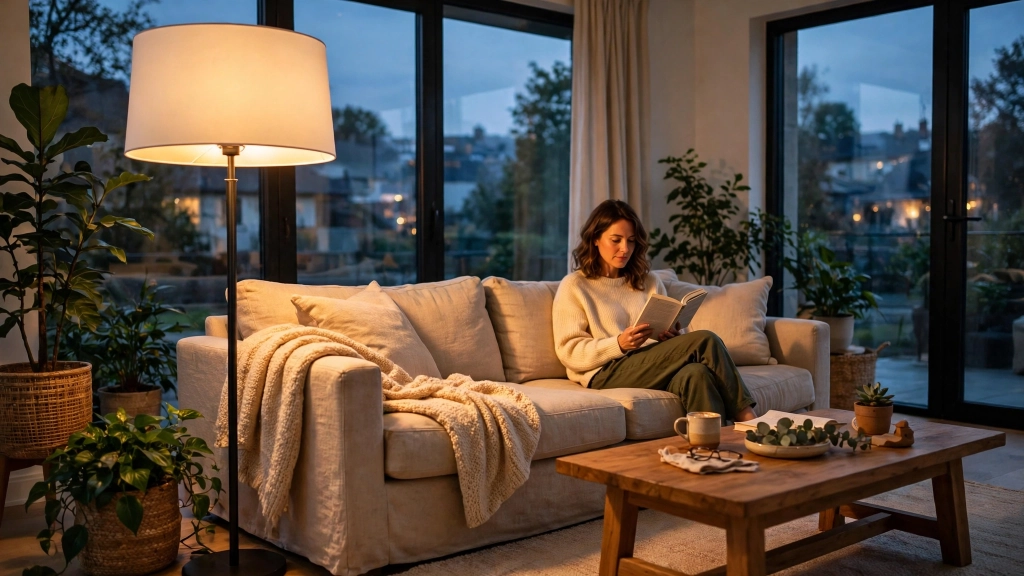
You walk into a friend's living room and something feels off. The lamp glows in the corner, but the light hits the wall instead of your book. You shift to a better chair and still squint at the pages. The problem is not the bulb, and it is not the shade. It is the height. Getting the standard floor lamp height right changes how a room feels, how easily you read, and how warm the whole space looks at night.
Most people shop for lamps the way they shop for art. They pick the shape they love, check the price, and hope it works. Lighting designers do the opposite. They start with numbers. And the first number they reach for is height, because height decides where every drop of light lands.
What Is the Standard Floor Lamp Height?
Most floor lamps sold today stand between 58 and 64 inches tall, measured from the base to the top of the shade. The sweet spot for the standard floor lamp height sits right around 60 inches, which places the bottom of the shade near your eye level when you sit down.
Lamp makers settled on this range for a practical reason. A shade that hangs near seated eye level spreads light across the room instead of pushing it straight up or straight down. Buy a lamp that is much shorter and the light pools around your knees. Buy one that is much taller and the bulb glares over the top of the shade straight into your eyes.
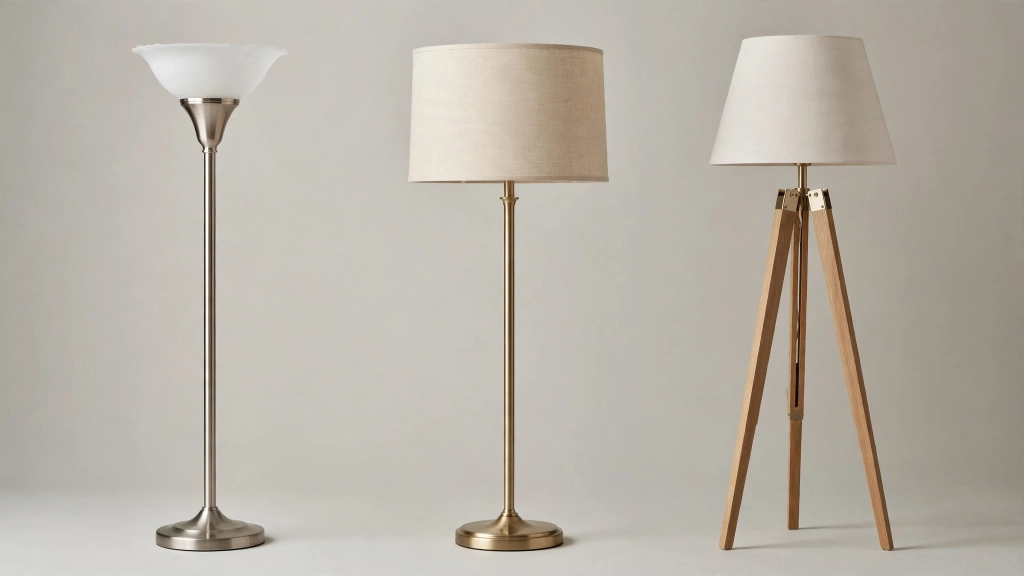
Sizes do vary a little between brands. A modern arc lamp can stretch past 70 inches, and a small pharmacy reading lamp can dip to 55. But the classic torchiere, the drum shade lamp, and the tripod style you see at stores like IKEA, Target, and West Elm all cluster near that 60 inch mark. If a product page lists anything between 58 and 64 inches, you are looking at a true standard size, and it will suit most rooms.
Why Height Decides How Your Room Feels
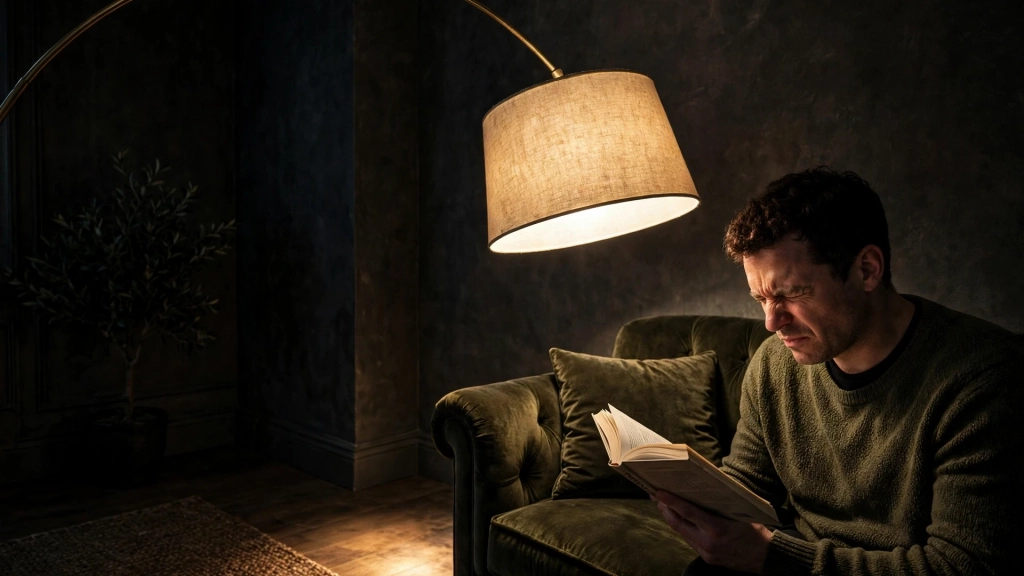
Picture two identical living rooms. Same sofa, same rug, same paint. In the first room the floor lamp stands 52 inches tall and hugs the wall. The light stops at the coffee table, the corners sink into shadow, and the space feels cramped. In the second room the same style of lamp stands 60 inches tall and sits a foot from the wall. Shadows lift, the ceiling glows softly, and the room breathes. Nothing changed except height.
How Standard Floor Lamp Height Shapes Light Quality
Light behaves a little like water. It flows out from the source and pools wherever the shade sends it. The standard floor lamp height lifts the shade high enough to wash the walls with soft, indirect light, which makes a whole room feel bigger and calmer.
Researchers who study indoor lighting, including work published through the Illuminating Engineering Society, have shown for years that indirect light relaxes people more than harsh downlight. A lamp at the right height bounces gentle light off the ceiling and walls. Your eyes relax because they never stare into a bare bulb. That is why a well placed floor lamp can make an evening at home feel restful while an overhead ceiling light makes the same room feel like an office.
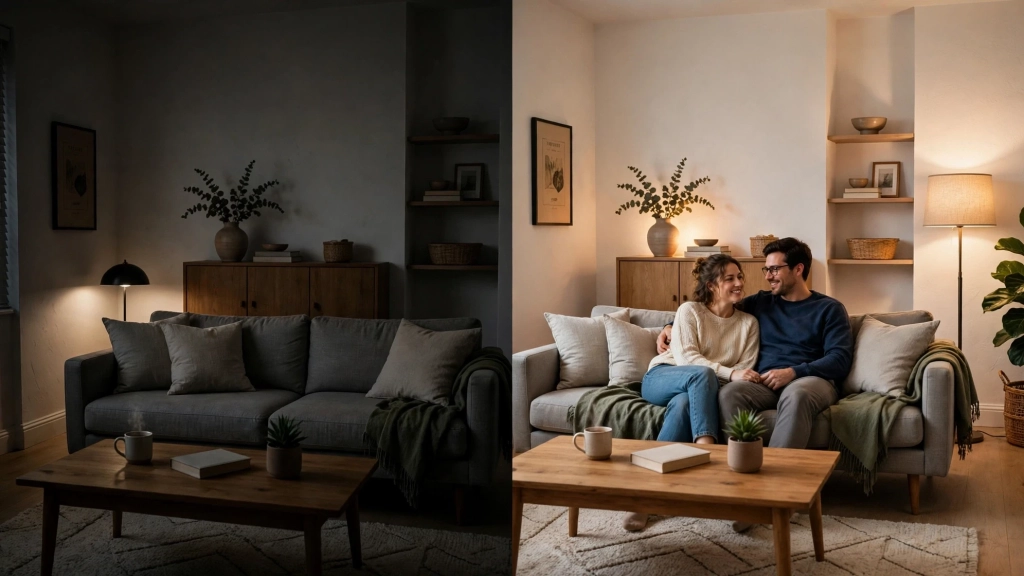
Height also controls glare. When the bulb sits below your eye line, you see the glowing bulb itself every time you look across the room. That direct view causes eye strain, especially while you read or watch television. Lift the bulb a few inches above your eyes and the shade hides it. You see only the warm pool of light, never the source. This one detail separates a lamp that annoys you from a lamp you love.

Standard Floor Lamp Height for Every Room
Every room asks its lamp to do a different job, so treat the standard floor lamp height as a starting point and adjust for the task at hand.
Living Room
Next to the sofa, aim for a lamp whose shade bottom lands right at your eye level when you sit, which usually means 58 to 62 inches of total height. The light then washes over your shoulder for reading and spreads across the seating area for conversation. Place the lamp beside the arm of the sofa rather than behind it, so the light reaches your lap instead of the back of your head.

Bedroom
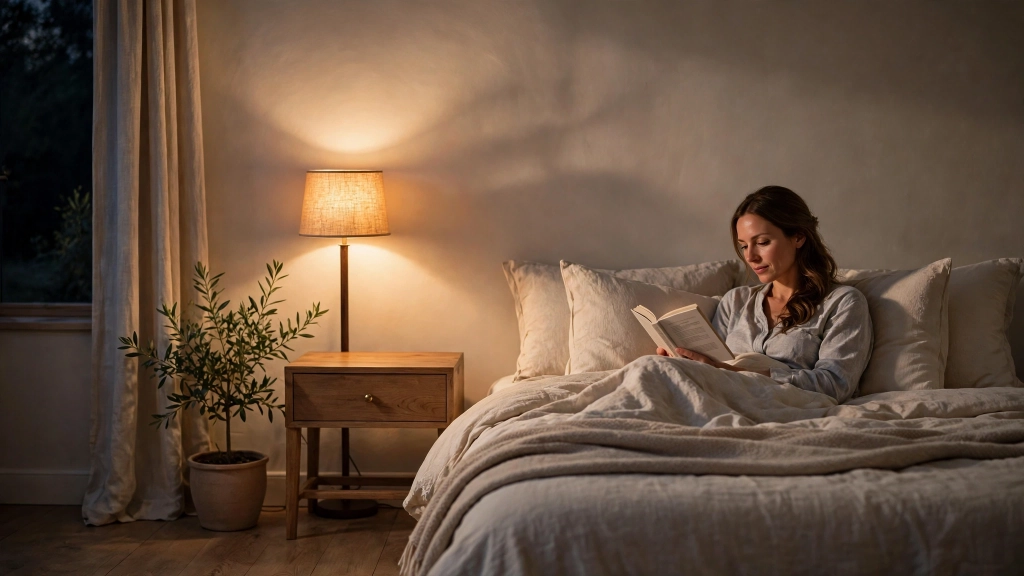
Beside the bed, a slightly shorter lamp often works better. Your head rests lower on a pillow than on a sofa back, so a lamp of 55 to 58 inches keeps reading light close without blinding anyone else in the bed. Set the lamp a few inches behind the nightstand so the shade clears the tabletop, and choose a shade that aims light downward toward your book.
Reading Corner and Home Office
For a dedicated reading chair, keep the bottom of the shade two to four inches above your seated eye line. That small lift throws light directly onto the page instead of into your eyes. In a home office, pair the floor lamp with your desk lamp so the two sources balance each other. One light from the side plus one from above removes the harsh shadows that a single overhead light always creates.

How to Measure for the Perfect Fit
Grab a tape measure and do this simple test. Sit in your chair and have someone measure from the floor to your eye level. Add two inches. That number is your ideal lamp height. Most adults have seated eyes about 42 to 46 inches from the floor, which is exactly why the 60 inch standard works so well. A typical shade runs 12 to 16 inches tall, so the bulb sits near 48 inches, just above your eyes where it belongs.
Check the shade width while you shop. A handy rule says the shade should measure about two thirds as wide as the surface it stands near. A skinny shade on a chunky base looks top heavy, and an oversized shade swallows a slim lamp. If you shop online, look for the shade diameter in the spec sheet next to the height. Good brands like Lutron and Philips Hue list both numbers clearly.
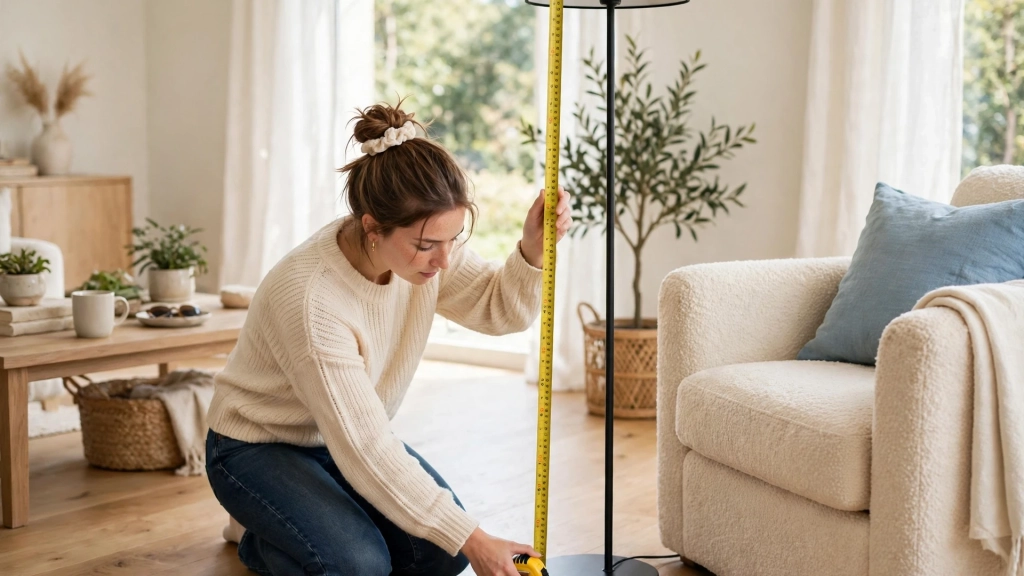
Think about the bulb too. Height and brightness work as a team. A tall lamp with a dim 40 watt equivalent bulb leaves the room moody but dark. The same lamp with a bright 100 watt equivalent LED floods the space. Look for bulbs labeled 2700K for warm living room light or 3000K for a slightly crisper reading light. The kelvin number tells you the color, and the lumens number tells you the brightness, so read both before you buy.
Mistakes That Ruin Good Lighting
The first mistake is buying for looks and ignoring scale. A tall arc lamp beside a low loveseat throws light across the whole room instead of onto your seat. A short lamp beside a tall wingback chair hides behind the furniture. Match the lamp to the furniture it serves, not just to your taste.
The second mistake is pushing the lamp deep into a corner and expecting it to light the middle of the room. Light needs a clear path. Pull the lamp six to twelve inches away from the wall and angle the shade toward where you sit. That small gap lets light wrap around the shade and wash the wall behind it, which doubles the glow you get from one bulb.
The third mistake is forgetting the dimmer. Even perfect height cannot fix a bulb that burns too bright at night. A simple plug in dimmer costs only a few dollars and lets you drop the light for movie night and raise it for reading. Smart bulbs from brands like Philips Hue add the same control through your phone, and they remember your favorite setting.
The fourth mistake is using one lamp to do every job. A floor lamp gives you ambient and task light, but it cannot replace every source. Layer it with a table lamp or a wall sconce. Designers call this layered lighting, and it is the reason professionally decorated rooms feel rich while rooms with a single lamp feel flat.
Pick the Right Height Once and Enjoy It for Years
Lighting feels complicated until you learn one number. Once you know the standard floor lamp height, shopping gets easy. You can glance at a spec sheet, see 60 inches, and picture exactly how the light will fall in your room.
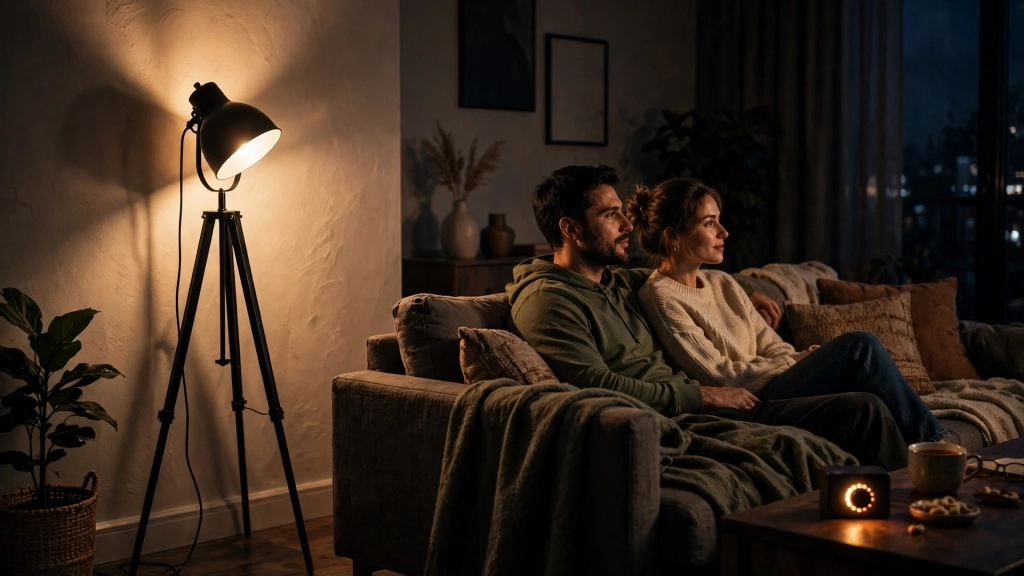
Measure your chair, trust the 60 inch rule, and give the lamp a little breathing room from the wall. Add a dimmer, match the shade to your furniture, and layer in a second light source. Your eyes, your books, and your guests will notice the difference every single evening.