Dining Room Rug Size: The Simple Rule That Never Fails

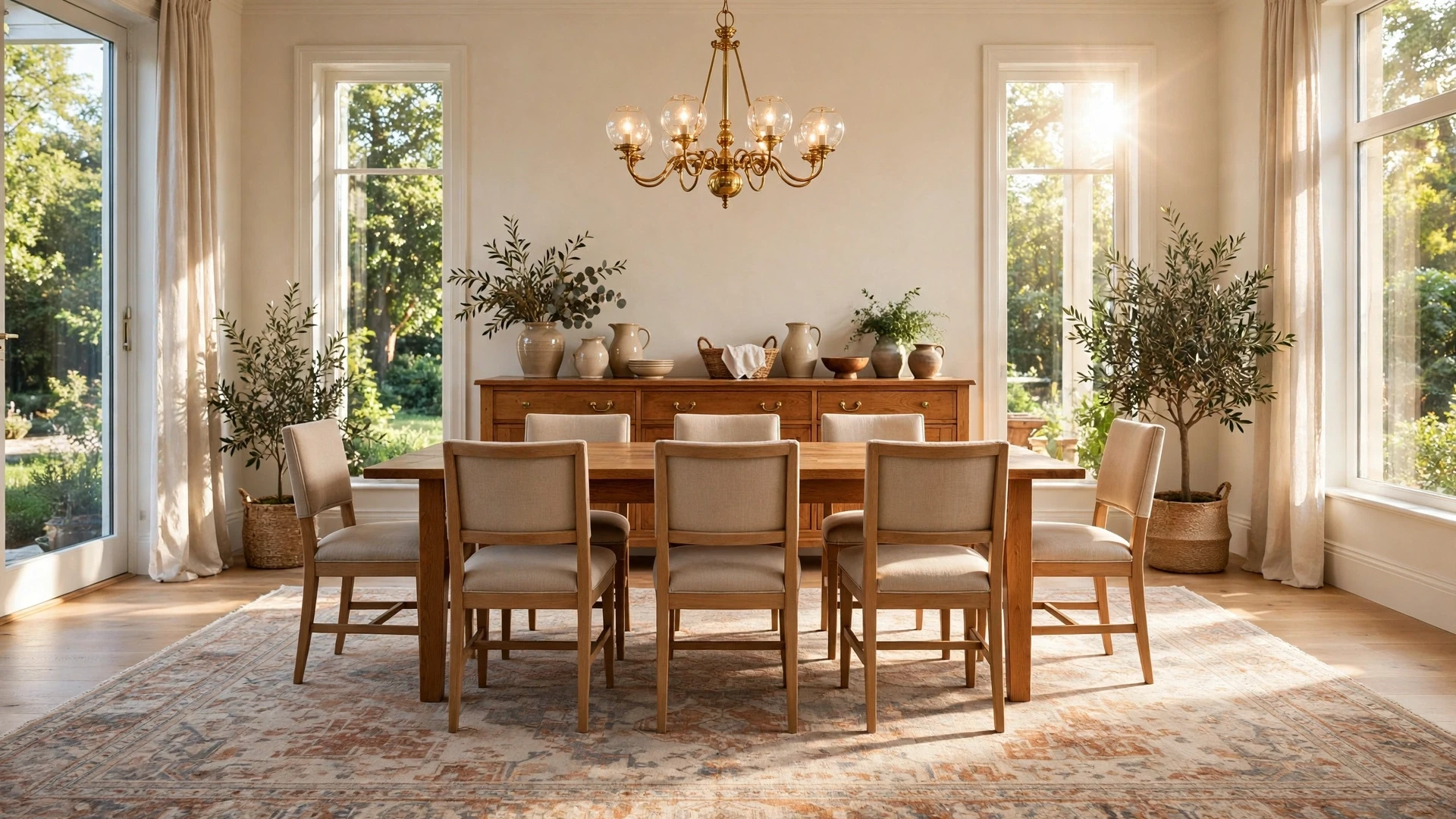
Last Thanksgiving, my sister invited the whole family to her new house. The turkey was perfect, the pies were warm, and the dining room looked like it belonged in a magazine. There was just one problem. Every time someone pulled out a chair, the back legs caught on the edge of the rug with a loud, scraping jolt. By dessert, the rug had bunched up into a wrinkled mess, and my uncle had moved his chair off it completely. My sister whispered to me, “I measured twice, I swear.” She had measured. She had just measured the wrong thing. Getting the dining room rug size right sounds like the easiest job in home decor, but one small mistake turns the prettiest room into an obstacle course.
The good news is that professionals all follow one dead-simple rule, and once you know it, you will never buy the wrong rug again.
Why the Rug Under Your Table Matters More Than You Think
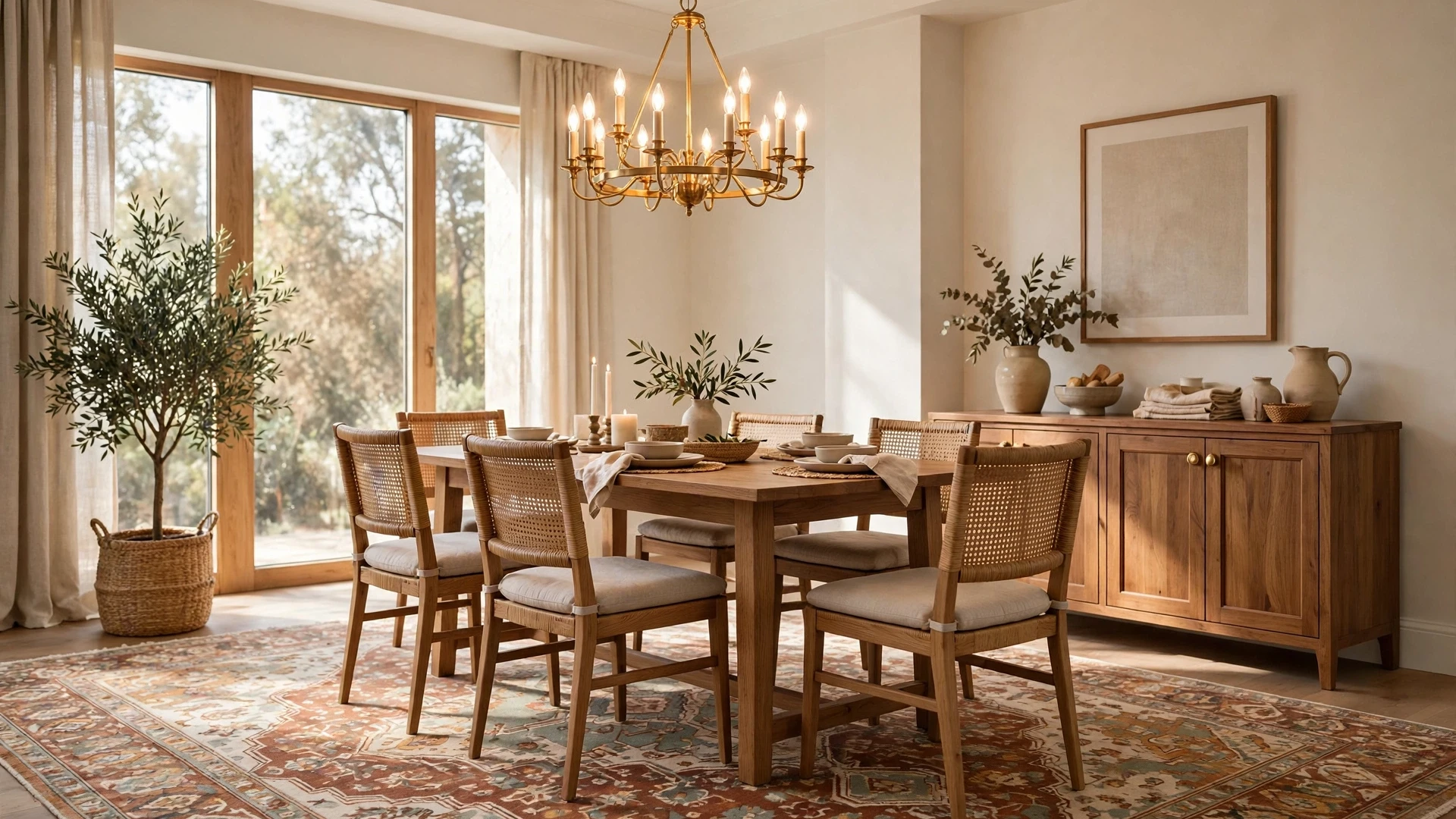
A rug in the dining room does more work than almost any other piece in the house. In the living room, a rug mostly frames the couch. In the dining room, your rug takes daily abuse. Chairs scrape back and forth across it three times a day. Food drops on it. Feet shuffle on it during long Sunday lunches. It also sets the visual foundation for the whole space, tying the table, the chairs, the chandelier, and the sideboard into one finished picture.
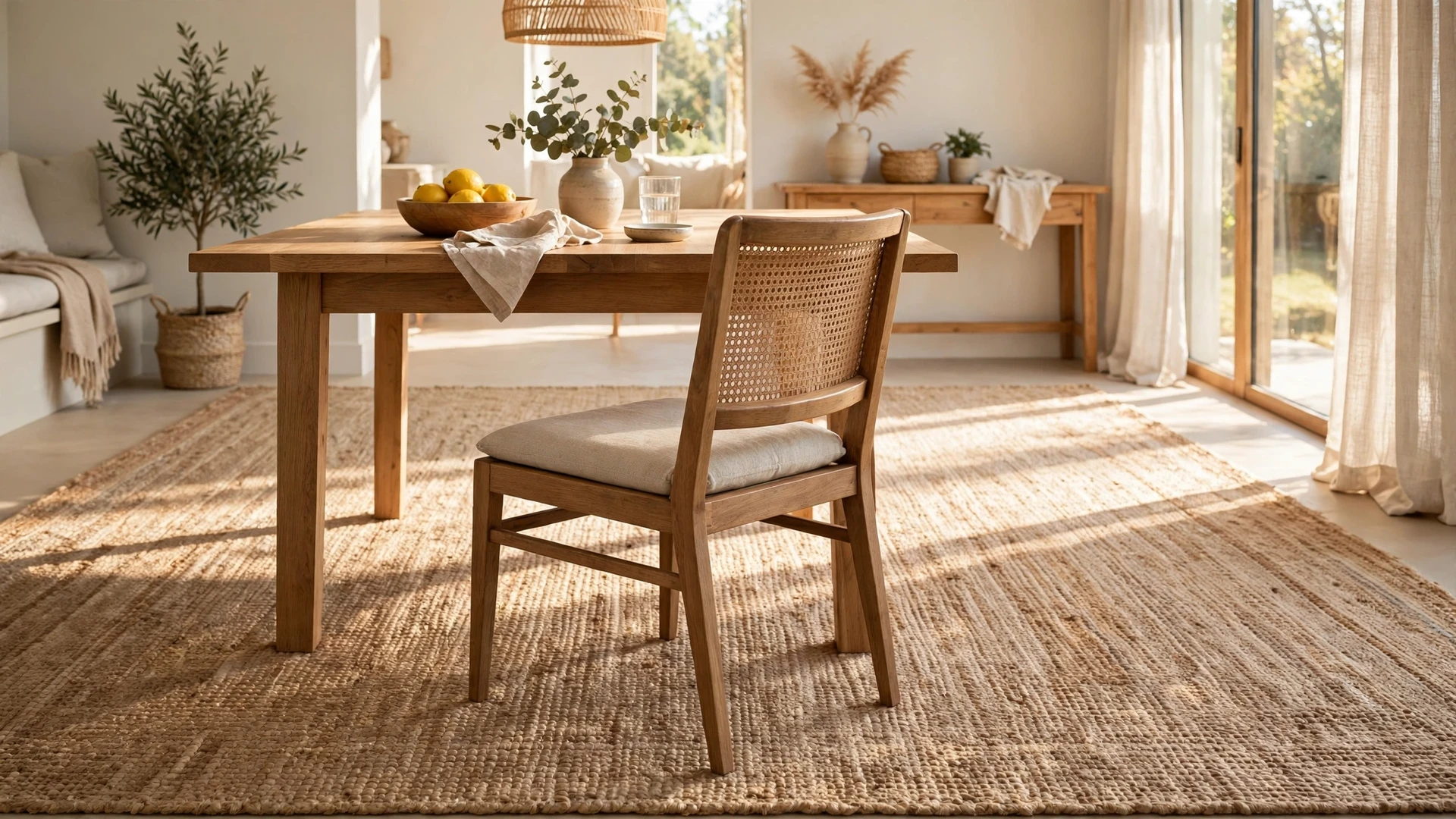
When the rug fits, everything feels calm and put together. The chairs glide. The room feels bigger, because the eye reads one continuous surface instead of a clutter of separate legs. When the rug is too small, the room feels cramped and unfinished, like a shirt with sleeves that are too short. When it is too big, it swallows the room and fights with the walls for attention. Size is not a detail here. It is the whole game.
How to Get Your Dining Room Rug Size Right Every Time
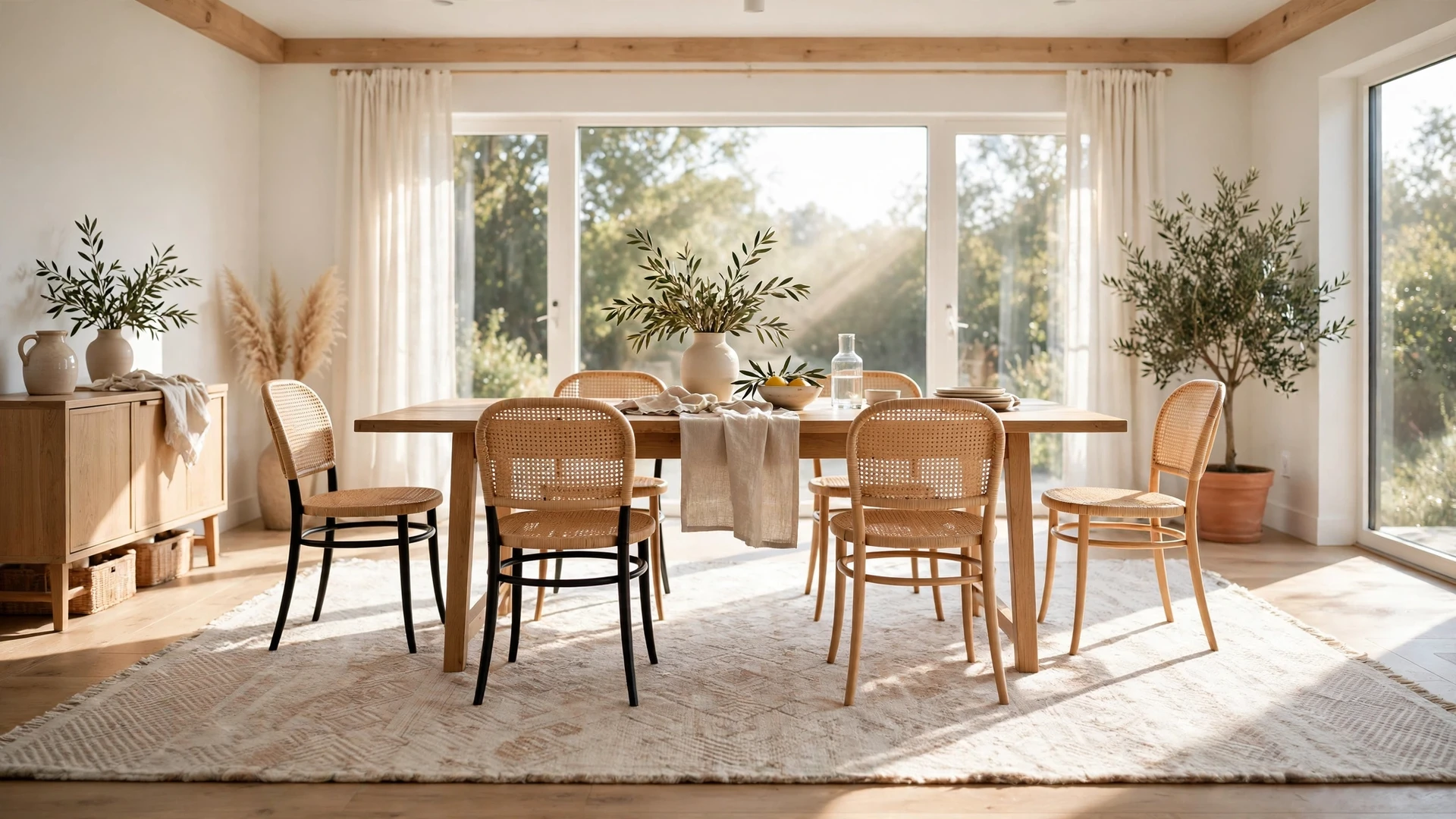
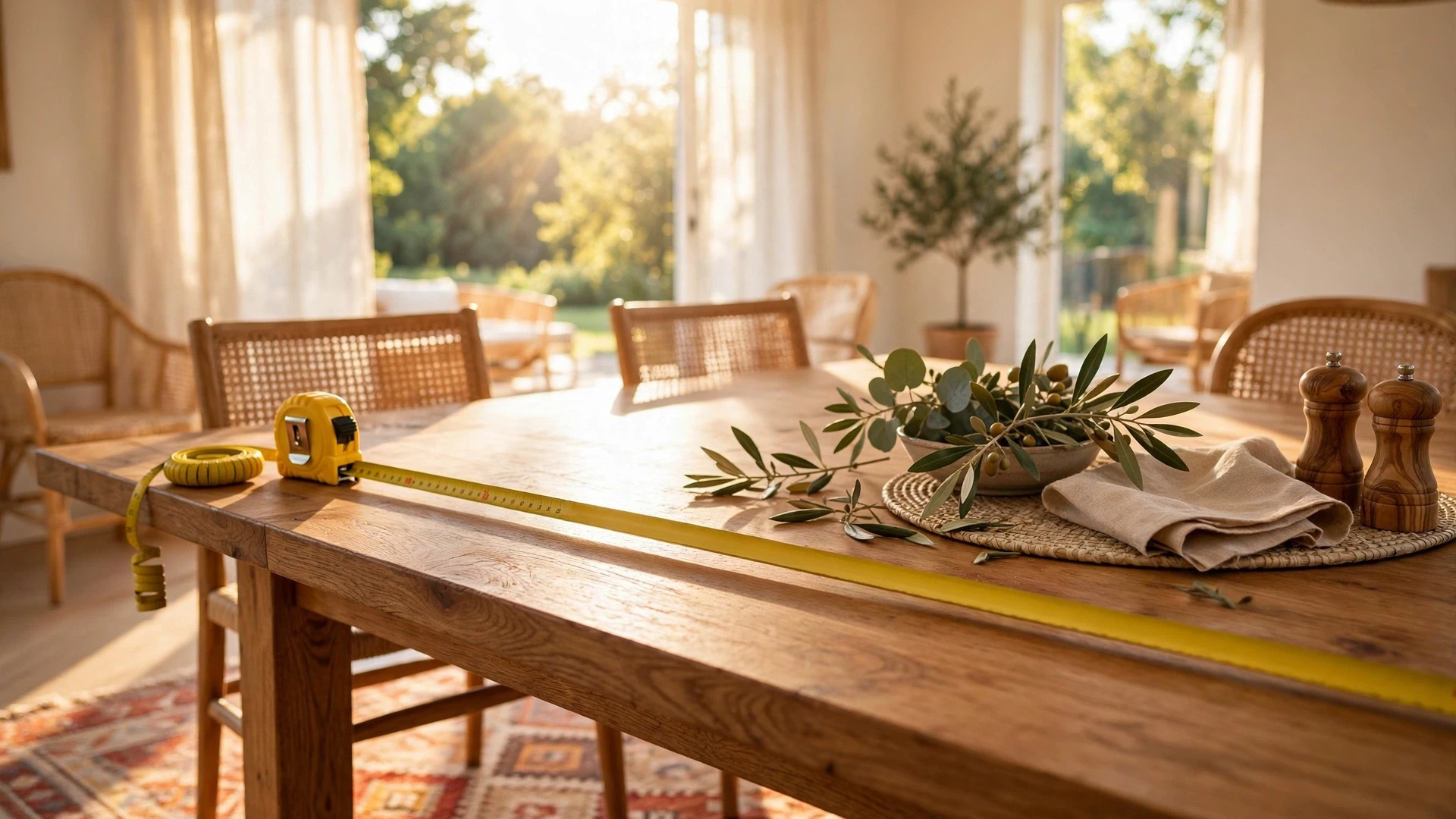
Here is the rule every interior designer I have ever worked with follows, and it has never failed me once. Measure your dining table, then add 48 inches to both the length and the width. That gives you 24 inches of rug on every side of the table. Why 24 inches? Because the average dining chair needs about that much room to slide out while all four legs stay on the rug. This is the heartbeat of the entire method, and everything else is just fine-tuning.
The 24-Inch Dining Room Rug Size Rule
Picture your favorite restaurant. When you push your chair back to stand up, you glide smoothly. Nobody thinks about the floor. That is what 24 inches of breathing room buys you at home. Sit in your chair at the table, push it back as if you were getting up for seconds, and look at where the back legs land. On a properly sized rug, they never leave the edge.
This rule works because it is based on the human body, not on fashion trends. Chair legs typically extend about 18 to 22 inches behind the table edge when a seated person stands. The extra two inches of margin keep the rug edge from ever peeking out awkwardly under a leg. The correct dining room rug size therefore has almost nothing to do with your room and almost everything to do with your table. Start there, and you are already ahead of most shoppers.
Measure the Table, Not the Floor
The mistake my sister made was measuring the room. She found a rug that filled her dining space nicely wall to wall, but her table was a modest six-seater on a rug built for a banquet. Always measure the tabletop first, length and width, then add your 48 inches. If you own an extendable table, measure it at the size you use most often. Most families eat at the compact size 300 days a year and only extend for holidays. A rug that fits the everyday setup will look fine at Christmas too, since the table simply overhangs the rug a little, which nobody notices.
Also measure the chairs themselves. Armchairs and wide upholstered host chairs take up more space than slim side chairs. If your chairs are extra wide or your table has a thick apron that pushes chairs outward, add a few more inches of rug beyond the standard 24. A quick test costs nothing. Lay painter’s tape on the floor in your planned rug dimensions, pull out every chair, and walk around it. You will know in thirty seconds whether it feels right.
Match the Rug Shape to the Table Shape
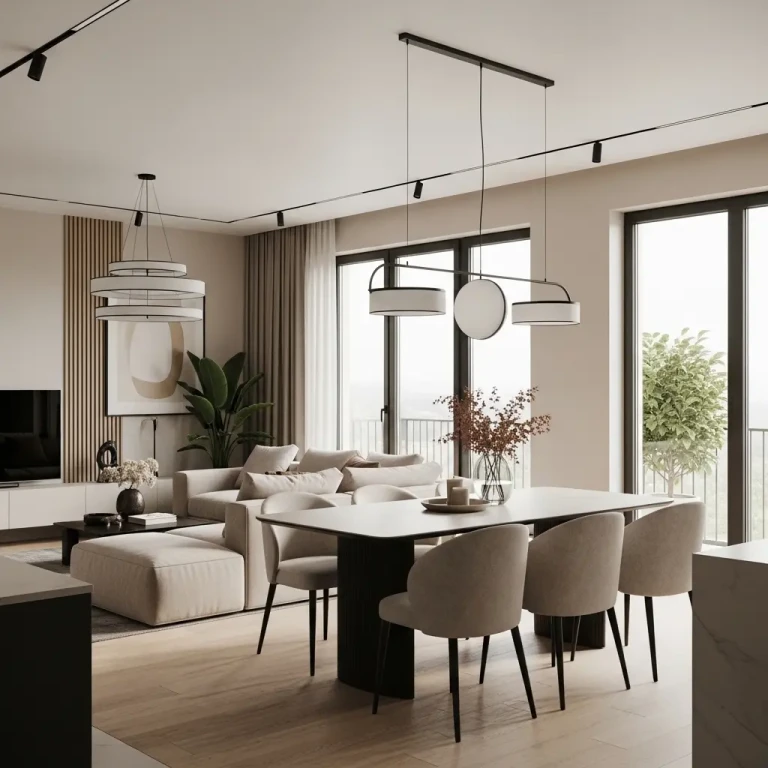
Rectangular tables want rectangular rugs. Round tables want round rugs. This sounds obvious, but I see square rugs under round tables in store displays all the time, and it always looks restless. A round table on a round rug creates a calm, gathered feeling, like everyone has pulled into a circle together. Whatever shape you pick, the 24-inch rule keeps the dining room rug size honest. An oval table can go either way, but a rectangular rug usually anchors it best.
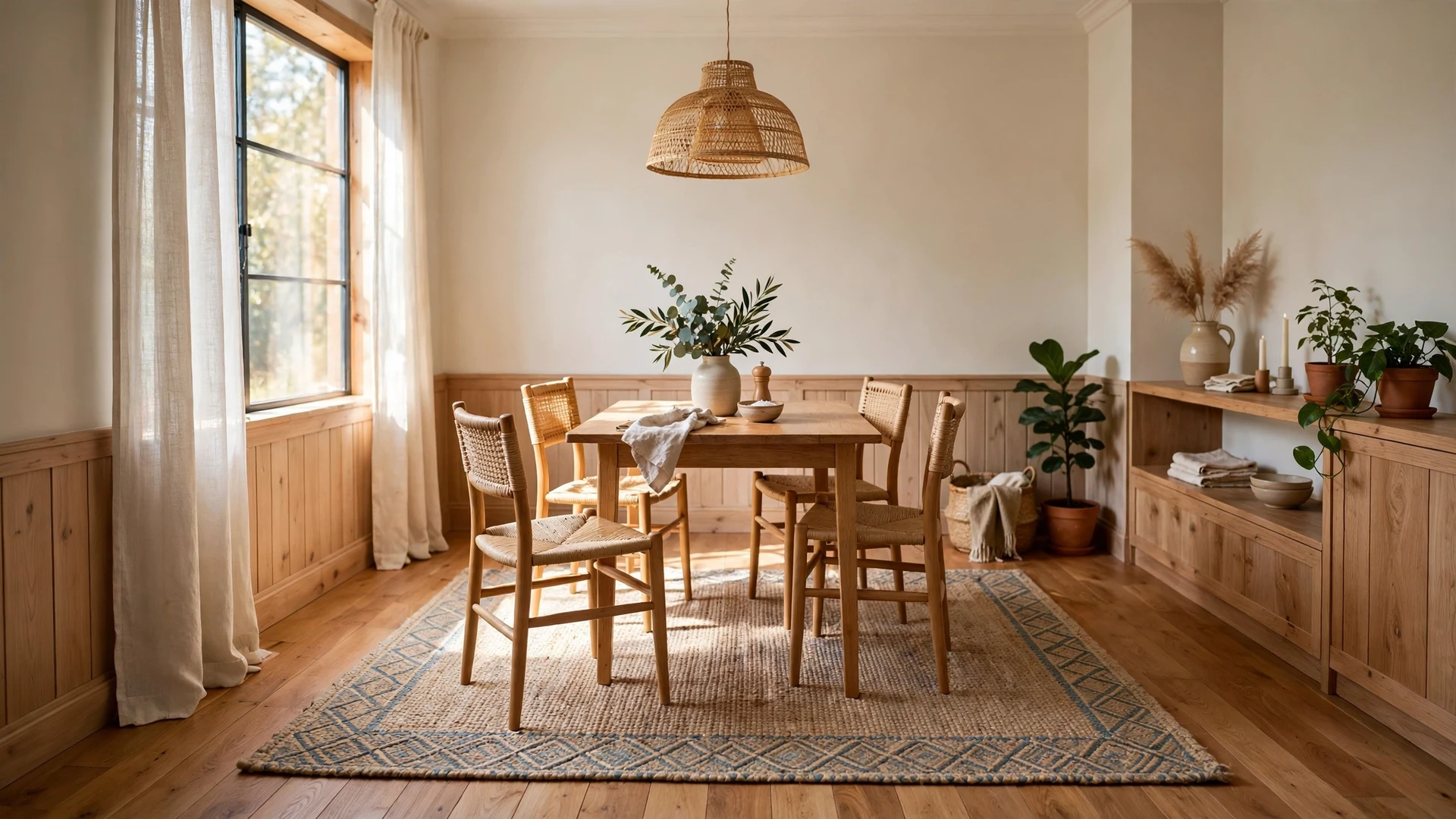
Oval and round rugs need the same 24-inch rule measured from the widest point of the table. For a round table, that means the rug’s diameter equals the table diameter plus 48 inches. A 48-inch round table wants a 96-inch round rug, which is an 8-foot round. These round sizes get large fast, so double-check that your room can hold them with a little floor showing around the edges. A rug that touches the walls on all sides stops looking like a rug and starts looking like wall-to-wall carpet.
Exact Dimensions for Every Common Table
Let’s turn the rule into numbers you can shop with. For a standard rectangular table that seats six, about 72 inches long and 42 inches wide, add 48 to each side and you land at 120 by 90 inches. That is a 10 by 7.5 foot rug, and in stores you will find the closest standard size is usually 10 by 8 feet. For an eight-seater table around 96 inches long, you need roughly a 12 by 9 foot rug. Small four-top tables, about 60 inches long, sit comfortably on an 8 by 6 foot rug.
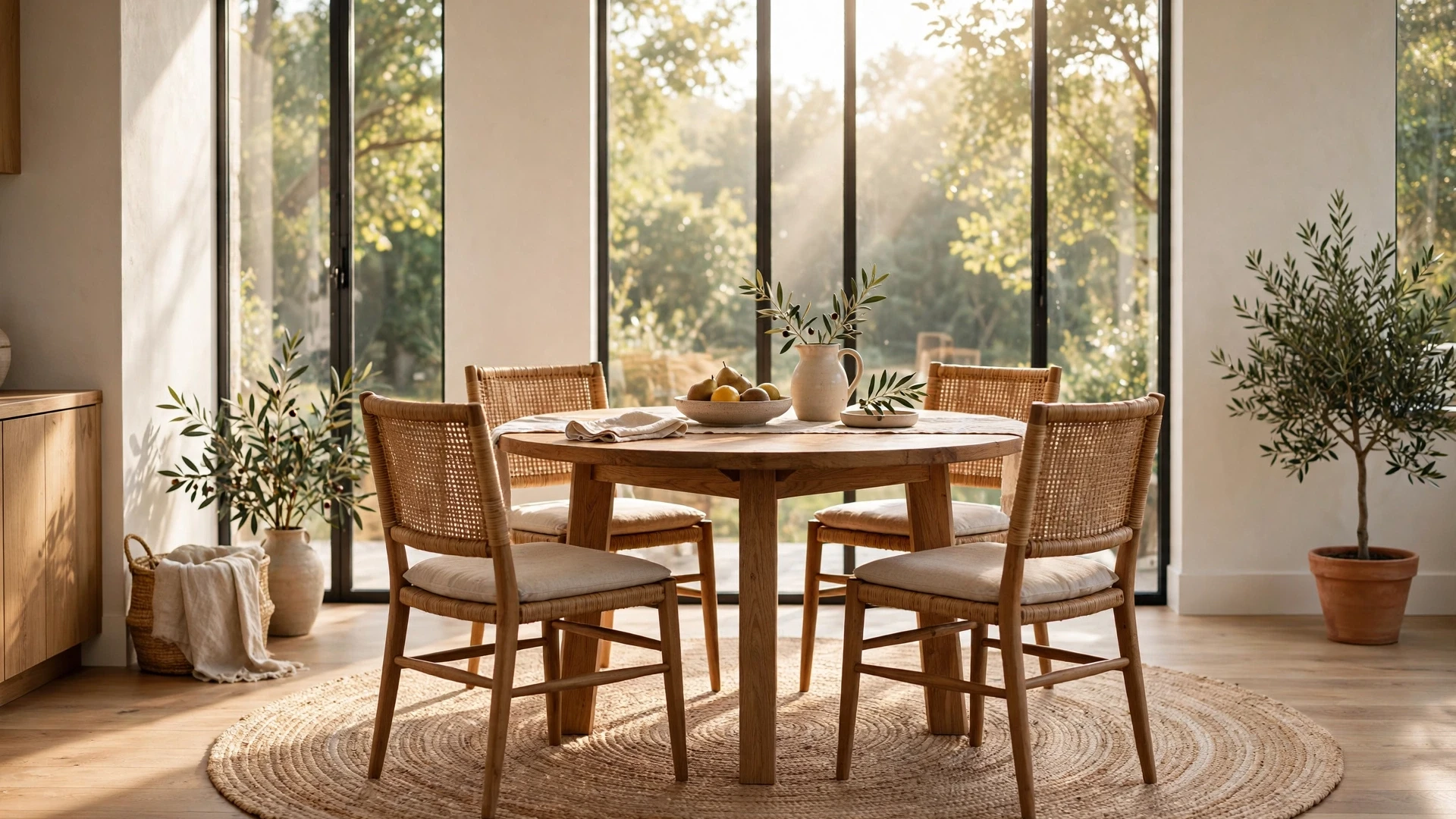
Round tables follow the same math. A 42-inch round table for four wants a 90-inch round rug, sold as 7.5 foot. A 60-inch round table for six needs a 108-inch round, a 9-foot rug. Pedestal tables cheat a little here because there are no corner legs to worry about, but chairs still push back the same distance, so keep the full 24 inches.
One more practical note. Leave at least 18 inches of bare floor between the rug edge and the wall in an average room, and more in a large one. This frame of visible flooring makes the rug look intentional instead of accidental. If the math says your ideal rug would nearly touch the walls, go one size down rather than up. A slightly smaller rug with good proportions always beats a wall-to-wall look.
Dining Room Rug Size Mistakes That Ruin the Look
The number one mistake is the “postage stamp” rug, a rug that barely extends past the table legs. Every chair scrapes off the edge, the rug curls and wrinkles, and the whole setup looks like an afterthought. If you already own one, layering a larger flatweave underneath can rescue it, but buying right the first time costs less.
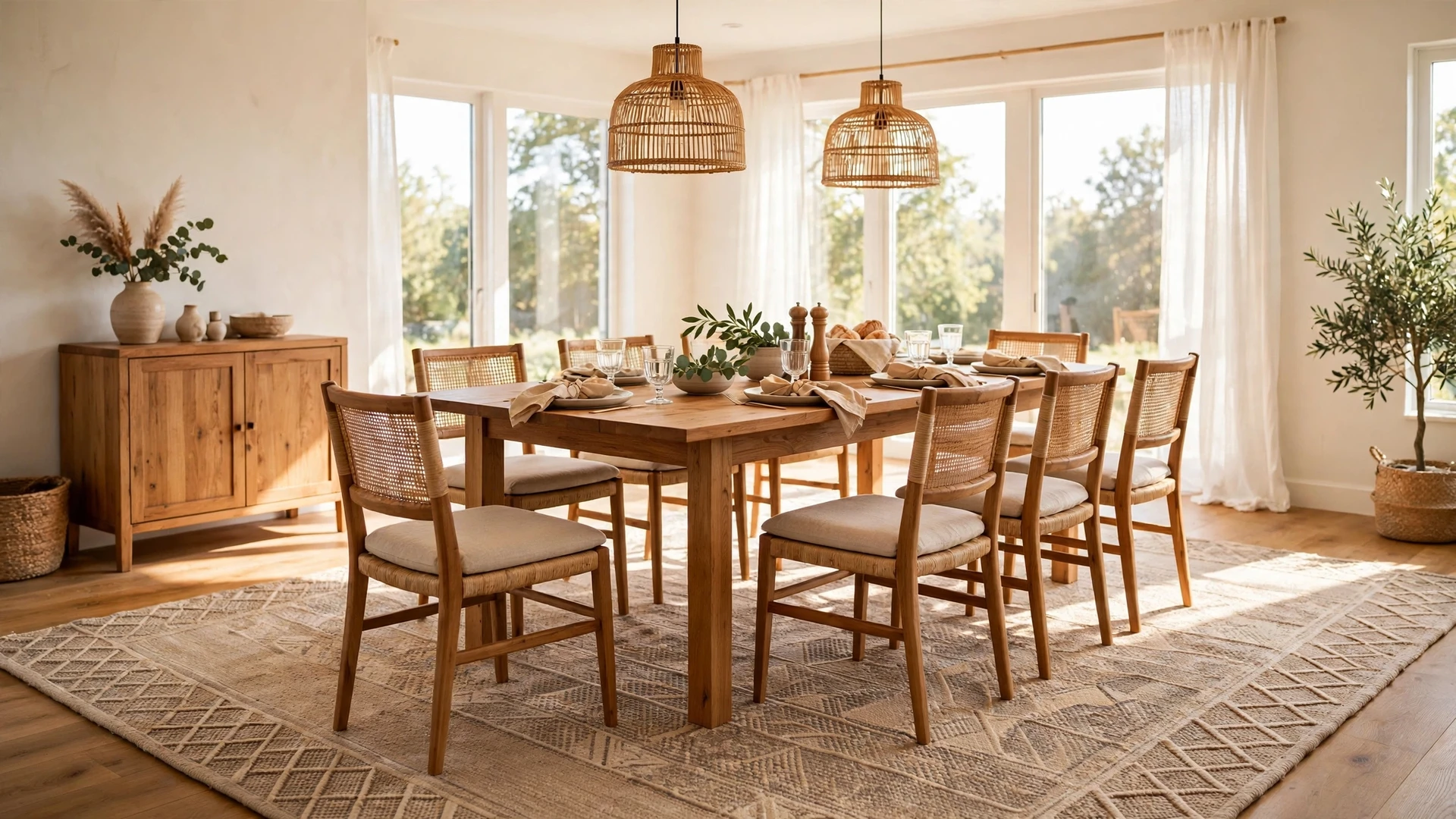
The second mistake is buying for the room instead of the table, exactly what my sister did. A rug that fits the floor plan but not the furniture creates a strange floating effect. The third mistake is choosing thick, plush pile for the dining room. A deep shag feels wonderful under bare feet, but chair legs sink in, get stuck, and leave dents. Low-pile wool, flatweave cotton, or indoor-outdoor polypropylene rugs let chairs glide for years. I learned this the expensive way with a beautiful high-pile rug that lasted one dinner party before I dragged it to the living room.
Finally, do not forget the light fixture. Your chandelier or pendant should hang centered over the table, and the rug should sit centered under both. A rug that is perfectly sized but off-center by six inches looks worse than a smaller rug that is perfectly aligned. Center the rug to the table, not to the room, if those two centers disagree.
Material, Weave, and Color That Survive Real Dinners
Wool remains the gold standard for dining rooms. It resists stains naturally, springs back after chair legs compress it, and lasts for decades. A hand-knotted wool rug costs more upfront but often outlives two or three synthetic replacements. For busy households with kids, look at performance fabrics and indoor-outdoor rugs made from solution-dyed acrylic or polypropylene. They rinse clean, shrug off red wine, and modern versions look nothing like plastic.
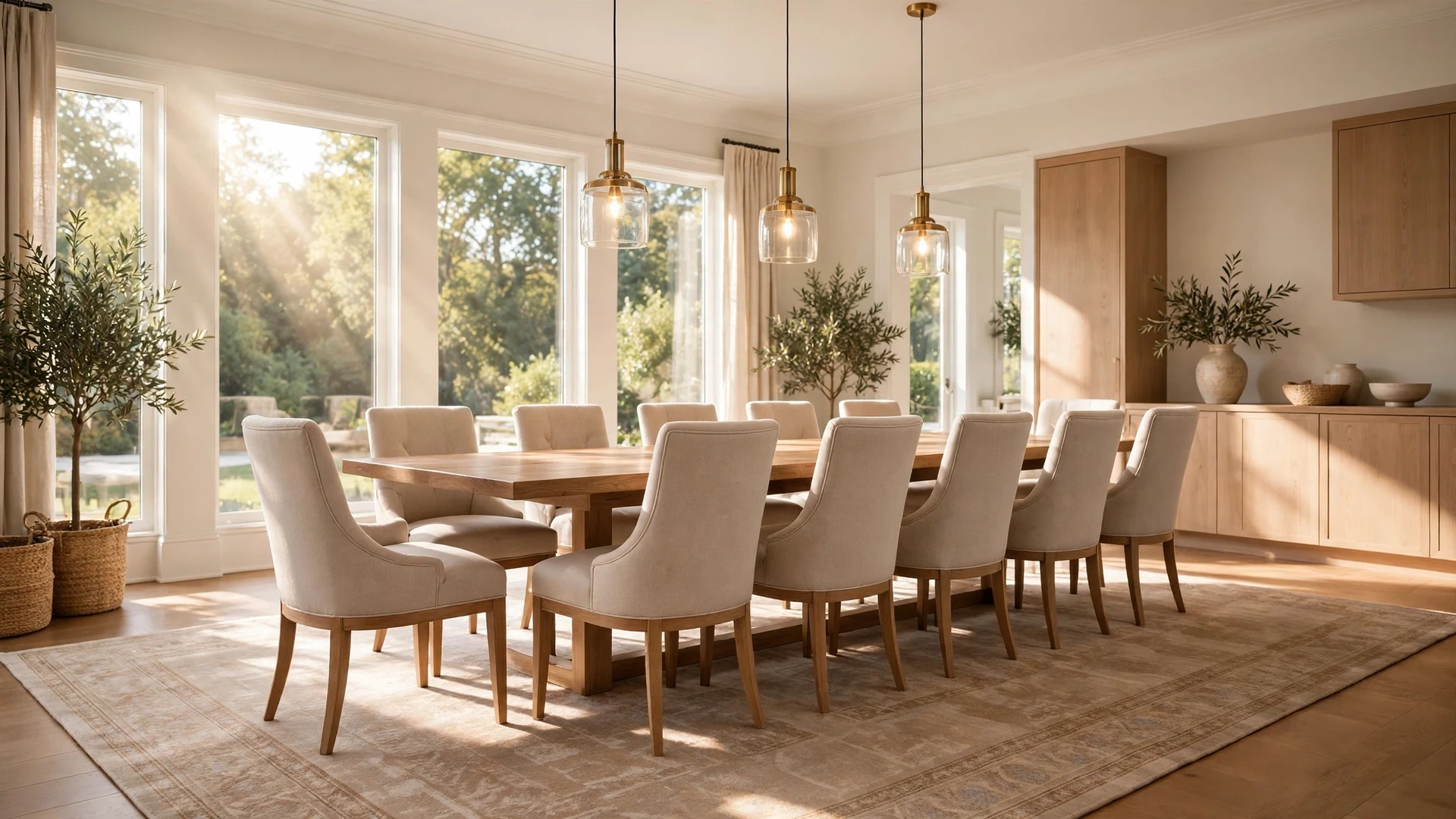
Jute and sisal bring gorgeous natural texture, but think carefully before committing. They stain easily and do not love moisture, so a dining room with frequent spills can age them fast. A smart compromise is a washable rug with a thin pad underneath. Washable rugs have improved enormously in recent years, and being able to toss the whole thing in the machine after a gravy disaster is worth real money.
Color and pattern do quiet, powerful work. A medium-toned pattern hides crumbs and small stains between cleanings far better than a solid cream rug, which shows everything. If you love light rugs, choose one with a subtle border or a low-contrast pattern. Dark rugs hide stains beautifully but show every speck of dust and pet hair, so there is no perfect answer, only trade-offs. Pick the trade-off that matches your household, not the one in the catalog photo.
Quick Answers Before You Shop
How much bigger than the table should the rug be? Add 48 inches to the length and 48 inches to the width of your table. That is the simple version of the whole system, and it works for rectangles, rounds, and ovals alike.
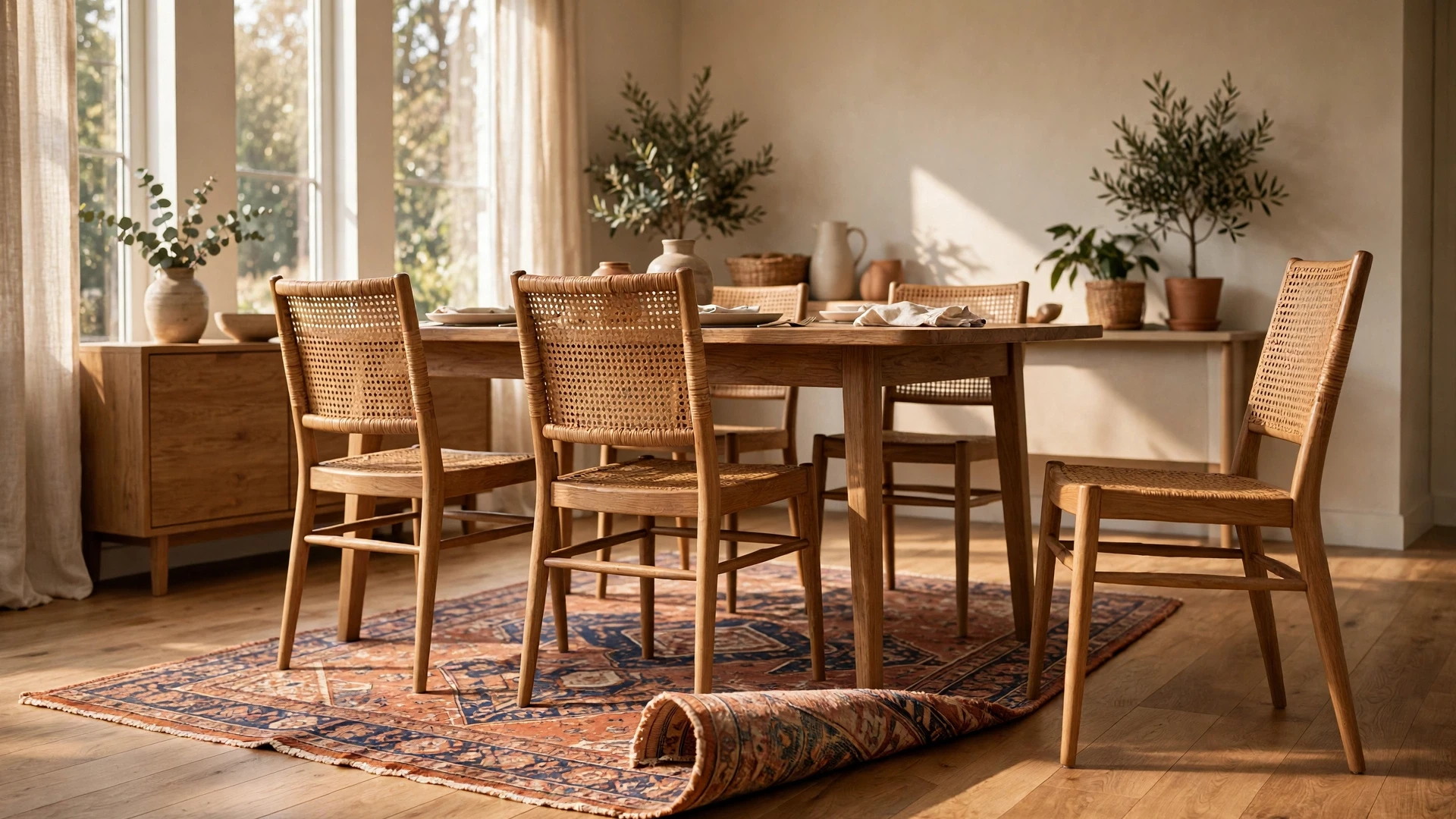
What dining room rug size fits a standard six-person table? A table around 72 by 42 inches needs a rug about 10 by 8 feet. Always round to the nearest standard rug size your store carries, and when you are between sizes, size up if the room allows it.
Can the rug go under the sideboard too? It can, but only if the sideboard sits fully on or fully off the rug. A sideboard straddling the rug edge wobbles and looks unsettled. Most designers keep serving furniture off the rug entirely and let the rug serve the table alone.
Do I need a rug pad? Yes, always. A thin felt or rubber pad stops the rug from creeping when chairs push back, adds a little cushion, and protects hardwood floors from scratches. It is the cheapest upgrade in the entire project.
The Rule You Will Never Forget
My sister remeasured her table, swapped her rug for the right dimensions, and this Thanksgiving the only scraping sound was forks on plates. That is the whole promise of this system. You do not need a design degree or a big budget. You need a tape measure, one number, and the discipline to measure the table instead of the room. Get the dining room rug size right once, and every dinner after that feels just a little more effortless.