

Almost every builder closet in almost every house has one rod at one height, and it is usually the wrong height for what you own. Long dresses puddle on the floor. Shirts hang with three feet of dead air underneath them. There is a shelf above that you can only reach the front eight inches of. Closet rod height is one of those small, fixable numbers that quietly decides how much of your closet you actually get to use.
The standards are worth knowing, and you will find them below. But the honest starting point is not a standard at all. It is your own longest garment and a tape measure, because a closet that suits a wardrobe of shirts is not the same closet that suits a wardrobe of coats.
Measure What You Own First

Before touching a single bracket, hang your longest item on a hanger and measure from the top of the hanger hook to the hem. Then add 3 or 4 inches of clearance so nothing drags. That single number sets the minimum for your long hanging section, and everything else is planned around it.
Typical lengths, hook to hem, though you should always measure your own:
- Shirts and blouses: roughly 32 to 38 inches.
- Trousers folded over a hanger: roughly 30 to 34 inches.
- Trousers hung full length from a clip hanger: roughly 44 to 48 inches.
- Jackets and blazers: roughly 36 to 40 inches.
- Knee length dresses: roughly 45 to 50 inches.
- Long dresses and long coats: roughly 55 to 70 inches.
Now count how many of each you own. If two thirds of your hanging clothes are shirts and jackets, you are wasting most of your closet on a single rod. That is the case for double hanging, and it is the single biggest capacity gain available in a standard reach in closet.
Single Rod Height
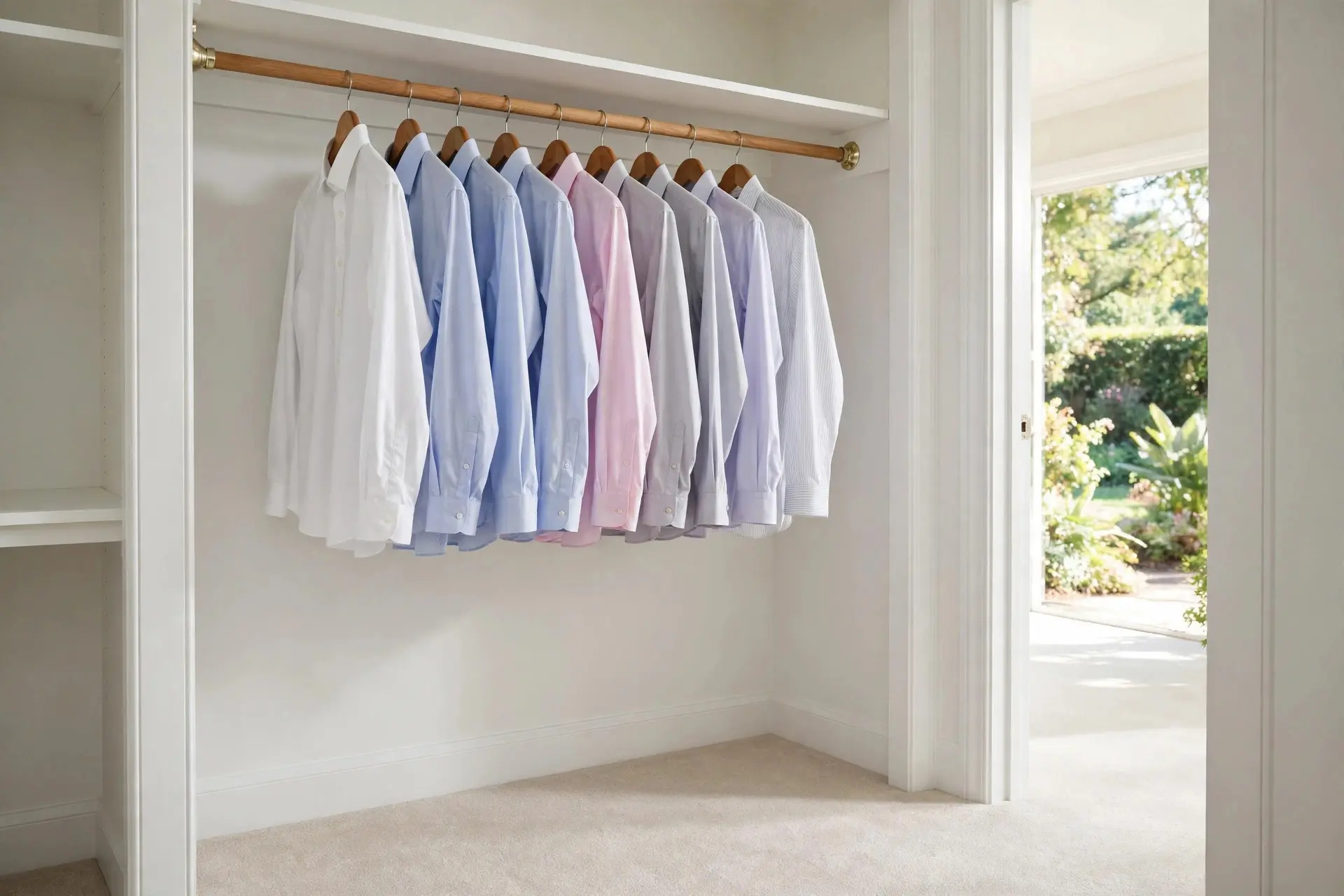
The standard single rod sits 66 inches above the floor, measured to the bottom of the rod.
That height is a compromise, and it is a sensible one. It clears a knee length dress comfortably, it is reachable without stretching for most adults, and it leaves room for a shelf above. Many closets are built at 66 to 72 inches, and anywhere in that band is defensible.
Where a single rod genuinely makes sense is a coat closet, a closet holding mostly dresses, or any closet where you want a tall shoe or storage zone underneath. Where it wastes space is the far more common case: a closet full of shirts, with 30 inches of empty air between the hems and the floor.
Double Rod Heights
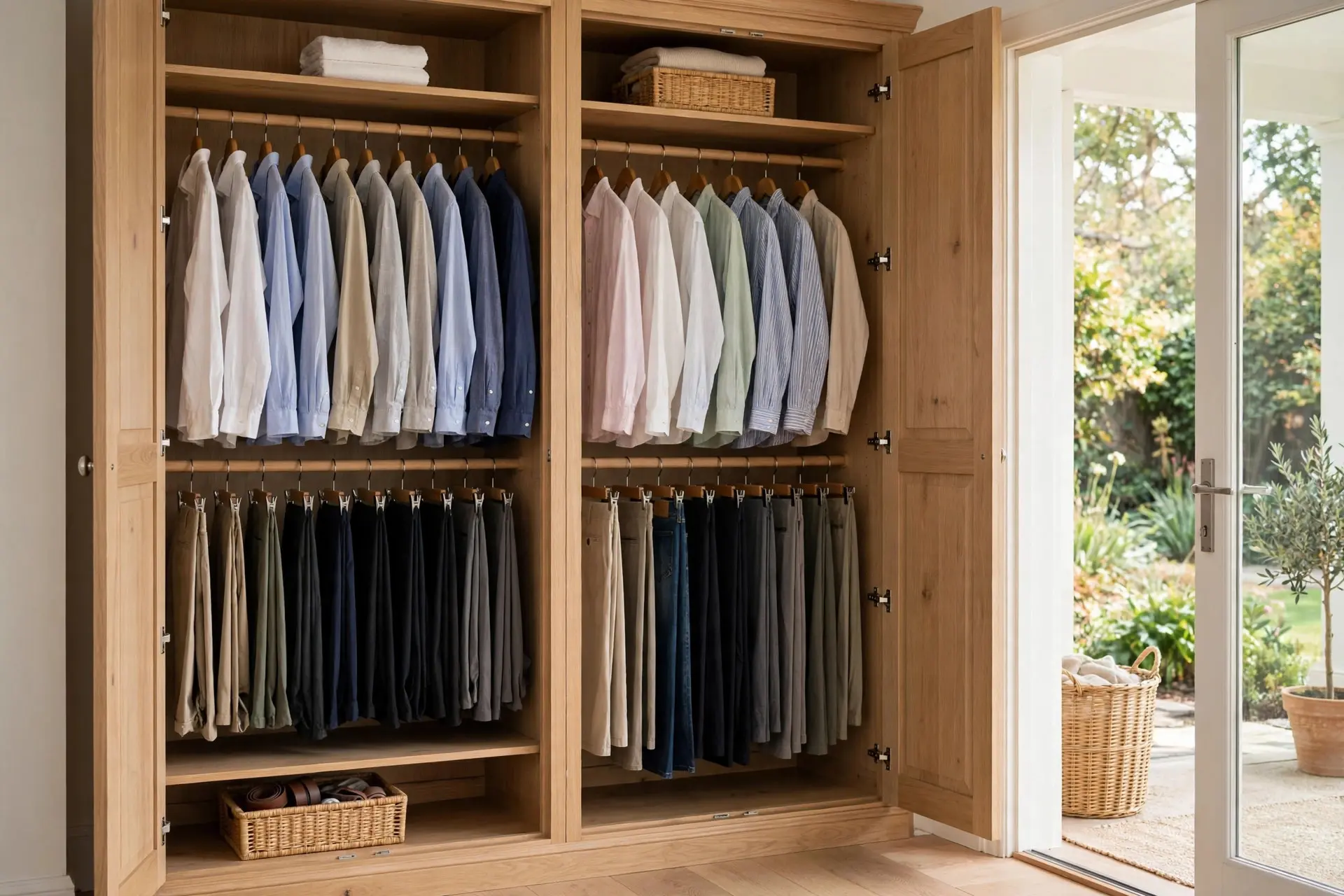
The standard double hang setup is an upper rod at about 82 inches and a lower rod at about 40 inches. The commonly cited figures are 81 and three quarter inches for the upper and 40 and a half for the lower.
Run the arithmetic and you can see why those numbers are what they are. A shirt needing 34 inches of drop, hung from a rod at 40 inches, puts the hem about 6 inches off the floor. Tight, but clear. That is the whole reason the lower rod does not sit at 36 inches. Drop it much below 40 and shirts start touching the floor.
Whether your closet can take double rods at all
Here is the test. You need the upper rod at 82 inches, plus at least 2 inches of gap between the top of that rod and any shelf above it. So the shelf lands around 85 inches, and the closet interior has to be taller than that.
In a room with a standard 8 foot ceiling, the closet interior is usually somewhere around 90 to 96 inches tall, and double hanging fits easily with a shelf above. In an older house with a lower header over the closet door, or a closet built with a dropped soffit, measure before you plan. If you only have 78 inches of interior height, double hanging will not work properly and you are better off with one well placed rod plus a shelf, or a rod over a set of drawers.
What actually belongs on each rod
Put the clothes you wear every day on the lower rod, at natural reaching height. The upper rod is a stretch, so it suits things you reach for less often. A lot of people do this backward, filling the easy rod with occasion wear and leaving daily shirts up at eye level and above.
Both rods only hold garments up to about 34 inches long. Shirts, blouses, folded trousers, short jackets. Anything longer needs its own zone.
The Long Hanging Zone
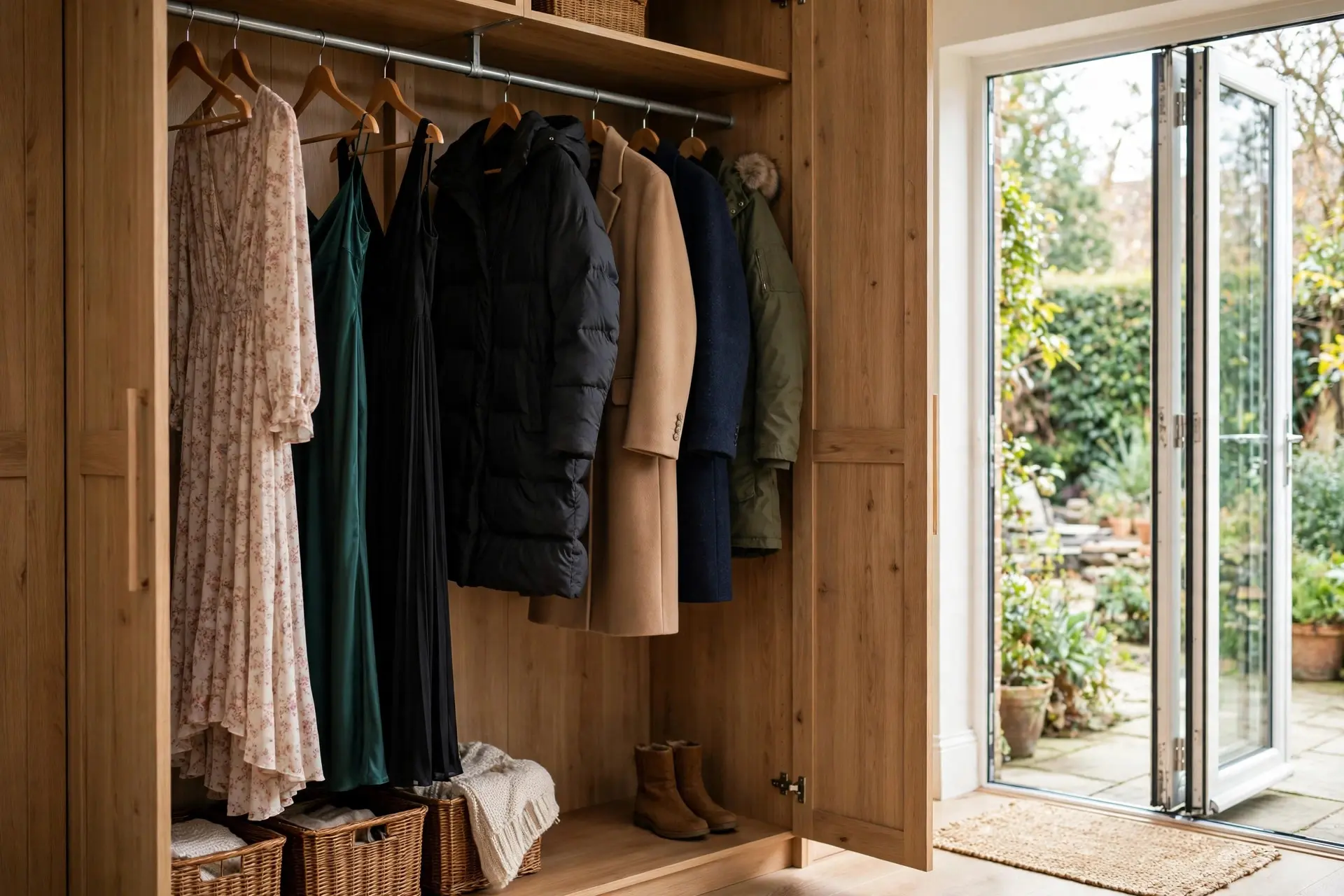
Almost every wardrobe has a handful of items that break the double hang system. Long coats, maxi dresses, a garment bag. Rather than lowering the whole closet to accommodate them, give them a dedicated section.
A long hanging section wants a rod at 66 to 72 inches with nothing below it. For genuinely long items, 72 inches with the hem finishing a few inches off the floor is the practical maximum in a standard closet. Give it 20 to 30 inches of width and it will hold more long garments than most people own.
The mixed layout, part double hang and part long hang, holds far more than a single rod across the whole width. This is the core idea behind most closet design plans that work: zones sized to garment types rather than one height for everything.
The 12 Inch Rule Behind the Rod

Set the rod at least 12 inches out from the back wall. Less than that and every garment presses its shoulders against the wall, which wrinkles them and makes sliding hangers along the rod a fight.
This is also why closet depth matters. An average closet is about 24 inches deep, which comfortably fits a rod 12 inches off the back wall with clearance for the door. A shallower closet, say 20 inches, means clothes touch either the back wall or the doors, and there is no rod position that solves it. If you are framing a new closet, 24 inches of interior depth is the number to protect.
Hangers themselves are usually 17 to 19 inches wide, which is the real reason 24 inches works and 20 does not.
The Shelf Above
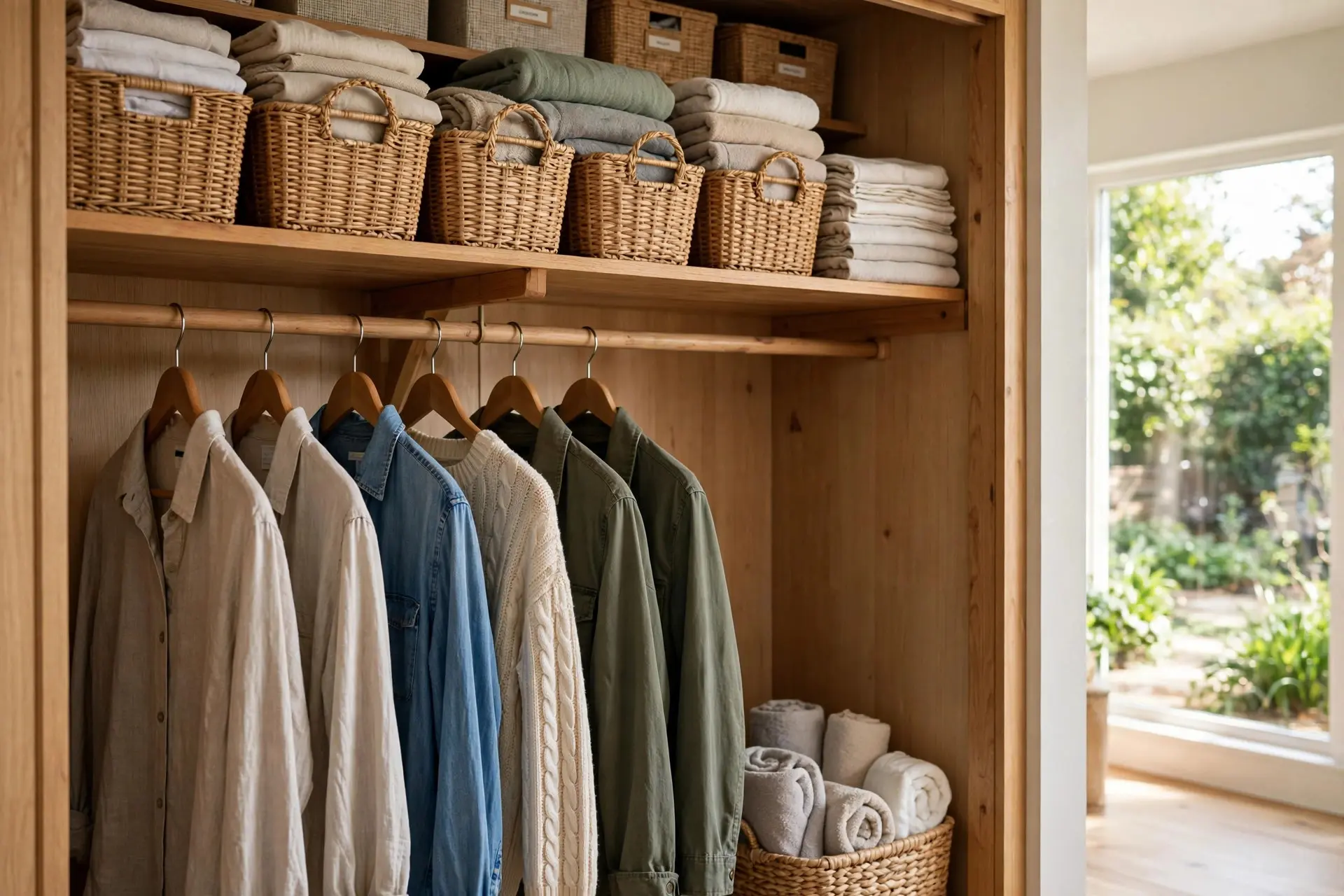
Leave at least 2 inches between the top of the rod and the underside of the shelf. That gap is what lets you lift a hanger off the rod instead of dragging it sideways to the end every time.
On depth, the shelf usually runs the full depth of the closet, but be realistic about what you can reach. Past roughly 16 inches of depth, the back of a high shelf becomes a place things go to be forgotten. If your closet is deeper than that, use bins on the shelf so you can pull the whole container forward rather than reaching blindly behind a stack of sweaters.
A second shelf above the first is usually better than one very deep shelf, as long as you can still reach it. Seasonal storage lives up there happily.
Kids’ Closets
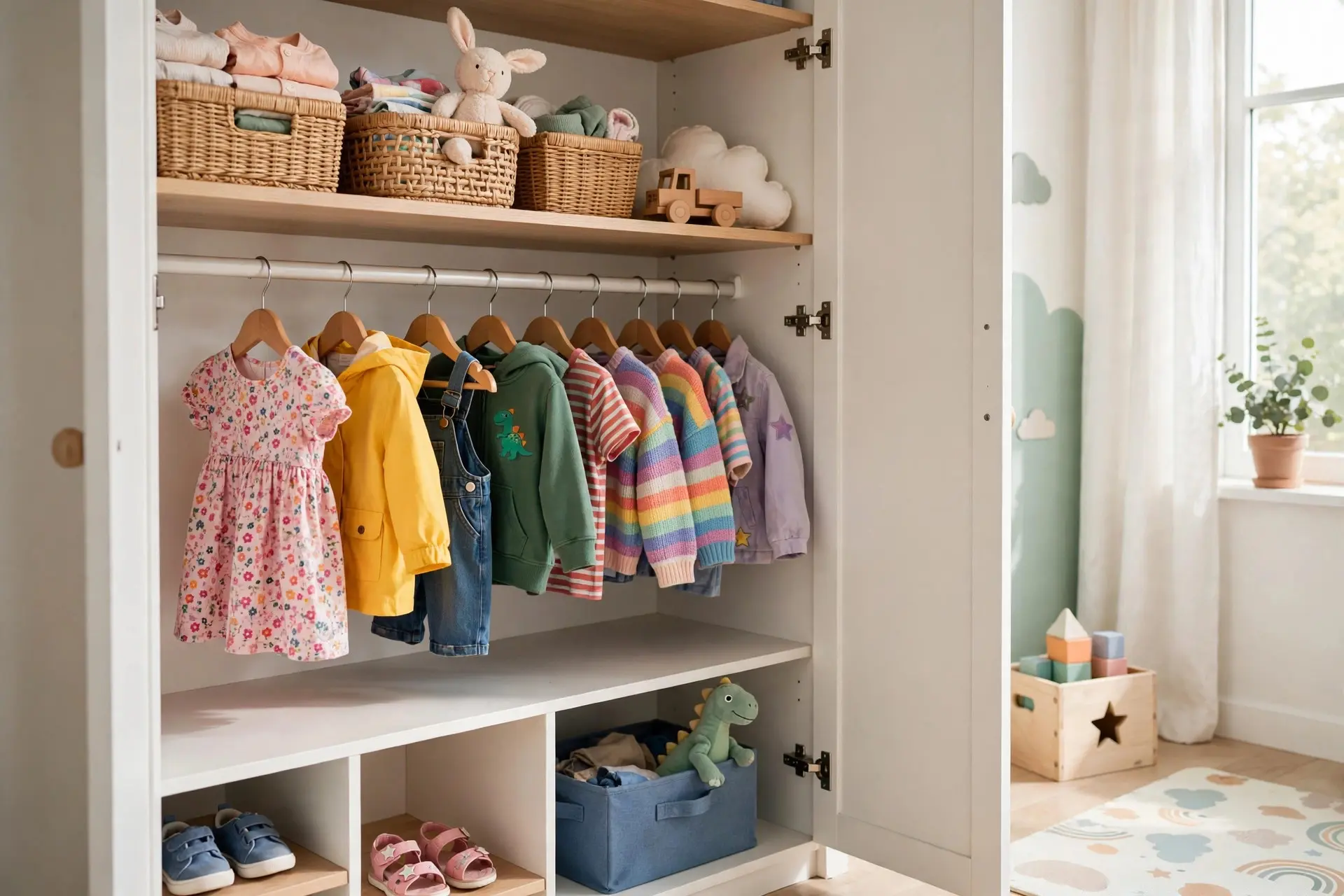
For a small child, a lower rod around 30 inches puts clothes within their own reach, which is the entire point. Keep an upper rod at adult height for storage and for the clothes they will grow into.
Plan to move it. A rod at 30 inches is right for a four year old and comical for a ten year old, so use adjustable brackets or a track system rather than screwing everything permanently into place. Children’s clothes are short, which means a child’s closet has more usable vertical space than an adult’s, not less, and it is easy to fit three levels in one closet.
A Worked Layout for a Standard Reach In Closet

Take a common 72 inch wide, 24 inch deep closet with a 90 inch interior height. Here is a layout that holds roughly twice what the original single rod did.
- Left 48 inches, double hang: upper rod at 82 inches, lower rod at 40 inches. Holds about 48 inches of shirts on top and 48 inches of shirts and folded trousers below.
- Right 24 inches, long hang: one rod at 68 inches, floor clear underneath for a shoe rack or a laundry basket.
- Shelf across the full width at about 85 inches, with bins for seasonal items.
- Floor: keep it clear under the double hang side so you can vacuum, and use the long hang side for the things that always end up on the floor anyway.
The whole conversion is two rods, two sets of brackets and an afternoon. It is one of the highest value small projects in a bedroom, and it pairs well with other bedroom space saving ideas that free up floor area.
Quick Reference
- Single rod: 66 inches to the bottom of the rod, up to 72 inches acceptable.
- Double hang upper rod: about 82 inches.
- Double hang lower rod: about 40 inches.
- Long hanging rod: 66 to 72 inches with clear floor below.
- Child’s lower rod: about 30 inches, on adjustable brackets.
- Gap between rod top and shelf: 2 inches minimum.
- Rod distance from back wall: 12 inches minimum.
- Closet interior depth: 24 inches is the target.
- Minimum interior height for double hanging: about 85 inches.
Mistakes That Cost You Space
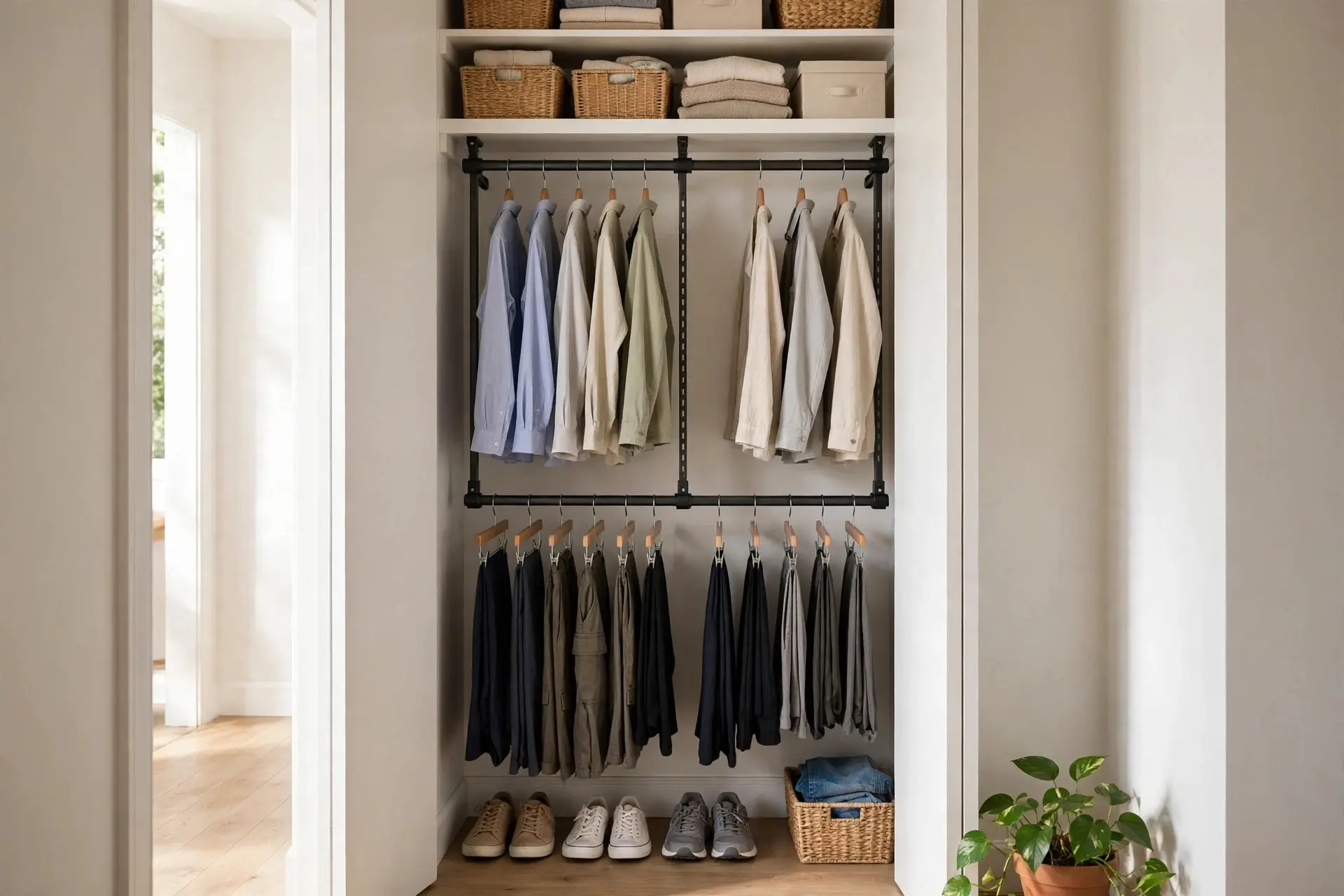
- One rod for a wardrobe of shirts. The most common and most expensive mistake, in terms of space wasted per dollar.
- Lowering everything for a few long items. Give the long items a narrow zone instead of designing the whole closet around them.
- A rod tight against the back wall. Wrinkled shoulders and hangers that will not slide.
- No gap under the shelf. You cannot lift a hanger straight up, so every item has to be walked to the end of the rod.
- Daily clothes on the high rod. Reach height should follow how often you wear something.
- Forgetting the door. Bifold and sliding doors eat into the usable width at the ends. Check what you can actually reach with the doors in their open position.
Frequently Asked Questions
How high should a closet rod be?
66 inches above the floor for a single rod, measured to the bottom of the rod. For a double hang setup, put the upper rod at about 82 inches and the lower at about 40 inches. Then check the number against your own longest garment before you drill.
How much space do you need between double closet rods?
About 42 inches between them, which is what you get with rods at 40 and 82 inches. That spacing gives each level roughly 34 to 38 inches of usable drop, enough for shirts, blouses, folded trousers and short jackets.
How far should a closet rod be from the wall?
At least 12 inches from the back wall. Hangers are typically 17 to 19 inches wide, so anything tighter presses clothes against the wall and makes them hard to slide. It also explains why a closet shallower than 24 inches never feels right.
Can I fit double rods in a closet with a low header?
Only if the interior height is about 85 inches or more, since you need 82 inches for the upper rod plus the shelf gap above it. Below that, a single rod with a shelf, or a rod above a dresser, uses the space better than a cramped double hang where the upper clothes brush the lower ones.
What is the best height for a shelf above a closet rod?
At least 2 inches above the top of the rod, which usually lands it near 85 inches in a double hang closet or around 70 inches over a single rod. Keep the usable depth to about 16 inches or use pull out bins, because anything further back stops being storage and becomes a hiding place.
The Short Version
Measure your longest garment, count what you own, then build zones rather than one height. Double hang at 40 and 82 inches for shirts and jackets, a long hang rod at 66 to 72 inches for coats and dresses, 12 inches clear behind every rod, and 2 inches under every shelf. Most builder closets can double their capacity with two rods and a free afternoon, which is a better return than almost any closet makeover that starts with buying containers.