Minimal Living Room Aesthetic 2026. Calm, Clean Spaces That Redefine Modern Homes

Homes in 2026 feel different from the loud interiors of the past decade. Many homeowners now prefer calm spaces that slow the mind and simplify daily life. That shift explains the growing appeal of the Minimal Living Room Aesthetic.
A minimal space does not feel empty. Instead, it feels intentional. Every object has a purpose, and every color supports a quiet mood. Designers often combine neutral palettes, soft textures, and clean architectural lines to build this effect. The same philosophy appears in modern closet organization ideas that prioritize clarity, function, and thoughtful storage.
The idea connects closely with Scandinavian design, Japanese interior philosophy, and modern architecture. Concepts such as simplicity, balance, and functional beauty shape these interiors. Architects and design institutions like the Bauhaus movement helped establish this approach, emphasizing function and form over decoration.
When done well, a minimal living room creates visual calm. Natural light spreads easily. Furniture breathes within the room. The space begins to feel larger, even in small apartments.
Many designers describe this style as “quiet luxury.” It relies on thoughtful choices rather than expensive decoration.
Color Palette Foundations for a Minimal Living Room Aesthetic


4
Color defines the emotional tone of a room. For a Minimal Living Room Aesthetic, designers build the palette with restraint.
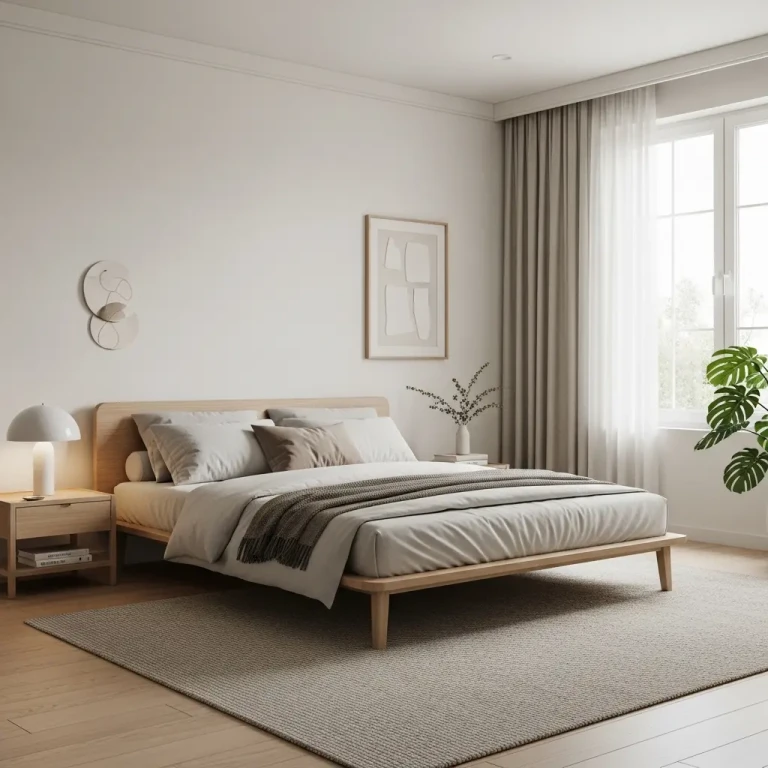
The base usually starts with warm neutrals. Popular tones include soft white, warm beige, sand, ivory, and light taupe. These shades reflect natural light and create visual softness.
Interior stylists often combine these base colors with natural materials. Oak wood, linen fabric, clay pottery, and stone surfaces introduce subtle variation without visual noise.
A typical palette may include:
Soft cream walls
Beige or oatmeal upholstery
Light oak furniture
Muted stone or ceramic accents
This restrained palette keeps the room cohesive. Instead of strong contrast, the design relies on tonal harmony.
Many interior experts reference Scandinavian homes as a model. Nordic design uses pale colors to reflect limited winter daylight. That same principle now shapes many modern interiors worldwide.
Warm neutral interiors also age well. Unlike trend-driven color schemes, they remain relevant across multiple design cycles.
Furniture Choices That Define the Minimal Living Room Aesthetic


4
Furniture carries most of the visual weight in a minimalist interior. In a Minimal Living Room Aesthetic, each piece must serve both functional and visual roles.
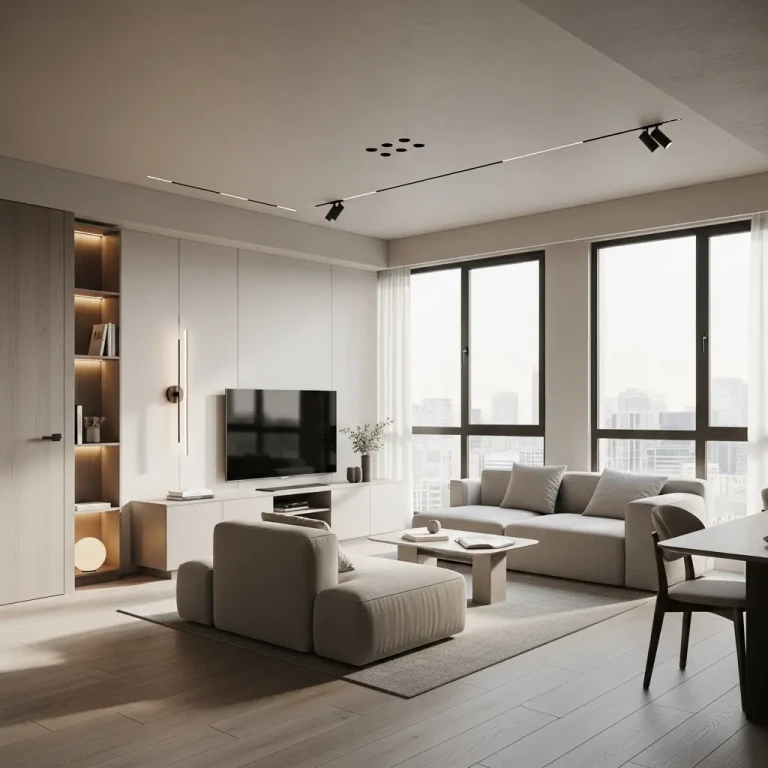
Designers prefer furniture with simple geometry. Low profile sofas, slim coffee tables, and sculptural lounge chairs create presence without clutter.
Three qualities usually define good minimalist furniture.
Clean lines
Balanced proportions
Natural materials
A low sofa in textured linen often anchors the room. A wooden coffee table adds warmth. One accent chair introduces subtle contrast.
The arrangement matters as much as the pieces themselves. Designers often leave more negative space around furniture. That empty space allows the eye to rest and keeps the room feeling open.
Modern furniture brands such as Muji, Hay, and Menu have popularized this restrained design language. Their products often combine Japanese simplicity with Scandinavian functionality.
Instead of filling the room with many items, designers focus on fewer, higher quality pieces.
Light, Texture, and Space in a Minimal Living Room Aesthetic


4
Light plays a central role in a Minimal Living Room Aesthetic. Without heavy decoration, illumination becomes part of the design.
Large windows often define the room. Natural sunlight enhances neutral tones and reveals subtle textures in fabrics and materials.
Designers also layer textures to prevent the room from feeling flat. Texture introduces depth while maintaining simplicity.
Common materials include linen curtains, wool rugs, boucle upholstery, and ceramic décor. These textures interact with light throughout the day.
Soft lighting supports the atmosphere at night. Warm LED floor lamps or paper lantern lights create gentle illumination. Designers often avoid harsh overhead lighting because it disrupts the calm mood.
Interior architecture also contributes to the feeling of space. Open layouts, smooth walls, and uncluttered surfaces allow the room to breathe.
Minimal design works best when the room feels visually balanced rather than filled.
Decluttering Rules Behind the Minimal Living Room Aesthetic


4
Decluttering forms the foundation of a Minimal Living Room Aesthetic. Without this discipline, the design quickly loses clarity.
Many homeowners follow the “one purpose rule.” Every item must either serve a function or contribute to the atmosphere. If it does neither, it leaves the room.
Storage solutions help maintain this balance. Closed cabinets hide electronics and everyday objects. Built-in shelving keeps surfaces clean.
Interior experts often recommend limiting decorative objects to a few meaningful pieces. A ceramic vase, a stack of design books, or a sculptural lamp can create interest without overwhelming the space.
Japanese organizing consultant Marie Kondo popularized the concept of intentional ownership. Her philosophy aligns naturally with minimalist interiors.
When objects disappear, the architecture becomes visible. Walls, light, and furniture take center stage.
This shift transforms the living room from a storage space into a calm living environment.
Styling Details That Elevate a Minimal Living Room Aesthetic


4
Small styling decisions often determine whether a room feels unfinished or refined. Thoughtful details elevate a Minimal Living Room Aesthetic.
Artwork usually remains simple. Many designers choose abstract paintings, monochrome photography, or textured wall art. Large pieces often work better than multiple small frames.
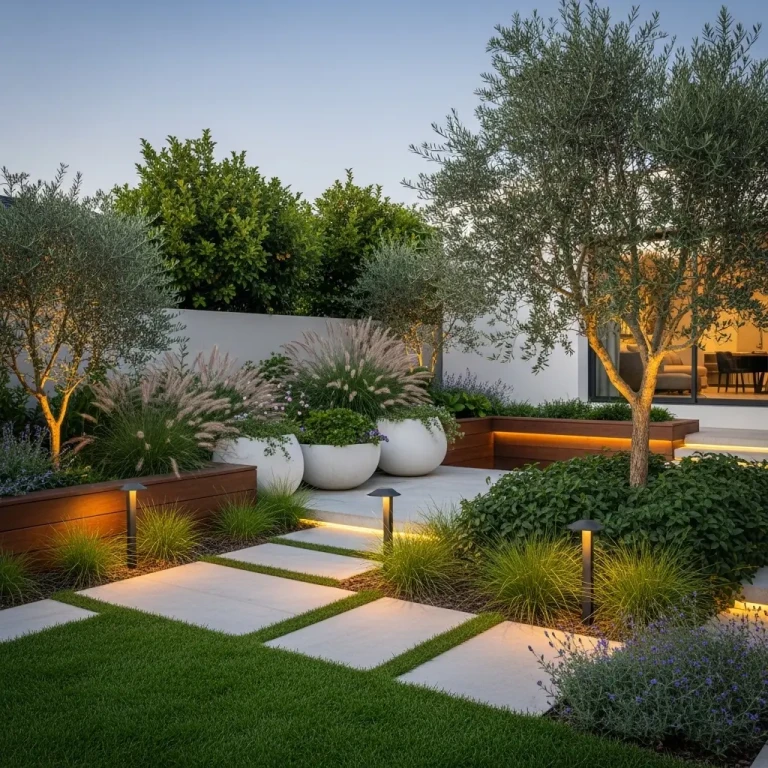
Plants add life without disrupting simplicity. Olive trees, rubber plants, or fiddle leaf figs introduce organic shapes and fresh color.
Coffee table styling also follows minimalist rules. Designers often use the “rule of three.” A book, a small sculpture, and a ceramic bowl create a balanced composition.
Even textiles play a role. A soft throw blanket or linen cushion introduces comfort while maintaining visual restraint.
These details add personality while preserving calm.
Minimal interiors succeed when every object feels intentional.
The Future of Calm Interiors
Interior trends continue to evolve, yet the principles behind the Minimal Living Room Aesthetic remain stable. Simplicity, balance, and thoughtful design continue to resonate with modern lifestyles.
As urban living spaces become smaller, this approach helps maximize comfort and clarity. Clean layouts reduce visual stress. Neutral palettes support relaxation after busy days.
Design schools and architects often return to the same principle that shaped modernism decades ago. Good design removes what is unnecessary.
A living room built around that idea rarely feels outdated.
Instead, it becomes timeless.