Standard Dishwasher Size: The Fit-Check Guide Before You Buy

Two summers ago, my friend Omar finally ripped out his ancient dishwasher. It had started leaking at the base, and every repair quote came back higher than a new machine. He found a beautiful stainless model on sale, a midweek deal he could not resist, and the delivery truck arrived on a Saturday morning. The delivery crew slid it toward the cabinet opening, and it stopped dead about two inches short. The opening was an odd 23 inches wide, a leftover from a kitchen remodel in the nineties, and the new machine refused to budge. Omar paid a restocking fee and lived without a dishwasher for another three weeks. All of that pain came down to one measurement he never checked. If Omar had known the standard dishwasher size before he bought, he would have measured first and shopped with confidence. This guide exists so you never repeat his Saturday-morning mistake.
Why the Standard Dishwasher Size Matters Before You Buy
A dishwasher is not like a toaster. You cannot slide it a little to the left and call it done. It lives inside your cabinets, hooked up to water lines and a drain, and it has to clear your countertops, your flooring, and the door swing all at once. Get the fit wrong and the problems stack up fast. The unit rocks on uneven flooring, the door scrapes the cabinets, or the gap around the edges collects crumbs you can never reach. Worse, many retailers charge hefty restocking fees for appliances that were ordered, delivered, and then refused at the door. The standard dishwasher size works as your anchor point. It tells you what almost every manufacturer builds, what almost every cabinet opening expects, and exactly where to measure when something looks unusual. When you know the baseline, a quick tape measure check takes ninety seconds and saves you hundreds of dollars.
What the Standard Dishwasher Size Actually Measures
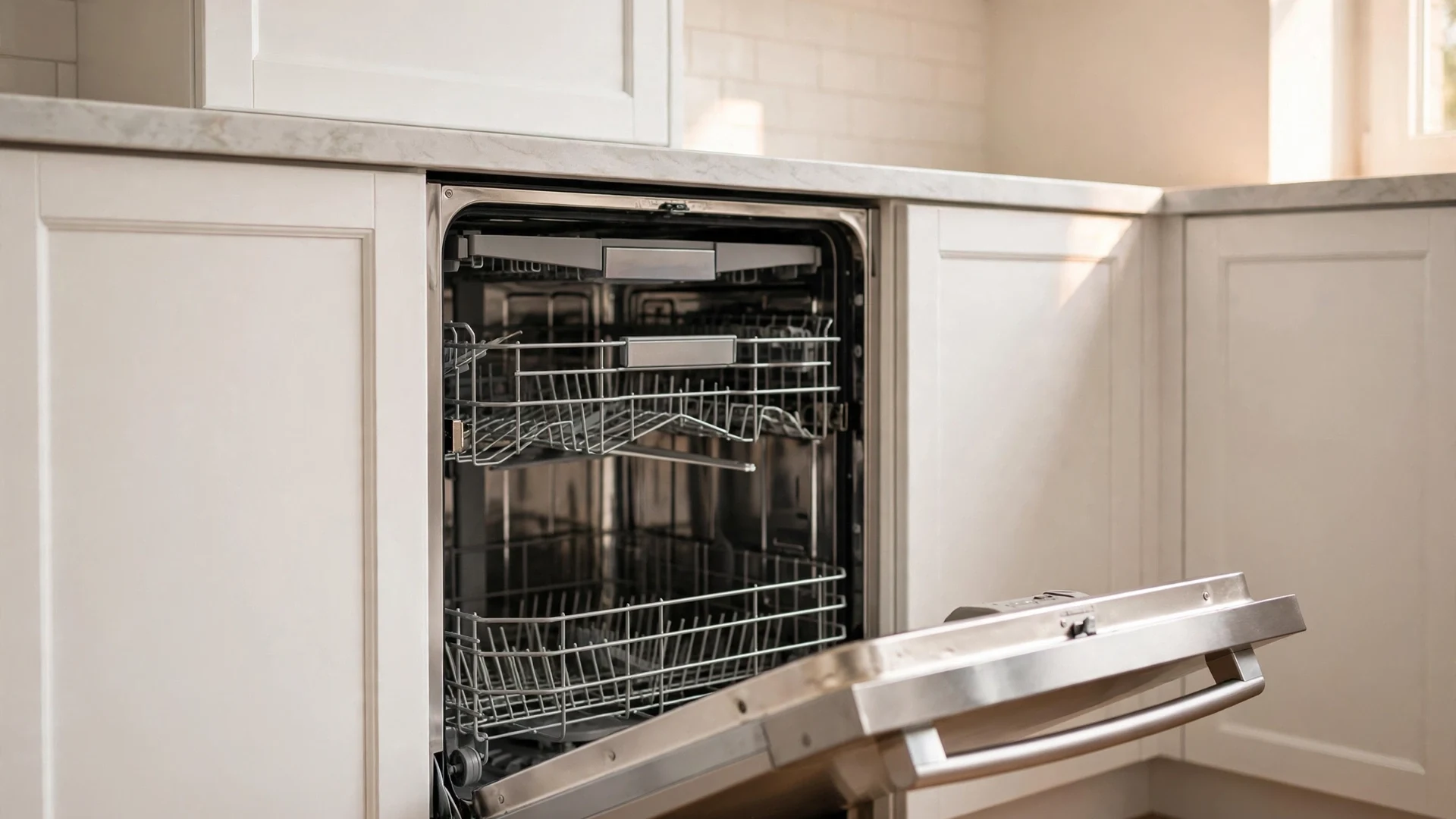
Three numbers define every built-in dishwasher: width, height, and depth. Manufacturers print them on the spec sheet, and installers live by them. The standard dishwasher size lands at 24 inches wide, 35 inches tall, and 24 inches deep, and those numbers have held steady for decades. American brands like Bosch, Whirlpool, GE, and KitchenAid all build their flagship models around these dimensions because the North American cabinet standard settled here long ago. Knowing the trio by heart turns appliance shopping from a gamble into a plan. You walk into the store, you ask for the spec sheet, and you compare three numbers against your cabinet opening instead of trusting that a beautiful machine will somehow squeeze in.
Standard Dishwasher Size: The Three Numbers You Need
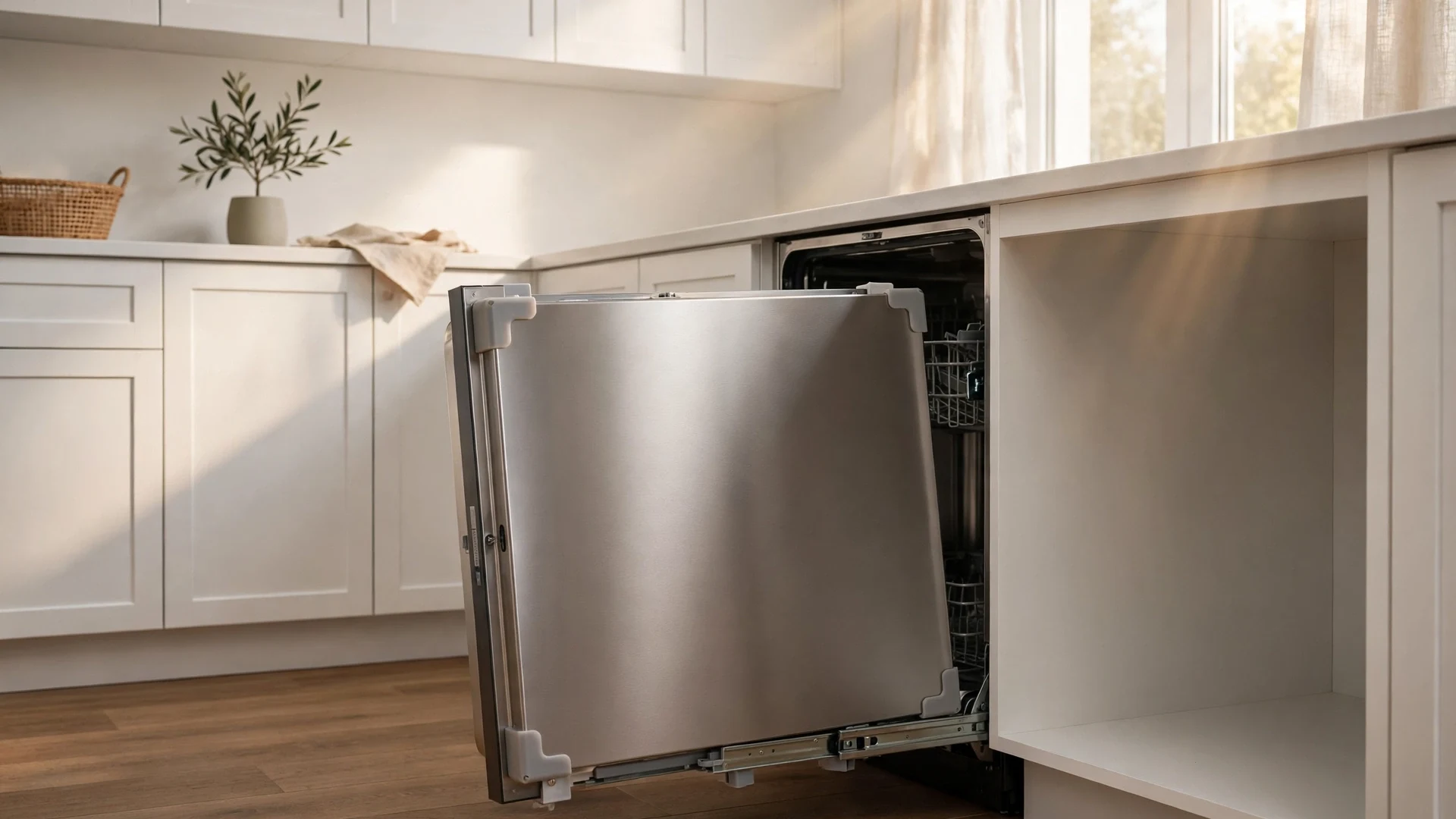
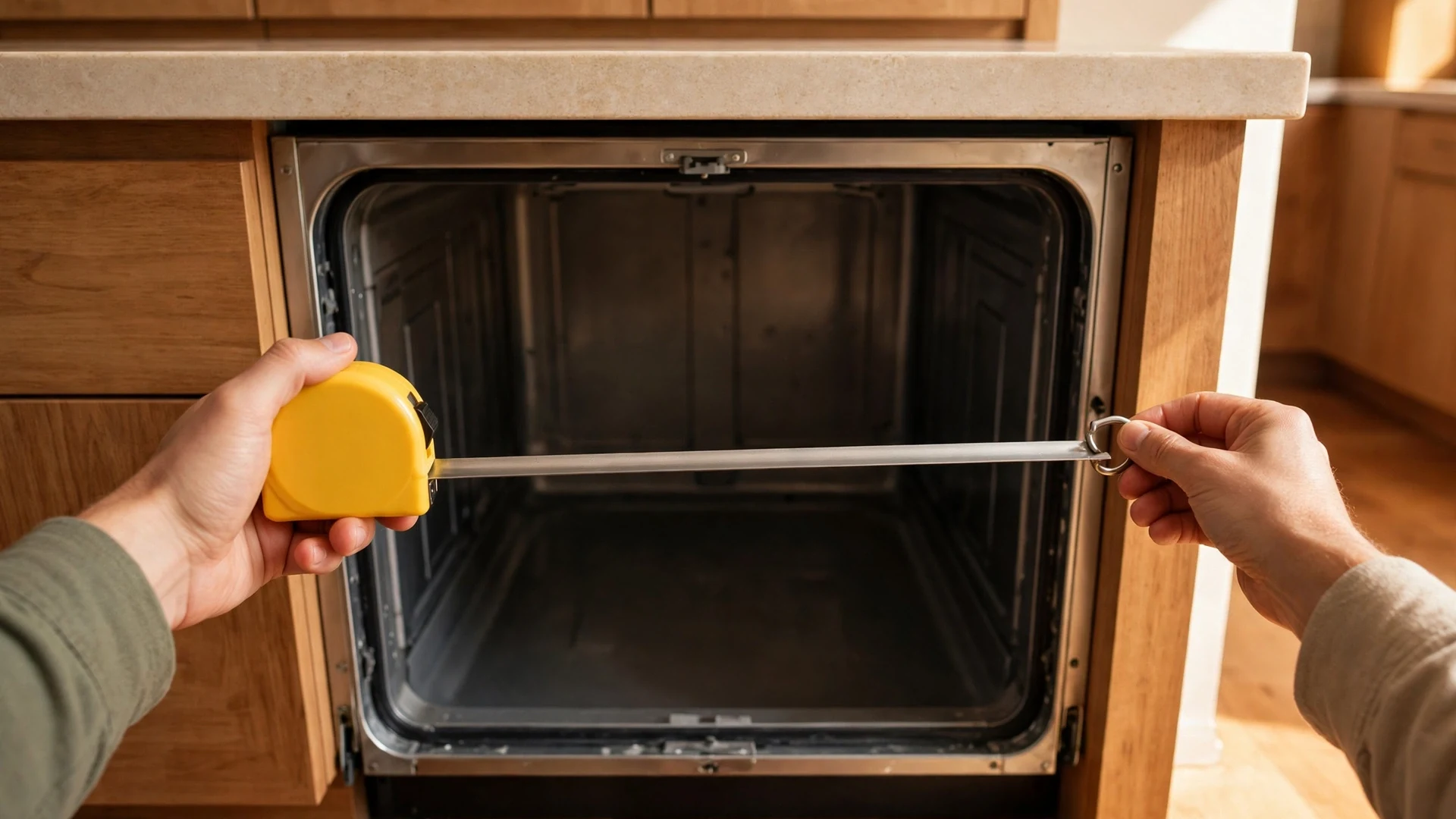
Width comes first because it causes the most headaches. A 24-inch machine needs an opening between 24 and 24.25 inches wide, with most installers recommending a hair of clearance on each side. If your opening measures 23.5 inches, that half inch matters enormously, and you will need a different plan. Height runs second. The machine adjusts between roughly 33.5 and 35 inches tall on leveling feet, and it must slide under your countertop without touching it. Measure from the floor to the underside of the counter, because new tile flooring or a raised subfloor can steal height you thought you had. Depth comes last and surprises people the most. The cabinet box measures 24 inches deep, but the door needs about 27 inches of clearance when it drops open, and the handle adds another inch or two beyond the countertop line. In a galley kitchen or a tight U-shaped layout, an open dishwasher door can block the walkway, so pace out that swing before you fall in love with a model.
Measure Your Opening Like a Pro
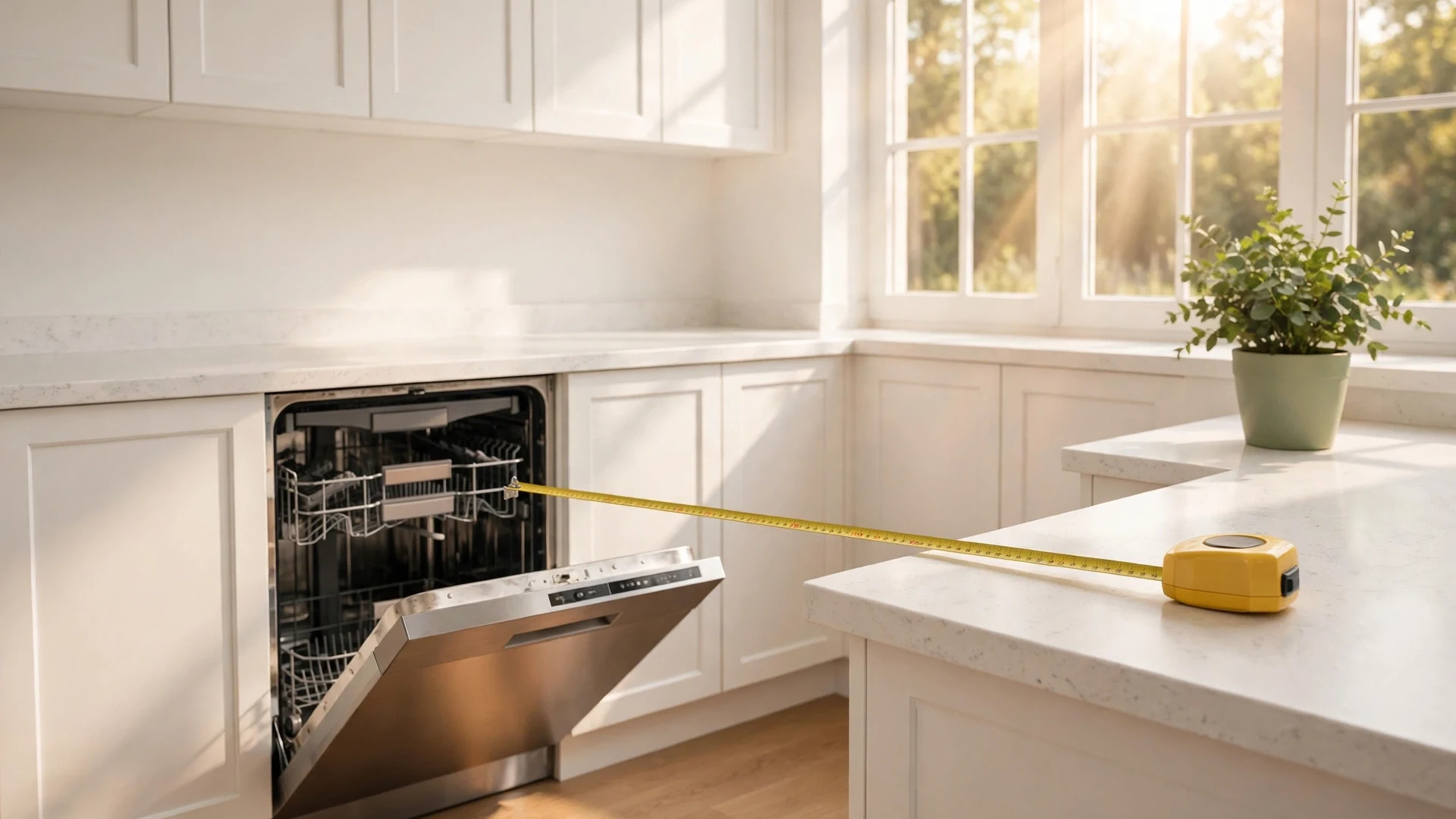
Installers measure three times and cut once, and you should do the same before ordering. Grab a steel tape measure, not a floppy cloth one, and measure the width at the top, middle, and bottom of the opening. Old cabinets shift over time, and the narrowest reading wins. For height, measure from the finished floor to the underside of the countertop at the front and the back, and keep the smaller number. For depth, measure from the back wall of the opening to the front edge of the cabinets, then plan for the door swing. Check the water hookup location too, because a supply line stuck in the wrong spot can block the machine from sliding fully back.
The Tape Measure Routine That Saves Every Install
Start empty. Pull out the old machine if one is already there, or clear the space if the opening is boxed in with a false panel. Measure width in three spots and record the tightest one. Measure height front and back and record the lowest. Then open the space in front and confirm the door drops flat. Snap a photo of the water supply valve and the drain hose position, and bring these numbers to the store or keep them on your phone for online shopping.
When the Standard Dishwasher Size Does Not Fit Your Kitchen
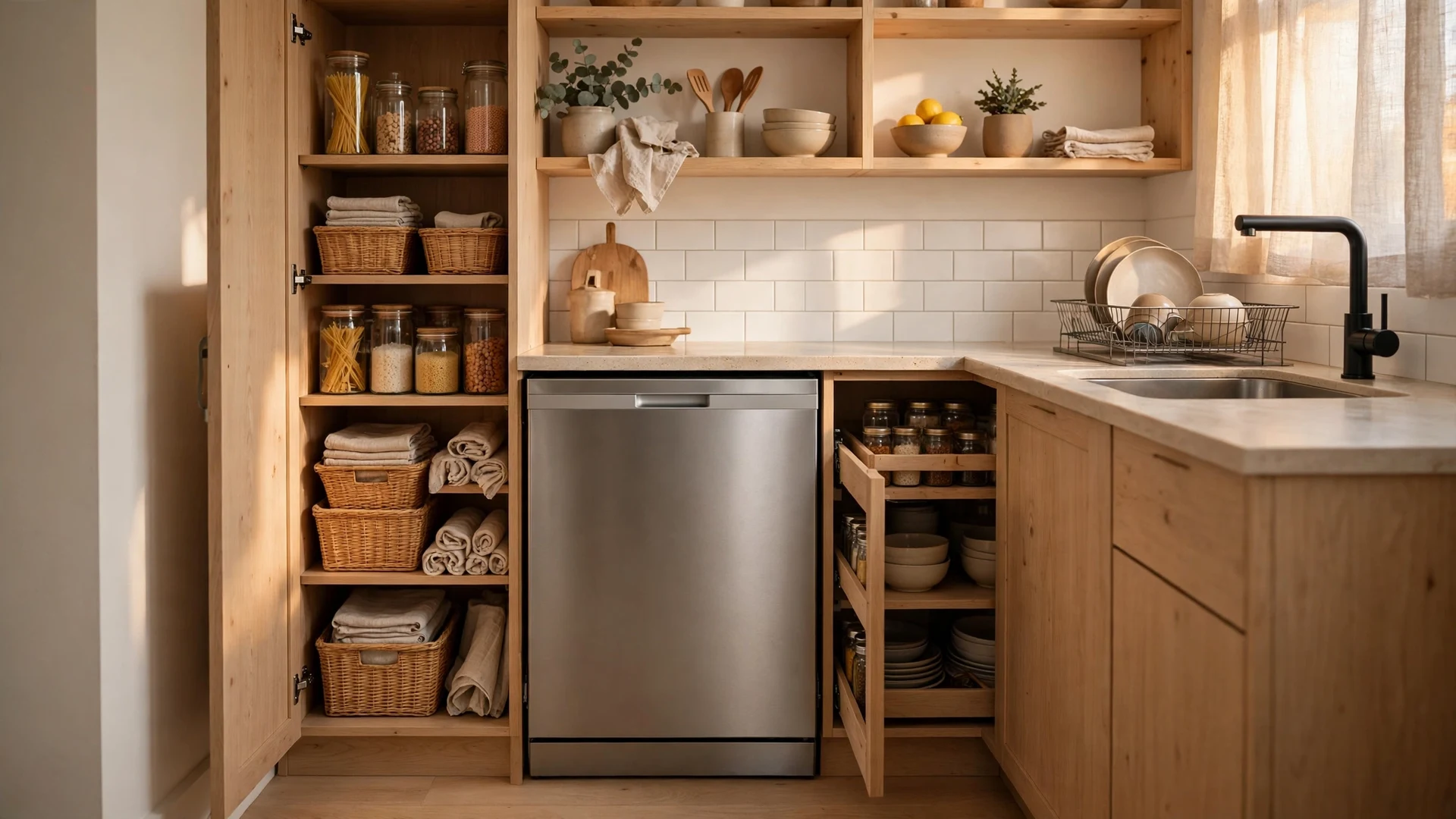
Some kitchens break the mold, and manufacturers know it. Apartments, older homes, and wet bars often have openings closer to 18 inches wide, and compact dishwashers built for that slot hold about eight place settings instead of twelve. These slim machines clean beautifully, they just hold less per load, which suits a single person or a couple perfectly. If your opening lands outside the 24-inch family, do not force a standard machine into it. Forcing a fit means shaving cabinet frames and voiding the install warranty. Search listings for the exact width your opening allows. The model you buy should match the kitchen you have, not the kitchen you wish you had.
The Hidden Numbers That Ruin Perfect Fits
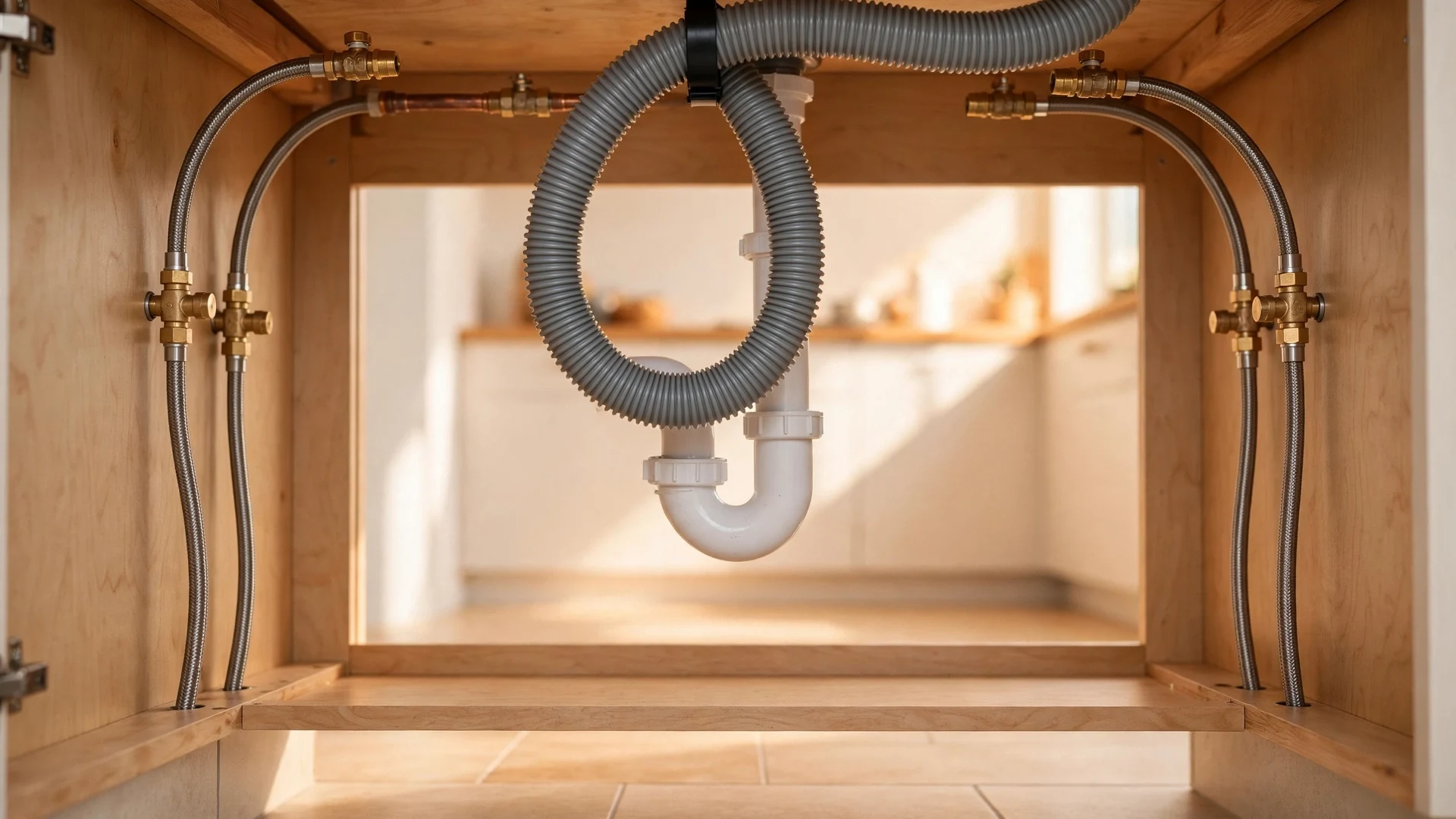
Even when the width, height, and depth line up, smaller details can sabotage the install. The drain hose loop matters. Building code in most states requires the drain hose to rise to the underside of the counter before dropping to the disposal, and a lazy loop creates slow draining and funky smells. Flooring height trips up more installs than any other surprise. If you laid new tile or luxury vinyl after the cabinets went in, the finished floor now sits higher than the floor the cabinet installer planned for, and your height clearance shrank. Always measure on the floor that will actually be there on install day, not the subfloor underneath it.
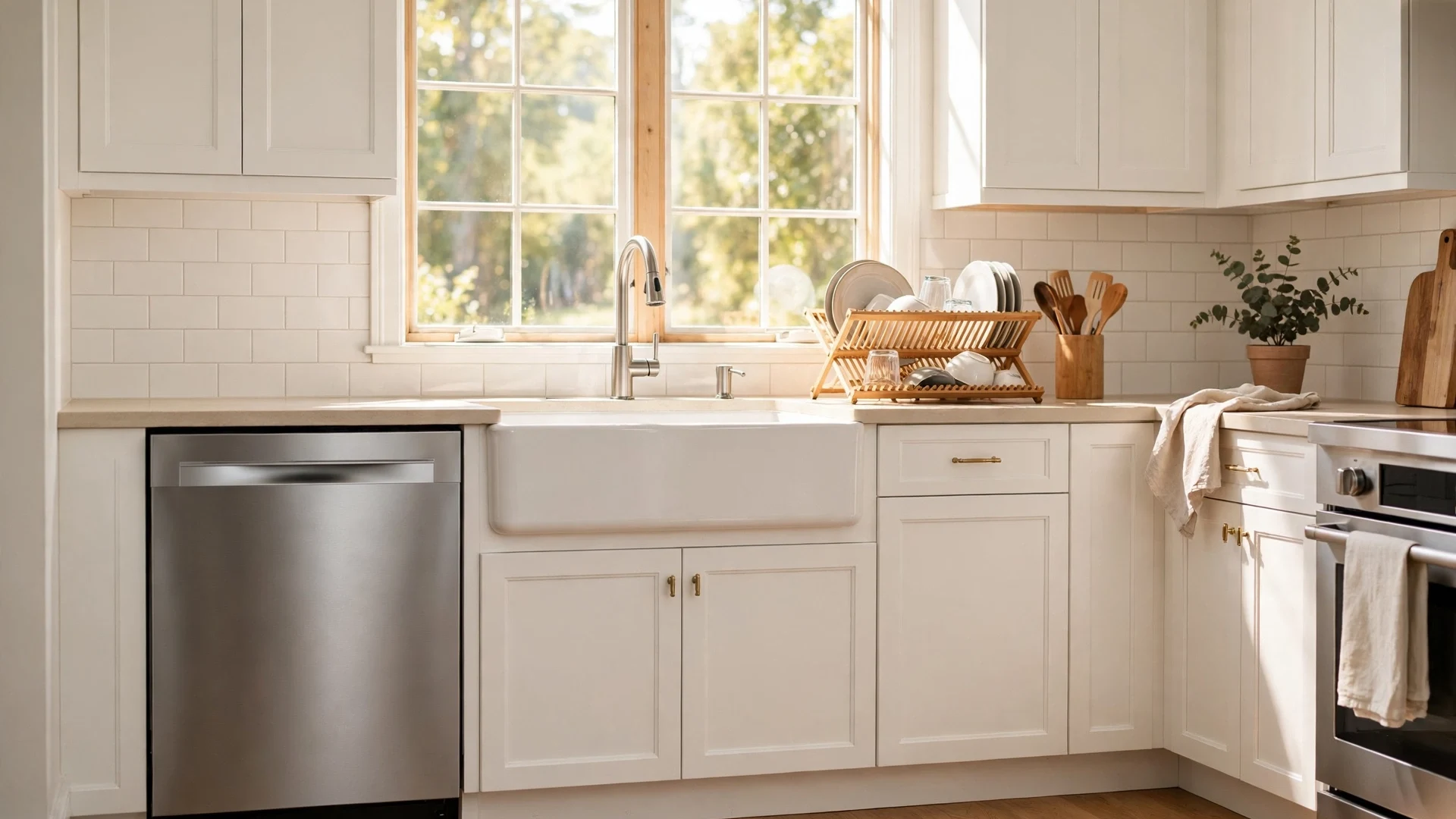
Dishwasher Dimensions and Your Cabinet Layout
Think about the dishwasher as part of a work triangle, not an island on its own. Ideally it sits next to the sink, because the water lines and the drain share the same cabinet wall. It should also sit near your dish storage, so unloading means three steps instead of thirty. Watch the door swing against nearby drawers and oven doors. If the dishwasher door drops and blocks the trash pullout, your daily routine becomes a dance. These layout checks cost nothing and take five minutes, yet most buyers skip them entirely.
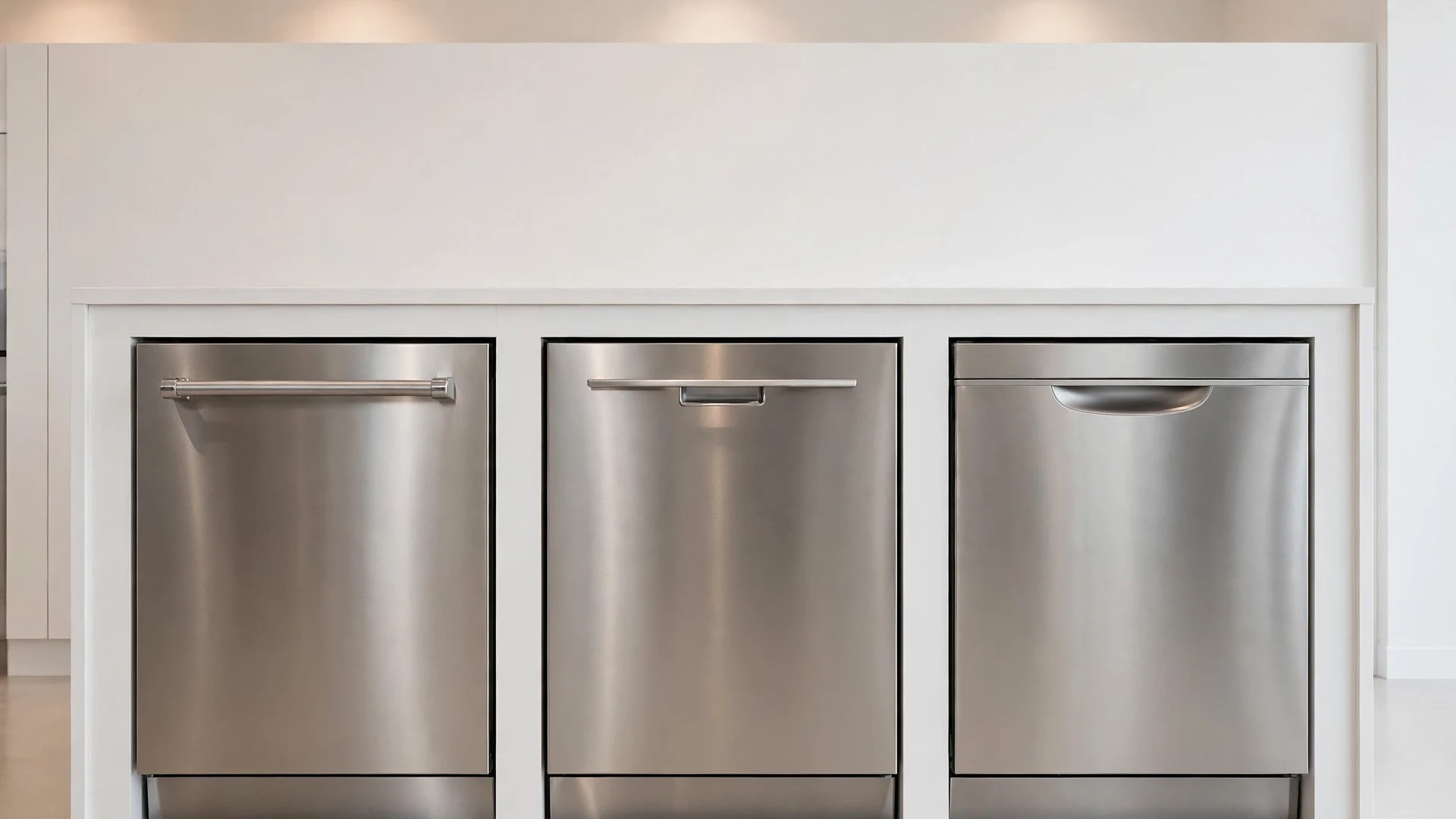
Brand Differences Worth Knowing
Bosch dishwashers tend to run a whisper quieter and measure true to spec, which installers love. Whirlpool and its Maytag siblings keep pricing friendly and spare parts cheap. GE leans into smart features and bottle wash jets. Whatever brand you prefer, ignore the marketing photos and download the installation guide PDF. That document shows the real numbers, including the exact cutout dimensions, the door swing radius, and the utility connection zones.
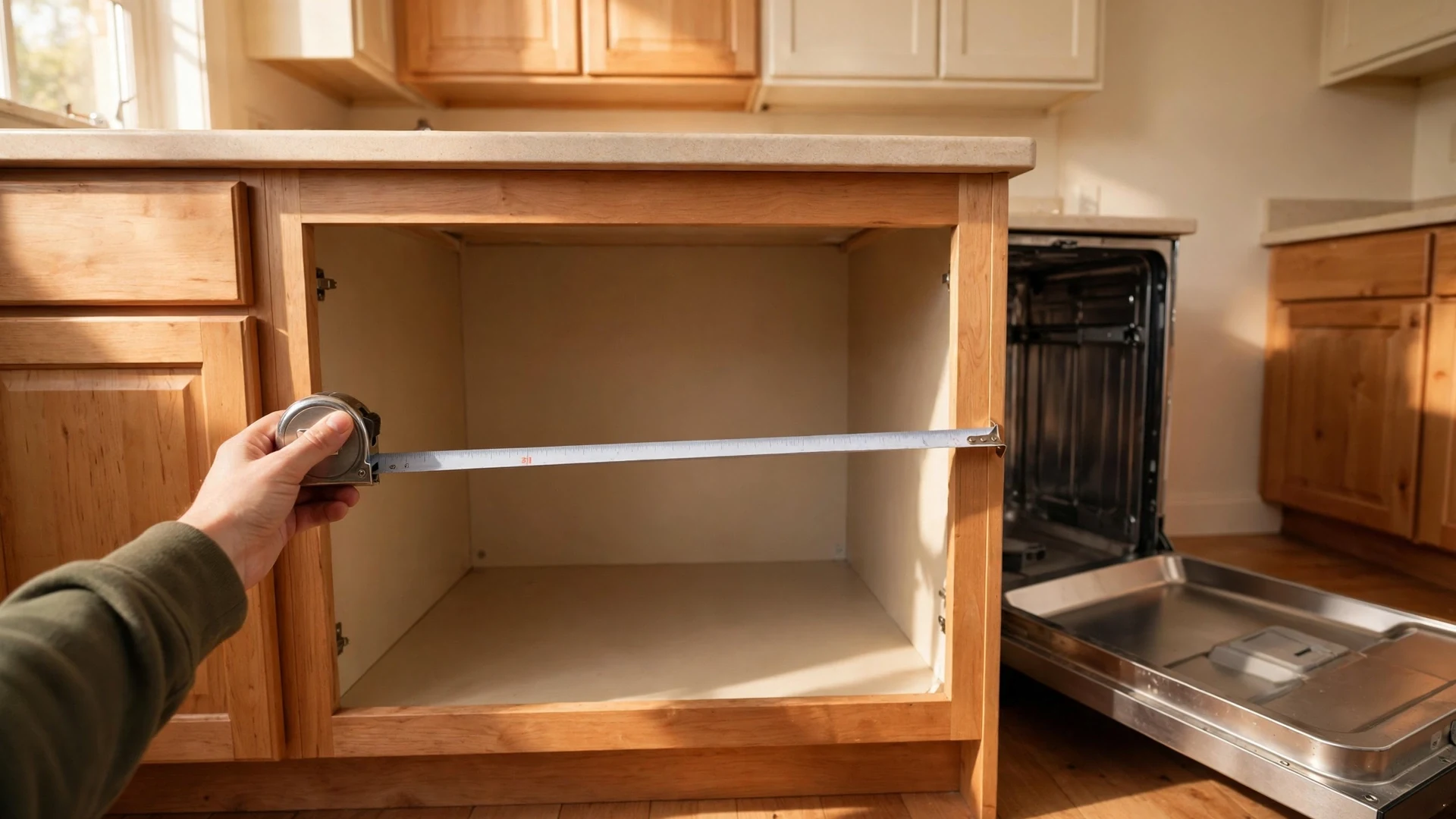
Mistakes People Make With Dishwasher Fit
The number one mistake is measuring the old machine instead of the opening. Old machines shrink in memory, and the replacement might differ by half an inch that the opening cannot give. The second mistake is forgetting the leveling feet, which add height during the slide-in that disappears once the machine settles. The third mistake is ignoring the handle. Bar handles on pro-style models stick out up to two inches past the door, and in a narrow kitchen that changes how the room flows. Measure the opening, not the appliance, and check every detail on the spec sheet before you pay.
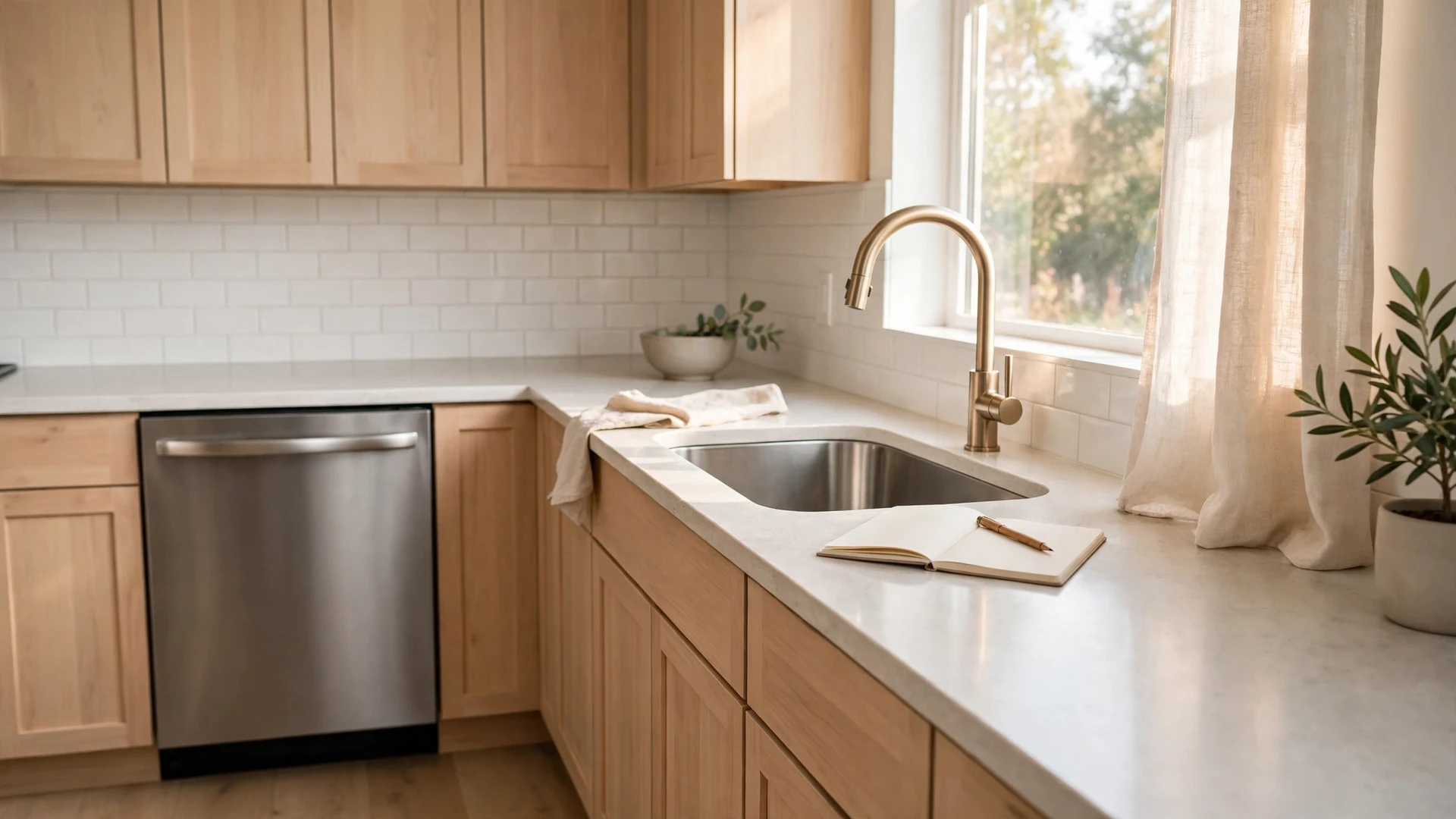
Your Pre-Purchase Checklist
Run through this list the week before you buy and you will never relive Omar’s Saturday. Measure the opening width in three spots and record the narrowest. Measure height from the finished floor to the counter underside, front and back, and record the lowest. Confirm the door swing clears your walkway. Photograph the water valve, drain, and electrical positions. Check that the machine sits beside the sink and near dish storage. Download the installation guide and compare its cutout numbers against your measurements, not just the headline width on the product page.
Conclusion: Measure Once, Buy Once
Appliance regret almost always traces back to a skipped measurement. The standard dishwasher size gives you a reliable baseline, your tape measure gives you the truth about your own kitchen, and the installation guide bridges the gap between the two. Omar’s story ended well, by the way. He measured, found an 18-inch compact that fit his odd opening perfectly, and he swears it cleans better than the old full-size unit ever did. Your kitchen deserves the same happy ending. Take the ninety seconds, check the numbers, and buy with total confidence.