

Staircases once served a simple purpose. They connected floors and supported circulation. Today, they shape how homes express style, scale, and luxury. In 2026, architects and interior designers treat staircases as sculptural anchors that define space rather than fill it. Modern Staircase Design Ideas focus on material quality, clean proportions, soft lighting, and thoughtful detailing.
The fitness room concepts for 2026 emphasize performance, comfort, and calm focus. Designers are creating training environments with controlled acoustics, strategic lighting, improved circulation, and storage that reduces visual noise. This approach turns the fitness space into an intentional part of the home rather than an improvised corner—reflecting the broader shift toward architectural elements that feel crafted and considered rather than merely functional.
Why Staircase Design Ideas Evolve in 2026
Residential architecture adapts quickly. Homes now feature double-height living spaces, atriums, pivoting layouts, and panoramic glazing. Publications like Architectural Digest and Dezeen highlight the rise of sculptural staircases in boutique residences, luxury loft conversions, and custom builds.
Designers treat staircases as vertical monuments that organize circulation. They integrate lighting, storage, and artistry into the structure. They choose materials that age well and communicate character. This creates a balance between function and expression. Staircases become the architectural spine of the home.
Luxury modern Staircase Design Ideas combine technical engineering with quiet elegance.
Material Choices Define Luxury and Longevity
Materials shape how a staircase feels underfoot and how it ages. Wood lends warmth and texture. Stone introduces weight and prestige. Metal offers refinement and precision. Glass brings lightness and transparency. Concrete expresses strength and modernism.
Oak, walnut, and ash remain favorites in contemporary projects. They hold up to foot traffic and pair naturally with plaster walls and steel rails. Marble and limestone introduce grandeur in entry halls and double-height foyers. Stainless steel and lacquered iron express sleek minimalism in geometric forms.
These materials must balance durability with mood. Designers consider acoustics, grip, tactile comfort, and color temperature when specifying stairs.
Railings and Balustrades Influence Personality
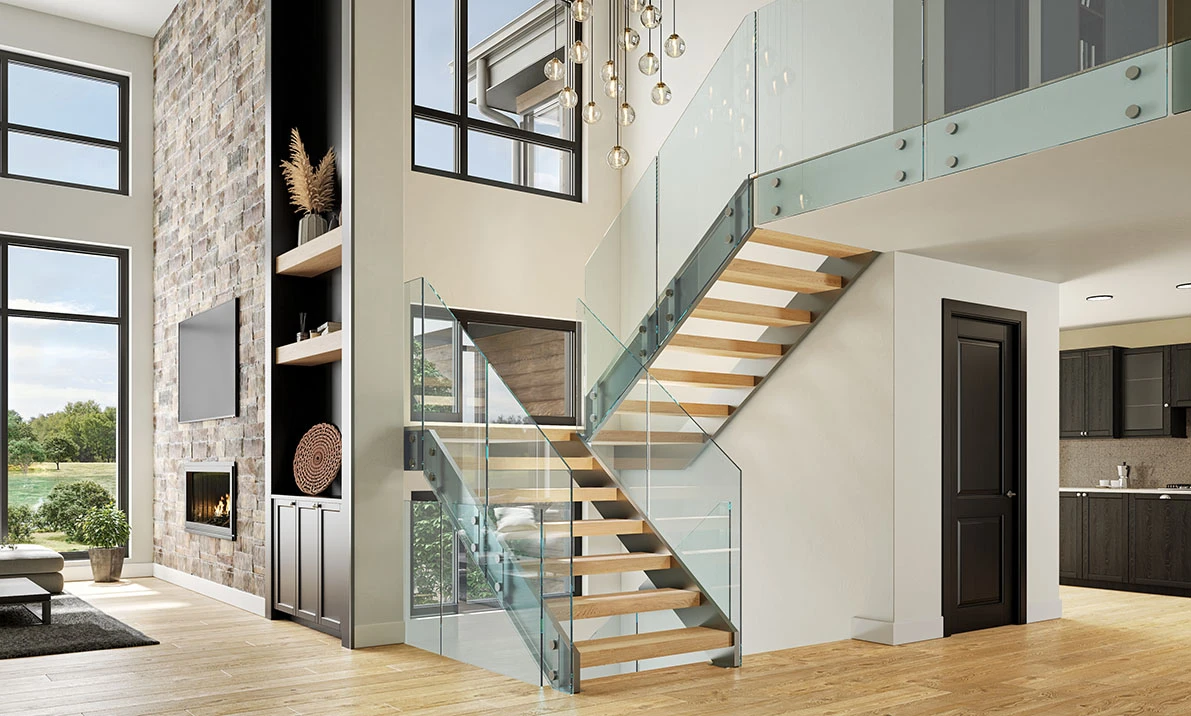
Details distinguish good staircases from extraordinary ones. Railings and balustrades define the line and rhythm of the staircase. Thin metal balustrades create vertical tension. Glass balustrades disappear into the space. Sculpted wood handrails soften touch points and bring warmth.
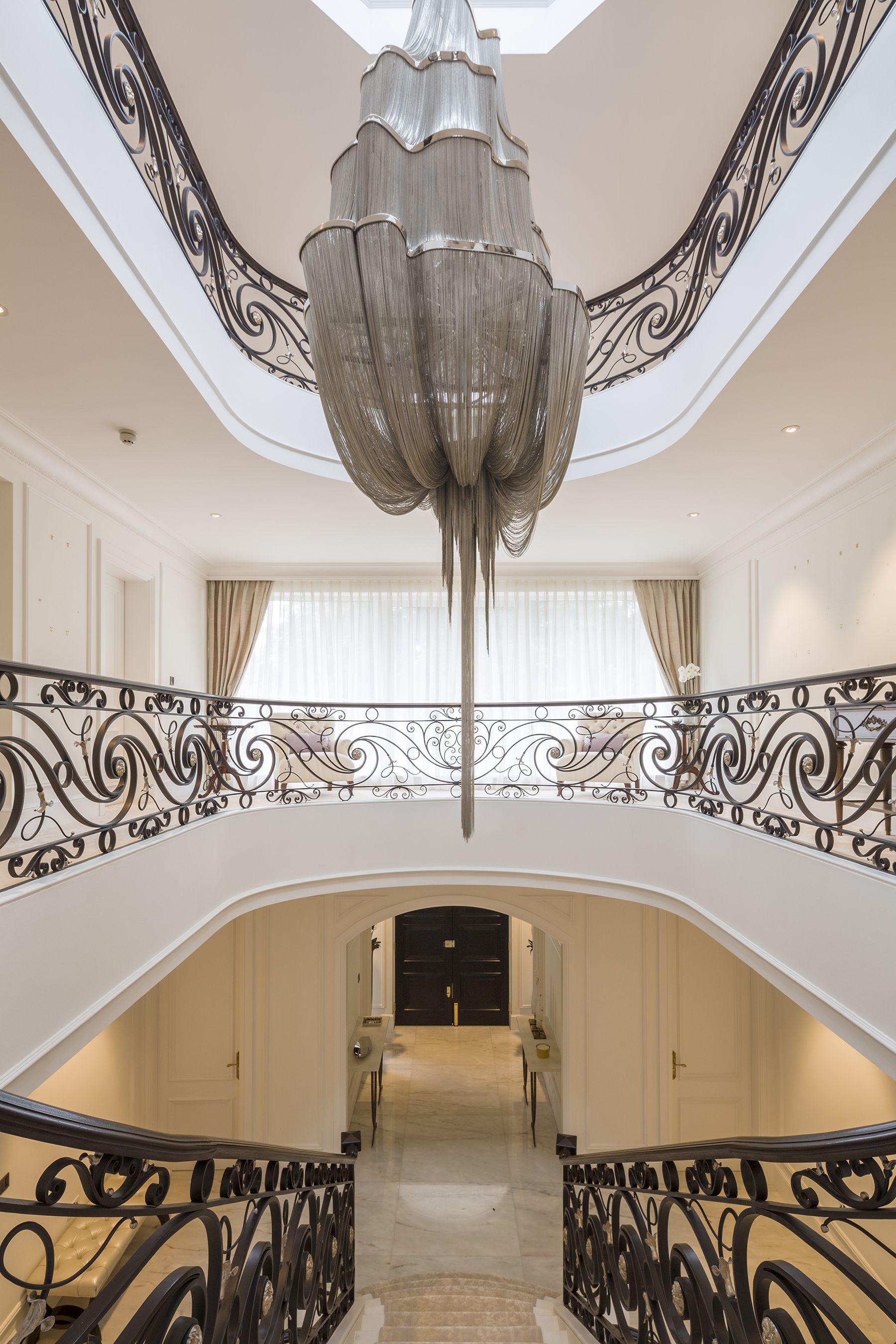
In luxury homes, floating monolithic treads with hidden supports produce dramatic lightness. In European heritage interiors, wrought iron balustrades and carved wood rails convey history.
These choices affect safety, but they also create architectural identity.


Lighting Enhances Drama and Safety
Lighting transforms staircases from functional structures into architectural scenes. Step lights guide movement at night. Linear LED strips accentuate geometry. Pendant clusters highlight verticality in double-height entries. Skylights flood treads with natural light during the day.
Warm lighting softens stone and metal. Cooler lighting highlights concrete and steel. Designers use concealed lighting to maintain elegant minimalism without exposing fixtures.
Lighting ensures each step feels secure while elevating ambiance.
Geometry Drives Spatial Experience
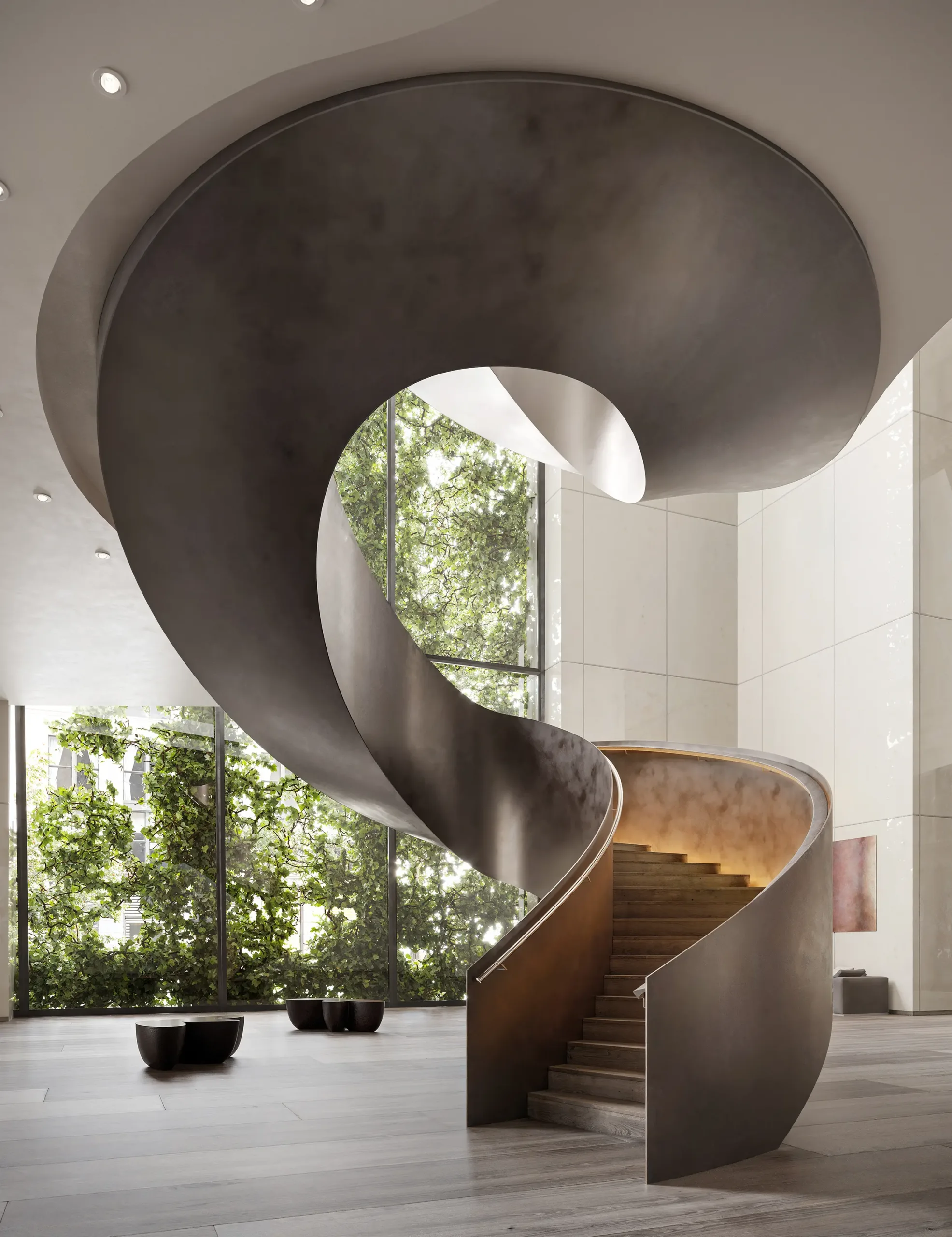
The shape of a staircase influences how people move and feel inside the home. Straight staircases emphasize clarity and speed. L-shaped and U-shaped staircases encourage pauses and views. Curved staircases slow pace and introduce elegance. Helical and spiral staircases add sculptural interest while saving floor area.
Architects guide homeowners toward geometries that match circulation patterns, not just aesthetics. A curved staircase might suit a central hall, while a straight staircase suits a rear corridor.
Geometry influences real estate value as much as furniture layout.
Storage and Display Integrations Add Functionality
Luxury homes now integrate storage beneath staircases to reduce clutter and maximize efficiency. Hidden cabinets, built-in shelving, and wine displays turn stair voids into practical features. Some designers create reading nooks or seating alcoves beneath staircases, blending architecture with lifestyle.
In contemporary homes, integrated shelving displays ceramics, art books, and sculpture. This transforms circulation space into cultural storytelling.
Function elevates form when both support how families live.
Staircases Connect Architecture and Interior Design
Staircases bridge architectural structure and interior styling. They set the tone for how materials flow between floors. A wood staircase rising to a bedroom suite creates warmth. A stone staircase leading to a gallery landing creates formality. A glass staircase leading to an office mezzanine feels modern and open.
Design studios synchronize finishes between cabinetry, flooring, and treads. This cohesion makes homes feel curated and intentional.
These harmonies define high-end Staircase Design Ideas that appear in newly built and renovated luxury homes.
Double-Height Spaces Heighten Impact
Double-height foyers and living rooms amplify the architectural drama of staircases. They support chandeliers, pendant clusters, and large-format art. They allow staircases to float freely in space without crowding.
Real estate developers recognize that double-height entries improve perceived scale and luxury. Buyers often associate vertical openness with prestige.
Light, sound, and shadow change throughout the day in these spaces, adding kinetic character.

Finishes Make Staircases Feel Complete
Finishes define the final layer of experience. Matte finishes feel calm and contemporary. Gloss finishes reflect light and feel formal. Natural finishes reveal grain and mineral detail. Powder-coated metals deliver precision and color consistency. Polished stone reinforces luxury.
Designers specify finishes to control visual noise. In neutral minimalist interiors, oak treads and white plaster walls create serenity. In bold luxury interiors, noir marble, brass rails, and smoked glass create theatrical statement.
Finishes determine how homeowners touch, see, and remember the staircase.
Longevity Replaces Trend-Driven Design in 2026
Staircases represent long-term architecture. They cannot be replaced easily. Homeowners choose materials, colors, and details that age gracefully rather than succumb to trend cycles.
This philosophy informs modern luxury Staircase Design Ideas that prioritize lasting craftsmanship over novelty.
Staircases that feel timeless elevate real estate value.
Staircases that respect materials and geometry elevate daily life.
Staircases that tell architectural stories never lose relevance.