10 Moody Living Room Ideas That Feel Dramatic Yet Surprisingly Cozy

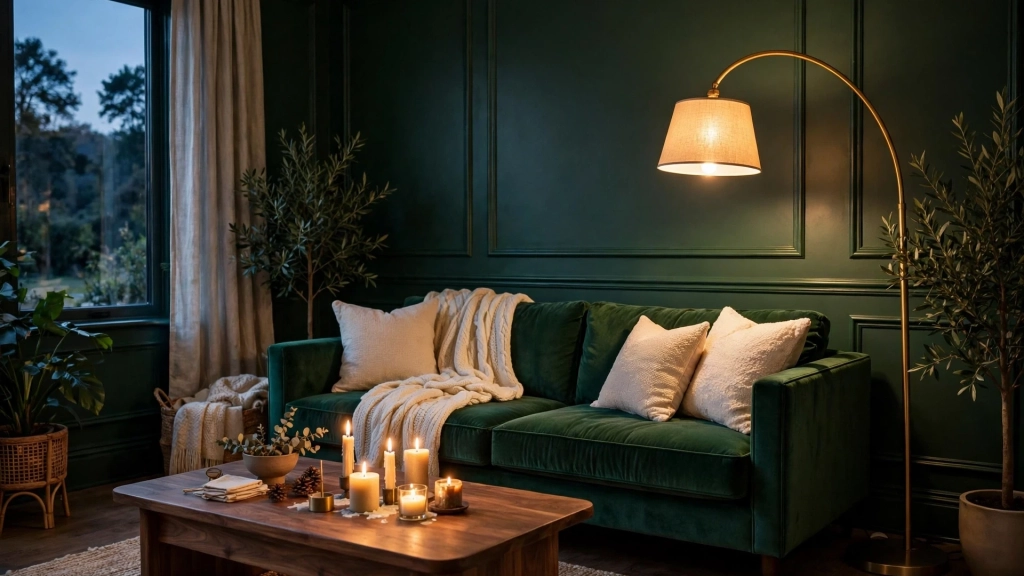
My friend Dana invited me over for coffee last October after painting her living room a deep forest green. I walked in expecting a dark cave and found the warmest room I had sat in all year. A brass floor lamp glowed in the corner and the walls wrapped around us like a blanket. I left that evening with one thought: I wanted to design a moody living room that feels exactly like this one.
Dark walls scare people because we associate dark with cold, small, and sad. But a dark room done right feels calm, rich, and expensive. The secret is not the paint alone. It is deep color, warm light, and soft texture working together. Get that mix right, and dark becomes the coziest color in your home.
Why a Moody Living Room Just Works
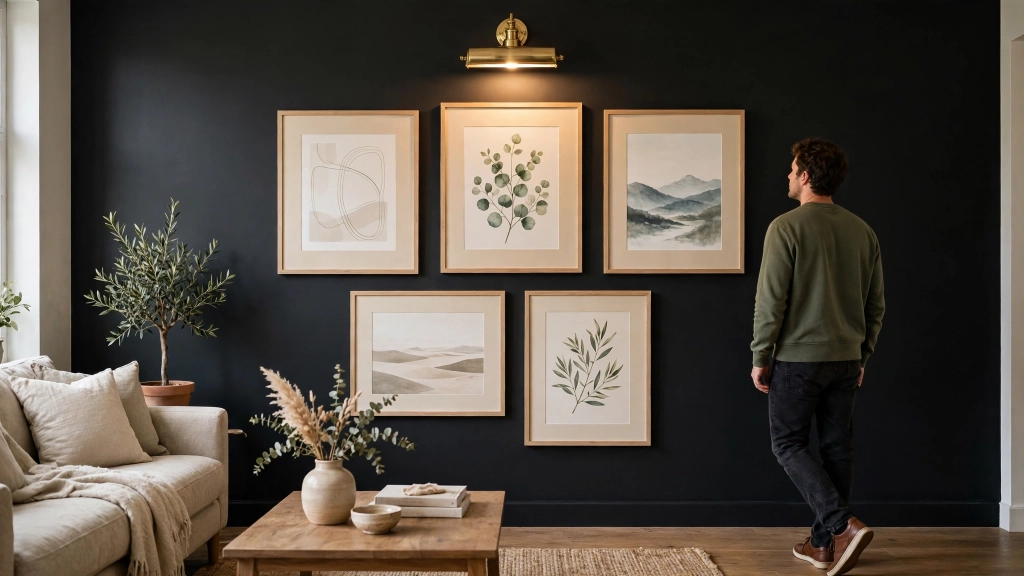
Dark colors lower the visual noise in a room. White walls bounce light everywhere and show every scuff, while deep walls absorb the chaos and recede, which makes the room feel deeper and calmer. That is why high-end art galleries paint their walls charcoal or near-black: art and furniture pop against a dark backdrop.
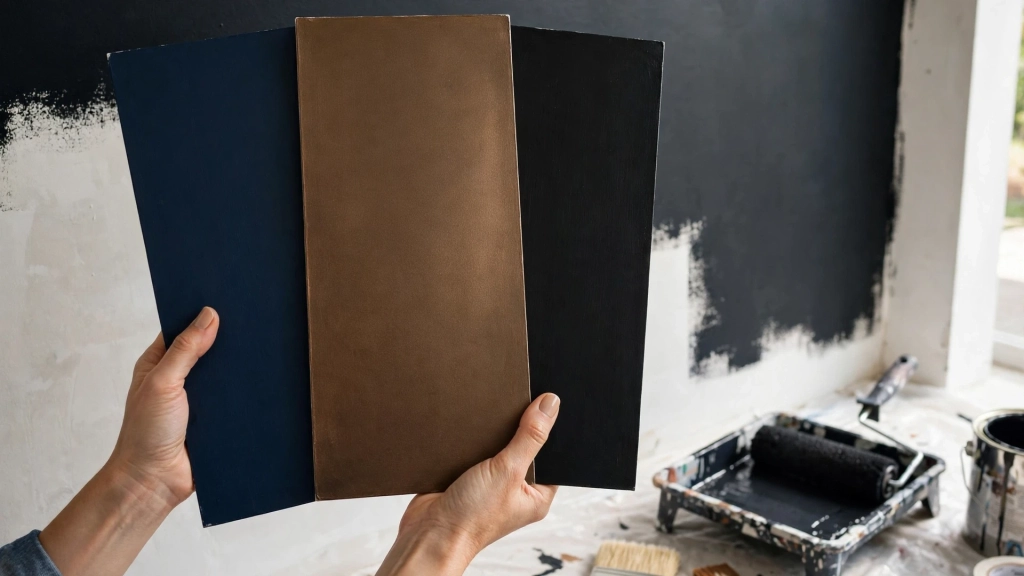
Dark rooms also feel more intimate. Deeper tones and lower light make people feel sheltered, like sitting around a campfire. Dark greens, navies, and charcoals show up in libraries, studies, and cozy pubs for exactly this reason. Borrow that feeling for your own living room.
Start With the Walls: 10 Paint Colors Designers Swear By
Nothing changes a room faster than a gallon of paint, so before you buy a single pillow, pick the wall color, because the right paint for your moody living room matters more than any piece of furniture. Dark paint sets the temperature of the whole room, and undertones decide whether it feels warm or icy.
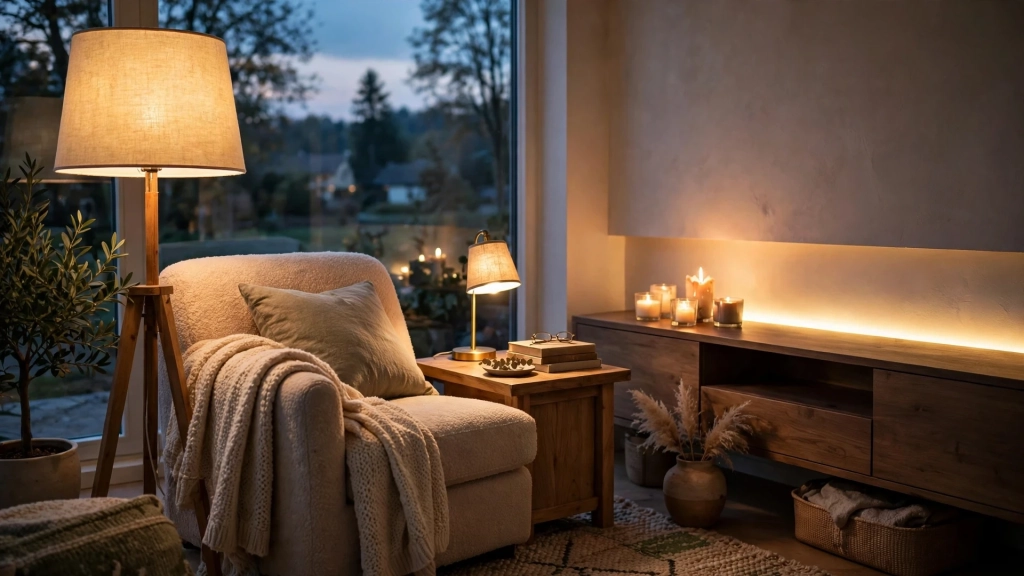
Test before you commit. Paint large sample boards and move them around the room at different times of day, since morning light is cool while evening lamplight is warm and forgiving. Check the Light Reflectance Value (LRV) on the chip. Colors with an LRV under 20 give you that true dark, enveloping look.
Best Paint Colors for a Moody Living Room
Here are ten real paint colors that designers reach for again and again. Every one of them reads dark and dramatic without tipping into cold.

1. Benjamin Moore Hale Navy (HC-154). A deep navy with just enough warmth to feel classic. 2. Sherwin-Williams Iron Ore (SW 7069). A soft black with a warm undertone. 3. Farrow & Ball Railings (No. 31). A blue-black that shifts with the light. 4. Behr Cracked Pepper (PPU18-01). Behr's 2024 Color of the Year, a soft black neutral. 5. Sherwin-Williams Urbane Bronze (SW 7048). A warm bronze-gray, Sherwin-Williams' 2021 Color of the Year. 6. Farrow & Ball Hague Blue (No. 30). A deep teal-blue that glows in lamplight. 7. Benjamin Moore Kendall Charcoal (HC-166). A warm, livable gray that works in almost any light. 8. Sherwin-Williams Peppercorn (SW 7674). A rich gray, darker than it looks on the chip. 9. Benjamin Moore Wrought Iron (2124-10). A near-black with a whisper of olive undertone. 10. Benjamin Moore Black Forest (CSP-285). A green so deep it reads near-black after sunset.
Match the undertone to your fixed elements. Warm honey-toned floors pair with bronze, olive, or warm charcoal. Cool gray floors suit navy and blue-black.
Light It in Three Layers, Not One Sad Ceiling Light
Here is the truth about gloomy dark rooms. They are rarely gloomy because of the paint. They are gloomy because they have one overhead light doing all the work. Lighting a moody living room in three layers changes everything, and it is the single biggest difference between dramatic and depressing.
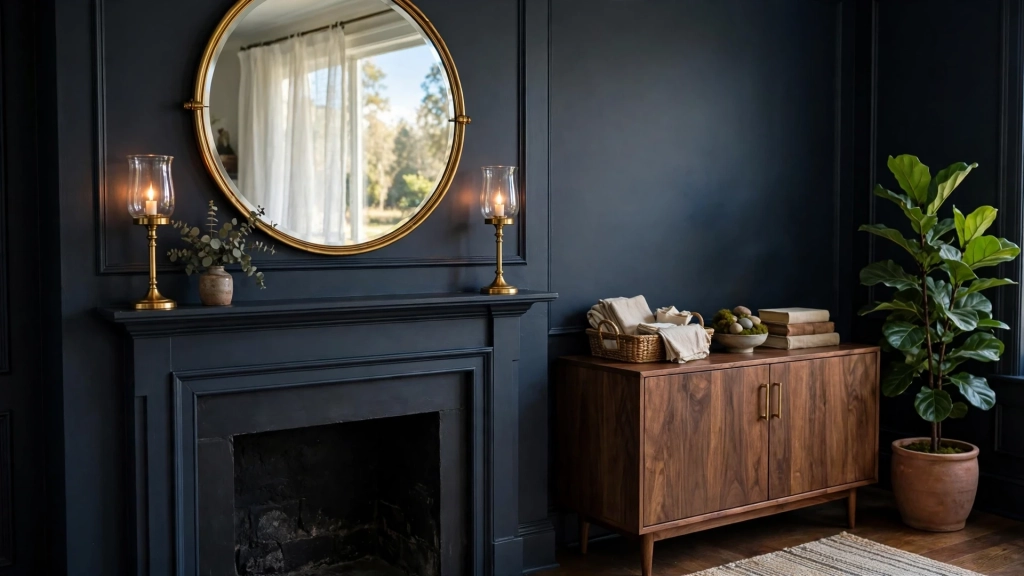
Layer one is ambient light, the soft overall glow. A floor lamp with a fabric shade, or a pair of table lamps flanking the sofa, spreads light gently. Layer two is task light, the focused pool where you read. An arc floor lamp over your favorite chair or a small lamp on a side table does the job. Layer three is accent light, the jewelry of the room: picture lights over art, an LED strip behind the media console, or candles on the coffee table.
Then warm everything up. Choose bulbs at 2700K or lower, the warm golden range that flatters skin and wood. Anything labeled daylight or 5000K will turn dark walls cold and clinical. Put dimmers on every lamp you can. A plug-in dimmer lets you drop the brightness as the evening goes on, which is exactly how a cozy room should behave.
Texture Is the Secret Weapon Against Flat, Cold Walls
Dark paint can look flat and lifeless on its own. It needs something to play against. The texture you layer into the room is what keeps a moody living room from feeling cold, and this is where most people stop too soon. One sofa and one rug are not enough. Aim for at least five different textures you can see and touch.
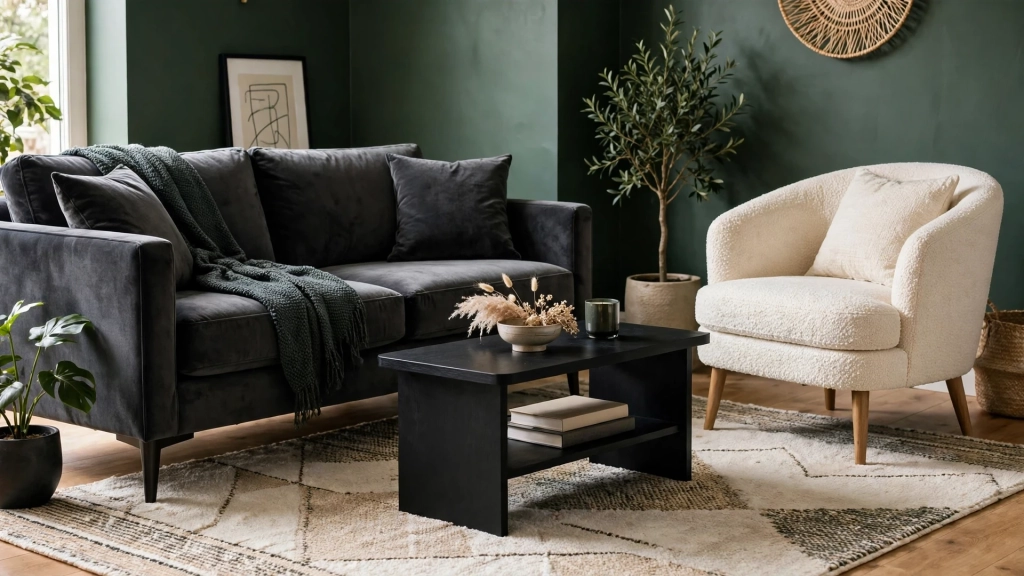
A velvet sofa practically glows against dark walls. Add a chunky knit wool throw tossed over one arm, not folded neatly. A leather ottoman brings a smooth, rich surface into the mix, and a jute rug layered under a smaller Persian-style rug adds depth underfoot. Finish with a nubby boucle accent chair in cream or ivory. That one light piece stops the room from feeling heavy, and the contrast makes the dark walls look intentional.
Mix matte and shine on purpose: matte walls, a glossy ceramic lamp base, brushed brass, and soft wool in one sightline. Texture turns a dark box into a room you want to touch.
How to Keep Your Moody Living Room Cozy, Not Gloomy
Warmth comes from contrast, and you build it in layers. Warm metals are your best friend. Swap cool chrome for brass, aged bronze, or copper in lamp bases, curtain rods, and picture frames. Metal catches lamplight and throws tiny warm reflections around the room.
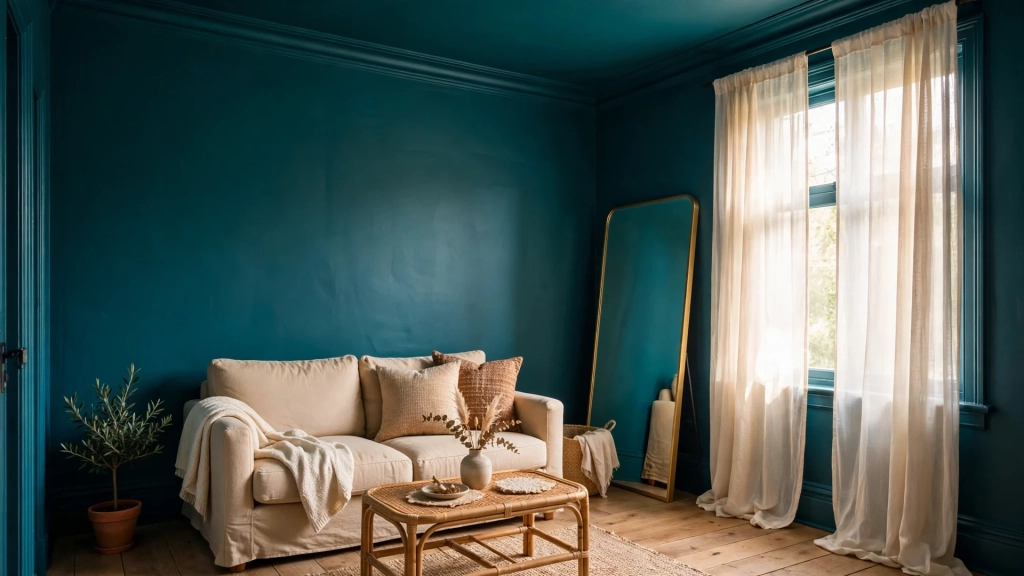
Mirrors do the same job on a bigger scale. Hang one large mirror opposite your brightest window to double the daylight. Add one big plant, like a fiddle-leaf fig or an olive tree, since green looks incredible against navy or charcoal. Then bring in fire glow: pillar candles on the mantel, LED candles in glass hurricanes, or a real fireplace if you have one. Warm wood helps too: a walnut coffee table or oak sideboard keeps the palette grounded. Finally, keep some cream and ivory in the mix. Cream curtains or an ivory throw lift the whole room without fighting the dark walls.
Furniture That Flatters Dark Walls
Choose a deep-seat sofa in performance velvet or a textured weave, something you can sink into. One cream boucle chair gives the eye a resting place. Avoid a full set of matching black furniture. Mix your darks instead. A charcoal sofa, a navy armchair, and a black coffee table read as layered, not matchy.
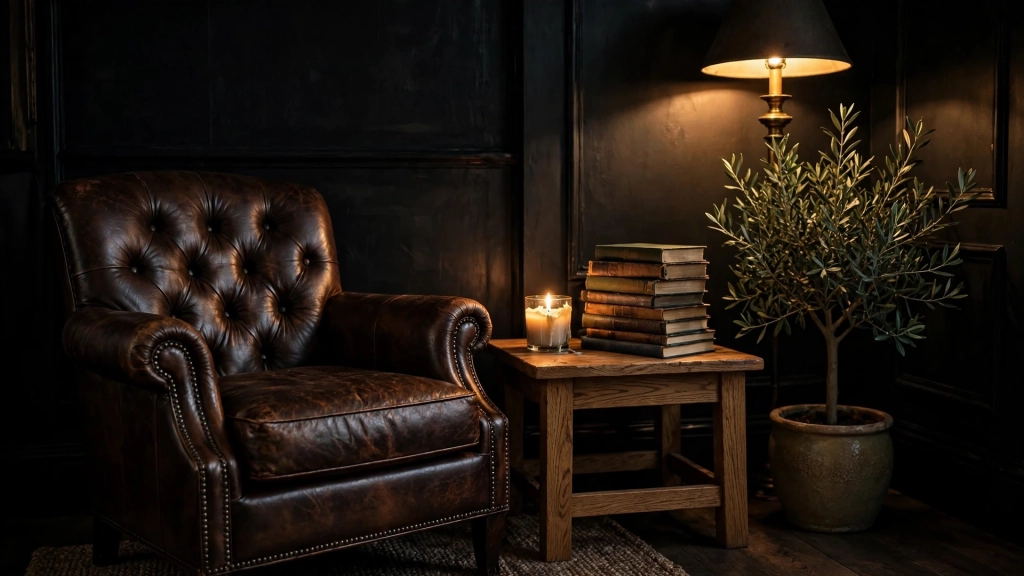
Scale matters in dark rooms because shadows hide edges. Go big with the rug so the front legs of every seat sit on it. Hang art with wide, light-colored mats that act like frames of light and stop artwork from disappearing into the wall.
Yes, Small Living Rooms Can Go Dark Too
The most common myth is that dark paint shrinks small rooms. In practice, the opposite often happens. Dark walls blur the corners, and when your eye cannot find the edges, the space feels deeper. White walls draw a hard line at every boundary instead.
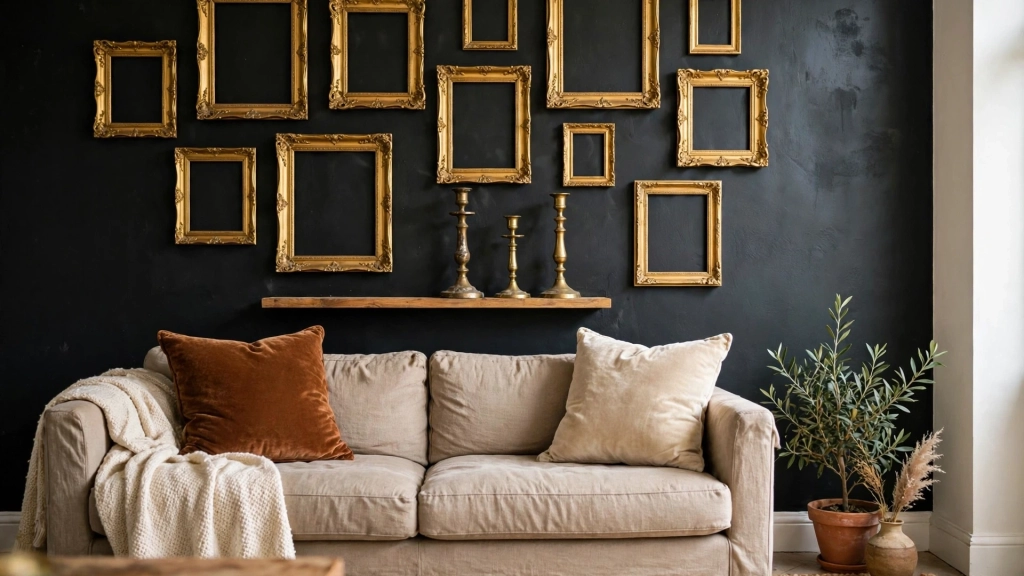
Try color drenching: paint walls, trim, and ceiling the same deep color. Erasing contrast lines makes the room feel like one continuous cocoon. Keep the ceiling matte, add one oversized mirror, and use sheer curtains in warm white so daylight pours in while the walls hold the drama.
Mistakes That Make Dark Rooms Feel Gloomy
Most failed dark rooms fail for the same few reasons. The first is relying on a single overhead light, which we already fixed with the three-layer rule. The second is ignoring undertones. A green-black wall beside a blue-black sofa clashes quietly all day. Hold fabric samples against the paint board before you commit.
The third mistake is going all black with no warm tones to balance it. Black walls, black sofa, black rug, chrome lamp. That room will feel like a showroom, not a home. The biggest mistake people make with a moody living room is forgetting warmth. Every dark room needs wood, brass, candlelight, or warm textiles to keep it human.
The fourth mistake is blocking natural light. Heavy blackout curtains on every window will starve the room. Use sheers or light-filtering shades during the day and save the drama for the walls. Dark paint plus generous daylight is the combination that makes guests ask who your designer was.
Steal the Look on a Budget
You do not need a designer budget. A single gallon of quality paint costs about fifty dollars and covers a whole accent wall, the cheapest transformation in decorating. Start with the wall behind your sofa and live with it for a week.
Thrift stores are gold mines for this style: brass candlesticks, wooden frames, and ceramic vases that look expensive against dark paint. Spray paint can turn mismatched frames into a unified gallery wall in an afternoon. Swap pillow covers instead of buying new pillows. Velvet covers in rust, ochre, or cream cost far less and deliver the texture this look demands. LED candles with timers give you the evening glow without the fire worry.
Dana's living room taught me the real lesson: dark walls were never the risk. Flat light and bare surfaces were. Give a dark room warm bulbs, five touchable textures, and one wall of deep color, and it will wrap around you. Start with one wall this weekend.