

Home fitness evolves quickly. In 2026, people want workout spaces that support real training without feeling like commercial gyms. They value smart equipment, flexible layouts, and calming aesthetics. They want spaces that help them stay committed and consistent. This shift drives modern Fitness Room Ideas that blend performance with atmosphere.
The pantry directions for 2026 focus on smart storage and simple living, prioritizing systems that support real daily routines rather than decorative staging. Designers think about access, frequency of use, and how much equipment or supply a household actually needs—an approach similar to how home gyms are now planned with attention to comfort, lighting, acoustics, and functional storage. In both cases, intentional design transforms utilitarian spaces into environments that genuinely work for the people using them, rather than serving as improvised zones.
Why Fitness Room Ideas Matter More in 2026
Health and wellness hold greater value today. Publications like Men’s Health and Women’s Health note that hybrid work and time-compressed schedules push people toward home workouts. Gyms still matter, but convenience controls consistency. When training sits inside the home, the barrier to entry disappears.
Designers observe behavioral patterns inside fitness rooms. They consider circulation around weights and mats. They choose textures for grip and noise control. They plan electrical needs for cardio equipment. They select colors that reduce stress rather than heighten it. These details turn rooms into performance environments.
Modern Fitness Room Ideas focus on training quality, comfort, and long-term motivation.
Lighting Shapes Mood and Performance
Lighting influences how people train. In 2026, homeowners avoid harsh fluorescent light. Instead, they choose warm LEDs for recovery and brighter task lighting for strength or mobility work.
Natural light remains ideal. Rooms with windows feel larger and more energizing. Designers position cardio machines near windows because visual distance reduces exertion perception during longer training sessions.
Even windowless rooms benefit from layered lighting. Wall sconces, recessed cans, and smart bulbs simulate daylight cycles for morning or evening workouts.
Flooring Supports Safety and Movement
Flooring determines safety, comfort, and acoustics. Rubber tiles, cork floors, engineered wood, foam mats, and performance vinyl reduce impact and protect joints. They absorb noise from jumping, weights, and treadmills. They protect the subfloor from heavy equipment.
Luxury fitness spaces sometimes use turf runs for sled pushes, warm-ups, and dynamic drills. Turf adds variety to training and defines zones.
These details matter because flooring influences whether people enjoy training or dread it.
Storage Keeps Gear Visible but Organized
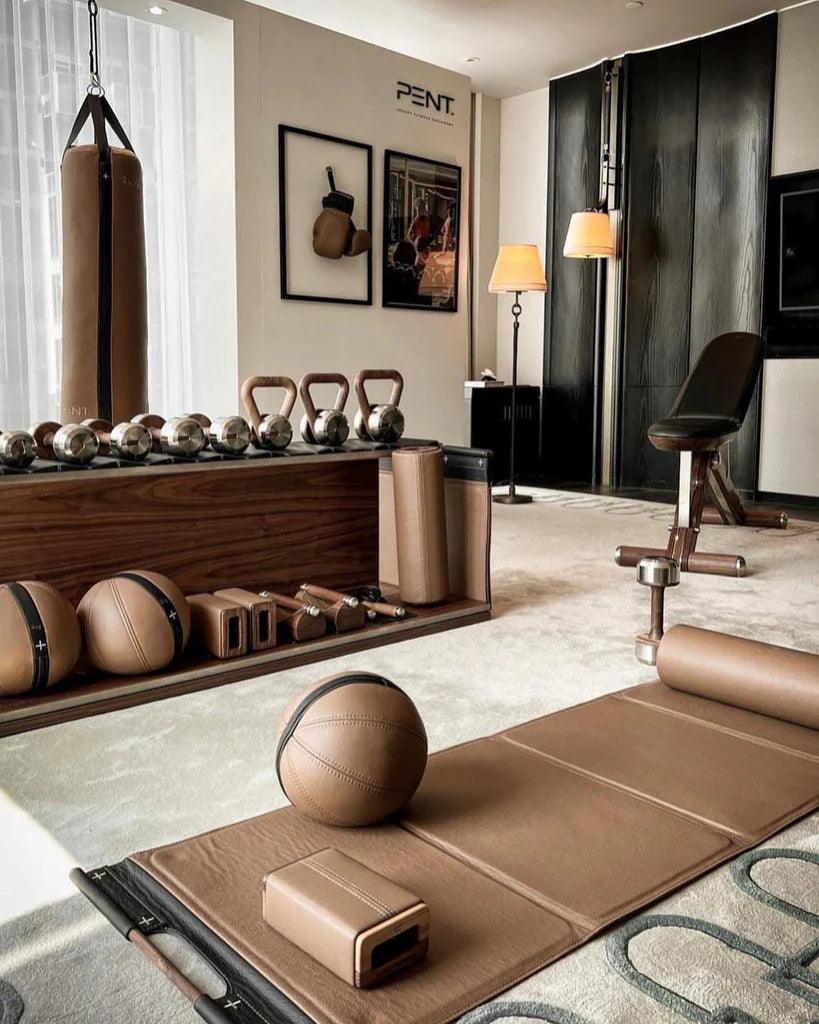
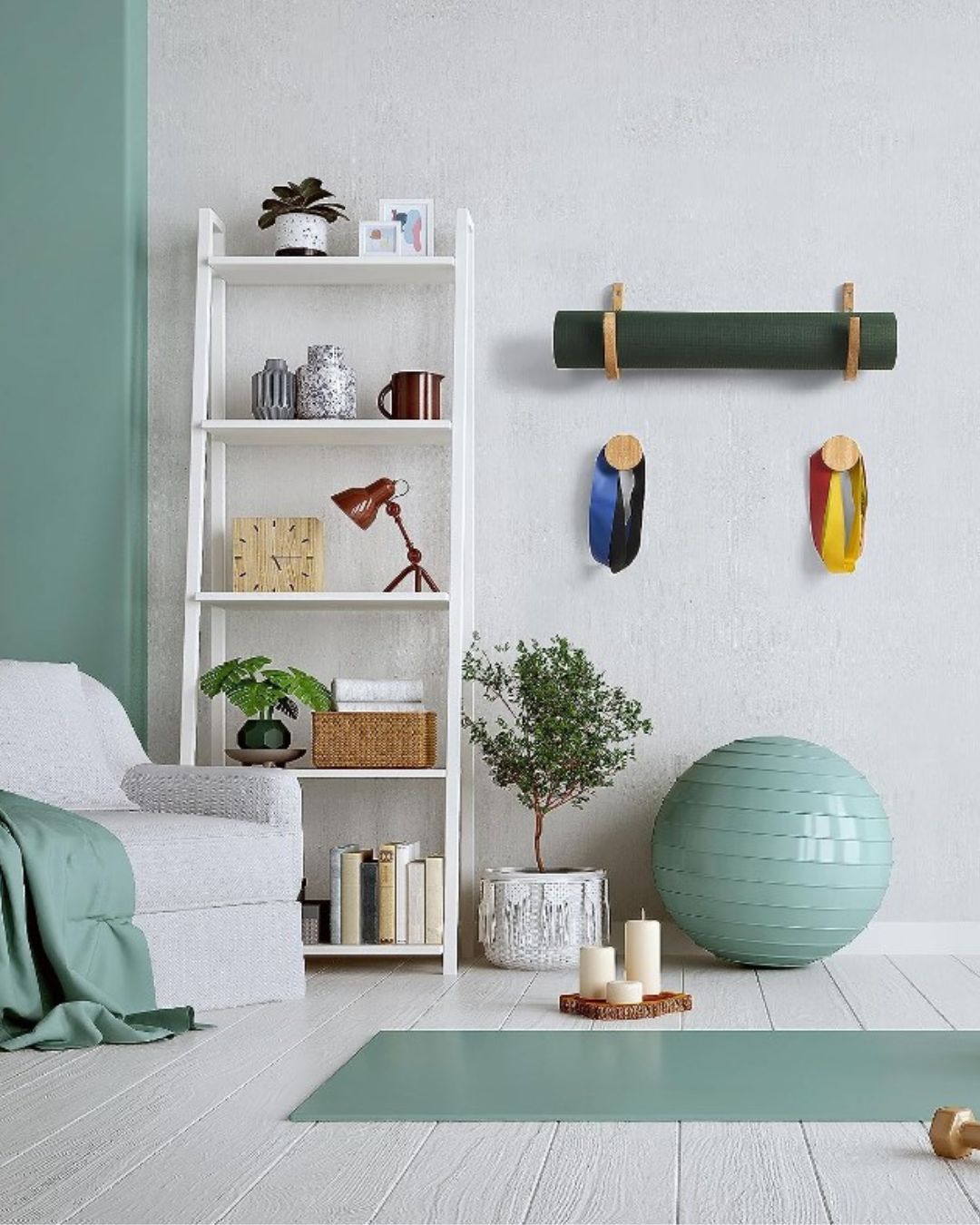
Home gyms hold gear that varies in size and purpose. Dumbbells, resistance bands, mats, foam rollers, kettlebells, medicine balls, jump ropes, yoga blocks, and towels all need homes. Designers integrate shelving, cubbies, hooks, and wall racks to store everything without visual chaos.
Open storage keeps gear accessible. Closed storage hides bulkier items. Vertical storage maximizes rooms with limited square footage. Mirrors above storage expand light and help with form checks.
A well-designed storage system supports daily use and quick reset — a key reason good Fitness Room Ideas solve clutter early.

Equipment Selection Based on Training Style
Equipment shapes the function of the room. Some people prioritize strength. Some prioritize mobility. Some prioritize cardio. Some train for athletic performance. Designers build spaces for those goals rather than copy commercial gyms.
For strength: adjustable dumbbells, kettlebells, barbells, racks, benches, and plates.
For cardio: treadmills, rowers, bikes, or compact climbers.
For mobility and recovery: mats, straps, blocks, rollers, and blankets.
For boxing: mounts, gloves, and bags.
Brands such as Peloton, Hydrow, and Technogym influence consumer expectations because they blend performance with design.
Home gyms that mirror training needs deliver better long-term consistency.
Acoustics Reduce Distraction and Stress
Sound shapes focus. Hard rooms echo. Good fitness rooms use rugs, curtains, acoustic panels, and soft finishes to reduce reverberation. This makes training more enjoyable and reduces household disturbance.
Some homeowners install rubber-backed curtains, cork panels, or upholstered divider walls for sound absorption. These upgrades support apartment dwellers who train in shared or limited spaces.
Acoustics matter for breathing, concentration, and comfort.
Mirrors Improve Form and Increase Perceived Space
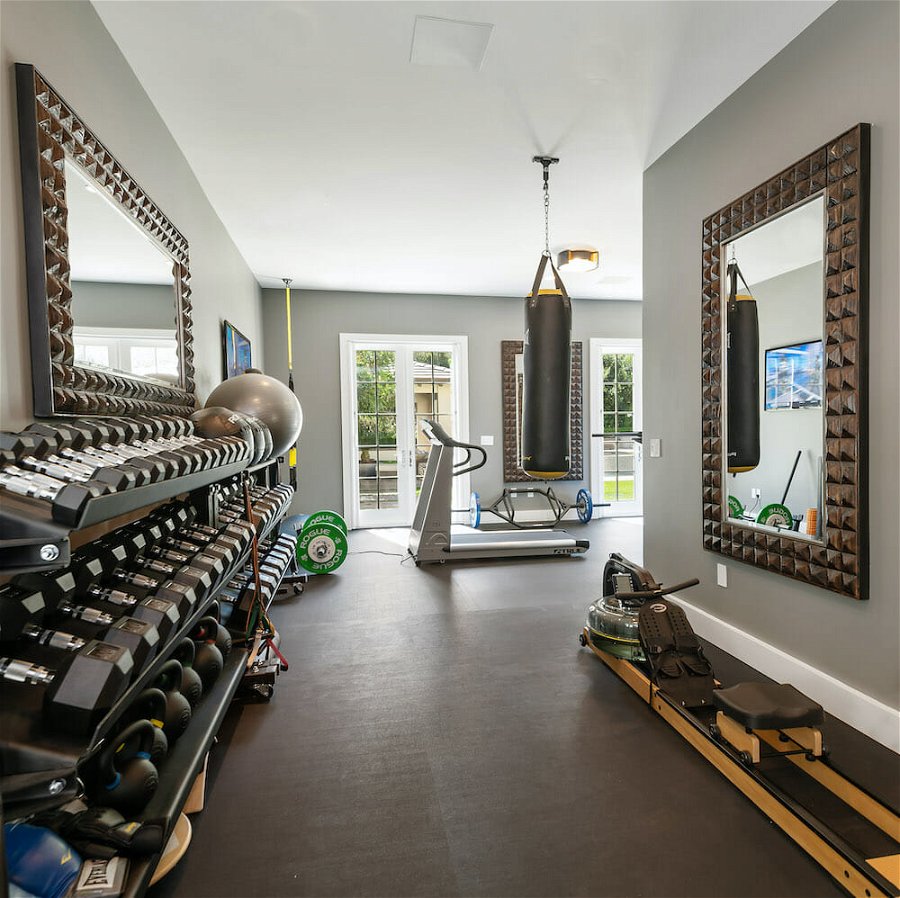
Mirrors help people check form during strength training, yoga, and mobility sessions. They also expand perceived space by reflecting light. Designers place mirrors opposite windows or near cardio equipment for optical balance.
Full-height mirrors create the most functional reflection range. Narrow vertical mirrors work well in compact rooms. For homeowners who want softness, framed mirrors suit warm interior styles better than frameless mirrors.
This practical detail appears in many modern Fitness Room Ideas that prioritize function and visual clarity.
Climate Control Protects Comfort
Temperature affects performance. Overly hot rooms reduce stamina. Cold rooms stiffen muscles. Designers integrate fans, HVAC adjustments, air purifiers, and dehumidifiers to keep training conditions ideal.
Air purification matters in rooms with heavy cardio because oxygen exchange supports endurance. Dehumidifiers help in basement gyms prone to moisture.
Climate control determines whether people enjoy using the room year-round.
Zones Support Different Modes of Training
Home gyms benefit from zoning. Strength zones hold weights and racks. Cardio zones hold treadmills and bikes. Floor zones support yoga, stretching, and pilates. Boxing zones require clearance. Recovery zones support breathing work and foam rolling.
Zones appear in even the smallest rooms through furniture placement and mats. Designers map movement first, then equipment. This sequencing prevents cramped, unsafe circulation.


Integration with Wellness and Recovery
Recovery enters mainstream training. Massage guns, stretch straps, cold compress tools, sauna blankets, and yoga props appear inside home gyms. Some homeowners add mini-fridges for hydration or cold therapy.
Advanced spaces include compact saunas, red light therapy panels, or cold exposure tubs. Wellness technologies once reserved for athletes now support everyday users.
Recovery upgrades reinforce daily use rather than sporadic training.
Longevity Outranks Trends in 2026
Fitness trends evolve, but good home gyms rely on everyday usability. They support quiet training, safe equipment handling, and mental focus. They age well without feeling outdated.
The strongest modern Fitness Room Ideas prioritize motivation, consistency, and long-term performance.
Homeowners who design for how they live — not how gyms market — create better training habits.
Home gyms become sanctuaries for both body and mind.