10 Winter Wreaths That Turn a Plain Door Into a Winter Welcome


Last January I stood at my front window with a mug of tea and stared at my own front door. It looked empty. The holidays were over, the garland had come down, and the door looked bare and a little sad, like a tree after the ornaments come off. Then I looked across the street. My neighbor's door wore a frosted green wreath, dusted white like it had caught the morning frost, and it looked perfect. It did not scream holiday. It just looked like winter, in the best way.
That is when I started hunting for winter wreaths that suit the whole season, not just December. I wanted something that looks right in January and February, without Santa, without red bows, and without anything that feels like Christmas leftovers. This guide shares the 10 styles I found, all frosty, evergreen, or made from natural materials.
Winter Wreaths Keep Your Home Welcoming Long After December
Winter is long. After the holidays end, most front doors stay plain for two or three months, and that is the exact moment guests arrive, delivery drivers come by, and you walk in and out every day. A wreath built for the season, not for a holiday, fills that gap beautifully.
The trick is to choose materials that read as winter rather than Christmas. Think frosted greens, silvery branches, white berries, pinecones, dried grasses, and natural twigs. Skip the red and gold. Skip the glitter. A good winter wreath looks like it grew on a hillside in January.
Before you buy or build, measure your door. Most front doors look best with a wreath between 24 and 30 inches across. A wreath that is too small gets lost, and one that is too big overwhelms the door.
Evergreen Winter Wreaths for a Frosty Front Door
Evergreen wreaths are the classic winter choice. Fir, cedar, and pine stay green through the coldest months, and a light dusting of faux frost makes them look freshly touched by winter. These three styles all avoid holiday colors, so they carry you from January into spring.

Noble Fir With a Light Flocking
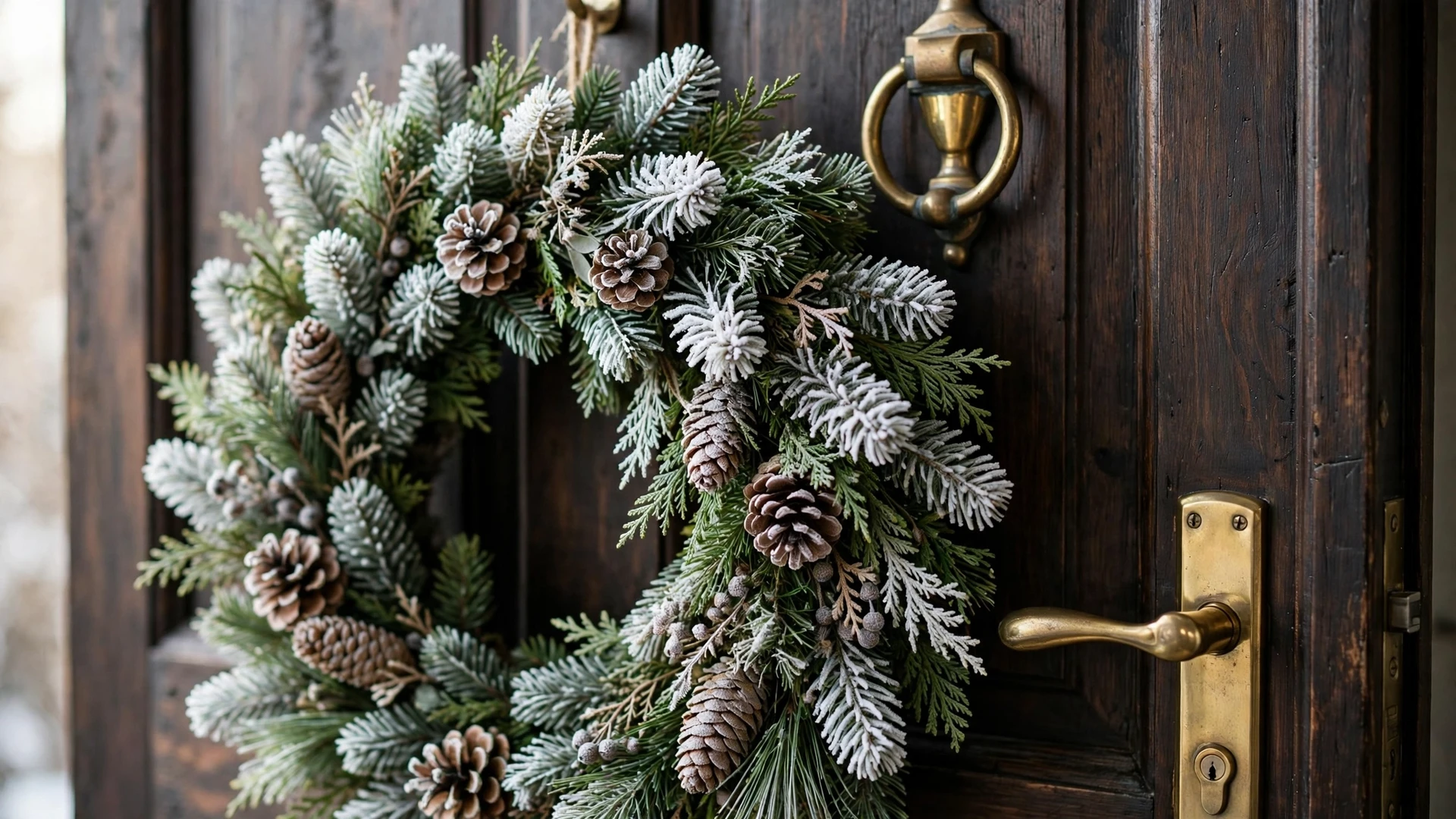
Noble fir has the fullest, most layered branches of any evergreen. A flocked noble fir wreath, dusted with white powder that looks like snow, turns a plain door into a winter scene. Good flocking looks soft, not chalky.
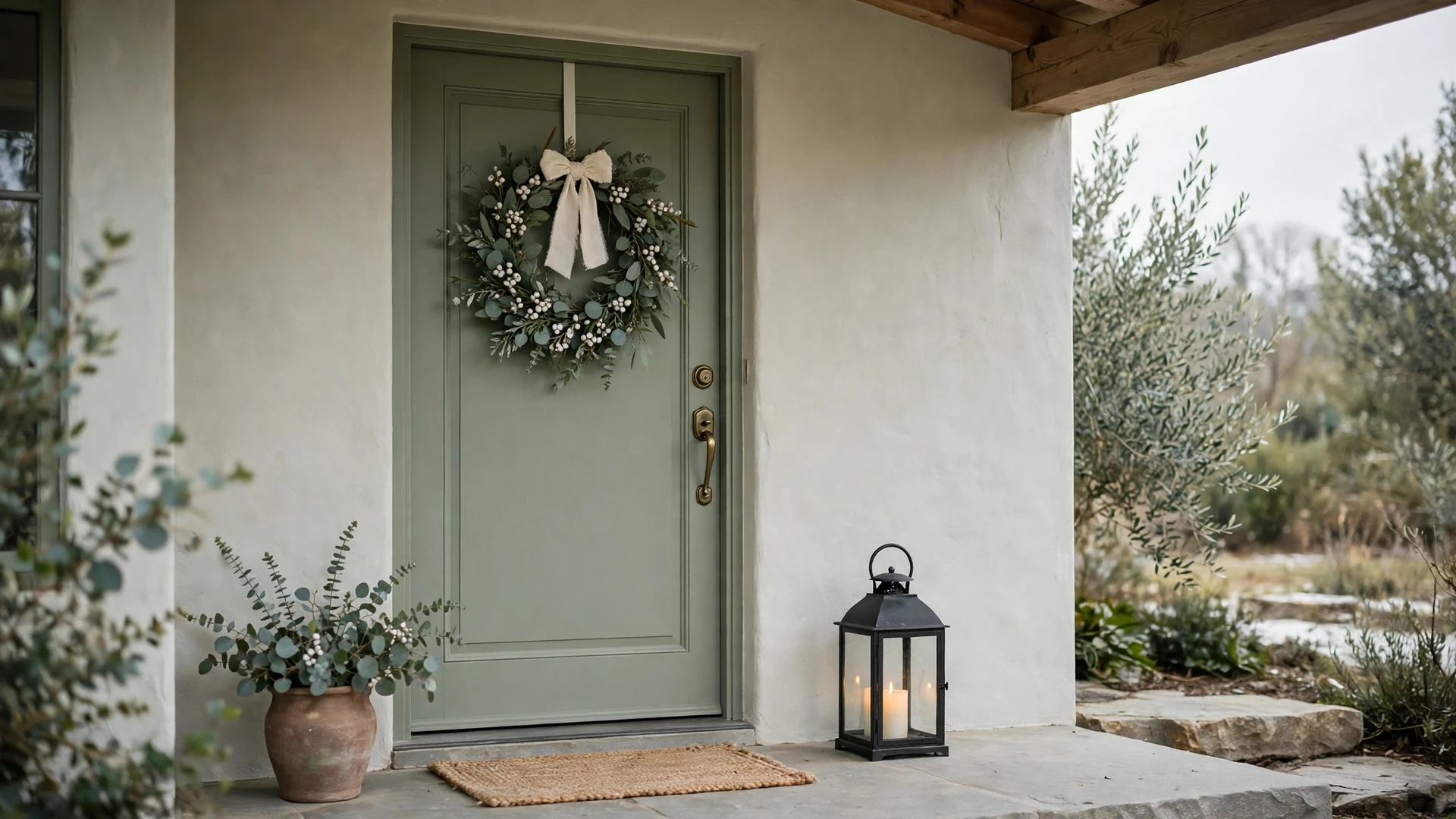
Keep the rest simple. A flocked fir wreath needs no ribbon and no ornaments. Hang it on a plain dark hook or a length of twine, and let the frost do the talking. Retailers like Terrain and Pottery Barn sell flocked evergreen wreaths each winter, proof this style has real staying power.
Cedar and Juniper Mix
Cedar branches droop softly, juniper berries add tiny blue-gray dots of color, and together they make a wreath that feels wild and natural. This combination looks especially good on farmhouse doors and any home with stone or wood siding. The looser texture gives it a handmade, gathered-from-the-woods feeling.

A cedar and juniper wreath also smells wonderful. If you buy a fresh one, mist it lightly with water once a week, and keep it out of direct afternoon sun.
Boxwood for a Clean Winter Look
Boxwood wreaths are the minimalist's winter choice. The small, round leaves form a tight, even circle that looks tidy and modern on any door. A plain boxwood wreath reads as winter because of its deep green color, not because of any decoration, so it works from December through March.
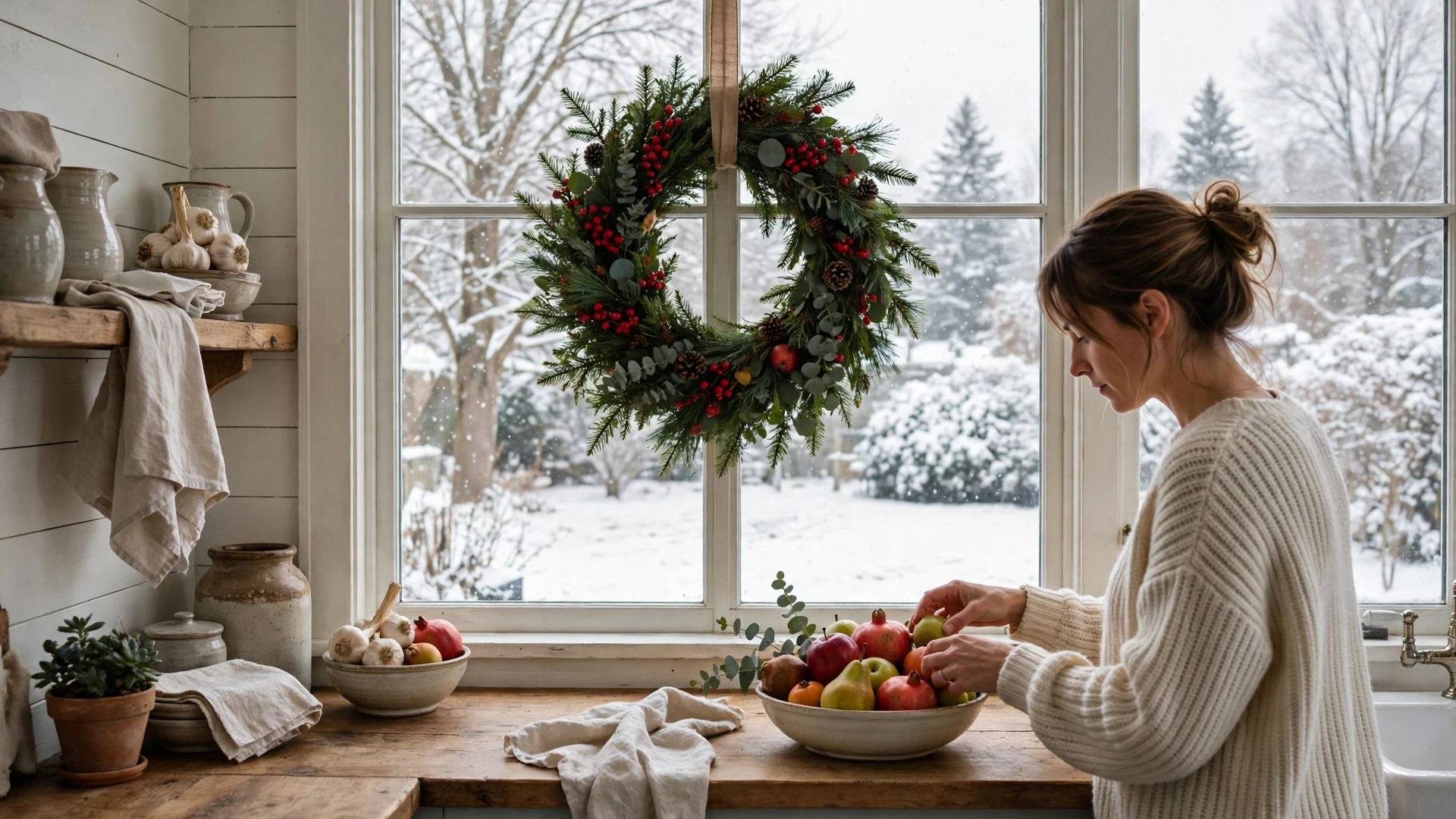
Dress it up with a single natural accent if you like. A small cluster of pinecones at the bottom, or a sprig of white berries tucked into one side, adds winter character without breaking the clean look. A preserved boxwood wreath can survive several winters if you store it in a dry box between seasons.
Natural Material Winter Wreaths That Age Beautifully
Some of the prettiest wreaths use no greenery at all. Pinecones, dried grasses, bark, and bare branches bring warm brown and tan tones to a winter door, and they age gracefully. These materials never wilt, never drop needles, and they look just as good in March as in January.

Pinecone and Birch Bark
Pinecones are the ultimate winter material. They cost almost nothing if you gather them yourself, and they carry instant winter meaning without a single holiday reference. A pinecone wreath built on a grapevine base, with a few curls of birch bark tucked between the cones, looks rich and textural.
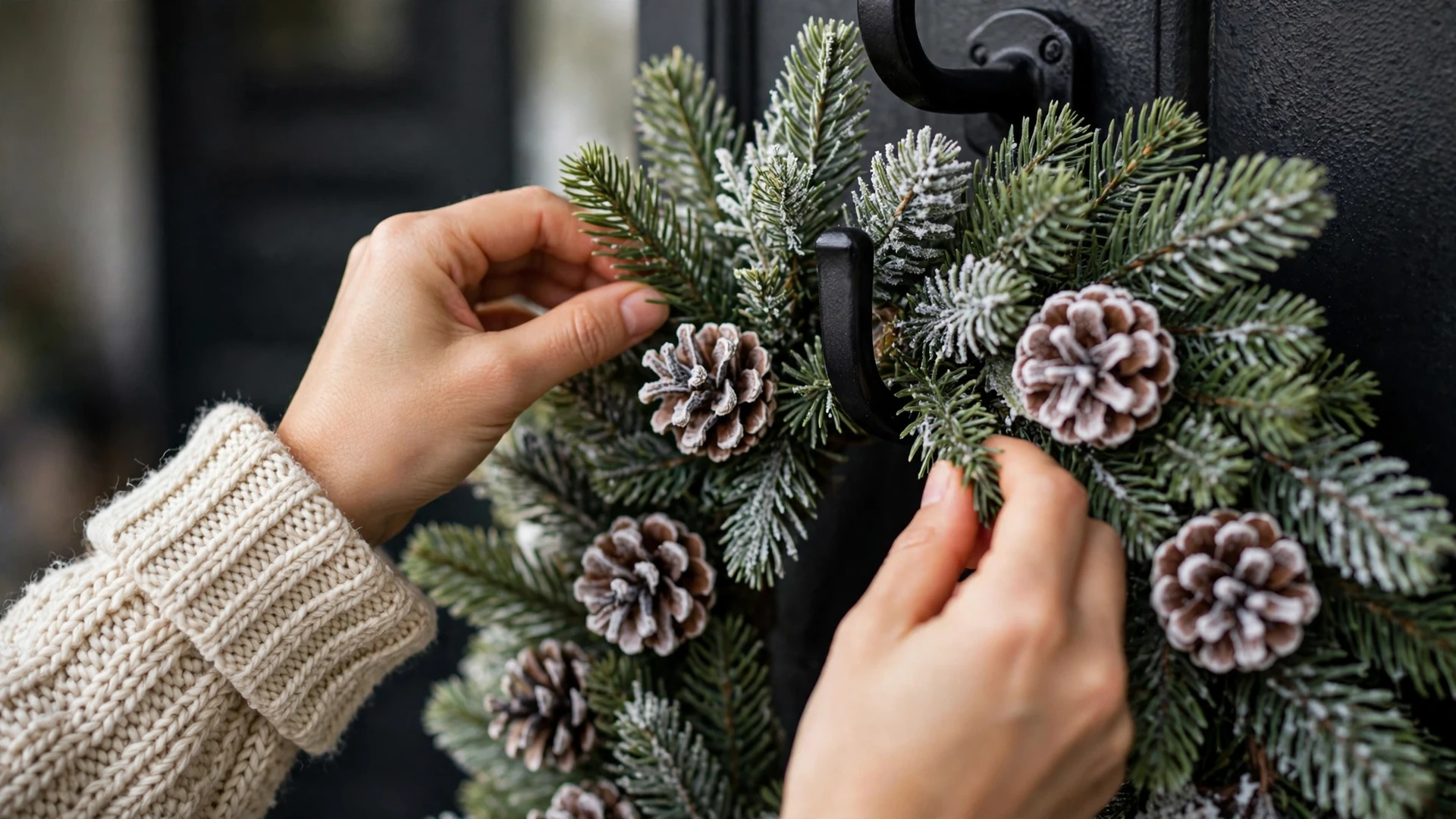
Vary the cone sizes for the best effect. Large cones form the base layer, smaller cones fill the gaps, and a few open, flat cones face outward to catch the light. A birch bark accent, with its white and gray peeling layers, keeps the whole thing feeling frosty.
Dried Wheat and Winter Grasses
Dried wheat wreaths glow with a soft golden color that warms up a cold gray January day. The golden tone looks beautiful against navy, charcoal, or forest green doors. This style suits modern and Scandinavian homes especially well, where the simplicity of one material makes a strong statement.
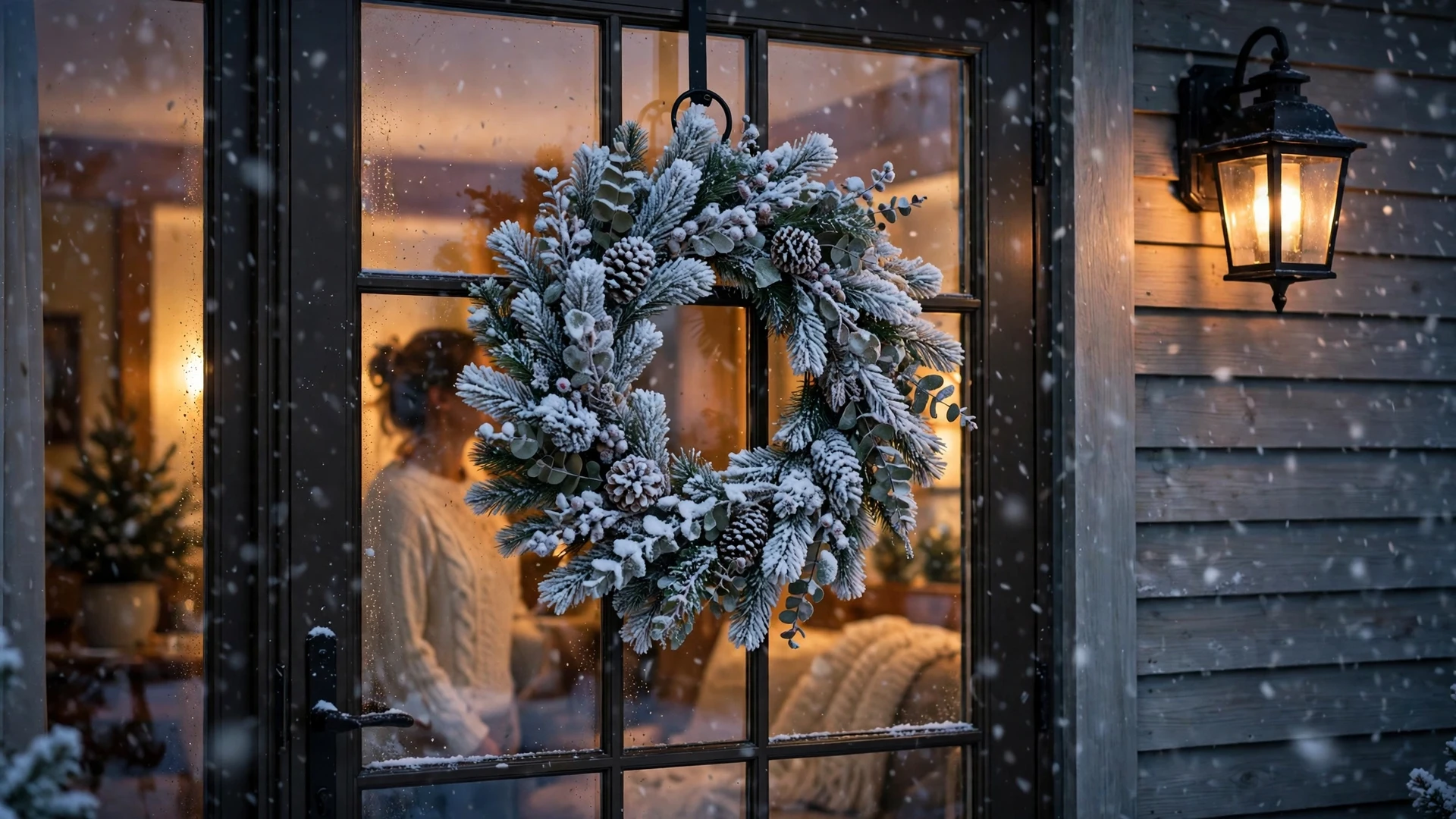
Dried grasses like pampas and bunny tails add movement. A wreath of mixed grasses sways gently in winter wind, which makes the door feel alive. These wreaths are feather light, so they hang easily from a simple nail. Keep them under a porch roof, since heavy rain can flatten delicate grasses.
Bare Twigs With Warm Fairy Lights
A bare twig wreath is the most dramatic option on this list. Twisted branches of birch, willow, or grapevine form an open, sculptural circle that looks like winter itself, bare trees and all. On a dark painted door, the pale twigs stand out sharply and draw the eye from the street.
Wrap the twigs with a short strand of warm-white fairy lights on a timer, and the wreath glows softly every evening. This is the wreath for people who love the quiet, spare beauty of January, and it transitions straight into early spring without a single change.
Soft and Elegant Winter Wreaths for a Calmer Look
Not every door wants a bold evergreen. If your style leans soft and calm, these wreaths use muted colors, dried flowers, and pale berries to create a gentle winter feeling. They look lovely on white, cream, and light gray doors.
Dried Eucalyptus Winter Wreaths for Cool Gray Tones
Silver dollar eucalyptus dries into soft gray-green discs that look like winter mist, and a full circle of it needs zero decoration. The color is cool and calm, the scent is light and clean, and the whole wreath weighs almost nothing.
Eucalyptus suits modern farmhouse and coastal homes. A single strand of jute twine as a hanger completes the natural look. One caution. Eucalyptus drops small leaves over time, so sweep your step once in a while, and keep the wreath dry.
White Berries and Snowberry
White berries look like frozen drops of snow, and a wreath made of them is pure winter magic. Snowberry, white hypericum berries, and artificial frosted berries all give the same effect, a pale, luminous circle that stands out against dark doors and glows softly on light ones.
Pair a white berry wreath with a simple black door and a brass knocker, and the whole entryway looks like a boutique hotel. The berries read as frost, not fruit, so the wreath never looks like Christmas decor. If you choose a fresh berry wreath, hang it in a sheltered spot, since hard freezes can crack real berries.
Frosted Hydrangea
Dried hydrangea blooms keep their full, cloud-like shape long after the growing season ends. A wreath of dried hydrangea in pale blue, cream, or soft green looks like a snowdrift gathered into a circle. It is romantic, a little vintage, and completely different from the evergreen wreaths your neighbors hang.
Hydrangea wreaths look best on cottage and traditional doors. The blooms are fragile, so choose a spot under a porch or overhang, away from wind and rain. A light coat of clear floral sealant before hanging firms up the petals against winter damp.
Dried Lavender and Soft Grays
Dried lavender wreaths bring a whisper of purple-gray color to the winter door. The tiny buds form a dense, even texture that smells faintly of summer gardens, a lovely contrast on a cold day. Mixed with lamb's ear or dusty miller, lavender makes a wreath that feels calm and a little bit French country.
This wreath suits light-colored doors and shaded entries, since strong sun can fade the purple tones. Like other dried styles, it lasts for years with simple storage in a dry closet.
How to Hang Your Wreath So It Stays Put All Winter
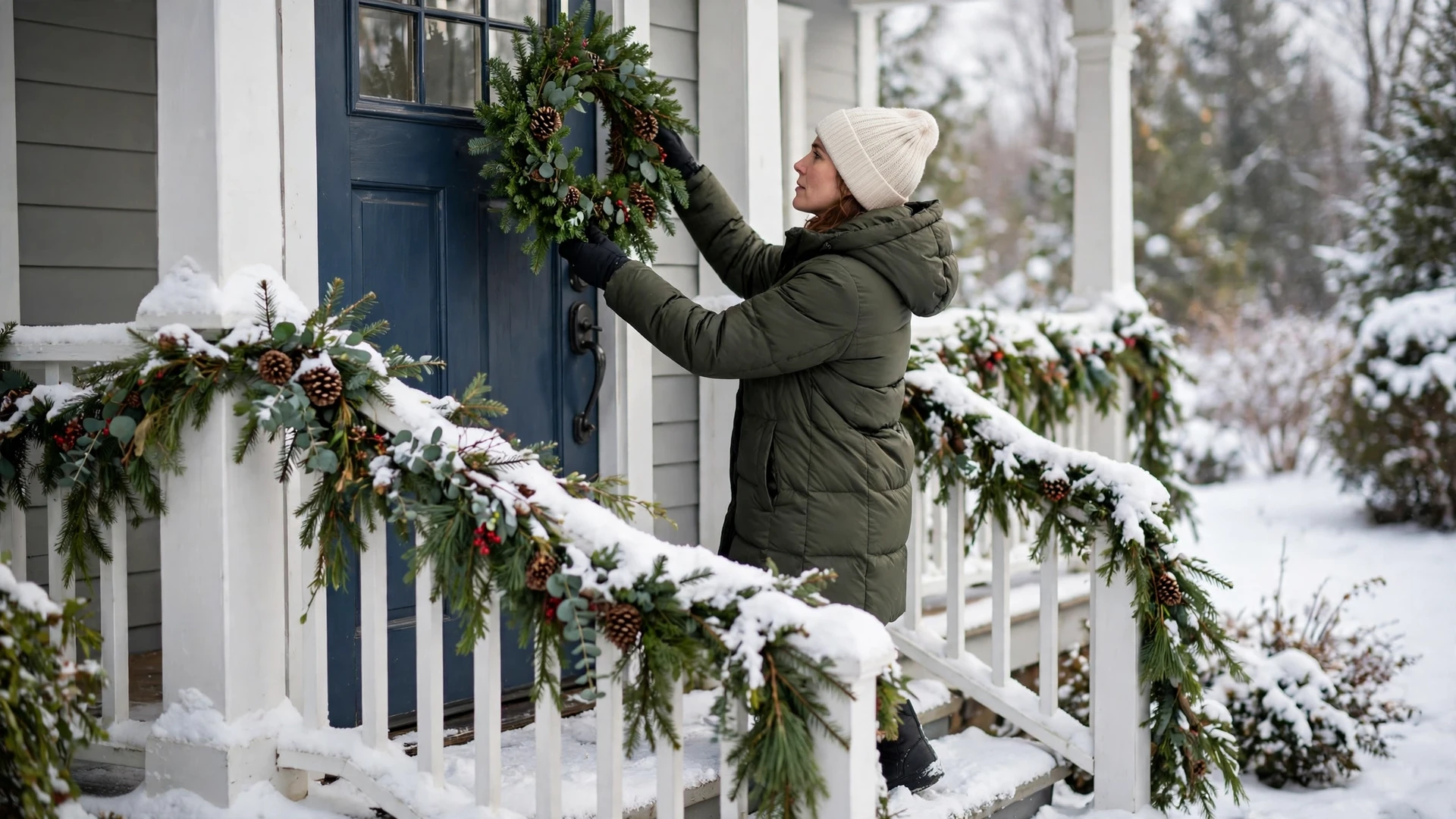
A beautiful wreath means nothing if it slides, swings, or falls. Most store-bought winter wreaths arrive with a simple loop hanger on the back, but that loop alone rarely holds through winter wind. An over-the-door wreath hook is the easiest solution, and it leaves no holes.
For heavier fresh evergreen wreaths, use a sturdy metal hook rated for at least 10 pounds, and hang it from the top of the door. Adhesive hooks fail in cold weather when the glue stiffens, so save those for indoor use. A clear fishing line looped over the top of the door and tied to the wreath frame gives you an invisible hanger that adjusts easily.
Check the wreath after the first big storm of the season. Straighten any branches the wind pushed, shake off heavy snow so the weight does not strain the hanger, and make sure the door still closes fully.
Choose the Wreath That Matches Your Door and Your Winter
The best winter wreaths are the ones that make you pause for a second every time you come home. For a bold, classic look, pick flocked noble fir or a full pinecone wreath. For something quiet and modern, try boxwood, eucalyptus, or bare twigs with lights. For romance and softness, hydrangea, white berries, and lavender are hard to beat.
Match the wreath to your door color and your home's style, hang it securely, and leave it up as long as winter lasts. Your door will look finished and welcoming from the first frost to the first thaw.